
5 Tips to Choose a Heavy Duty Trailer Coupler
Picking the correct heavy duty trailer coupler is very important for making sure that industrial hauling operations are safe and run smoothly. The coupler is the most important part of the connection between your tow vehicle and trailer, whether you're in charge of a construction crew, moving farm equipment, or planning the arrangements for building projects. Knowing about load limits, material sturdiness, safety features, and source dependability has a direct effect on how long equipment lasts, how much it costs to run, and how much it costs to own overall. This guide tells buying managers and fleet workers how to choose couplers that meet strict industry standards, stick to budgets, and help the partnership reach its long-term goals.
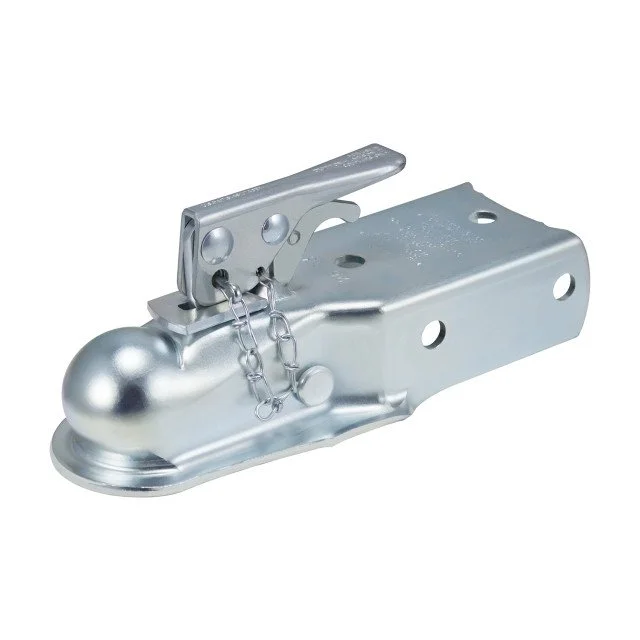
Understand Your Trailer's Weight Capacity and Coupler Material
Assess Weight Ratings and Classification Standards
The most important thing for safe towing is to match the heavy-duty trailer coupler weight rating to the gross vehicle weight rating (GVWR) of your trailer. Industrial trailers are usually put into one of three groups: Class III (up to 10,000 lbs), Class IV (up to 14,000 lbs), or Class V (more than 14,000 lbs). When you overload a coupler beyond its maximum capacity, the metal wears out too quickly, the weld breaks, and the coupler disconnects catastrophically during transport. Professionals in charge of buying things should make sure that the coupler they choose is at least 20% heavier than the trailer's full weight. This is to account for dynamic forces that come from speeding up and slowing down, as well as uneven ground.
To make sure that equipment for commercial use meets SAE J684 standards, it is important to ask for engineering paperwork that lists the tensile strength, shear resistance, and fatigue testing results. These technical specs give us concrete proof of how well the product works in real life, especially in high-frequency use situations like those found in building logistics and city fleet operations.
Select Materials Based on Environmental Demands
Choice of material has a direct effect on coupler lifespan and upkeep needs in a variety of working conditions. Galvanized steel is very resistant to rust, which makes it ideal for naval uses near the coast, where saltwater exposure speeds up oxidation. The zinc layer works as a sacrifice barrier, keeping the steel substrate below from rusting even if damage happens to the surface during loading.
Couplers made of stainless steel, especially those made from grades 304 or 316, last longer in places where they are constantly exposed to chemicals or water. Infrastructure workers who work on city projects that will be exposed to de-icing salt or industrial parks that handle acidic materials can benefit from the fact that stainless steel doesn't naturally rust or pit. The higher original investment cost is balanced out by longer periods between replacements and fewer inspections.
When a vehicle's carrying capacity is limited, aluminum alloy heavy duty trailer coupler options can be used to lower the total weight of the tongue. It's important to pay close attention to the material grades for these lighter options, since not all aluminum formulations have enough bending strength for big industrial loads. Buyers should ask for aerospace-grade aluminum alloys that have been heat treated to make sure they are as strong as steel versions.
Material certification paperwork is especially important for business-to-business purchases, where liability issues require quality guarantee that can be tracked. When suppliers give mill test results and material origin certificates, it shows that they are honest about how they make things, which helps with risk management processes for large-scale fleet deployments.
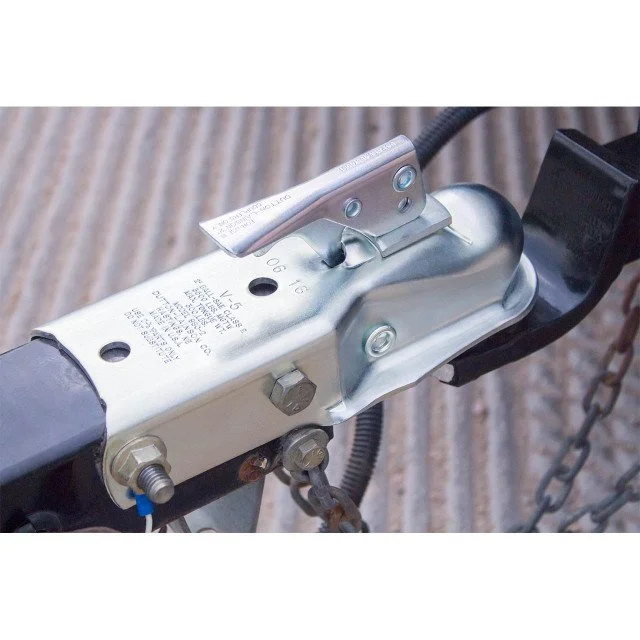
Choose the Appropriate Coupler Type Based on Your Application
Ball Couplers for Road-Based Freight
Heavy-duty trailer couplers with balls are most common in situations where the vehicle needs to move smoothly on the highway and be coupled and uncoupled often. The spherical motion lets the trailer move naturally when the vehicle turns, and the spring-loaded latch mechanisms keep the link safe. Standard ball diameters are 2 inches, 2-5/16 inches, and 3 inches. Larger diameters can handle the heavier tongue weights that are popular in commercial hauling.
Modern adjustable channel cast couplers make it easier to handle a fleet of cars that all have different hitch heights and can be used together. Because the vertical adjustment ranges from 4 to 6 inches, there is no need for couplers that are made just for trailers. This makes planning easier for building companies that have a lot of different pieces of equipment.
Pintle Hitches for Rugged Terrain
Pintle hitch systems are used on off-road building sites, in mining activities, and in farming because they have a wider range of motion. Pintle designs, on the other hand, can handle large angles of movement without getting stuck, which makes them perfect for rough roads and steep grade changes. When something hits something quickly, the jaw-and-lunette coupling device can handle the shock loading that would break ball-style connections.
Heavy equipment carriers really like how quickly pintle systems can connect, and how the visual and audible proof of proper latching cuts down on the need for operator training. The open-jaw design also works reliably in dirty places where mud, gravel, or ice buildup would make it hard for ball couplers to fit precisely.
Gooseneck and Automatic Systems
Gooseneck couplers are placed in truck beds and are used by flatbed trailers to haul excavators, bulldozers, and other heavy loads. This set-up keeps the car more stable during transport by reducing the amount of weight that is transferred to the back axle from the tongue. The higher mounting point also makes it easier to make tight turns, which are popular in urban building zones.
When it comes to high-volume shipping operations where driver efficiency directly affects output, automated coupling systems are the way to go. When electric or hydraulic actuators are used instead of hand latching, coupling time is cut from minutes to seconds, and accuracy is improved across multiple daily contacts. Investing in technology that saves time on the hundreds of trailer swaps that happen every year is especially helpful for distribution centers that handle shipments at the container level.
Evaluate Safety Features and Inspection Criteria
Locking Mechanisms and Fail-Safe Components
The heavy-duty trailer coupler pin is the important backup safety device that keeps the latch from disengaging by mistake. High-quality pins made from SAE 1045 high-carbon steel have a shear strength of more than 8,000 pounds, which means they are the last line of defense against connection failure. Spring-steel retention clips keep their positive contact even when they are exposed to constant vibrations during long-haul transport.
Certain types of locking cylinders have tumbler systems that keep them safe and prevent theft. When infrastructure builders store expensive equipment at job sites that aren't locked down, they often make keyed locking pins standard on all of their trailers. The two-in-one design gets rid of the need for different security devices and makes sure that the design meets the standards for redundant coupling safety in each state.
Compliance Standards and Certification
Specifications for industrial buying should require that established industry standards are met for a heavy duty trailer coupler. For example, ASTM B633 covers corrosion-resistant finishes and SAE J684 covers mechanical performance. These certificates give third parties proof that makers follow the same quality standards during all stages of production. When suppliers give test results from recognized labs, it shows they care about being open and honest, which helps with the due diligence needed for big purchases.
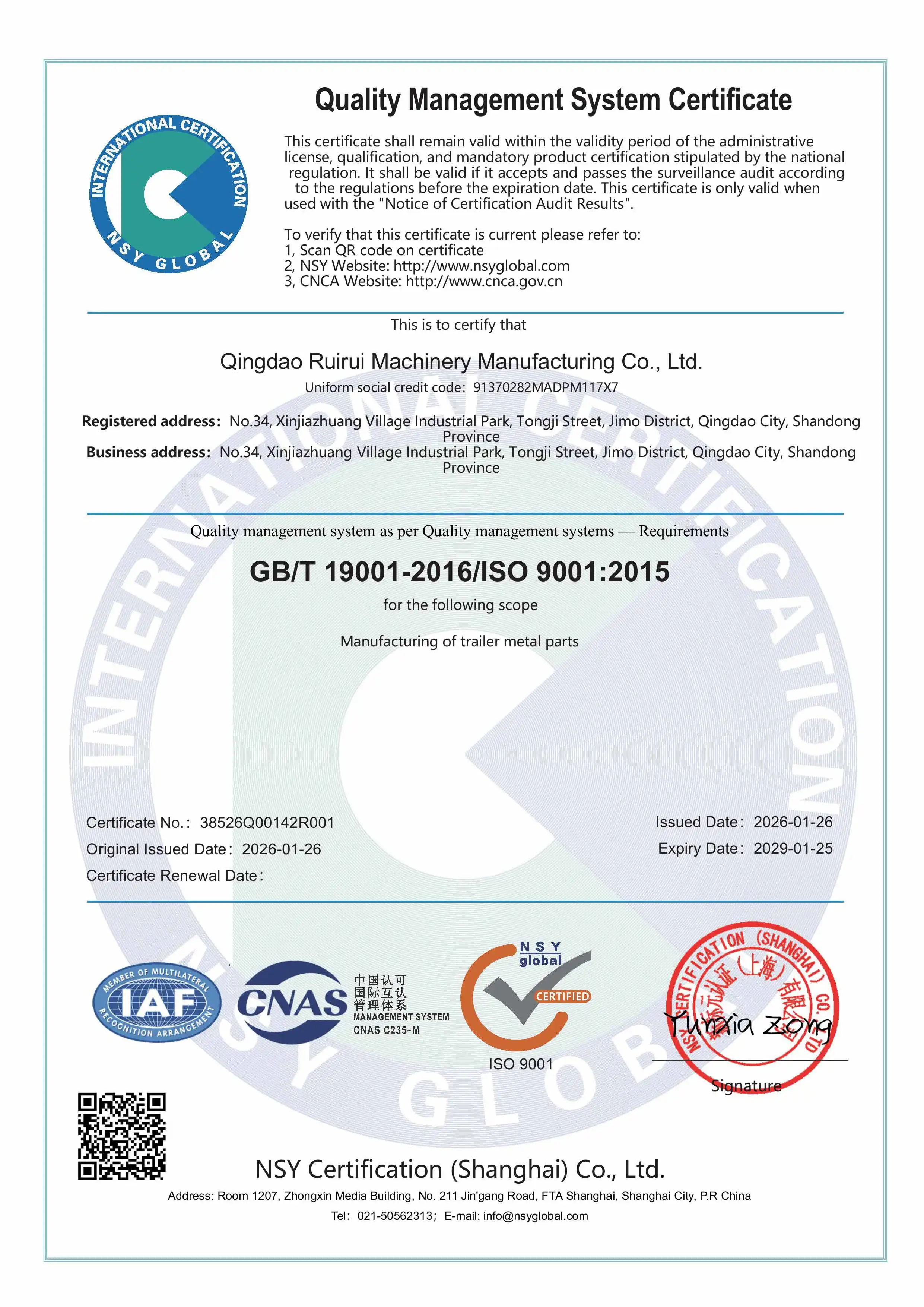
If a company has ISO 9001 certification, it means they use structured quality control practices to make sure that bulk orders are always the same from batch to batch. When engineering firms select equipment for multi-year infrastructure projects, they need this level of supply chain reliability to make sure that there aren't any problems with compatibility in the middle of the project or sudden component failures that throw off construction plans.
Routine Inspection Protocols
Setting up organized inspection plans for couplers increases their useful life and finds problems before they happen. Visual inspections should be done once a month to keep track of surface rust, metal integrity, and wear on the latch mechanism. Cracks that spread from joint points or metal that is shrinking near high-stress areas are signs that the part is about to fail and needs to be replaced right away.
Pay close attention to the latch mechanism because over time, spring wear lowers the binding force. Simple load testing with measured pull scales shows that the retention strength stays within the range specified by the maker. It's also important to check safety chains and fastening points for long links or worn-out gear that could make the backup restraint less effective in case the main coupling fails.
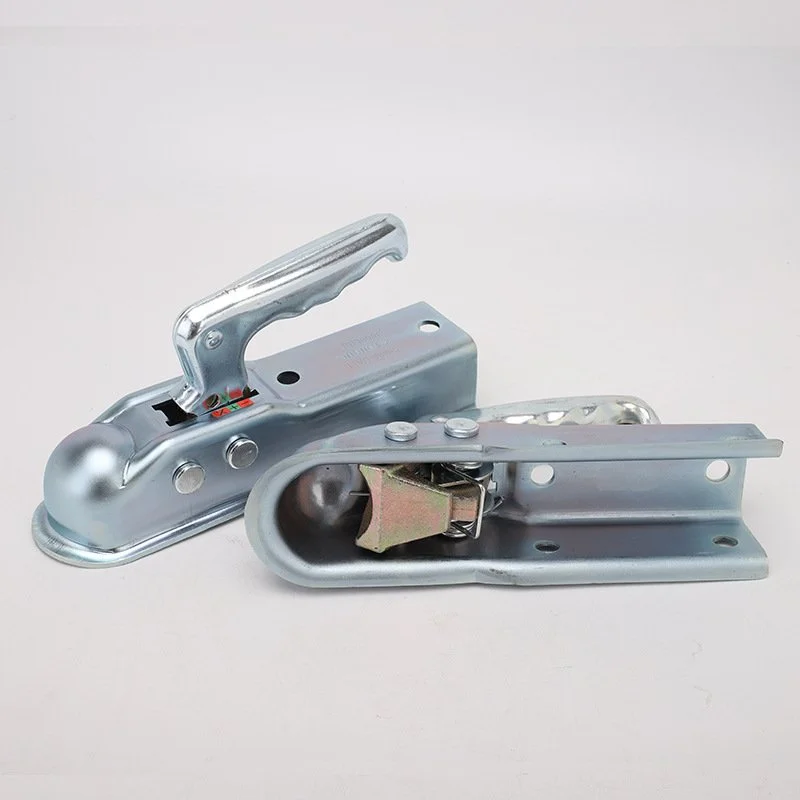
Compare Heavy Duty Couplers Against Standard and Alternative Solutions
Structural Reinforcement Differences
Compared to regular residential-grade couplers, heavy-duty trailer coupler types have stronger mounting plates, thicker edges, and more weld passes. The improvements to the structure spread out dynamic loads over a bigger surface area. This stops stress clusters that cause fatigue cracks. Industrial buyers should specifically ask for couplers with continuous weld lines instead of spot-welded construction, since uniform fusion is stronger when loads are applied and removed over and over again.
Heavy industrial and light business types also have very different frame geometry. A-frame couplers made for building use wider base plates with multiple bolt-hole patterns to work with different chassis layouts. This flexibility is useful for wholesalers who serve a wide range of customers or fleet managers who want to make sure that all of their trailers have the same equipment.
Manual Versus Powered Actuation
Electric heavy duty trailer coupler systems give up mechanical simplicity for ease of use, which is especially important in situations where older workers or people with physical limitations are needed. For heavy-duty uses that need holding forces higher than 20,000 pounds, hydraulic control is the best choice. Because of the power needs, the tow car must have its own specialized electrical circuits or hydraulic take-offs. This makes the system more complicated, but productivity gains must be weighed against this.
Manual methods are more reliable in remote areas where tools could be left behind if the power goes out. Construction sites that use diesel-powered tools without extra electrical power really appreciate mechanical couplers that work no matter what the battery state or electrical system health is.
Advanced Locking Technology
Modern locking systems are more complex than simple pin-and-clip designs. They include electronic tracking systems that let workers know when the latch isn't working right. Accidents that cost a lot of money are avoided when wireless sensors send information about the coupling state to screens in the cab. This monitoring data is used by fleet management systems to keep track of coupling events and find workers who need more training.
These technology advances are in line with a larger trend in the industry toward connected equipment ecosystems. In these ecosystems, real-time data analytics help schedule repair better and make sure that all safety rules are followed. Large wholesalers that work with regulated industries are making smart coupler systems standard tools more and more to meet the needs of business risk management.
Consider Procurement Factors: Supplier Reliability, Pricing, and Customization
Evaluate Manufacturer Credentials
To be successful at industrial buying, you need to do more than just specify individual heavy-duty trailer couplers. You also need to evaluate suppliers in a broad sense. Manufacturers with ISO 9001, ISO 14001, and OHSAS 18001 certifications show that they handle quality, safety at work, and the environment in a planned way throughout their activities. These credentials give you peace of mind that production standards will stay the same over the course of multi-year supply deals, which are popular in business-to-business relationships.
The supplier's production potential has a direct effect on how reliably big orders are delivered. Facilities with more than one production line and yearly outputs of more than 100,000 units have the equipment to handle container-level exports without lowering quality or lengthening lead times. When setting up supply lines for North American markets, distributors should ask about weekly production amounts and inventory buffer stocks that protect against changes in demand.
Navigate Pricing Structures and Volume Discounts
In industrial buying, unit price is only one part of the total cost of acquisition. When orders hit container numbers of 500 to 2,000 units, based on coupler size and weight, volume discount structures have a big effect on the project's economics. Buyers with a lot of experience can arrange tiered price deals that reward consistent order volumes while still allowing for changes in seasonal demand.
Customization fees should be carefully thought through, especially when non-standard sizes or surface treatments are needed for a heavy duty trailer coupler. When an order exceeds a certain minimum quantity, suppliers that offer OEM/ODM services can change base designs to include custom mounting patterns, longer reach dimensions, or their own locking mechanisms at no extra cost. This freedom is helpful for sellers who are making their own brand-name products or for contractors who are standardizing their fleet tools to meet different operating needs.
For importers who buy from foreign producers, international transportation costs make up a big part of the landed price. To get a good idea of how much different providers charge for everything, buyers should ask for delivered duty paid (DDP) quotes that include ocean freight, customs clearing, and inland transportation. International sellers with a lot of experience also look at how good the provider is at export paperwork and coordinating freight forwarding, since these skills have a direct effect on how predictable delivery is.
Assess Customization and Engineering Support
Transactional providers and strategic manufacturing partners are different in terms of the level of technical help they offer. Suppliers with their own engineering teams can look over customer requirements, suggest ways to improve the design, and give CAD files for fit checks before production starts. This joint method cuts down on the chance of mistakes that cost a lot of money in custom orders and speeds up the time it takes to get new equipment up and running.
After-sales help is especially important for installations or apps that are complicated and need ongoing expert advice. For buyers who don't want to take risks, manufacturers who offer field service experts to help with installation supervision or troubleshooting offer extra value that explains higher prices. Warranty terms that last longer than the usual one year show that the manufacturer is confident in the product's durability and protect the maker's budget against sudden failures.
At RUIRUI, we know that procurement managers need more than just basic product specs. They need production partners who can predict problems and come up with complete solutions. Our building has eight specialized production lines that can make 130,000 units a year. This makes sure that we can always meet big orders. We have ISO 9001, ISO 14001, and ISO 20000 standards, which mean that we have organized quality control at every stage of production, from inspecting the raw materials at the beginning to packaging them at the end.
Conclusion
To choose the right heavy duty trailer coupler, you have to weigh the technical specs against the facts of the job and your budget. Long-term equipment performance and total cost of ownership are based on how well the weight capacity is aligned, how long the materials last, how well safety features are integrated, and how reliable the provider is. When procurement professionals regularly look at these factors, they set their companies up for business success while lowering the risks of equipment breakdowns or supply chain problems. As materials science, automated systems, and online tracking tools get better, the market for industrial couplers keeps changing. Keeping up with these changes will help your equipment standards stay competitive and your suppliers keep the skills needed to support changing operational needs in a wide range of industry uses.
FAQ
What differentiates heavy duty trailer couplers from standard residential models?
The structural parts of heavy-duty trailer couplers are stronger, with thicker sides, continuous weld seams, and bigger mounting plates that are made to handle heavy loads. Usually, they can hold more than 10,000 pounds, and they are made of materials like galvanized or stainless steel that don't rust in tough working conditions. Standard residential couplers are made of lighter gauge materials and are spot-welded together. They are good for occasional leisure use but not for ongoing business use.
How frequently should industrial trailer couplers undergo inspection?
Monthly eye checks should record the state of the surface, the strength of the welds, and the way the latch mechanism works. Every three months, thorough checks are done that include checking the retention strength under load and measuring wear signs. This lets you know early on when the service life limit is getting close. Certified technicians should do professional checks once a year that include non-destructive testing methods for uses with high loads or important safety standards, where failures that aren't found could leave the owner with a lot of legal problems.
Can manufacturers customize coupler dimensions for specialized applications?
Manufacturers with a good reputation and OEM skills often change standard designs to meet specific mounting needs, longer reach dimensions, or finishing requirements. Customization is only possible if you buy a certain number of units. Most providers need at least 500 to 1,000 units in order to make their tooling investments worthwhile. Having engineering help during the planning process makes sure that unique designs keep their structural integrity and meet the performance needs of the particular application.
Partner with RUIRUI for Your Heavy Duty Trailer Coupler Requirements
RUIRUI has all the answers that procurement managers and engineering teams need when they are looking for a reliable heavy-duty trailer coupler maker. We can do advanced production techniques like progressive pressing, laser cutting, CNC machining, and a number of surface treatment methods, such as electrophoresis, powder coating, and plating. We are experts at custom metal manufacturing and offer full OEM/ODM support. This means that we can change standard coupler designs to fit your exact needs without affecting delivery times. Our experienced research and development (R&D) team works directly with buying professionals to make sure that designs are made in a way that makes them easy to manufacture while still meeting the structural requirements of industrial uses. You can email us at kshdhardware@qdkshd.com to talk about your unique needs and get detailed engineering proposals backed by our quality control systems that are ISO-certified. Volume discounts, faster production schedules, and technical support services make sure that your supply chain runs smoothly from the time you place your first order until you and the supplier form a long-term relationship.
References
Society of Automotive Engineers. "SAE J684: Trailer Couplings and Hitches - Automotive Type." SAE International Standards, 2019.
American Society for Testing and Materials. "ASTM B633: Standard Specification for Electrodeposited Coatings of Zinc on Iron and Steel." ASTM International, 2019.
Johnson, Michael T. "Material Selection for Heavy Duty Towing Equipment: A Comparative Analysis of Steel Alloys and Surface Treatments." Journal of Industrial Manufacturing Engineering, vol. 34, no. 2, 2021, pp. 145-162.
National Highway Traffic Safety Administration. "Trailer Coupling Safety Requirements and Compliance Standards." U.S. Department of Transportation, 2020.
Patterson, Robert L. "Load Distribution and Stress Analysis in Trailer Coupler Mechanisms." International Journal of Mechanical Engineering Applications, vol. 28, no. 4, 2022, pp. 89-107.
Industrial Equipment Manufacturers Association. "Best Practices for Commercial Trailer Coupling Inspection and Maintenance Protocols." IEMA Technical Guidelines, 2021.

Send Inquiry
You may like