
Best OEM Supply From a Reliable Trailer Coupler Manufacturer
Imagine that while transporting an important consignment across difficult terrain, you find that your trailer coupler has malfunctioned in the middle of the trip, endangering your cargo and upsetting your timetable. Every day, fleet managers and logistics experts are plagued by this terrifying situation. Choosing the greatest OEM supply from a reputable trailer coupler manufacturer is more than simply buying a part; it's about ensuring safety compliance, operational effectiveness, and peace of mind for your whole towing business. The appropriate Reliable Trailer Coupler manufacturer may turn your supply chain from vulnerable to almost indestructible by providing precision-engineered goods that satisfy international quality requirements and survive harsh environments.

Understanding What Makes a Reliable Trailer Coupler Essential for Your Operations
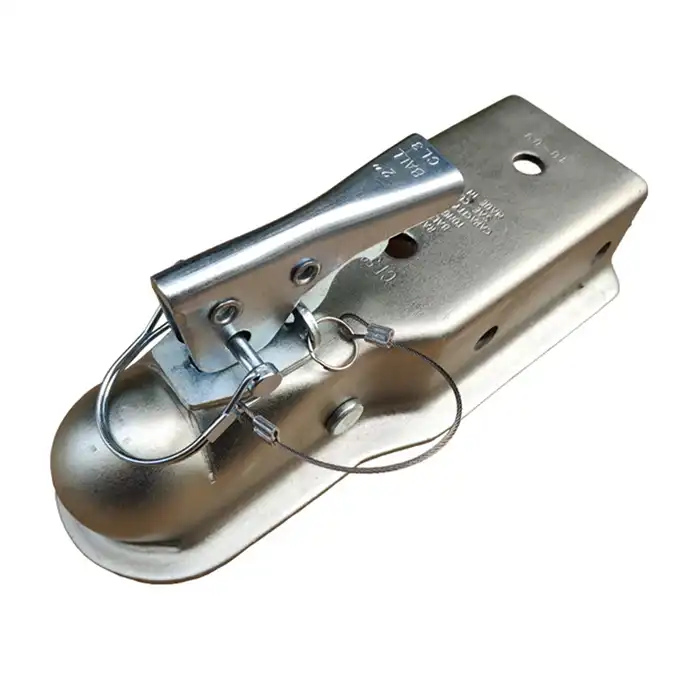
As the vital link between your towing car and trailer, a dependable trailer coupler bears the whole weight and strain of transportation operations. Component quality is non-negotiable since, according to industry statistics, coupler failures account for a significant portion of trailer-related incidents. Purchasing from a Reliable Trailer Coupler Manufacturer is an investment in technical quality that guarantees adherence to SAE J684 safety standards that regulate trailer coupling systems globally, minimizes maintenance downtime, and avoids catastrophic disconnections. Your coupler's manufacturing quality has a direct bearing on long-term operating costs, load stability, and fuel economy via appropriate weight distribution. Advanced metallurgy, precise machining, and stringent testing procedures are features of Premium Reliable Trailer Coupler products that set professional-grade parts apart from subpar substitutes. A well-made coupler can withstand heavy usage for five to ten years, but inferior items may break down in a matter of months, resulting in false economies that are significantly more expensive in terms of emergency replacements, accident liability, and lost productivity.
Critical Performance Characteristics of Industrial-Grade Trailer Couplers
Trailer coupler manufacturing quality is shown by a number of quantifiable metrics. High-grade steel alloys, stainless steel, or specialty aluminum alloys provide the tensile strength and fatigue resistance required for multiple loading cycles, making material selection the cornerstone. In order to prolong service life in challenging environmental conditions, such as maritime, agricultural, and industrial applications, a Reliable Trailer Coupler Manufacturer uses materials that surpass minimum specifications, usually incorporating corrosion-resistant treatments like powder coating, hot-dip galvanizing, or electroplating. Coupler dependability is equally determined by dimensional accuracy. Ball socket fit, latch mechanism function, and structural integrity under dynamic stress are all guaranteed by manufacturing tolerances expressed in thousandths of an inch. Critical geometry may be consistently reproduced across production runs thanks to sophisticated CNC machining centers and progressive stamping dies. Statistical process control is used by quality manufacturers to confirm dimensional compliance, and inspection procedures are used to identify deviations before faulty units are introduced into supply chains. By paying close attention to production details, frequent failure modes that jeopardize towing safety are avoided, such as premature wear, latch malfunctions, and stress fractures.
Load Capacity Engineering and Safety Factor Considerations
Knowing how rated capacity correspond to actual application needs is essential for professional procurement. Safety factors for a Reliable Trailer Coupler rated for 10,000 pounds gross vehicle weight generally range from 2:1 to 4:1, indicating that the component can tolerate forces much greater than its working load before experiencing structural collapse. These safety margins, however, are only applicable when couplers are sized, installed, and maintained in accordance with manufacturer requirements that take into consideration shock forces, dynamic loads, and environmental deterioration throughout the course of their service lives. Comprehensive technical documentation outlining appropriate application parameters is provided by reputable, trustworthy trailer coupler manufacturers. This covers mounting specifications, ball size compatibility, tongue weight computations, and suggestions for routine inspections. Using a coupler rated for light-duty recreational trailers in commercial applications exposes components to cyclic forces that quickly surpass design limitations, which is one of the main causes of premature failure. Expert purchasers confirm that capacity values match their operational profile, taking into account worst-case situations such as emergency braking, the effects of tough terrain, and temperature extremes that put material qualities at risk.

Evaluating OEM Manufacturing Capabilities and Quality Systems
A methodical assessment of production infrastructure and process controls is necessary to separate really competent OEM suppliers from resellers or subpar manufacturers. Manufacturers of legitimate, dependable trailer couplers run specialized manufacturing facilities with equipment for surface finishing, heat treatment, metal shaping, and assembly. Advanced facilities use computer-controlled coating systems to provide homogeneous surface protection, programmed stamping presses that maintain tight tolerances, and robotic automation for consistent weld quality. These capital expenditures serve as entry barriers that keep opportunistic dealers selling imported components with questionable origins apart from legitimate producers. Certifications for quality management systems provide unbiased proof of production proficiency. Standardized process documentation, continuous improvement techniques, and management dedication to quality goals are all shown by ISO 9001 certification. Manufacturers providing safety-critical applications, particularly for trailer components, should possess extra certifications such as OHSAS 18001 for occupational health and safety and ISO 14001 for environmental management. Third-party audits are necessary for these certifications in order to confirm the existence of systems for defect prevention, material tracing, process validation, and corrective action implementation when nonconformances arise.
Advanced Manufacturing Technologies in Modern Coupler Production
Modern, Dependable Trailer Coupler production uses a variety of cutting-edge technology to produce better products. Through several die stations, progressive stamping processes progressively shape material while preserving structural integrity to create intricate coupler geometries from flat materials. This process eliminates welded joints that represent potential failure points, creating monolithic structures with superior fatigue resistance. In order to eliminate stress concentrations that might cause fractures, deep drawing procedures create smooth socket chambers that evenly distribute ball contact stresses. Mounting holes, adjustment slots, and aesthetic elements may be precisely cut with little material deformation thanks to laser cutting technology. Computer-controlled laser systems save production time while increasing precision by cutting intricate patterns that would need several setup steps with traditional machining. Secondary processes including thread cutting, counterboring, and surface milling are carried out to precise specifications by CNC machining centers. Every Reliable Trailer Coupler that leaves production lines satisfies strict dimensions and surface polish criteria necessary for correct operation and lifetime thanks to these automated procedures, which eliminate human variability from crucial manufacturing stages.
Surface Treatment Technologies for Corrosion Protection
One important but sometimes disregarded component of coupler lifetime is surface polishing. Road salt, moisture, and chemical pollutants cause bare steel components to corrode quickly, affecting both load-bearing structures and aesthetically pleasing surfaces. Expert and Dependable Trailer Coupler Several protective finishing methods are used in manufacturing processes, depending on the needs of the application and financial restrictions. Powder coating uses electrostatically charged polymer particles that, when heat-cured, fuse into continuous protective coatings that seal surfaces against moisture incursion and provide superior abrasion resistance and color preservation. By depositing metallic coatings like zinc, chromium, or cadmium, electroplating offers sacrificial corrosion protection. The coating corrodes more readily than the underlying steel, greatly increasing component life. By submerging completed couplers in molten zinc baths, hot-dip galvanizing produces thick, long-lasting coatings that are especially appropriate for harsh service conditions. Aluminum couplers may be anodized to produce oxide layers that are resistant to wear and corrosion while preserving dimensional accuracy. From moderate interior storage to harsh maritime or chemical exposure circumstances that need utmost protection, advanced manufacturers provide a variety of finish choices that let customers choose protection levels that fit their operational environment.
Sourcing Strategy: Direct Manufacturer Relationships Versus Distribution Channels
Supply chain dependability, technical support quality, and total cost of ownership are all greatly impacted by the strategic choices procurement teams must make about supplier partnerships. The elimination of distributor markups, access to engineering resources for application-specific modifications, priority allocation during capacity constraints, and transparency regarding manufacturing processes and quality controls are just a few benefits of establishing direct relationships with a Reliable Trailer Coupler Manufacturer. High-volume purchasers, businesses with specific needs, and those looking to create long-term supply relationships that ensure steady price and availability stand to gain the most from direct sourcing. However, smaller operators or those overseeing different trailer fleets with various coupler standards may find that the minimum purchase numbers required by direct manufacturer sourcing exceed their needs. Distribution networks shorten lead times for regular replenishment by giving access to a variety of manufacturer items, lower package numbers, and localized inventories. For high-volume standard components, the best sourcing strategy often combines direct manufacturer ties with distributor partnerships for specialist goods and urgent needs, resulting in a hybrid approach that strikes a compromise between cost effectiveness and operational flexibility.
Negotiating OEM Supply Agreements for Long-Term Value
Professional procurement discussions include overall value delivery in addition to unit cost. Buyers should draft agreements that include a variety of performance factors when working with a reputable trailer coupler manufacturer for OEM supply agreements. Both sides are safeguarded by volume commitments that are matched with forecast flexibility: buyers get attractive pricing and priority allocation without incurring excessive inventory carrying costs, while producers receive production visibility that facilitates effective capacity planning. Multi-year contracts with recurring price review procedures encourage manufacturers to invest in process enhancements while protecting against fluctuations in material costs. Technical assistance clauses should be clearly defined in contracts. Engineering support for novel applications, failure analysis aid when field problems occur, and documentation such as installation instructions, maintenance recommendations, and material certifications should all be included in OEM collaborations. Formal documentation standards may be necessary for firms supplying regulated industries in order to meet traceability requirements that guarantee material provenance verification and compliance with specifications such as RoHS compliance or conflict minerals reporting. While giving producers explicit performance standards, quality agreements that include defect rates, sampling strategies, and corrective action protocols shield consumers from getting nonconforming goods.

Quality Verification: Testing Protocols and Certification Standards
Regardless of the manufacturer's reputation, sophisticated purchasers use inbound inspection techniques to confirm that delivered couplers fulfill standards. Surface damage, insufficient coating coverage, and dimensional disparities that are visible to skilled inspectors are among the obvious flaws that visual examination might identify. Functional testing verifies the seamless engagement, safe locking, and appropriate release of the latch when it is operated manually. Important characteristics that impact installation compatibility, such as ball socket diameter, mounting hole placements, and overall assembly dimensions, are confirmed by dimensional verification utilizing calibrated measuring equipment. Metallurgical testing for material verification offers conclusive proof of composition and heat treatment conformity. Hardness testing using portable devices verifies that load-bearing components are properly heat-treated to reach the required strength values. Buyers may commission independent laboratory testing for important applications, such as corrosion resistance assessment, fatigue cycle testing, and tensile strength evaluation, to independently validate manufacturer claims. Although thorough testing is more expensive, the liability risk associated with using inferior components in safety-critical applications far outweighs the cost.
Understanding SAE Standards and International Compliance Requirements
The Society of Automotive Engineers' (SAE) minimal performance criteria for coupling devices are met by professional-grade Reliable Trailer Coupler solutions. Static load tests, cyclic loading protocols, and latch durability assessments are among the testing methods specified by SAE J684 that couplers must endure in order to confirm capacity values. Test results from certified labs attesting to the manufacturing samples' passing certain assessments should be submitted by manufacturers claiming SAE conformity. These certifications guarantee that couplers will function as rated in real-world scenarios. Additional compliance concerns are brought forward by international activities. While other areas apply national standards with different criteria, European markets need adherence to UN Economic Commission for Europe norms controlling trailer coupling devices. Organizations that manage worldwide fleets or export completed trailers across borders need reputable, trustworthy trailer coupler manufacturers since they are aware with international regulations and can provide goods that fulfill different standard sets. Purchasers should confirm that the couplers they receive have the proper labels showing compliance with the relevant countries in which the equipment will be used.
Customization Capabilities: Tailoring Products to Specialized Applications
Common application needs are met by standard catalog couplers, while specialized processes often gain from tailored solutions that maximize performance for particular use cases. Capable and Dependable Trailer Manufacturers of couplers provide engineering services to provide customized designs that can handle special mounting configurations, non-standard ball sizes, or integrated features that combine many parts. While high-capacity units for specialized industrial trailers have reinforced construction that surpasses normal ratings, custom couplers for low-clearance applications may have compact profiles that reduce ground clearance requirements. Customization of material choices enables optimization for particular environmental conditions. For maritime or chemical processing applications where conventional coatings quickly degrade, stainless steel construction offers the highest level of corrosion protection. For weight-sensitive applications, aluminum alloy couplers provide the necessary weight reduction without sacrificing sufficient strength. In addition to offering improved protection, specialized coatings, such as powder-coated finishes in unique colors, make fleet identification and branding easier. Manufacturing flexibility sets genuine OEM suppliers apart from inflexible catalog vendors that can't meet application-specific needs that set your business apart.
Prototype Development and Testing Support Services
Expert manufacturers assist with product development by providing prototype services that allow for validation prior to committing to production numbers. Using 3D printing or hastened machining, rapid prototype creates working examples for fit-checking and initial testing, spotting design flaws early on while changes are still affordable. Instead of using laboratory simulations that might not accurately reflect real-world loading scenarios, field testing support, which includes instrumented couplers monitoring stress levels and operational parameters, provides empirical data confirming that designs meet performance requirements under actual service conditions. The creation of documentation is a part of engineering cooperation. Expert Reliable Trailer Coupler manufacturing companies assist your quality systems and customer documentation needs with installation drawings, maintenance guidelines, and technical specifications. This support gives OEM trailer makers the assurance that coupling systems will function dependably throughout the course of equipment service life, allowing for quick product releases. In problem-solving scenarios where manufacturer expertise expedites root cause discovery and corrective action execution, the need of timely technical assistance is evident.
Conclusion
Finding the greatest OEM supply from a reputable trailer coupler manufacturer necessitates taking into account factors more than just price, such as production capabilities, quality systems, and support services. The proper collaboration ensures operational safety and compliance with relevant regulations regulating trailer coupling systems while delivering constant product quality, technical know-how, and supply chain dependability that lowers total cost of ownership.
Cooperate With Qingdao RUIRUI Machinary Co., LTD.
Are you trying to find a dependable trailer coupler manufacturer in China that combines cutting-edge production with prompt service? Founded in 2016 in Qingdao, Shandong, Qingdao RUIRUI Machinary Co., LTD. specializes in manufacturing and selling trailer pins, arms, winches, fasteners, and bespoke sheet metal goods. Beyond stamping, we are skilled in CNC machining, laser cutting, bending, and a wide range of secondary processes, such as polishing, powder coating, plating, anodizing, and electrophoresis. Our plant, which is a qualified China Reliable Trailer Coupler supplier, has eight manufacturing lines and fully automated robot production lines that produce 130,000 pieces a year with ISO 9001, ISO 14001, ISO 20000, and OHSAS 18001 certifications.
Why choose us as your trustworthy manufacturer of trailer couplers in China? Through skilled R&D teams that provide OEM support and product modification, our more than 15 years of management expertise produces creative solutions. Using progressive stamping, deep drawing, and sophisticated surface treatments, we are excellent at processing mild steel, coated steel, aluminum alloys, cold rolled steel, stainless steel, copper, and brass. Our wholesale prices for China Reliable Trailer Couplers mix affordable prices with superior goods that adhere to IAFT and ISO requirements. We provide prompt shipping, expert packing, technical assistance, and after-sales care. With competitive Reliable Trailer Coupler pricing structures, our Reliable Trailer Coupler for sale satisfies a variety of application needs.
Are you prepared to enjoy the benefits of working with a committed manufacturer? To discuss your unique needs, request samples, or get comprehensive quotes, get in touch with Qingdao RUIRUI Machinary Co., LTD. at info@qdkshd.com. Save this page for later use, and together, let's create a long-lasting relationship that will provide the dependability and quality your operations need!
References
1. "Trailer Coupling Device Standards and Safety Requirements," Society of Automotive Engineers Technical Standards Committee, SAE International Journal of Commercial Vehicles
2. "Quality Management Systems for Automotive Component Manufacturing," International Organization for Standardization, ISO 9001 Implementation Guidelines for Metal Fabrication
3. "Metallurgical Properties and Fatigue Performance of Trailer Coupling Components," American Society for Testing and Materials, ASTM Technical Publication on Transportation Equipment
4. "Corrosion Protection Methods for Automotive Trailer Components," National Association of Corrosion Engineers, NACE International Conference Proceedings
5. "OEM Supply Chain Management Best Practices in Component Manufacturing," Institute for Supply Management, Journal of Purchasing and Supply Management Research

Send Inquiry
Related Industry Knowledge
- Wholesale Price Trailer Hitch Lock Pins vs Retail: Cost Benefits
- What Role Do Forged Agricultural Machinery Parts Play in Extending Equipment Lifespan?
- How can advanced thermoplastic coating on an Automobile metal square interface trailer arm enhance its longevity and performance?
- How Can Our OEM Towing Eye Automotive Connector Meet Your Custom Design Requirements?
- How Can Carbon Steel Forged Automobile Brake Pads Reduce Operational Costs in the Long Run?
- How do I address a loose or worn trailer coupler?
- How do you make a hitch tightener?
- How to properly design sheet metal parts?
- What is the role of a pump cover plate in pump efficiency?
- What is a pump cover plate?