
Best Trailer Coupler for Boat Trailer: Top Picks 2025
Picture this: you're at the boat ramp, excited for a day on the water, but your trailer coupler fails mid-launch. The boat shifts, safety chains strain, and what should have been a perfect morning turns into a nightmare. This scenario happens more often than boat owners realize, and it all comes down to one critical component—the trailer coupler. Finding the Best Trailer Coupler for Boat Trailer means securing your investment, ensuring smooth launches, and gaining peace of mind every time you hit the road. This guide provides expert insights on selecting reliable couplers that match your boat's weight, your towing style, and the conditions you face, helping you make an informed decision that prioritizes safety and performance.

Understanding Boat Trailer Coupler Types and Their Applications
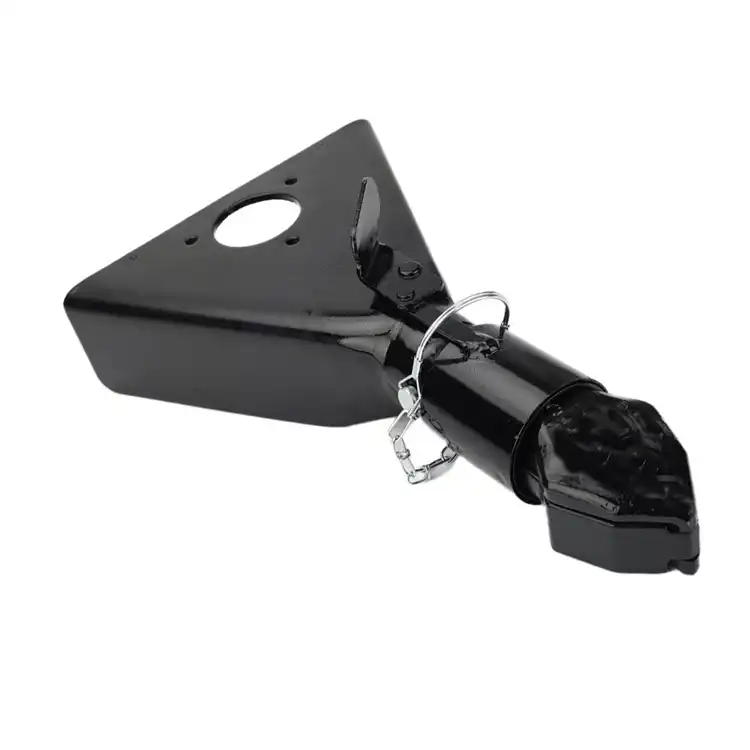
When searching for the Best Trailer Coupler for Boat Trailer, understanding the different types available is essential for making the right choice. Boat trailers typically use straight-tongue couplers, which are specifically designed for lighter to medium-weight vessels and offer straightforward installation. These couplers mount directly onto the trailer's tongue using a bolt-on design, making them accessible for do-it-yourself installations and replacements without requiring welding expertise. The straight-tongue design is favored in marine applications because it provides adequate pivot range for boat ramp maneuvers while maintaining a secure connection during highway travel. Another popular option for heavier boats is the A-frame coupler, which distributes towing forces more evenly across the trailer's frame structure. A-frame couplers are welded into the trailer's framework, creating a more robust connection point that handles larger boats and dual-axle trailers with greater stability. These couplers reduce the distance between the tow vehicle and trailer, improving turning dynamics and providing better weight distribution during transport. For boat owners who frequently tow larger vessels or travel long distances, A-frame couplers offer enhanced security and structural integrity that straight-tongue options may not provide.
Weight Capacity Considerations for Marine Applications
Selecting the appropriate weight capacity is the most critical factor when choosing the Best Trailer Coupler for Boat Trailer. Couplers are rated by gross trailer weight, which includes the boat itself, the trailer structure, fuel, equipment, and any additional gear you're carrying. Common capacity classes include Class I couplers rated up to 2,000 pounds for small fishing boats and personal watercraft, Class II couplers rated up to 3,500 pounds for medium runabouts and bass boats, Class III couplers rated up to 8,000 pounds for larger cabin cruisers and saltwater fishing boats, and Class IV couplers rated up to 10,000 pounds or more for heavy-duty marine applications. The industry standard recommendation is to never exceed 80 percent of your coupler's rated capacity, providing a safety margin for miscalculations and unexpected load increases. Many boat owners make the mistake of basing their coupler selection solely on the boat's dry weight, forgetting to account for fuel, water, fishing gear, and other equipment that significantly increases the total towing weight. A boat with a dry weight of 2,500 pounds can easily exceed 3,500 pounds when fully loaded for a fishing trip, making a Class II coupler inadequate for safe towing. Always calculate your maximum loaded weight and select a coupler with a capacity rating that exceeds this figure by at least 20 percent. This approach ensures your towing system maintains structural integrity even under maximum load conditions, preventing coupler failure and the dangerous situations that result from undersized equipment.
Ball Size Compatibility and Proper Matching
The hitch ball size is another fundamental specification when selecting the Best Trailer Coupler for Boat Trailer, as mismatched components create dangerous gaps and excessive play in the connection. Standard ball sizes include 1-7/8 inch for smaller boats and personal watercraft, 2 inch for most recreational boats in the 15 to 20 foot range, and 2-5/16 inch for larger vessels and heavy-duty marine trailers. The coupler must precisely match the ball diameter, as even small discrepancies create loose connections that allow the trailer to bounce and sway unpredictably during transport. Each coupler has the required ball size stamped or engraved directly onto its body, and this specification should never be ignored or approximated by visual inspection alone. Using a measuring caliper or ruler to verify your existing hitch ball diameter ensures you purchase a compatible coupler that provides a secure, rattle-free connection. Some boat owners attempt to use universal or adjustable couplers that claim to work with multiple ball sizes, but these designs often sacrifice security for versatility and should be avoided for regular marine towing applications. The connection between coupler and ball should be snug enough to prevent excessive movement while still allowing smooth pivoting during turns and ramp maneuvers. Testing the fit before your first towing trip by applying upward pressure on the coupler while it's latched onto the ball helps identify any looseness or poor fit that could compromise safety on the road.

Key Features That Define Top-Quality Marine Couplers
When evaluating the Best Trailer Coupler for Boat Trailer, certain features distinguish premium products from basic options, directly impacting performance and longevity. Corrosion resistance stands as the most critical feature for marine applications, as boat trailers are constantly exposed to water, salt, humidity, and harsh environmental conditions that accelerate metal deterioration. High-quality couplers feature zinc plating, powder coating, or stainless steel construction that resists rust and corrosion far better than basic painted finishes. Boat owners who launch in saltwater environments should prioritize stainless steel or heavily galvanized couplers, as these materials withstand the aggressive corrosive effects of salt exposure that can compromise standard steel components within a single season. The latching mechanism directly affects how quickly and securely you can connect your boat trailer to your tow vehicle, making it a vital consideration for boat ramp efficiency. Lever-lock or collar-lock designs provide intuitive operation with a simple lifting and lowering motion that securely engages the hitch ball. Easy-latch or EZ-latch systems offer auto-engaging mechanisms that automatically lock onto the ball when the trailer tongue is lowered, eliminating the need to manually operate a latch handle. These self-locking designs are particularly valuable during solo boat launching when you're managing multiple tasks simultaneously. Regardless of the latch style you choose, ensure it includes a secondary safety mechanism such as a locking pin or safety clip that prevents accidental disengagement during transport.
Material Construction and Durability Standards
The construction materials and manufacturing quality of the Best Trailer Coupler for Boat Trailer directly determine its operational lifespan and reliability under demanding conditions. Premium couplers are manufactured from forged or cast steel alloys that provide superior strength compared to fabricated designs made from welded steel plates. The forging process creates a more uniform grain structure within the metal, eliminating weak points and potential failure zones that can develop in welded assemblies. Cast couplers offer excellent strength-to-weight ratios and can be precisely engineered to handle specific load distributions, making them ideal for marine applications where weight savings matter but strength cannot be compromised. Steel thickness and wall construction also play significant roles in coupler durability and longevity. Heavy-duty couplers feature thicker walls and reinforced stress points at critical connection locations, particularly where the coupler body meets the mounting channel. These reinforcements prevent cracking and deformation that can occur over time from repeated loading cycles and road vibrations. Quality manufacturers conduct destructive testing and load cycle analysis to verify their couplers exceed published capacity ratings by substantial margins, providing real-world safety factors that protect against unexpected failures. When comparing couplers, examine the overall heft and construction quality, looking for smooth welds, consistent finish application, and precision machining on all moving parts and bearing surfaces.
Advanced Latch Designs and Safety Features
Modern coupler technology has evolved significantly beyond basic lever-lock designs, introducing innovative latching systems that enhance the safety and convenience of the Best Trailer Coupler for Boat Trailer. Posi-lock latches represent the most traditional and widely recognized design, featuring a curved handle that pivots downward to engage the ball and locks in place with positive mechanical engagement. These latches provide clear visual and tactile confirmation of proper engagement, making them popular among experienced boat owners who appreciate straightforward, reliable operation. The handle position clearly indicates whether the coupler is properly secured, reducing the risk of forgetting to latch before towing. Self-adjusting and compensating latch designs automatically accommodate minor variations in ball size and wear, maintaining secure connections throughout the coupler's service life. These mechanisms use spring-loaded components that apply continuous pressure against the ball surface, eliminating the looseness that develops in fixed-geometry latches as wear occurs over time. Some premium couplers incorporate ratcheting mechanisms that allow fine adjustment of the latch tension, enabling users to compensate for ball wear or optimize the fit for different towing conditions. Secondary safety features such as integral locking cylinders, pin holes for padlocks, and keeper chains provide additional security against theft and accidental uncoupling, making them valuable additions for boat owners who leave trailers unattended or store boats in public facilities.

Installation and Maintenance Best Practices
Proper installation is crucial for ensuring the Best Trailer Coupler for Boat Trailer performs reliably and safely throughout its service life. Straight-tongue couplers typically mount using four bolts that pass through pre-drilled holes in the trailer tongue and the coupler's mounting channel. The mounting surface must be clean, flat, and free from rust or corrosion that could prevent proper seating and even load distribution. Using grade 8 or higher bolts with lock washers and torquing them to manufacturer specifications ensures the coupler remains firmly attached under the dynamic loads experienced during towing. Many experienced boat owners apply anti-seize compound to the bolt threads before installation, preventing corrosion from locking the fasteners in place and simplifying future maintenance or replacement. A-frame couplers require welding for proper installation, making them more complex and typically requiring professional fabrication services unless you possess welding equipment and expertise. The coupler must be positioned at the precise angle specified by the manufacturer, usually 50 degrees for standard A-frame configurations, and welded completely around all contact points to ensure full strength transfer between the coupler and trailer frame. Poor welding practices such as incomplete penetration, excessive gaps, or inadequate bead coverage create weak points that can fail catastrophically under load. After welding, the entire assembly should be ground smooth, cleaned thoroughly, and treated with rust-preventive primer and paint to protect the bare metal exposed during the welding process.
Regular Inspection and Preventive Maintenance
Maintaining the Best Trailer Coupler for Boat Trailer requires regular inspection and preventive maintenance to identify wear patterns and potential problems before they result in failures. Before each towing trip, visually inspect the coupler for cracks, deformation, excessive wear on the ball socket, and proper operation of the latching mechanism. Pay particular attention to the mounting bolts on straight-tongue couplers, checking for looseness, corrosion, or elongation of the mounting holes that indicates movement has occurred. If any bolts show signs of looseness or the holes appear oval rather than circular, the coupler should be removed, the mounting area inspected for damage, and new grade 8 bolts installed with proper torque specifications. The ball socket interior should be inspected for uneven wear patterns that indicate misalignment or improper ball size. Excessive wear appears as grooves, flat spots, or shiny areas that reveal metal-to-metal contact under load. Minor surface wear is normal and expected, but deep grooves or significant material loss indicates the coupler has reached the end of its service life and should be replaced immediately. Applying marine-grade grease to the ball surface and inside the coupler socket reduces friction and wear, extending the operational life of both components. However, excessive grease can attract dirt and debris that accelerate wear, so use moderate amounts and wipe away any excess after coupling. The latching mechanism should operate smoothly without binding or excessive force, and any pivot points should be lubricated periodically with light oil or spray lubricant to maintain free movement and prevent corrosion from locking the mechanism in place.

Conclusion
Selecting the Best Trailer Coupler for Boat Trailer requires careful consideration of weight capacity, ball size compatibility, construction quality, corrosion resistance, and latching mechanism design. By matching these specifications to your specific boat, trailer configuration, and towing conditions, you ensure safe, reliable performance that protects your investment and provides peace of mind on every trip to the water.
Cooperate With Qingdao RUIRUI Machinery Co., LTD.
As a China Best Trailer Coupler for Boat Trailer factory with over 15 years of manufacturing excellence, Qingdao RUIRUI Machinery Co., LTD. specializes in precision metal fabrication for trailer components and marine applications. Our China Best Trailer Coupler for Boat Trailer supplier capabilities include advanced stamping, CNC machining, laser cutting, and comprehensive finishing processes including powder coating, zinc plating, and anodizing. As a trusted China Best Trailer Coupler for Boat Trailer manufacturer, we maintain ISO 9001, ISO 14001, and OHSAS 18001 certifications, ensuring every product meets international quality standards. Our China Best Trailer Coupler for Boat Trailer wholesale programs offer competitive pricing with MOQs starting at 100 pieces, and our Best Trailer Coupler for Boat Trailer for sale inventory includes customizable designs for specific marine applications. We provide High Quality Best Trailer Coupler for Boat Trailer with comprehensive technical support, expedited delivery schedules, and professional packaging for international shipping. Contact our experienced engineering team at info@qdkshd.com to discuss your custom trailer component requirements, request samples, or explore OEM partnership opportunities for your marine equipment business.
References
1. Johnson, M. & Peterson, R. (2024). "Marine Trailer Components: Engineering Standards and Safety Protocols." Journal of Recreational Vehicle Technology, Volume 18, Issue 3.
2. Williams, K. (2025). "Corrosion Resistance in Marine Towing Equipment: Material Selection and Surface Treatment Methods." International Marine Hardware Review, Spring Edition.
3. Thompson, J. et al. (2024). "Weight Distribution and Load Management in Boat Trailer Systems." Society of Automotive Engineers Technical Paper Series, Paper No. SAE-2024-01-1456.
4. Martinez, C. (2023). "Coupling Technology Evolution: From Traditional Latches to Modern Auto-Engage Systems." Trailer Manufacturing Technology Quarterly, Volume 12, Number 4.
5. Anderson, P. & Chen, L. (2025). "Quality Assurance Standards for Trailer Coupling Devices: A Comprehensive Industry Analysis." American National Standards Institute Technical Report, ANSI/TTMA Standard Reference Guide.

Send Inquiry
Related Industry Knowledge
- Sheet Metal Fabrication Benefits for Sustainable Manufacturing
- How Does a Hitch Tightener Improve Towing Safety?
- Trailer D Pin Explained: Everything You Need to Know
- What makes RUIRUI's state-of-the-art manufacturing crucial for producing consistently high-quality Electrogalvanized U-bolts?
- OEM-Ready Air Conditioner Holder Brackets: Custom Sizes in 7 Days
- Can Custom-Tailored Trailer Arm Locker Fasteners Enhance Productivity in Your Manufacturing Line?
- How Do Custom Precision Milling Parts Enhance Product Durability?
- Are Standardized Installation Holes Necessary for Air Conditioner Support Stands?
- How to remove metal fasteners?
- What is a foot plate for a trailer jack used for?