
Best Trailer Hitch Pin Lock for Heavy-Duty Towing
Picture this scenario: you've spent thousands of dollars in your trailer and equipment, only to discover everything stolen from your driveway the following morning because a simple clip pin failed to offer appropriate protection. Many trailer owners experience this horror every year, but you don't have to. Choosing the appropriate trailer hitch pin lock for heavy-duty towing applications might be the difference between safe transit and catastrophic loss. Knowing which locking mechanisms provide unwavering safety while withstanding tremendous pressures may save you from both financial ruin and operational issues, whether you're transporting construction equipment, maritime boats, or recreational vehicles over difficult terrain.
Understanding Trailer Hitch Pin Lock Security Features
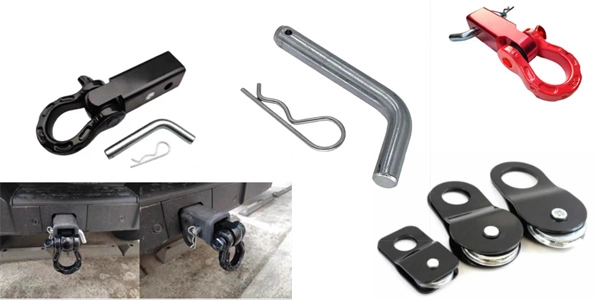
Understanding how sophisticated trailer hitch pin lock systems safeguard your priceless belongings is the first step towards building a secure trailer. Professional-grade locking pins have advanced security mechanisms intended to withstand tampering, drilling, and forceful removal, in contrast to basic hitch pins that just serve to keep components together. Modern heavy-duty applications need locks made of stainless steel compositions or hardened steel alloys that can withstand extreme shear stresses without losing structural integrity in the face of continuous vibration and environmental stress. Operators who are concerned about security understand that the efficiency of theft prevention is directly impacted by the quality of the locking cylinder. Pick-resistant mechanisms with different tumbler configurations are included into high-security Trailer Hitch Pin Lock designs; some have over a million potential key combinations, making illegal copying almost difficult. While the key insertion point needs weatherproof covers to prevent moisture, dirt, and road debris from compromising the internal mechanisms during prolonged outdoor storage or cross-country transportation, the lock barrel itself should be protected by protective housings that prevent drill attacks. The pin shaft diameter and length requirements must precisely match your receiver classification in addition to the locking mechanism itself. While Class V heavy-duty applications can need bigger diameter pins to support severe tongue weights, Class III and IV receivers usually accept five-eighths-inch diameter pins with various useable lengths between three and four inches. Choosing a Trailer Hitch Pin Lock that removes excessive play in the receiver tube while offering enough span to fully penetrate both receiver walls with proper threading contact for the locking mechanism is a crucial technical concept.
Material Construction and Durability Standards
Professional heavy-duty towing operations need Trailer Hitch Pin Lock parts made of high-quality materials that are resistant to corrosion, retain tensile strength under dynamic loads, and last years of rigorous use without deteriorating. When compared to cast metal alternatives, forged steel construction offers improved grain structure alignment that improves impact resistance, making it the industry standard for demanding applications. Even under continual vibration, temperature cycling, and moisture exposure, the forging process compresses the molecular structure, resulting in density increases that immediately translate into greater working load limits and longer service life. For operators operating in maritime situations or areas with high winter road salt application, stainless steel trailer hitch pin lock alternatives provide outstanding corrosion resistance. Stainless alloys' chromium content creates a passive oxide coating that repairs itself when scratched, offering continuous defense against rust development that can ultimately impair the lock's mechanical performance or result in seizure within the receiver tube. For fleets working in corrosive circumstances, the removal of surface coating maintenance and replacement costs frequently results in improved long-term value, even though stainless steel usually requires higher initial investment prices. The durability features of high-quality Trailer Hitch Pin Lock products are further improved by surface treatment methods. Zinc plating offers sacrificial protection that keeps underlying steel from oxidizing even after surface damage occurs, while powder coating treatments provide thick, durable barriers that withstand chipping and abrasion better than conventional liquid paint finishes. Electroless nickel plating and ceramic-based coatings are examples of advanced treatment solutions that provide industrial-grade protection appropriate for the most demanding commercial applications where equipment downtime just cannot be allowed.
Selecting the Correct Size and Fit
A crucial selection factor that directly impacts both security performance and safe towing operation is the appropriate size of the trailer hitch pin lock. The first step in the measuring procedure is figuring out the pin hole diameter and interior dimensions of your receiver tube, which change depending on the hitch type that is placed on your towing vehicle. While two-and-a-half-inch and three-inch receivers need proportionately bigger components to prevent hazardous movement between the ball mount and receiver assembly, standard two-inch receivers used on Class III hitches accommodate particular pin specifications. To avoid excessive lateral movement that causes wear, noise, and even failure under load, pin diameter parameters must precisely match the drilled holes in your receiver. Five-eighths-inch diameter pins are the most popular heavy-duty size; but, depending on the technical standards of the receiver manufacturer, certain specialty applications call for half-inch or three-quarter-inch choices. When undersized pins are used in big holes, it may lead to hazardous situations where impact loads during braking, acceleration, or imperfections in the road can cause the pin shear plane to wear down quickly or break catastrophically. Your unique towing setup must be carefully considered while calculating the useful pin length. Measure the whole distance between the outside edge of one receiver wall and the outside edge of the other receiver wall, passing through the ball mount shank. Good trailer hitch pin locks are long enough to cover this whole distance and provide extra room for the locking mechanism attachment. Extended length pins may be necessary for operators who use weight distribution systems, sway control devices, or numerous ball mount configurations since these systems contribute extra hardware thickness to the receiver assembly.
Advanced Locking Mechanisms for Maximum Protection
Modern Trailer Hitch Pin Lock architecture combines many security levels that cooperate to thwart typical theft methods. The key profile should include intricate patterns to thwart impressioning or bumping assaults, and the main locking cylinder should have hardened steel pins that withstand drilling efforts. While both technologies may provide sufficient security when correctly constructed with high-quality components, certain high-end designs use tubular key systems that provide better pick resistance than conventional pin tumbler setups. Another essential security component of professional-grade trailer hitch pin lock systems is anti-rotation features. These devices stop criminals from violently rotating the lock cylinder using pipe wrenches or vice grips, which can harm internal parts and permit unapproved removal. Ball bearing interfaces in swivel head designs enable the lock body to freely revolve in the event of an assault, dissipating the applied torque without transferring damaging forces into the locking mechanism itself. To avoid separation under impact or vibration, particular technical attention must be given to the physical connection between the pin shaft and locking head. To make permanent assemblies that are resistant to loosening during transportation, quality manufacturers use mechanical deformation methods or precision threading with thread locking compounds. Some sophisticated Trailer Hitch Pin Lock solutions feature patented quick-release mechanisms that enable authorized users to swiftly install or remove the unit while preserving security against unwanted access, giving operational efficiency without sacrificing theft prevention.

Weather Resistance and Environmental Protection
Trailer Hitch Pin Lock components are subjected to harsh weather conditions during heavy-duty towing operations, which would swiftly destroy subpar items. Rain, snow, ice, road salt, dirt, dust, and drastic temperature fluctuations create a hostile working environment in which only mechanisms that are well protected can continue to operate reliably. In order to avoid water buildup that may freeze in cold weather and make the lock useless, the lock cylinder itself has to be completely sealed against moisture penetration. This is usually accomplished using rubber or silicone dust covers that cover the keyway when not in use. The internal lock components themselves are corrosion resistant, going beyond basic surface coatings. Where protective coatings cannot reach, high-quality trailer hitch pin lock designs include brass pins, stainless steel springs, and other corrosion-resistant components within the cylinder mechanism. Standard steel components may rust with even short contact to moisture, resulting in friction that makes key insertion difficult or impossible. By using sealed bearing surfaces and corrosion-inhibiting lubricants made especially for saltwater conditions, marine-grade designs go beyond these safeguards. Extreme temperatures provide additional difficulties that set professional equipment apart from consumer-grade substitutes. Extreme cold may produce binding problems due to the differing expansion rates of steel pins and aluminum or zinc lock bodies, while high temperatures can cause lubricants to migrate or degrade. Regardless of the climate conditions encountered during long-distance transportation, your towing equipment will remain secure thanks to the operating temperature ranges specified by quality trailer hitch pin lock manufacturers and the use of thermal-stable materials that maintain consistent performance from arctic conditions to desert heat.
Installation Best Practices and Maintenance Requirements
Proper Trailer Hitch Pin Lock installation starts with properly cleaning the receiver tube to eliminate accumulated dirt, corrosion, or debris that might inhibit complete pin insertion or generate abrasive particles that accelerate wear. Road film and oxidation are eliminated with a wire brush and solvent cleaning, and packed debris is expelled from the pin holes by compressed air. This setup guarantees that the locking pin passes through the receiver without binding, enabling the locking mechanism to engage correctly and perform as intended for the duration of its service life. Before activating the security features during installation, operators should confirm that the pin fully enters both receiver walls with sufficient space for the locking mechanism. To prevent forward movement that may result in impact stress on the pin during acceleration, the ball mount shank has to be securely seated against the front receiver wall. Rubber O-rings or spring-loaded mechanisms are examples of anti-rattle features included in certain trailer hitch pin lock designs. These features reduce noise and wear while enhancing overall towing comfort. For dependable long-term performance, high-quality trailer hitch pin lock devices nevertheless need very little ongoing maintenance. A routine examination should confirm that there are no indications of wear, distortion, or stress cracking that might weaken the pin shaft. Occasionally lubricating the locking mechanism using graphite powder or dry-film lubricants, which don't draw dust and debris like conventional oils, is beneficial. Because binding suggests possible internal corrosion or damage that has to be fixed right away before the lock totally fails, key action should continue to be smooth and take little effort to turn.
Conclusion
When choosing the best trailer hitch pin lock for heavy-duty towing, security features, material quality, appropriate size, and environmental protection capabilities must all be carefully taken into account. These factors work together to provide dependable theft prevention and safe operation in a variety of demanding applications.
Cooperate With Qingdao RUIRUI Machinery Co., LTD.
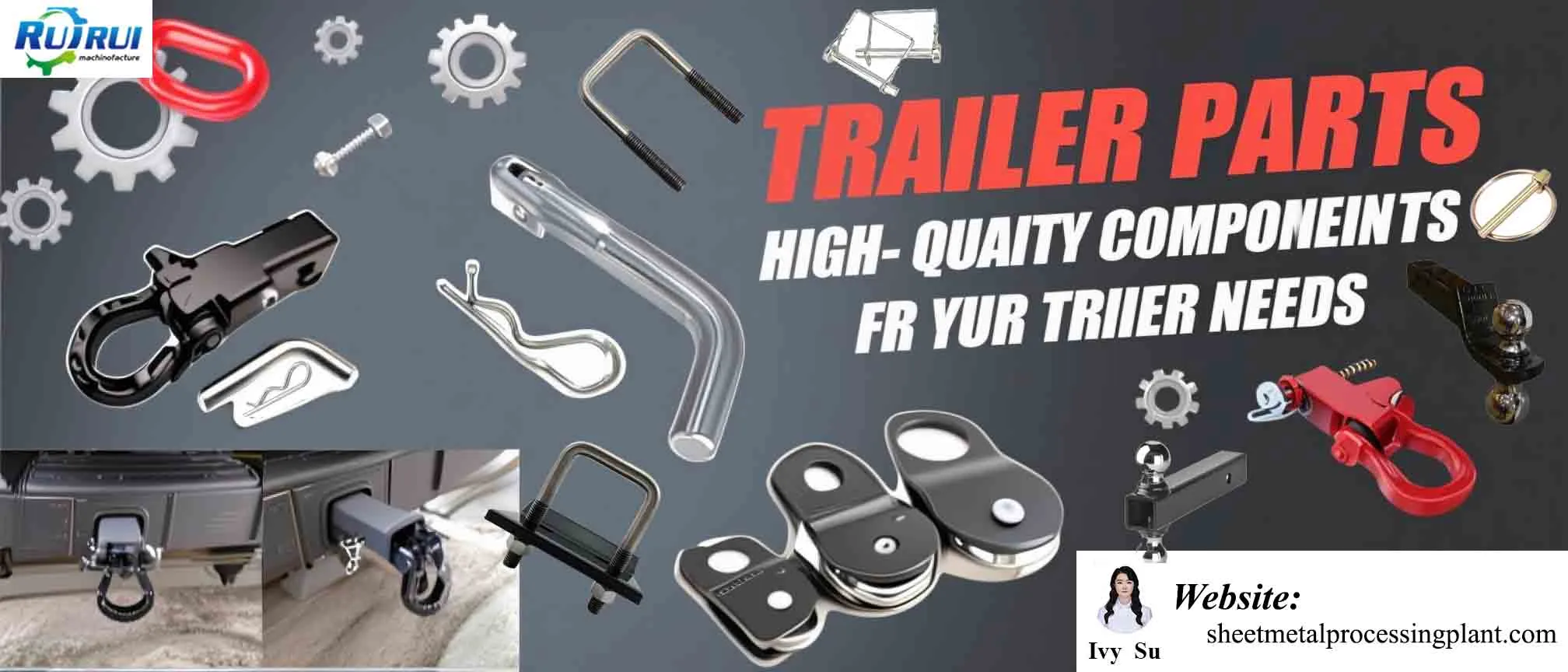
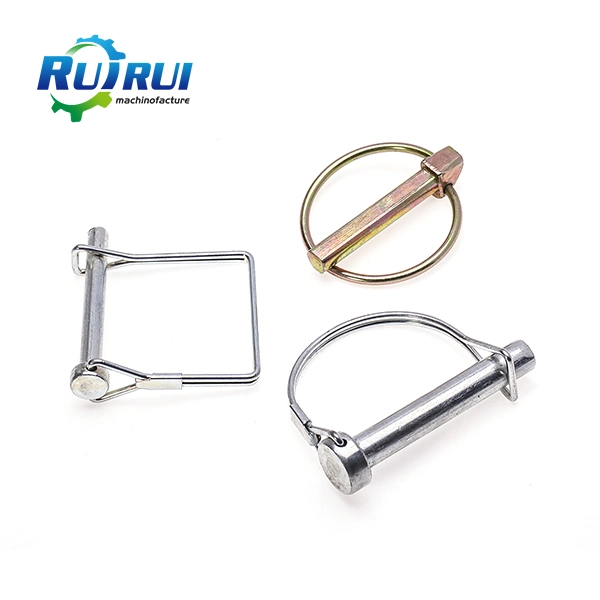
When obtaining superior Trailer Hitch Pin Lock components for your heavy-duty towing operations, collaborating with an experienced China Trailer Hitch Pin Lock manufacturer gives considerable benefits in quality, customization possibilities, and cost effectiveness. As a top manufacturer of trailer hitch pin locks in China, Qingdao RUIRUI Machinery Co., LTD. specializes in producing precision trailer accessories using cutting-edge metal fabrication techniques like progressive stamping, CNC machining, laser cutting, and automated welding systems that guarantee constant dimensional accuracy throughout production runs.
As a China Trailer Hitch Pin Lock supplier, we offer a wide range of material options, such as mild steel, stainless steel, aluminum alloys, and brass compositions, all of which receive the best processing treatments possible thanks to our certified powder coating, plating, anodizing, and electrophoresis finishing systems. We maintain inventory capacity for China Trailer Hitch Pin Lock wholesale orders with eight production lines producing 130,000 units annually. We also offer competitive Trailer Hitch Pin Lock price structures that reflect our manufacturing efficiency advantages without sacrificing the High Quality Trailer Hitch Pin Lock standards required by international markets.
Every stage of production is governed by quality assurance procedures certified under ISO 9001, ISO 14001, and OHSAS 18001 standards. Our engineering team creates thorough quality files that detail the manufacturing process for every Trailer Hitch Pin Lock sold through our distribution network, which spans more than 80 countries. Our OEM support skills and 15 years of management expertise put us in a position to provide technical support, expert packaging, and dependable after-sales service that supports your procurement goals, regardless of whether you need standard specs or custom-engineered solutions.
To discuss your unique Trailer Hitch Pin Lock needs and learn how our manufacturing skills may improve the dependability of your supply chain while lowering your overall acquisition costs, contact our team at info@qdkshd.com. When organizing your next large purchase or investigating cutting-edge trailer security options supported by proven Chinese manufacturing expertise, keep this information handy.
References
1. "Trailer Coupling Systems and Security Hardware Engineering Standards" - Society of Automotive Engineers, Technical Standards Committee
2. "Heavy-Duty Towing Equipment: Material Selection and Durability Testing" - American Society for Testing and Materials, Transportation Division
3. "Anti-Theft Devices for Recreational and Commercial Trailers" - National Insurance Crime Bureau, Vehicle Security Research Group
4. "Corrosion Protection Methods for Automotive Towing Components" - International Journal of Materials Science and Engineering, Dr. Robert Chen et al.
5. "Load Distribution and Stress Analysis in Receiver Hitch Assemblies" - Journal of Mechanical Engineering Design, Transportation Systems Research Institute

Send Inquiry

Related Industry Knowledge
- How to Lubricate a Trailer Coupler?
- From Highways to Off-Road: The Versatile Hitch Pin for Any Adventure
- What Are the Key Benefits of Using a Customizable Towing Eye Automotive Connector?
- OEM-Ready Air Conditioner Holder Brackets: Custom Sizes in 7 Days
- What Applications Are Perfect for a Robust Car Trailer Ball Towing Hitch?
- Are trailer ball covers universal in size?
- What materials are D ring shackle hitch receivers made from?
- How to change the foot plate of a trailer jack?
- How to design sheet metal box?
- What was the purpose of a pump cover?