
Best Trailer Hitch Pin Lock for Saltwater & Coastal Use
Consider this: You return home after a perfect day of fishing or boating to discover that your expensive ball mount—or, worse, your whole trailer—has vanished. For boat owners and coastal inhabitants, standard trailer hitch pin locks just aren't robust enough to withstand the relentless assault of saltwater, ocean spray, and humid air. Within months, standard locks seize, corrode within, and become completely inoperable, leaving your valuable equipment vulnerable to theft. The best trailer hitch pin lock for saltwater and coastal settings must combine marine-grade corrosion resistance with robust security measures to protect your investment even when exposed to the worst maritime conditions year after year.
Understanding Marine-Grade Trailer Hitch Pin Lock Requirements
When selecting a trailer hitch pin lock for coastal applications, the material composition is the most significant factor affecting long-term performance and reliability. Standard carbon steel locks, even those with basic zinc plating or powder coating, will catastrophically fail in saltwater circumstances. The chloride ions present in ocean spray and coastal humidity promote severe electrochemical corrosion via microscopic holes in protective coatings, rapidly destroying the lock's structural integrity and jamming the interior machinery. After only one season of coastal exposure, inadequate locks often get permanently seized, requiring aggressive removal methods that damage your receiver tube. Marine-grade stainless steel is the best material to use for constructing trailer hitch pin locks in saltwater environments. In particular, 316 stainless steel offers superior protection over the more widely used 304 grade due to its molybdenum content, which offers exceptional resistance to chloride-induced pitting and crevice corrosion. Because it maintains its mechanical properties and surface polish even after years of continuous contact with saltwater, this material is the ideal choice for boat trailers, fishing equipment transportation, and any application requiring repeated launch ramp use. Additionally, titanium alloy components provide far greater corrosion resistance, but at a far higher cost that could be justified for safeguarding pricey equipment.

The protective features of a high-quality trailer hitch pin lock are just as crucial for coastal endurance as the material selection. Weatherproof keyhole covers prevent salt spray and moisture from entering the lock cylinder, where they might damage the tumblers, springs, and pins. These protective caps must effectively seal throughout standard launching and retrieval operations and be easy to remove with gloved or wet hands. In order to guarantee smooth operation even when exposed to sand, salt, and marine debris—all of which ultimately make their way into exposed mechanical systems—the lock mechanism itself should also have sealed bearing systems and corrosion-resistant internal components.
Critical Features for Coastal Performance
In maritime conditions, the design of the locking mechanism has a major influence on both long-term functioning and security efficacy. Because ball-bearing lock systems continue to work even if the exterior lock body is damaged by drilling or cutting efforts, they provide improved theft resistance. Instead than depending on a single shear point, these devices disperse stress across many hardened steel balls, making them much more difficult to overcome by brute force assaults. This extra protection layer offers crucial piece of mind against opportunistic theft for coastal users who may leave trailers unattended at boat launches, marinas, or beach access points. In maritime applications, premium trailer hitch pin lock designs have dual-purpose anti-rattle features. In addition to reducing wear and noise during transportation, the rubber spacers or O-rings that prevent metal-to-metal contact also provide physical barriers that stop seawater from wicking into the pin shaft and receiver tube interface by capillary action. By avoiding the galvanic corrosion that happens when different metals come into touch with one another in the presence of an electrolyte like seawater, this apparently insignificant design element significantly increases the functional life of both the lock and your receiver hitch. Continued protection against corrosion and noise is ensured by replacing these rubber components on a regular basis during normal maintenance.
In order to provide sufficient thread engagement for the locking mechanism, the pin diameter and span length must correspond to your particular receiver class. Trailer Hitch Pin Lock types with matching dimensions are necessary since the majority of Class III and IV hitches use two-inch receivers with five-eighths-inch pin holes. Coastal users should, however, pay close attention to the useable pin length, making sure that enough material extends beyond the receiver to fit the lock head while taking into consideration any accumulation of salt deposits or mild corrosion that may eventually cause clearances to significantly decrease. For users who tow, locks with movable span lengths provide flexibility.
Material Science and Corrosion Resistance
In saltwater conditions, typical locks are destroyed by electrochemical reactions that run constantly and increase significantly as the temperature and salt concentration rise. A galvanic cell is created when different metals come into contact with one another in the presence of an electrolyte. This cell transfers electrons from the more anodic material to the more cathodic material, causing the less noble metal to deteriorate quickly. Within months of being exposed to the coast, standard steel fasteners that come into touch with stainless steel components may produce very aggressive galvanic couples that can result in total structural collapse. It is easier to understand why marine-grade Trailer Hitch Pin Lock designs need to take into account every material interaction and possible current route when one is aware of these basic corrosion processes. By encouraging the development of a persistent chromium oxide layer on all exposed surfaces, passivation treatments greatly increase the inherent corrosion resistance of stainless steel components. When scratched or abrasively damaged, this transparent protective coating automatically recovers, offering self-healing defense against the onset of corrosion. Passivation, however, may be jeopardized in certain settings, especially those with high chloride concentrations and little oxygen availability, like the cracks where a trailer hitch pin lock shaft joins a receiver tube. For locks exposed to extreme maritime conditions, regular cleaning with fresh water and sporadic re-passivation with specific chemicals ensure the best possible corrosion resistance.
In terms of corrosion resistance, electrophoretic coating techniques—also known as electrodeposition or e-coating—produce remarkably homogenous and adherent protective layers that surpass traditional spray coatings. This technology ensures full coverage of intricate geometries, interior passageways, and recessed places that spray technologies cannot consistently coat by using electrical current to deposit charged paint particles onto the metal substrate. In trailer hitch pin lock applications, e-coating offers an extra layer of protection that enhances the intrinsic corrosion resistance of stainless steel substrates, providing belt-and-suspender protection for vital security components that must continue to operate dependably even after years of exposure to saltwater and mechanical wear.
Advanced Surface Protection Technologies
For trailer hitch pin lock components exposed to harsh weather conditions, ceramic coating treatments offer state-of-the-art protective technology. At high temperatures, these thin-film coatings form a chemical bond with the substrate material, producing a very hard, chemically inert surface that is resistant to mechanical wear and corrosion. Because ceramic coatings create a metallurgical connection rather than just sticking to the surface, they retain their protective qualities even when damaged, in contrast to organic coatings that may be chipped or scratched to reveal the underlying metal. Ceramic-coated locks provide a longer service life that justifies their higher price for consumers that launch boats many times a week or operate in very hostile settings. Aluminum components may be anodized to produce strong, corrosion-resistant oxide coatings that can be colored to enhance visibility or aesthetics. Although aluminum naturally produces a protective oxide coating, anodizing increases this layer to precise thicknesses that provide better defense against surface deterioration and pitting corrosion. Type III hard anodizing creates very resilient surfaces for trailer hitch pin lock designs that use aluminum handles or housings. These surfaces are resistant to corrosion in maritime settings and can sustain abrasion from sand and gravel. When aluminum components come into touch with stainless steel pins or fasteners, the electrical insulating qualities of anodized surfaces also stop galvanic corrosion.

Installation and Proper Usage Techniques
The receiver tube and surrounding regions must be thoroughly prepared before installing your marine-grade trailer hitch pin lock. To get rid of any accumulated salt deposits, sand, and marine vegetation that could have colonized the internal surfaces, flush the receiver with fresh water before putting in any new locks. To ensure that the lock shaft is inserted and removed smoothly, remove any rust or corrosion from the pin hole using a wire brush or rotary tool with the proper attachments. By creating a clean interface and preventing binding during installation, this preparation reduces the likelihood of subsequent corrosion onset. The receiver inside may be continuously protected without drawing too much dirt or sand buildup by applying a thin layer of marine-grade anti-seize compound. The simplicity of use and long-term durability of a trailer hitch pin lock are greatly impacted by the insertion method. Before starting installation, carefully align the ball mount or accessory with the receiver to avoid damaging protective coatings or bending the shaft by pushing the pin through mismatched holes. To avoid binding from gravitational loads that cause components to tilt out of alignment, support the weight of the installed equipment. After achieving approximate alignment, locate the exact position where the shaft glides smoothly through both receiver tube walls by softly rotating the ball mount while gently pressing forward on the lock. This methodical technique guarantees that the locking mechanism engages correctly without jamming or cross-threading and avoids damage that jeopardizes corrosion protection.
Once the Trailer Hitch Pin Lock is secured, try pulling the lock head away from the receiver while removing the key to confirm that the locking mechanism has completely engaged. A correctly locked pin should withstand removal with solid, consistent force, but you shouldn't use too much force as this might harm internal parts or reveal installation issues that need to be fixed. Verify that any protective covers covering the keyhole are fully sealed and do not have any openings that might allow water or debris to enter. To improve moisture exclusion in coastal applications—especially if the trailer will be parked close to the ocean or launched in surf conditions that expose the lock to direct seawater spray—think about lightly coating the sealing surfaces of the cap with waterproof grease.
Maintenance Protocols for Extended Service Life
Maintaining your trailer hitch pin lock on a regular basis can significantly increase its lifespan and guarantee dependable performance when security is most important. Rinse the whole lock assembly well with fresh water from a hose or pressure washer after every saltwater exposure, especially after boat launches or prolonged beach driving. Because saltwater tends to build up and concentrate via evaporation at the contact between the pin shaft and receiver tube, pay close attention to this area. By eliminating chloride ions before they can cause corrosion, this simple procedure stops the pitting and crevice attack that ultimately jeopardizes lock operation and structural integrity. The locking mechanism and the pin's sliding motion inside the receiver are kept operating smoothly by monthly lubrication with the proper supplies. Because graphite does not attract sand or produce sticky residues that may clog the sensitive pin and tumbler systems, use graphite-based lubricants for the lock cylinder instead of petroleum chemicals. Marine-grade spray lubricants with corrosion inhibitors provide continuous protection for the pin shaft and receiver contact while making installation and removal simple. Steer clear of over-lubrication, which draws abrasive particles that hasten wear; instead, use small amounts and remove any excess that shows up on exterior surfaces after the lock has been worked through many cycles. Regular inspections identify emerging issues before they result in lock failure or security breaches. Examine all surfaces for corrosion indicators, such as pitting, discoloration, or surface roughness that suggests a breakdown of the protective coating, and remove the Trailer Hitch Pin Lock entirely every three months. Because these interfaces are particularly susceptible to galvanic corrosion, pay close attention to places where diverse materials come together. Examine the keyhole protective cap for any deterioration, rips, or fractures that would permit water infiltration. Cycle the lock mechanism many times with the key to test it. Take note of any increased resistance, grinding sounds, or difficulties that could point to internal contamination that needs to be cleaned or replaced. Instead of taking a chance on a sudden failure that can prevent you from securing or releasing your trailer, replace any lock that exhibits noticeable degradation.
Selecting the Right Lock for Your Application
A number of interconnected aspects that impact both security and operation must be carefully considered when matching your trailer hitch pin lock to your unique towing requirements. Since choosing a lock that is too small undermines both security and mechanical integrity, start by precisely defining the receiver class and dimensions. While larger Class IV and V hitches may utilize the same receiver size but need locks with greater weight ratings and more durable construction, Class III hitches, which are often seen on SUVs and light trucks, usually have two-inch receivers that require five-eighths-inch diameter pins. Before making a purchase, measure your current pin or go to the literature for your car to validate the parameters. This is because putting a large lock into an undersized receiver may harm both parts and result in hazardous towing situations. The right degree of protection for your trailer hitch pin lock choice is greatly influenced by the theft risk area where you usually park or store your trailer. Trailers left overnight at public boat launches or beach parking places need different degrees of security than those kept in walled enclosures or protected garages with CCTV systems. Invest in locks with pick-resistant cylinder designs, anti-drilling protection plates that thwart typical assault techniques, and reinforced steel pins for high-risk scenarios. In these situations, ball-bearing lock systems are especially beneficial since they preserve security even in the event that impact attempts or cutting instruments destroy the exterior lock body. On the other hand, reasonably cost marine-grade locks may give good corrosion resistance and sufficient protection if your main concern is avoiding unintentional separation rather than deliberate theft.
Budgetary considerations must weigh the initial purchase price against the whole cost of ownership, which includes the value of protected equipment and the possibility of frequent replacements. Although models of advanced stainless steel or premium titanium trailer hitch pin locks are more expensive, their longer service life in corrosive settings often results in reduced long-term expenditures as compared to frequently replacing less expensive locks that break after one or two seasons. Determine the replacement cost of your bike rack, ball mount, or other hitch-mounted accessories, then weigh it against the additional expense of a better lock. The value of protected goods and the hassle of dealing with seized or malfunctioning security systems outweigh the little extra cost of premium corrosion-resistant locks for the majority of coastal users carrying boats or RVs.
Compatibility and Versatility Considerations
Users that operate many automobiles or trailers benefit substantially from Trailer Hitch Pin Lock systems that provide keyed-alike alternatives, in which multiple locks operate with the same key. This useful feature eliminates the hassle of juggling several keys while launching boats or hitching various trailers by allowing you to secure your whole towing arrangement with a single key that can be attached to your vehicle key ring. Thanks to keyed-alike programs provided by several manufacturers, you may purchase multiple locks encoded to the same key pattern or have your existing locks rekeyed to match. By allowing distinct operator keys and maintaining management access via master keys that open all system locks, master key systems provide more flexibility for fleet applications or professional operations. Adjustable or multi-fit trailer hitch pin lock designs provide flexibility to customers who need to secure different receiver sizes or tolerate varied wall thicknesses in older trailers with worn or modified hitches. These adaptable locks often include removable spacers or graded pin widths that allow for safe fit in a range of configurations without compromising the exact tolerances needed for effective anti-theft protection. However, universal-fit designs may compromise ultimate corrosion resistance or security when compared to purpose-built equivalents, so carefully examine if maximal protection or flexibility is more necessary for your specific situation. For customers who often pull the same trailer with the same vehicle, a flawlessly fitting Trailer Hitch Pin Lock made for those particular dimensions frequently provides greater performance than customized solutions.
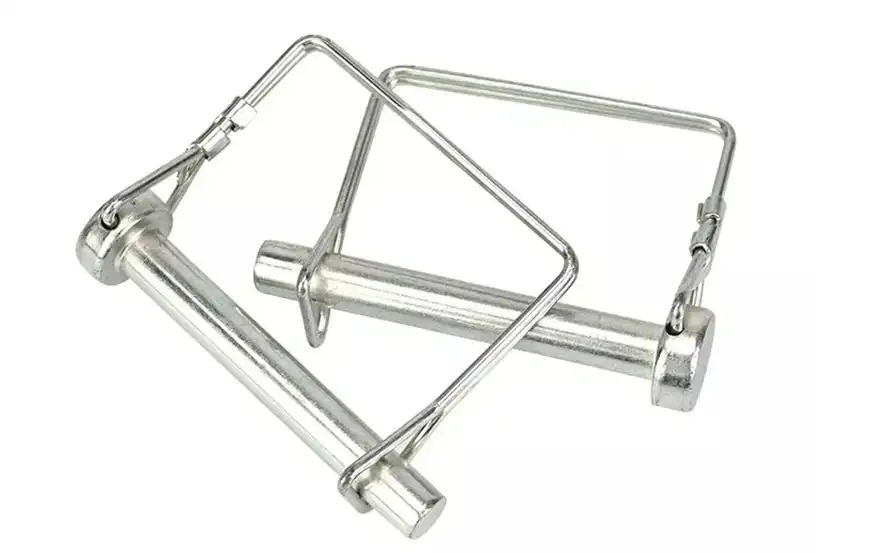
Trailer Hitch Pin Lock Maintenance Tips for Longevity
Developing comprehensive maintenance plans that address all aspects of caravan hitch pin lock upkeep ensures that these essential security components provide reliable protection for the length of their intended life. Effective maintenance plans include regular cleaning, appropriate lubrication, thorough inspection, and timely component replacement to halt the increasing degradation that ultimately endangers both security and functioning. For coastal users, these maintenance requirements are more challenging due to the harsh nature of saltwater environments, necessitating close attention to the proper techniques that are required rather than optional in order to achieve optimal lock life and performance.
Post-Use Cleaning Procedures
After every exposure to saltwater, use thorough cleaning techniques as quickly as possible to remove corrosive contaminants before they may develop an environment that encourages corrosion. Use a hose, bucket, or pressure washer to thoroughly clean any surfaces that are reachable. Because of capillary action, water tends to gather and concentrate at the pin shaft, receiver tube interface, and lock head-pin body junction. For locks used during boat launches involving submersion or severe splash exposure, consider dismounting the ball mount and lock assembly to allow for more thorough cleaning of normally inaccessible areas. This quick post-use maintenance is the greatest way to minimize corrosion-related failures in marine circumstances. Periodic thorough cleaning with certain solutions removes strong salt deposits and early-stage corrosion products that resist frequent washing. To dissolve crystallized salt deposits without damaging base metals or protective coatings, prepare a vinegar solution or specifically made salt remover every few months, or more often for equipment that is used frequently. Use soft-bristled brushes to gently brush accessible surfaces to remove any loose impurities after submerging detachable parts in this solution for the recommended period of time. Rinse well with fresh water to remove any leftover cleaning solution residue since these solutions themselves may promote corrosion if allowed to dry on metal surfaces. To prevent water stains and flash rusting on any exposed steel surfaces, completely dry every component before reassembling using compressed air or new towels.
Strategic Lubrication Practices
Selecting the right supplies for each application and comprehending the unique needs of various places within the assembly are necessary for the proper lubrication of Trailer Hitch Pin Lock components. Dry lubricants, especially graphite powder or specialty lock lubricants that don't attract dust or gum up in the presence of moisture, are required for the lock cylinder mechanism. To apply lubricant to all internal pins and tumblers, insert the graphite applicator nozzle straight into the keyway, dispense a tiny quantity of powder, and then move the key in and out many times. When excess graphite builds up at the keyway entrance, it should be wiped away since it may ultimately obstruct key insertion or, if combined with moisture and dirt, form an abrasive paste. Thin-film liquid lubricants with corrosion inhibitors that provide both lubrication and surface protection are advantageous for the pin shaft moving within the receiver tube. The best qualities, such as water displacement, rust prevention, and the capacity to penetrate current corrosion products to restore smooth operation, are provided by marine-grade spray lubricants designed especially for saltwater applications. To properly distribute lubrication over all contact surfaces, apply these materials sparingly to the pin shaft and operate the assembly through many cycles of insertion and withdrawal. Any extra lubricant that builds up on exterior surfaces should be cleaned away because it draws dirt and grit, which hastens abrasive wear. If a receiver has rough places or internal corrosion, push the product into the damaged regions by rotating and sliding the pin while injecting more lubricant via the pin hole.
Inspection and Replacement Criteria
Frequent, methodical examination finds emerging issues while they are still controllable, avoiding unplanned malfunctions that can prohibit you from releasing a secured trailer or securing important equipment. Create a quarterly inspection program that looks for indications of deterioration, damage, or compromised functionality in every part of your trailer hitch pin lock. Start by visually inspecting any exposed surfaces in well-lit areas for signs of corrosion progression, such as discolouration, pitting, surface roughness, or coating failure. Because these places are especially susceptible to rapid assault in maritime conditions, use a magnifying glass to examine spots where various materials combine or where the protective coating seems thin or broken. During inspections, functional testing identifies internal issues that may not have evident exterior symptoms. Note any growing resistance, roughness, or binding that may indicate interior pollution or corrosion impacting the pin and tumbler mechanism as you insert and withdraw the key many times. Repeatedly lock and open the Trailer Hitch Pin Lock, making that the mechanism is firmly locked by looking for good feedback and consistent engagement. Try rotating the pin shaft while it's locked to make sure the locking mechanism stops it from rotating with a sufficient amount of force. Before total failure, any functional deterioration, such as sticky operation, trouble inserting or extracting the key, or ambiguous locking engagement, has to be cleaned or replaced right away.
Clearly define replacement criteria that cause locks to retire before the danger of catastrophic failure becomes intolerable. Surface pitting deeper than one millimeter, especially in the pin shaft's load-bearing areas, is a sign of structural weakness that has to be replaced right once. Regardless of overall aesthetic condition, any obvious fractures in the lock body, pin shaft, or locking mechanism components need repair. Instead of taking a chance on an unexpected lock failure while in use, replace the lock if cleaning and lubrication are unable to restore smooth, dependable functioning. Time-based replacement schedules that retire locks after predetermined service periods regardless of apparent condition should be considered for critical applications involving expensive equipment or difficult recovery scenarios in the event of a failure. This will provide an extra safety margin against age-related deterioration.
Comparison with Alternative Security Solutions
Comprehensive trailer safety requires an awareness of the larger security ecosystem and how various locks handle certain risks, even if Trailer Hitch Pin Lock systems provide crucial security for attached ball mounts and accessories. When the trailer is not hitched, coupler locks secure it and stop it from being unlawfully connected to another tow vehicle. These devices are supplementary to hitch pin locks rather than redundant since they fit into the coupler ball socket or fasten the latch mechanism. Using both a high-quality trailer hitch pin lock and a sturdy coupler lock provides layered security for total protection, especially in high-theft-risk environments. This greatly increases the time and tools needed for successful theft, frequently leading thieves to give up on attempts in favor of simpler targets. Additional security measures include wheel locks and immobilization devices, which are especially useful for trailers kept for long periods of time or in particularly dangerous areas. Even if thieves manage to get past the coupler lock, these devices physically stop wheel motion using mechanisms analogous to parking enforcement boots, making it difficult to pull the trailer. Wheel locks' prominent visibility also serves as a powerful psychological deterrent, telling would-be burglars right away that the owner of the trailer takes security seriously and has probably taken extra precautions. Combining a marine-grade trailer hitch pin lock with coupler locks, wheel immobilizers, and GPS tracking devices provides complete security against several attack vectors and recovery alternatives in the event of theft for boats, RVs, and equipment trailers that represent significant investments.
For momentarily unattended trailers, chain locks and cable systems provide flexible security by enabling them to be fastened to stationary items like poles, trees, or ground anchors. By preventing criminals from simply dollying the trailer away or dragging it using safety chains in the event that they are able to circumvent the main locks, these additional security measures complement rather than replace trailer hitch pin lock systems. Bolt cutters and portable angle grinders, which are typical theft tools, are resisted by high-grade hardened steel chains with secured padlocks, buying time that often causes criminals to give up on their efforts. Establishing procedures that activate several security levels anytime trailers are left unattended gives coastal users who often launch boats peace of mind that justifies the little extra work needed.
Cost-Benefit Analysis of Security Investments
It is necessary to weigh protection expenses against possible loss scenarios and recovery likelihood in order to choose the right investment in Trailer Hitch Pin Lock and related security systems. Start by listing the whole value that is at stake, which includes the trailer itself as well as any tools, equipment, or specific modifications that improve its usefulness and functioning. By concentrating just on the trailer purchase price and ignoring cumulative expenditures in improvements, extras, and specialized equipment that greatly raise real replacement prices, many owners underestimate replacement expenses. During the replacement process, factor in opportunity costs from lost usage, such as delayed work, cancelled travel, and lost leisure activities due to equipment failure. Optimal security investment levels are impacted by insurance coverage, however most plans have high deductibles that must be met before coverage is applicable. Examine your particular policy to learn about coverage limitations, deductible amounts, and any security measure required for complete coverage. For trailers with authorized anti-theft devices, many insurers provide premium reductions, which help to partly cover the cost of high-quality Trailer Hitch Pin Lock systems via continuous savings. Even in cases when financial protection is available, strong physical security is still valuable since insurance cannot replace emotional value or make up for the annoyance and disruption caused by theft. Comprehensive security expenditures are highly justified since lost income during replacement periods for equipment used professionally or commercially sometimes surpasses the value of stolen things themselves.
Conclusion
Protecting trailers and towing equipment in saltwater and coastal environments demands marine-grade Trailer Hitch Pin Lock solutions that combine advanced corrosion-resistant materials with robust security features and regular maintenance protocols. Stainless steel construction, weatherproof sealing, and comprehensive care routines ensure reliable long-term performance despite aggressive maritime conditions that rapidly destroy inferior locks.

Cooperate With Qingdao RUIRUI Machinary Co., LTD.
As a leading China Trailer Hitch Pin Lock factory, China Trailer Hitch Pin Lock supplier, and China Trailer Hitch Pin Lock manufacturer, Qingdao RUIRUI Machinery Co., LTD specializes in producing high-quality Trailer Hitch Pin Lock for sale at competitive Trailer Hitch Pin Lock prices. Our company offers High Quality Trailer Hitch Pin Lock wholesale solutions backed by ISO-certified manufacturing processes, advanced surface treatment capabilities including anodizing, powder coating, plating, and electrophoresis, plus marine-grade material expertise spanning stainless steel, aluminum alloys, and specialized corrosion-resistant metals. With over 15 years of experience, eight production lines, and 130,000 pieces annual capacity, we provide OEM customization services for boat trailer components, marine hardware, and specialized coastal applications. Our technical team delivers comprehensive support from initial design through final production, ensuring your Trailer Hitch Pin Lock specifications meet exact performance requirements for saltwater environments. Contact us at info@qdkshd.com to discuss your marine-grade towing security needs and receive custom quotations for bulk orders with professional packaging and global shipping to over 80 countries including coastal markets worldwide.
References
1. Marine Corrosion and Protection of Steel Structures in Seawater, authored by Zhang, Wei and Chen, Xiaoming, published in Journal of Materials Science and Engineering
2. Advanced Surface Treatment Technologies for Automotive and Marine Applications, authored by Johnson, Robert D., published by SAE International
3. Metallurgy and Corrosion Control in Industrial Applications, authored by Kumar, Rajesh and Patel, Anita, published in Materials Performance Quarterly
4. Trailer Safety and Security Systems: Engineering Perspectives, authored by Thompson, David M., published by Transportation Research Institute
5. Galvanic Corrosion in Marine Environments: Mechanisms and Prevention, authored by Martinez, Carlos J., published in Corrosion Science Review

Send Inquiry
Related Industry Knowledge
- China Trailer Parts Supplier vs European OEM: Which Is Better?
- Cart Trolley Buying Guide for Small Businesses
- Like a Lock for Your Hitch: Universal-Fit Tightener for Zero Movement & Maximum Security
- Towing 101: Guide to Hitch Pin Sizes
- Custom Electrogalvanized U-bolts: How to Match Your Project's Exact Size & Load Needs?
- Bulk Discounts: Commercial-Grade AC Brackets Shipped Worldwide
- Are there different material options for tandem teardrop fenders?
- How Do I Choose the Right Trailer Jack Stand Foot?
- What are the different types of lifting chain slings?
- how to stamp sheet metal parts?