
Heavy Duty Trailer Coupler Factory Direct: Key Components and Structure
Picture this: you're hauling a loaded trailer down the highway when suddenly you feel an unsettling wobble. Your heart races as you realize your coupler might not be up to the task. For commercial operators, construction companies, and fleet managers, choosing the wrong Heavy Duty Trailer Coupler Factory Direct can mean costly downtime, safety hazards, and expensive replacements. Understanding the key components and structural integrity of heavy-duty trailer couplers is not just technical knowledge—it's essential for protecting your equipment investment and ensuring operational safety. This comprehensive guide breaks down everything you need to know about sourcing quality Heavy Duty Trailer Coupler Factory Direct solutions, from critical components to manufacturing standards that separate reliable products from potential failures.
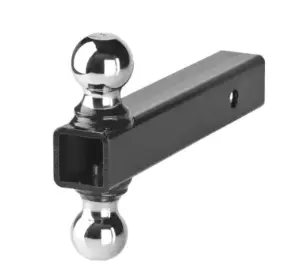
Understanding Heavy Duty Trailer Coupler Factory Direct Construction
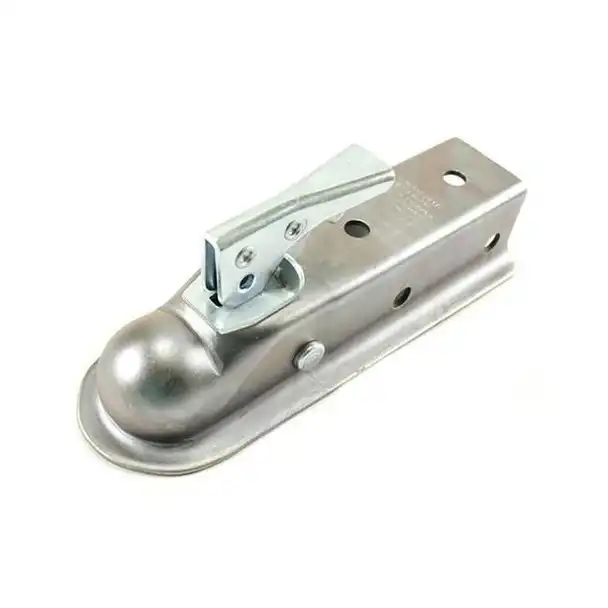
When evaluating Heavy Duty Trailer Coupler Factory Direct options, understanding the fundamental construction principles becomes paramount for making informed purchasing decisions. The structural integrity of a heavy-duty coupler depends on several interconnected components working in perfect harmony. At the heart of every quality coupler system lies the ball socket assembly, which must be precision-engineered to grip the hitch ball with unwavering security while allowing necessary articulation during turns and uneven terrain navigation. The coupler body itself represents the primary load-bearing structure, and its material composition directly impacts longevity and performance under stress. Professional manufacturers of Heavy Duty Trailer Coupler Factory Direct products utilize high-grade steel alloys, often incorporating carbon steel or cast steel formulations that have been heat-treated to achieve optimal hardness ratings between 40-50 HRC. This precise metallurgical balance ensures the coupler can withstand repeated stress cycles without experiencing material fatigue or deformation. The thickness of the coupler walls, typically ranging from 5mm to 8mm for heavy-duty applications, must be sufficient to resist crushing forces while maintaining reasonable weight parameters. The latching mechanism serves as the critical safety component that prevents accidental disconnection during transport operations. Modern Heavy Duty Trailer Coupler Factory Direct designs incorporate multiple safety features, including primary latch systems with secondary safety catches that engage automatically when the coupler is properly seated. These dual-locking systems provide redundant security, ensuring that even if the primary latch experiences wear or partial failure, the secondary mechanism maintains connection integrity. Advanced manufacturing facilities employ precision CNC machining to create latch components with tolerances measured in hundredths of a millimeter, ensuring smooth operation through thousands of coupling and uncoupling cycles.
Material Selection and Metallurgical Properties
The selection of appropriate materials for Heavy Duty Trailer Coupler Factory Direct manufacturing extends beyond simple strength requirements to encompass corrosion resistance, weldability, and machinability considerations. Premium manufacturers source steel alloys that meet or exceed SAE J684 specifications, which establish minimum standards for trailer couplers used in commercial applications. These specifications mandate specific chemical compositions, including controlled carbon content, manganese levels, and trace element percentages that contribute to superior mechanical properties. Surface treatment processes applied to Heavy Duty Trailer Coupler Factory Direct products significantly impact their operational lifespan. Hot-dip galvanizing creates a zinc coating that sacrificially protects the underlying steel from oxidation, while powder coating provides both corrosion resistance and aesthetic appeal. Advanced manufacturers like Qingdao RUIRUI Machinery employ multi-stage finishing processes that include degreasing, phosphate conversion coating, and either electrostatic powder application or electroplating depending on the specific application requirements. These surface treatments can extend coupler service life by 300-500% compared to untreated steel components when exposed to harsh environmental conditions.
Load Distribution and Structural Engineering
Proper load distribution throughout the coupler assembly prevents stress concentration points that could lead to premature failure. Heavy Duty Trailer Coupler Factory Direct designs must account for three primary force vectors: vertical loads from tongue weight, horizontal loads from acceleration and braking, and lateral loads from turning and side-to-side movement. Engineering analysis using finite element modeling allows manufacturers to identify potential weak points in the design and reinforce these areas through strategic material placement or geometry modifications. The mounting interface between the coupler and trailer tongue represents another critical structural consideration. Bolt-on configurations provide flexibility for replacement and adjustment, while weld-on designs offer superior strength for permanent installations. Quality Heavy Duty Trailer Coupler Factory Direct products feature mounting flanges with reinforced bolt hole patterns, typically using Grade 8 fasteners with lock washers or nylock nuts to prevent loosening from vibration. The mounting surface must be flat within 0.5mm across its entire area to ensure proper load transfer and prevent stress risers at high points.
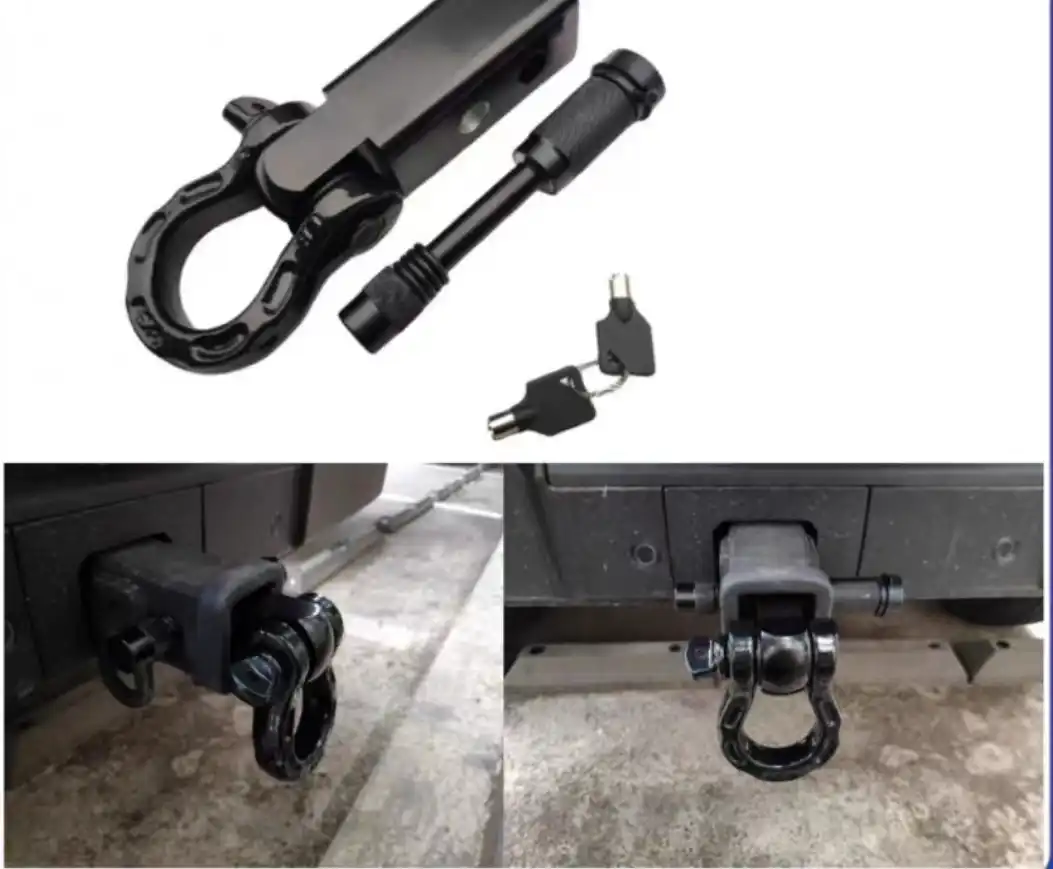
Essential Components of Heavy Duty Trailer Coupler Systems
Breaking down the individual components of Heavy Duty Trailer Coupler Factory Direct assemblies reveals the sophisticated engineering that enables reliable heavy-load towing. Each element plays a specific role in the overall system performance, and understanding these components helps buyers make informed decisions when sourcing from manufacturers.
Ball Socket and Retention System
The ball socket represents the primary interface between the Heavy Duty Trailer Coupler Factory Direct and the tow vehicle's hitch ball. This precision-formed cavity must match the ball diameter exactly—common sizes include 2 inches for medium-duty applications and 2-5/16 inches for heavy-duty towing operations exceeding 10,000 pounds gross trailer weight. The socket's interior surface requires careful finishing to achieve smooth contact without excessive clearance that would allow play in the connection. Quality manufacturers employ automated grinding and polishing processes to achieve surface roughness values below Ra 3.2, ensuring consistent friction characteristics and even wear patterns. The ball retention mechanism within the socket prevents vertical separation under dynamic loading conditions. This typically involves a ball clamp design with a wedge or collar that tightens around the ball's shank when the latch is engaged. The geometry of this clamping surface must be precisely calculated to distribute gripping force evenly around the ball's circumference, preventing point loading that could damage either component. Advanced Heavy Duty Trailer Coupler Factory Direct designs incorporate self-adjusting retention systems that compensate for wear over time, maintaining secure connection throughout the coupler's service life.
Latch Assemblies and Safety Mechanisms
The latch assembly converts operator input into secure coupling action through a carefully designed mechanical advantage system. Heavy Duty Trailer Coupler Factory Direct products typically employ lever-actuated latches that multiply the applied force by factors of 3:1 to 5:1, allowing users to achieve proper closure with reasonable physical effort. The pivot points in these mechanisms require precision bearings or bushings manufactured from wear-resistant materials such as bronze or hardened steel to maintain smooth operation through thousands of cycles. Secondary safety mechanisms provide crucial backup protection against accidental uncoupling. These systems typically employ spring-loaded pins or gravity-actuated catches that automatically engage when the primary latch is properly closed. The safety catch must be designed to require deliberate action for release, preventing accidental disengagement from vibration or incidental contact. Qingdao RUIRUI Machinery incorporates advanced safety latch designs that meet or exceed SAE J684 retention force requirements, ensuring the coupler remains securely attached even under extreme dynamic loading conditions encountered during emergency braking or rough terrain navigation.
Mounting Hardware and Fastener Systems
The fastener package supplied with Heavy Duty Trailer Coupler Factory Direct products must be engineered to match the strength characteristics of the coupler itself. Grade 8 or metric Grade 10.9 bolts provide the tensile strength necessary to prevent fastener failure under maximum load conditions. Proper torque specifications must be followed during installation—typically 75-90 ft-lbs for 1/2-inch mounting bolts and 120-140 ft-lbs for 5/8-inch hardware. Thread-locking compounds or prevailing torque fasteners prevent loosening from vibration, a critical consideration for trailer components subjected to continuous dynamic loading. The mounting plate integrated into Heavy Duty Trailer Coupler Factory Direct assemblies distributes fastener loads across a larger area of the trailer tongue, preventing localized deformation or crack initiation. Reinforcement ribs or gussets in this mounting interface increase stiffness and improve load transfer characteristics. For weld-on applications, the coupler should feature welding tabs or flanges with sufficient surface area to accommodate full-penetration welds that develop the full strength of the base materials. Professional fabrication facilities like those operated by Qingdao RUIRUI Machinery employ certified welders using procedures qualified according to AWS D1.1 structural welding standards.
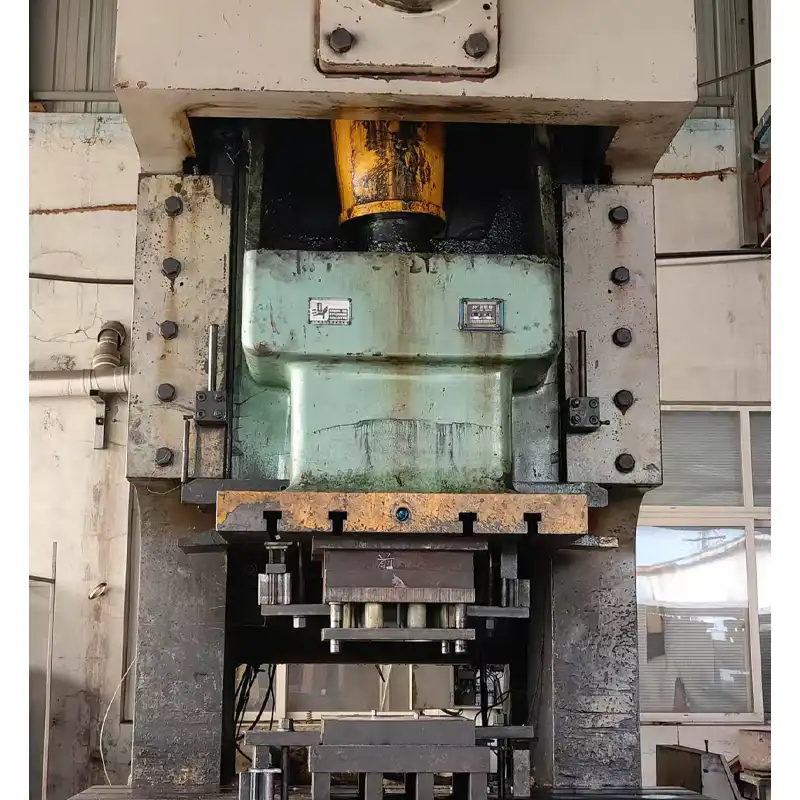
Manufacturing Quality Standards for Heavy Duty Couplers
Quality assurance in Heavy Duty Trailer Coupler Factory Direct production encompasses multiple verification stages from raw material receipt through final product inspection. Reputable manufacturers implement comprehensive quality management systems that ensure consistent product performance and long-term reliability.
Material Testing and Verification Protocols
Incoming material inspection represents the first quality control checkpoint in Heavy Duty Trailer Coupler Factory Direct manufacturing. Steel stock must be accompanied by mill test reports documenting chemical composition and mechanical properties. Manufacturers performing additional verification testing employ spectrometric analysis to confirm alloy composition and conduct sample tensile tests to verify yield strength and ultimate tensile strength values. Materials failing to meet specifications must be rejected before entering production, preventing defective components from reaching customers. Heat treatment processes applied to Heavy Duty Trailer Coupler Factory Direct components require careful monitoring and documentation. Hardness testing using Rockwell or Brinell methods verifies that heat-treated parts achieve specified hardness ranges. For critical components like latch mechanisms, manufacturers may perform metallurgical examination to confirm proper microstructure formation. These quality controls ensure that each coupler possesses the material properties necessary to withstand design loads throughout its intended service life.
Dimensional Accuracy and Functional Testing
Precision measurement of finished Heavy Duty Trailer Coupler Factory Direct components verifies that manufacturing processes maintain required tolerances. Critical dimensions including ball socket diameter, mounting hole spacing, and overall assembly geometry must be verified using calibrated measuring equipment. Coordinate measuring machines provide automated inspection capability for complex part geometries, while traditional tools like micrometers and calipers suffice for simpler features. Qingdao RUIRUI Machinery maintains ISO 9001 certified quality management systems that mandate documented inspection procedures and statistical process control methods to ensure dimensional consistency across production runs. Functional testing evaluates Heavy Duty Trailer Coupler Factory Direct performance under simulated operating conditions. This includes verification of latch engagement force, checking for proper safety catch operation, and confirming smooth articulation through the coupler's full range of motion. Load testing using hydraulic test fixtures applies forces equivalent to the coupler's rated capacity to verify structural integrity and identify any defects that might compromise performance. Products passing these rigorous evaluations receive capacity stamps and identification markings certifying their compliance with industry standards.
Certification and Compliance Documentation
Professional Heavy Duty Trailer Coupler Factory Direct manufacturers provide comprehensive documentation demonstrating compliance with applicable standards and regulations. This includes test reports verifying load capacity ratings, material certifications tracing steel stock to specific production heats, and declarations of conformity with relevant safety standards. For international markets, products may require additional certifications such as Australian Standards compliance or European CE marking, depending on destination country requirements. Qingdao RUIRUI Machinery maintains multiple management system certifications including ISO 9001 for quality management, ISO 14001 for environmental management, and OHSAS 18001 for occupational health and safety. These certifications demonstrate organizational commitment to excellence across all operational aspects, from product design through manufacturing and customer service. Buyers sourcing Heavy Duty Trailer Coupler Factory Direct products from certified manufacturers gain confidence that robust quality systems back their purchases and ensure consistent product performance.
Selecting the Right Heavy Duty Trailer Coupler Configuration
Matching Heavy Duty Trailer Coupler Factory Direct specifications to your specific application requirements ensures optimal performance and safety. Several key parameters must be evaluated during the selection process.
Capacity Rating and Load Calculations
The most fundamental specification for any Heavy Duty Trailer Coupler Factory Direct product is its gross trailer weight capacity rating. This value represents the maximum total weight the coupler is designed to safely handle, including the trailer's empty weight plus cargo. Buyers must calculate their maximum loaded trailer weight and select a coupler rated for at least that capacity, with many safety-conscious operators choosing ratings 20-30% above their maximum anticipated load to provide additional safety margin. Tongue weight, representing the downward force exerted on the coupler by the trailer's front end, typically ranges from 10-15% of gross trailer weight for conventional trailers. Heavy Duty Trailer Coupler Factory Direct products must withstand these vertical loads without deformation while maintaining secure attachment to the hitch ball. Exceeding the coupler's tongue weight rating can cause premature failure of the latch mechanism or deformation of the ball socket, compromising connection security.
Mounting Configuration and Compatibility
Heavy Duty Trailer Coupler Factory Direct products are available in several mounting styles to accommodate different trailer tongue designs. A-frame couplers feature wide mounting flanges that bolt or weld to the converging members of an A-frame tongue, providing excellent load distribution and stability. Straight tongue couplers mount to the end of a single square or rectangular tube tongue, offering simpler installation but requiring adequate tongue strength to resist bending moments. Channel mount couplers provide vertical adjustment capability, allowing proper alignment between the coupler and hitch ball even when trailer and tow vehicle heights don't naturally match. This adjustability proves particularly valuable in commercial operations where a single trailer might be pulled by multiple tow vehicles with different hitch heights. The adjustment mechanism must lock securely in position to prevent shifting during transport, with heavy-duty applications requiring robust fastener systems to maintain alignment under maximum loading conditions.
Surface Finish and Corrosion Protection
Environmental conditions in your operating area should influence Heavy Duty Trailer Coupler Factory Direct finish selection. Hot-dip galvanizing provides superior corrosion protection for trailers exposed to road salt, marine environments, or other highly corrosive conditions. The zinc coating thickness, typically 50-85 microns, determines the expected service life before corrosion reaches the base steel. Powder coating offers excellent abrasion resistance and aesthetic appeal but may not provide the same level of sacrificial protection as galvanizing in extremely corrosive environments. Qingdao RUIRUI Machinery offers multiple surface treatment options for Heavy Duty Trailer Coupler Factory Direct products, including hot-dip galvanizing, powder coating in various colors, electroplating, and electrophoresis coating. This flexibility allows buyers to specify the finish most appropriate for their operating conditions while maintaining the structural performance required for heavy-duty applications. Manufacturers employing multi-stage surface preparation processes achieve superior coating adhesion, preventing premature finish failure that could expose the base metal to corrosive attack.
Conclusion
Selecting reliable Heavy Duty Trailer Coupler Factory Direct components requires careful evaluation of structural design, material quality, manufacturing standards, and application-specific requirements. Understanding key components and their functions enables informed purchasing decisions that protect equipment investments and ensure operational safety.
Cooperate With Qingdao RUIRUI Machinary Co., LTD.
Qingdao RUIRUI Machinery Co., LTD. stands as your trusted China Heavy Duty Trailer Coupler Factory Direct manufacturer, offering comprehensive metal fabrication capabilities backed by over 15 years of manufacturing excellence. As a certified China Heavy Duty Trailer Coupler Factory Direct supplier, we maintain ISO 9001, ISO 14001, ISO 20000, and OHSAS 18001 certifications ensuring consistent quality across our product range. Our eight fully automated production lines generate 130,000 pieces annually, while advanced processes including progressive stamping, CNC machining, laser cutting, and thermoplastic coating deliver precision-engineered solutions.
We specialize in producing High Quality Heavy Duty Trailer Coupler Factory Direct products using mild steel, stainless steel, aluminum alloys, copper, and brass through processes including deep drawing stamping, anodizing, polishing, powder coating, plating, and electrophoresis. As a leading China Heavy Duty Trailer Coupler Factory Direct factory, we provide OEM support with professional R&D teams ready to customize solutions matching your exact specifications. Our competitive Heavy Duty Trailer Coupler Factory Direct price structure and short delivery times make us ideal partners for businesses seeking reliable Heavy Duty Trailer Coupler Factory Direct for sale with consistent quality.
Our Heavy Duty Trailer Coupler Factory Direct wholesale programs serve customers in over 80 countries including Spain, the UK, Europe, America, and Australia. Contact our technical support team at info@qdkshd.com to discuss your specific requirements—whether you need standard products or custom engineered solutions. Visit our comprehensive resource library for detailed specifications, installation guidelines, and maintenance procedures to maximize your equipment's performance and longevity.
References
1. Society of Automotive Engineers, "SAE J684: Trailer Couplers and Hitches - Automotive Type," SAE International Standards Committee.
2. American Welding Society, "AWS D1.1: Structural Welding Code - Steel," American Welding Society Technical Committee.
3. International Organization for Standardization, "ISO 9001: Quality Management Systems - Requirements," ISO Technical Committee.
4. National Highway Traffic Safety Administration, "FMVSS No. 393: Parts and Accessories Necessary for Safe Operation," U.S. Department of Transportation.
5. American Society for Testing and Materials, "ASTM A36: Standard Specification for Carbon Structural Steel," ASTM International Committee.

Send Inquiry
Related Industry Knowledge
- Hitch Ball Size Guide: How to Choose the Right One
- What Makes a Reliable China Trailer Parts Supplier?
- How Vehicle-Specific Trailer Couplers Reduce Wear and Maintenance Costs?
- Key Insights into High-Toughness Metal Hinge Applications
- Why High-Quality HITCH BALLs Improve Towing Safety?
- Why Is the Automobile Metal Square Interface Trailer Arm the Best Choice for Heavy-Duty Applications?
- What Materials Are Used for Bend Electronic Housing Parts?
- What sizes are available for trailer safety pins?
- What are the uses of removable bollards?
- How to install bollards in dirt?