
How Industrial-Grade Hinges Support Extreme Weight Without Sagging?
Doors to heavy equipment abruptly close. Constant pressure causes equipment enclosures to fail. When hinges collapse under heavy pressures, industrial activities come to a complete stop. However, industrial-grade metal hinges made with precise materials and cutting-edge designs avoid this expensive downtime by uniformly dispersing large weights over strengthened pivot points.
Understanding Industrial-Grade Metal Hinge Engineering
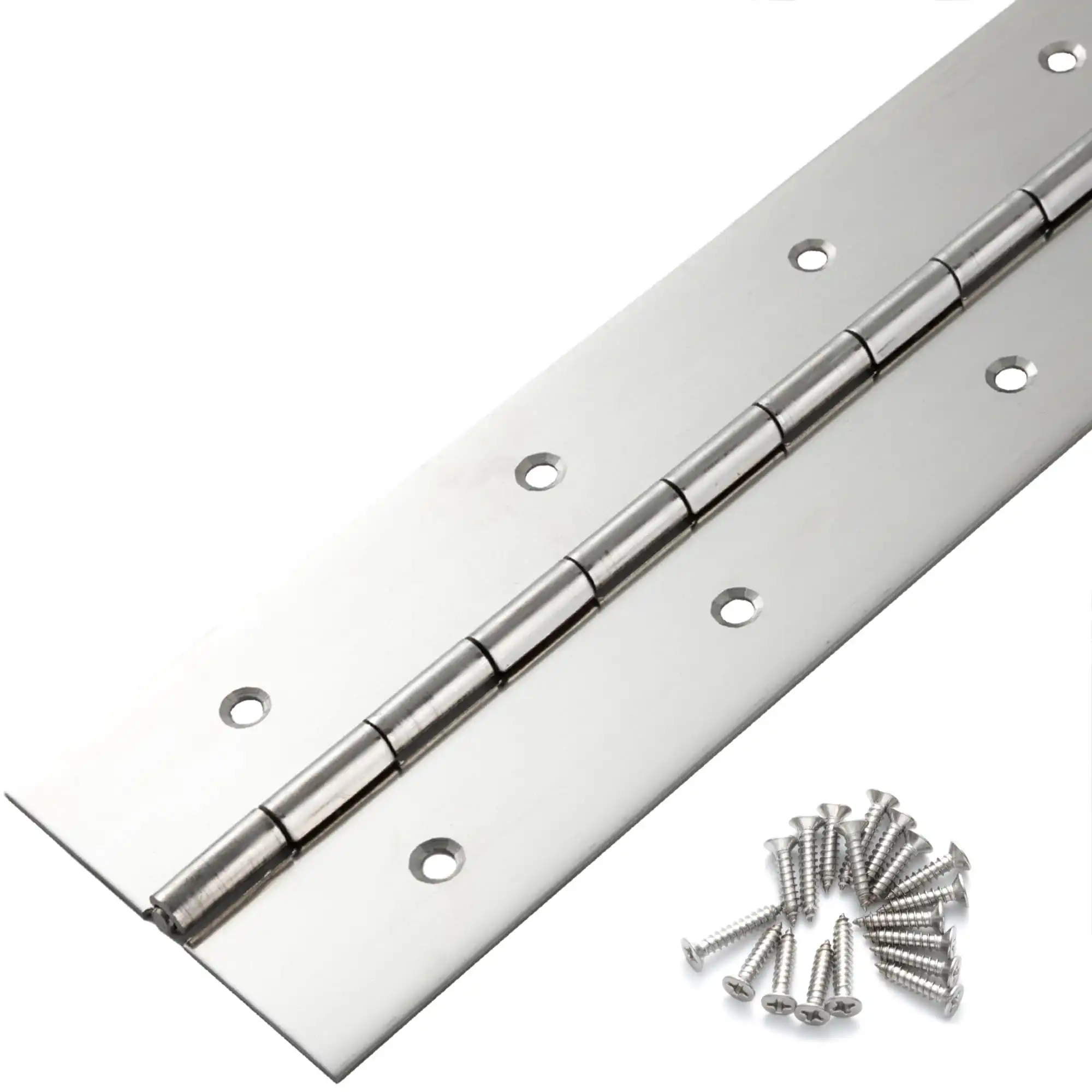
The highest level of mechanical design is represented by industrial-grade metal hinges, which combine material science with useful engineering. Industrial-grade metal hinge solutions, in contrast to typical home hinges, must endure loads that would jeopardize regular hardware, severe temperature swings, and repeated stress cycles. These hinges are carefully designed to accommodate anything from precise gear to large warehouse doors. Stress distribution is the basic idea behind the performance of industrial-grade metal hinges. Metal becomes fatigued and finally fails when weight is concentrated at one pivot point. This is resolved by multi-point bearing systems seen in professional-grade hinges, which distribute force across a greater surface area. Manufacturers choose stainless steel, carbon steel alloys, or specialty bronze compositions depending on load standards and corrosion resistance needs. Material composition is equally important. Founded in 2016, Qingdao RUIRUI Machinary Co., LTD uses precise fabrication and innovative metal stamping to provide industrial-grade metal hinge solutions. Metal hinges are guaranteed to fulfill strict ISO 9001 and ISO 14001 quality requirements thanks to their fully automated manufacturing lines and extensive secondary processing capabilities, which include anodizing, plating, and powder coating.
Material Selection for Extreme Load Capacity
The performance of a metal hinge under severe weight is largely determined by the choice of material. Stainless steel is perfect for pharmaceutical facilities, food processing facilities, and coastal industrial zones because it offers exceptional corrosion resistance in challenging conditions. Higher strength-to-weight ratios in carbon steel alloys enable thinner profiles without compromising load capacity. For temperature-controlled situations, aluminum alloys provide a compromise between lightweight construction and respectable durability. Mild steel, coated steel, aluminum alloys, cold-rolled steel, stainless steel, copper, and brass are just a few of the materials in which RUIRUI excels in metal stamping and sheet metal processing. Through their specific processing procedures, every material option achieves unique optimization. RUIRUI uses electrophoresis coating techniques to improve corrosion resistance while preserving electrical conductivity when manufacturers request bronze or brass components. This is crucial for equipment that has to be properly grounded.
Hinge Geometry and Bearing Design
Instead of focusing stress at specific bearing points, continuous piano-style hinges distribute weight across their whole length. The drooping of doors caused by normal hinges holding big loads is avoided by this design. Professional engineers determine the minimum hinge length for industrial applications depending on the weight of the door, the thickness of the material, and the mounting arrangement. While sustaining heavier weights, ball-bearing or roller-bearing designs minimize friction. Heavy doors may function smoothly without requiring a lot of human power thanks to these systems. To operate correctly, the bearing surfaces must maintain exact tolerances, usually within 0.001 inches. These precise requirements are routinely met by RUIRUI's CNC machining capabilities across manufacturing runs of more than 130,000 pieces each year.
Advanced Manufacturing Processes for Superior Performance
It takes more than just pressing and bending to make industrial-grade metal hinges. They need precise procedures that produce dependable, flawless parts that can withstand millions of operating cycles.
Progressive Stamping and Deep Drawing Technology
Using successive forming processes, progressive stamping produces hinge components by moving the metal a little bit farther through the press at each station. Thousands of identical components are produced with constant wall thickness and dimensional correctness thanks to this ongoing process. Metal may be shaped with deep drawing stamping technology into intricate three-dimensional designs that are not possible with simple flat stamping, including hinge eyes with exact hole diameters. The progressive stamping capability of RUIRUI creates bearing surfaces with flawless geometric uniformity. These procedures produce hinge eyes that receive pins of precise diameter without wobbling or unnecessary clearance when paired with their proficiency in deep drawing. The binding and misalignment that would result in early wear are avoided by such accuracy.
Secondary Processing and Surface Treatment
To obtain industrial-grade performance, raw stamped metal has to go through many finishing procedures. Surface imperfections that might cause stress fractures are eliminated by polishing. Sharp edges that cause stress concentrations are removed via deburring. Certain surface treatments that improve bearing qualities or aesthetic presentation are provided via wire drawing. Whether hinges withstand corrosive conditions for decades or fail in a matter of seasons depends on surface protection procedures. For painted industrial equipment, powder coating produces consistent protection layers that are perfect. For exceptional corrosion protection in severe applications, plating deposits nickel, chromium, or zinc. Anodizing produces oxide layers that are bound at the molecular level, providing remarkable endurance in chemical plants and food facilities. This is especially important for aluminum hinges. Even on interior surfaces, electrophoresis coating technology consistently covers complicated geometries with protective layers. RUIRUI uses cutting-edge thermoplastic coating techniques that provide excellent chemical resistance while adhering to the strictest environmental regulations.
Load Calculation and Design Specifications
Knowing how weight is distributed across mounting configurations is necessary to determine the proper hinge capacity. Engineers compute both dynamic loads, or the extra forces produced during opening and shutting cycles, and static loads, or the hinge's capacity to hold the door at rest. Design safety factors for professional-grade hinges range from 3:1 to 5:1, which means that a hinge rated for 1,000 pounds can only hold 200–300 pounds when in use. This cautious approach takes into consideration unanticipated shock loads, corrosion effects, mounting variances, and metal fatigue. The technical staff at Qingdao RUIRUI collaborates closely with clients to design suitable metal hinge specifications for their particular applications, guaranteeing industrial-grade performance throughout decades of dependable operation. Continuous hinges need fewer support brackets to produce the same strength because they distribute loads more efficiently than three-point versions. In order to provide precisely constructed solutions that surpass conventional criteria, RUIRUI uses its CNC machining, laser cutting, and welding skills to provide unique hinge configurations for niche applications.
Quality Assurance and International Standards Compliance
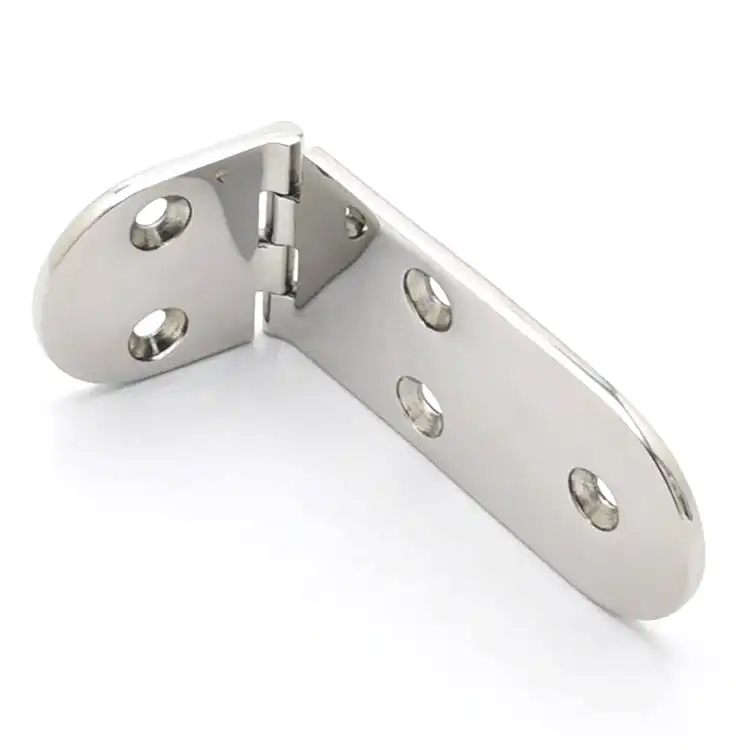
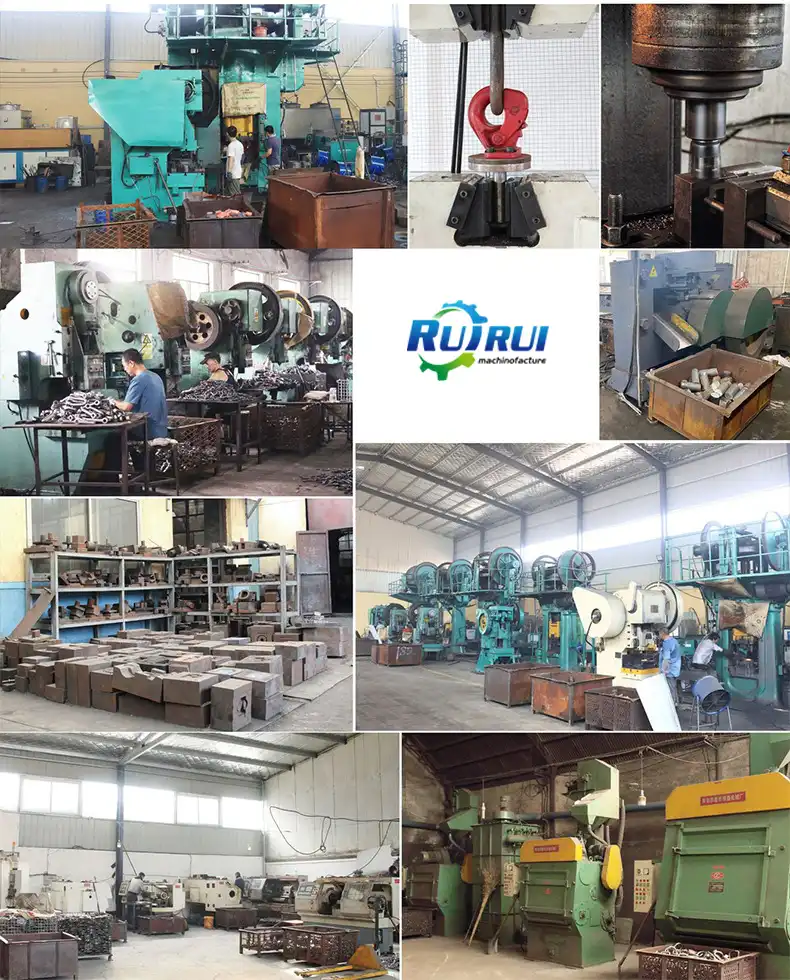
Strict quality control procedures must be followed when industrial-grade metal hinges are added to international supply chains. Qingdao RUIRUI is certified in quality management (ISO 9001), environmental management (ISO 14001), information technology services (ISO 20000), and occupational health and safety (OHSAS 18001). They also continue to hold a five-star green supply chain certification. From the beginning of production, quality assurance experts create comprehensive product files that include manufacturing information for every single hinge. This thorough documentation guarantees constant performance and permits traceability. RUIRUI conducts thorough testing prior to shipping in accordance with ISO and IAFT quality requirements. In order to turn discoveries into quantifiable productivity gains, its R&D team constantly improves production procedures while investing in new technology and talent development.
Industry Applications and Real-World Performance
Industrial-grade metal hinges support equipment in a variety of industries, including data centers that require precise environmental control equipment, food processing facilities that require stainless steel components, pharmaceutical manufacturing facilities that require cleanroom compatibility, and aviation maintenance hangars that demand extreme dependability. Professional-grade hinge engineering is essential for heavy equipment enclosures, electrical distribution cabinets, hydraulic press guards, and precision testing chambers. Surface treatment, geometry optimization, and material selection work together in every application to produce hardware that functions perfectly year after year. Qingdao RUIRUI serves manufacturers that understand that hinge quality directly affects production efficiency and safety compliance by exporting goods to more than 80 countries, including Spain, the United Kingdom, continental Europe, North America, and Australia.
Conclusion
By skillfully blending material science, geometric optimization, technological production, and strict quality control to handle severe loads without sagging or misalignment over decades of demanding operation, industrial-grade hinges avoid expensive equipment failures.
Cooperate with Qingdao RUIRUI Machinary Co., LTD
Join forces with a Chinese producer of industrial-grade metal hinges that combines ISO-certified quality procedures with more than 15 years of experience. RUIRUI offers industrial-grade metal hinges for sale with tested performance in more than 80 countries, whether you require a China supplier for typical applications or bespoke engineering. Contact info@qdkshd.com right now to get technical specs, price, and possibilities for bulk buying.
References
1. Title: "Heavy Duty Hinges with Vectis Technology: Effortless Motion Control"
Author: Weber Knapp Company
Published: February 19, 2025
2. Title: "9 Engineering Design Guidelines For Heavy Duty Industrial Hinges"
Author: Weber Knapp Engineering Team
Published: September 2024
3. Title: "6 Types of Heavy-Duty Hinges in Commercial & Industrial Design"
Author: Kiesler Machine Inc.
Published: 2024
4. Title: "Industrial Hinges: Heavy-Duty & Specialty Products"
Author: Zephyr Secure Technical Documentation
Published: July 17, 2025

Send Inquiry
Related Industry Knowledge
- What Are the Key Benefits of Trailer Parts Wholesale for Your Business?
- High-Strength Steel Hitch Pin vs. Standard Hitch Pins: Which Is Better?
- What Fabrication Techniques Are Involved in Making Small Sheet Metal Boxes?
- What Benefits Do ECE R55 Certified Car Tuning Accessories Towbars Provide?
- What are the Benefits of Using a Hitch Packer Adapter?
- Why Choose High-Grade Materials for Custom Casing Fitting Cannula Sleeve Supporting Foot?
- What Makes a High-Quality Air Conditioner Support Stand?
- How do I install a trailer ball cover?
- How do I choose the right size trailer safety pin?
- What is the difference between link plates and other types of connectors?