
How to Attach a Safety Chain to a Trailer Properly?
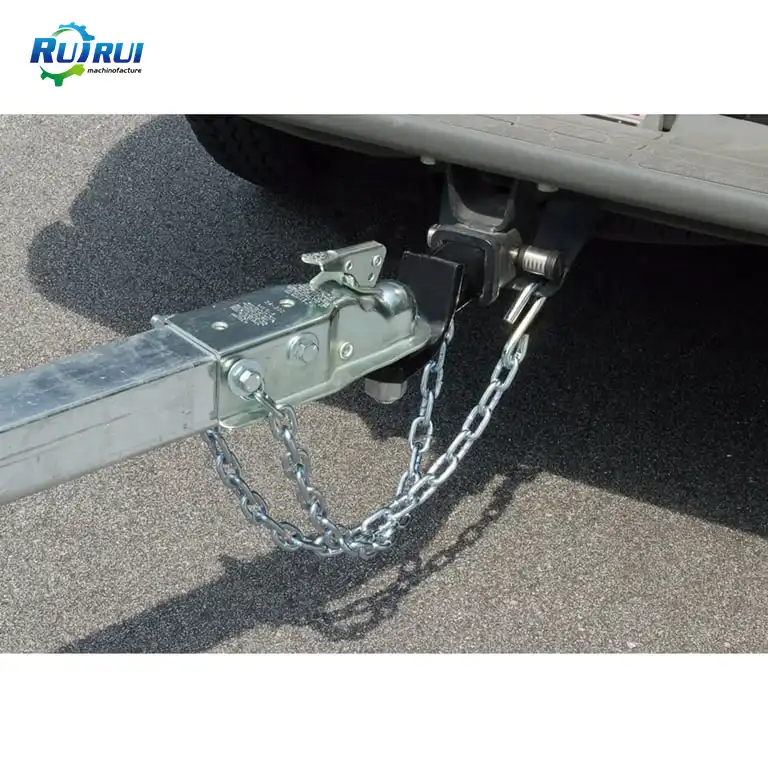
To connect a safety chain correctly, you need to pick chains that are rated higher than the gross vehicle weight rating (GVWR) of your trailer. Then, you need to make a cradle by crossing the chains under the coupler in an X shape, and then connect them to the tow vehicle in the right places. If the joint comes loose, the chains should be tight enough to hold it in place, but not so tight that they can't be turned. When you use good safety chain gear and the right fasteners, like S-hooks with keeper latches or trailer safety pins, the link stays safe while it's being moved. And this keeps the chain from getting loose. This is how business and industrial towing works the right way.
Understanding Safety Chains and Their Role in Trailer Safety
Between tow cars and trucks, safety chains are a very important back-up link. On the off chance that the connection fails, they keep the two from coming apart totally. Safety chains keep the trailer attached to the tow vehicle in the event that a hitch coupler quickly comes free due to a technical issue, vibration-induced loosening, or a bad latch. The trailer can't speed up and get away because of this. This backup system has kept many business logistics, construction equipment transport, and local building projects from ending in accidents where a trailer coming off could have caused major harm, injuries, or even death.
Types of Safety Chains for Industrial Applications
For different jobs, you need to use different chain materials and build them in different ways. Galvanized steel chains are a moderately priced option that doesn't rust. This makes them good for general building and farming uses where they will be wet a lot. Stainless steel variants manufactured from 304- or 316-grade alloys are better at resisting chemical and salt spray, which is important for naval activities and building projects near the water. There is a lot of power in heavy-duty welded link chains, which usually have Grade 43 or Grade 70 specifications. They can be used to move big tools and equipment. When buying managers know about these changes in materials, they can choose chains that meet the needs for sturdiness, stay within budget, and follow the rules set by the Department of Transportation (DOT).
Legal Requirements and Compliance Standards
Rules made by the Federal Motor Carrier Safety Administration (FMCSA) say that all trucks that carry more than 3,000 pounds must have safety chains on them when they are on public roads. The chains must be strong enough to stop the trailer from moving if it starts to split. At the very least, this means that their working load limit (WLL) must be the same as the trailer's gross weight. Some states have extra rules about how long the chain can be, how it should be connected, and how often it should be checked. Follow written inspection steps to make sure that the chain is still together before each release. This is for municipal workers and building project managers who run trailer fleets. Accidents involving separation happen a lot because safety gear isn't taken care of properly. To keep the fleet safe, it's important to make sure the right materials are used and that the fittings are done right.
Step-by-Step Guide: How to Attach a Safety Chain to a Trailer Properly
First, make sure that your safety chains meet or go over the weight limit. This is the first step in fitting them properly. Find out the GVWR on the trailer's tag, and then pick chains that can hold at least that much weight. If you need to load the trailer quickly, many safety experts say that chains that are rated 50% higher than the trailer's weight are better because they add more safety. Links in a chain should be just long enough to make a full loop, but not so long that they drag on the ground or get caught on something.
Selecting the Right Hardware and Tools
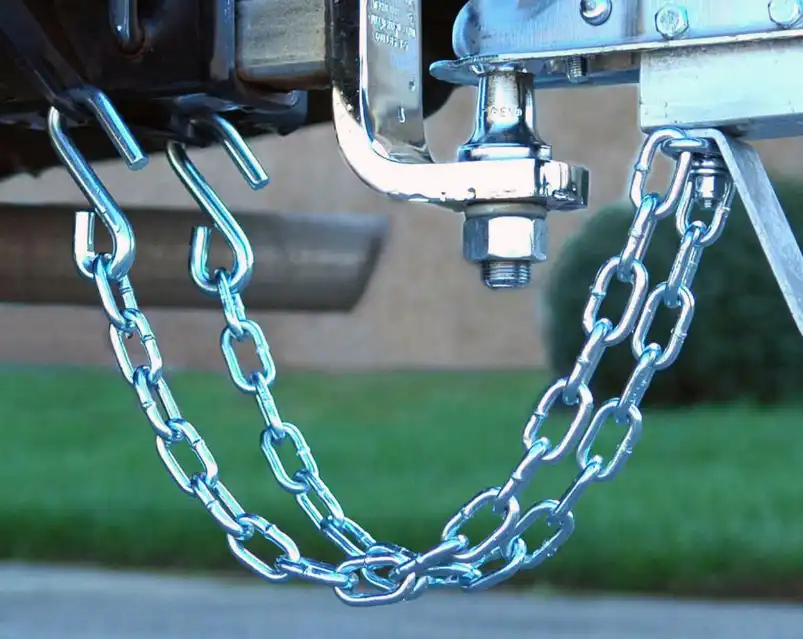
Make sure you have all the tools you need before you start fitting. For example, you'll need S-hooks that are right sized and have safety locks, shackles, or quick links that can handle the chain's working load. Coupler systems have an extra locking mechanism called a trailer safety pin that keeps the latch from releasing by accident when the car is going over rough ground; this pin also serves as part of the safety chain setup. Broken or rusty hardware is the weakest link in your safety system, so you shouldn't use it. Hand tools like pliers to open S-hook latches and wrenches to make strong shackle links should always be easy to find. Good gear made from steel that has been heated and given the right surface treatments will keep working well for as long as your trailer fleet does.
The Cross-Chain Attachment Technique
Everyone says to cross the chains under the trailer coupler so that when you look at it from behind, they look like an X-pattern. The coupler can be held in place if it comes loose from the ball mount with this set-up. This stops the tongue of the trailer from dropping to the ground, where it could damage the road or land on its side. Connect each chain to the pull car's frame where it's marked to go. Don't put them on the bumpers; they aren't strong enough. The chains should have about two to three inches of slack when the trailer is pulling in a straight line. You'll have enough space to turn, and the chains won't hang too low and touch the road when the loading ramp changes or the slope goes down.
Post-Installation Inspection and Maintenance
After installing everything, make sure it's all right by manually checking each link point for safety. If you try to open an S-hook latch, it means it is fully closed and locked. Check to see if the chains were put on straight when they were connected. When links are bent, they become weaker and break more quickly. Before each pull, look at the chains to see if they are cracked, stretched, or have surface rust that could weaken them. Plans for replacing things should be based on how often they are used. For example, chains that are used every day for business in rough conditions might need to be changed every year. On the other hand, if you store and take care of equipment that you only use sometimes, it can safely last for several years. Being careful cuts down on breakdowns on the side of the road and makes sure that business hauling operations stay in line with what insurance companies want.
Comparing Safety Chains: What Procurement Managers Should Know
To pick the right safety tools for trailer companies, procurement teams have to compare the total cost of ownership to the performance standards. The safety chain type affects not only how much it costs to buy, but also how often it needs to be kept, how often it needs to be changed, and how much the buyer may have to pay if the equipment breaks down.
Safety Chains Versus Safety Cables
The most durable chain is the traditional link chain. Damage is easy to see, so during regular checks, testers can quickly find old or broken links. Flexible cables made of braided or twisted wire rope can be used in scenarios where they need to be hooked up and taken apart a lot. Cable systems can, however, have strands break inside the cable that can't be seen until there is a big failure. It also helps that chains don't break down as quickly when they touch road surfaces or are dragged across loading docks during placement work. If reliability and ease of checking are more important than comfort in a business-to-business fleet, then welded link chains are the safer and more proper choice.
Material Selection: Galvanized vs Stainless Steel
A hot-dip zinc coating is put on galvanized chains to keep them from rusting. This coating also makes them about 40% cheaper than stainless steel chains of the same size. This treatment is good for things that happen upstream and are only hit by road salt at certain times of the year, provided a safety chain is in place. But stainless steel chains are worth the extra money because they don't damage the covering when you touch them. They also work well in marine settings, chemical processing plants, and building projects near the coast. When managers buy things, they should carefully think about how they will be used. For instance, using stainless steel for everything can make costs go up for no reason, and using galvanized chains in tough conditions can lead to a lot of repairs that cost more in the long run than the time saved. It's usually a good idea to keep both types of chains on hand so that you can get the best value for your money on a wide range of projects.
Understanding Weight Ratings and Sizing
In order to find the right numbers for safety chains, the working load limit is rather than the break strength used. You should never put more weight on the chain than what is written in the WLL. For most chains, it's found by taking a quarter to a sixth of their final tensile strength. The safety factor takes into account dynamic loads, metal fatigue, and normal wear and tear that makes the chain weaker over time. This is why a chain that says it can hold 5,000 pounds might break at 20,000 to 30,000 pounds. A lot of people make mistakes when they match the WLL of the chain to the weight of the trailer without taking into account the fact that chains can be hit by loads much heavier than their steady weight. Chains that are rated at 1.5 to 2 times the GVWR of the trailer give you extra safety in case something goes wrong in real life. This careful approach lowers the chance of damage and is in line with what insurance companies and companies that make tools say are the best ways to work in the field.
Procurement Insights: Sourcing Safety Chains for Trailers Effectively
To make sure you have a steady supply of safety gear, you need to think about more than just the price per unit. The value that safety chain providers offer is affected by what they do. This includes wait times, quality that stays the same, paperwork for approval, and expert help after the sale.
Evaluating Supplier Options and Quality Assurance
Online sellers can give low prices because they don't have to pay as many overhead costs. However, B2B buyers need to be careful that the savings don't hurt quality control or the authenticity of the product. Bring in material certifications and test reports that show the materials' tensile strength, the thickness of the finish, and that they meet ASTM standards. It may cost more to buy from a local wholesaler, but you can get replacements right away, it's easier to get guarantee problems taken care of, and you can see the goods in person before you buy them. A lot of buying teams use more than one way. They work with local wholesalers in case of emergencies and make deals with specialized manufacturers for big orders that are planned ahead of time to meet seasonal demand or fleet growth projects.
Negotiating Volume Discounts and Contracts
It's very easy for big buyers with lots of trucks to get what they want. When people buy more than 500 pieces, especially if they sign a deal that says they will buy the same amount every year, manufacturers can offer volume pricing discounts. These deals are good for both shoppers and sellers. Buyers get stable prices that help them stick to their budgets, and sellers get clear pictures of when their goods will be delivered, which makes everything run more smoothly. When you get prices, be sure to be clear about the safety chain grade, length, end fittings, and surface treatment you need. When things supplied don't meet business needs, disagreements can happen because annual contracts or buy orders aren't clear. Also, people who work in buying should try to get better payment terms. On the other hand, net-60 or net-90 deals can help you keep track of your cash flow for big building projects that need to be paid for over a longer period of time than normal.
Brand Reputation and Vendor Vetting
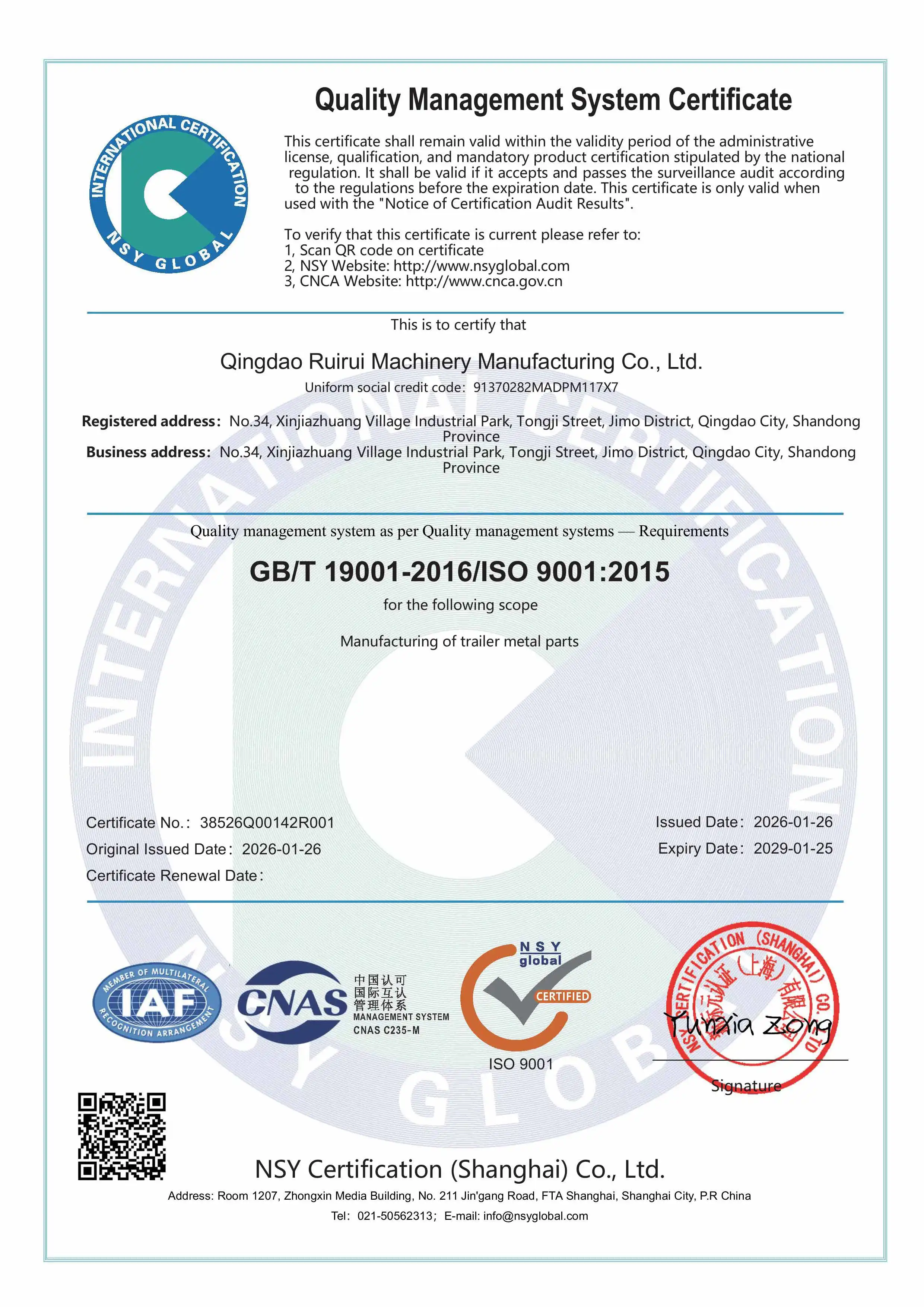
When it comes to trailer safety gear, a lot of well-known brands have made their names by regularly making good items and giving great customer service. But buying teams shouldn't just rely on well-known names; they should also check things out on their own. Readers in similar fields have written reviews about how long the product lasts, how true the specs are, and how fast the company fixes quality issues. Pay attention to these reviews. As the seller, ask for contact information for references. Then, call those references and ask them how well the product worked and how reliable the seller was. As you look at what the company can do, make sure you understand their manufacturing technology, quality control systems, and standards such as ISO 9001 compliance. When it comes to quality control, vendors with new facilities and well-documented processes make fewer mistakes and keep quality higher across production runs. Because of this, project plans are less likely to get thrown off by failed shipments, problems in the field, and last-minute replacements.
Ensuring Compliance and Safety: Best Practices
If they are not put together properly, even the best safety chains can fail, putting people in danger that can be avoided with the right training and steps. A lot of people make mistakes, like linking the chains to weak mounting places, using chains that are too short and drag on the ground, or not crossing the chains under the coupler. These mistakes happen most of the time because workers weren't trained well enough, not because they were trying to save money. When fleet managers write down how to set up trucks, they should include picture tips that show what to do and what not to do. Then, they should make sure that everyone who is in charge of connecting trucks gets training that they can actually do and regular lessons to brush up on their skills.
Maintenance Schedules and Replacement Criteria
Safety bands should be checked for wear often to keep them from becoming too dangerous. Choose how often to check the tools based on how often it is used. Daily visual checks should be done on business teams that work multiple jobs, weekly checks should be done on building equipment that is in use, and pre-operation checks should be done on trucks that are only used sometimes. When you check it, look for cracks in places where the links are bonded, length loss of more than 5%, and rust that has made the cross-sectional area smaller. If you see cracks in any of the links or if the chains are getting longer overall, you need to get new ones right away. Keep track of all the fixes and maintenance work you do to show that you're following safety rules and to set up maintenance methods that you can defend in court and that make it less likely that you'll be charged. These records are very helpful when fighting claims of machine failure because they show how safety-conscious the company is. This often changes who is responsible and how much the insurance company pays out.
Conclusion
Anyone who drives a van, whether they are in charge of a business fleet or the building projects for the city, must attach safety chains properly. There is a backup system that works well and stops catastrophic fails when linking goes wrong when you use the simple cross-chain method with properly rated chains and high-quality hardware. To make running safer, procurement workers and fleet managers can learn about differences in materials, set up regular checking routines, and work with manufacturers who follow strict quality standards. A small investment in good safety gear and training pays off in a big way: people follow the rules, accidents don't happen, and risk is lowered. A business can build a reputation for reliability that helps them get more customers and stay ahead of the competition by making trailer safety a clear goal and following through with good tools and well-thought-out steps.
FAQ
1. What Length Should My Safety Chains Be?
Safety chains need sufficient length to allow the tow vehicle to turn 90 degrees relative to the trailer without creating tension. A good way to figure out the length is to line up the trailer directly behind the tow vehicle and then add six to twelve inches to the distance between where the vehicle connects to the trailer. With this extra length, the crossing pattern can fit, and the chains won't drag on the ground when you move regularly.
2. Can I Use Safety Cables Instead of Chains?
By law, you can use safety cables that meet certain strength standards. For business purposes, though, regular link chains work better. When chains break, you can see how each link is wearing down. But when cables break, you might not notice that an internal strand is breaking until the whole cable breaks. Besides that, chains last longer when they touch the ground or the walls of a loading dock while being moved.
3. How Often Should I Replace Safety Chains?
When they need to be replaced depends on how often they are used and how much rough use they get. Chains that have lost more than five percent of their original length, links that are broken, or a lot of cross-sectional loss from rust need to be changed right away, no matter how long they've been used. Chains that are well taken care of generally last three to five years of heavy-duty use. But chains that are used in harsh conditions or for big business tasks might need to be changed every year to make sure there are enough safety gaps.
Partner with RUIRUI for Industrial-Grade Trailer Safety Solutions
For more than 15 years, Qingdao RUIRUI Machinery has been making safety chains. The company has built a reputation for excellence in precision metal fabrication and making trailer parts. Our engineering team knows how important it is for tow equipment to be designed and built correctly to avoid crashes and follow the rules in tough business situations. To make safety chains and related items like trailer safety pins, coupling parts, and fastening systems, we use cutting edge progressive stamping, CNC machining, and robotic welding. With these ways, the standard stays the same even when a lot of things are made.
We know a lot about coated steel goods, mild steel, and metals made of stainless steel. All of these go through approved surface treatment lines that include electroplating, powder coating, and hot-dip galvanizing. These all make the steel less likely to rust. With written quality control methods and ISO 9001 certification, you can be sure that every chain meets the length and width requirements before it is sent out. Our engineering support services give B2B buying managers more confidence by telling them which chain grades and configurations will work best for each fleet application. Because we can do flexible OEM manufacturing, we can also meet your needs for specific lengths, end fittings, and materials.
Reach out to our procurement specialists at kshdhardware@qdkshd.com to discuss volume pricing on safety chain for sale and explore how our comprehensive trailer hardware solutions can enhance your fleet safety program while optimizing your supply chain efficiency.
References
1. Commercial Vehicle Safety Alliance. (2021). North American Standard Out-of-Service Criteria: Coupling Devices and Towing Methods. Washington, DC: CVSA Publications.
2. Federal Motor Carrier Safety Administration. (2020). Federal Motor Carrier Safety Regulations Handbook: Part 393 - Parts and Accessories Necessary for Safe Operation. Washington, DC: U.S. Department of Transportation.
3. Society of Automotive Engineers. (2019). SAE J684: Trailer Couplings and Hitches - Automotive Type. Warrendale, PA: SAE International Standards.
4. American Society for Testing and Materials. (2022). ASTM F1773-18: Standard Specification for Welded Steel Chain. West Conshohocken, PA: ASTM International.
5. National Highway Traffic Safety Administration. (2018). Trailer Safety: Inspection and Maintenance Guidelines for Commercial Vehicle Operators. Washington, DC: NHTSA Technical Reports.
6. Transportation Research Board. (2020). NCHRP Report 928: Guidelines for Trailer Coupling Systems in Heavy Vehicle Operations. Washington, DC: The National Academies Press.

Send Inquiry
You may like