
How to Install a Trailer Hitch Tightener?
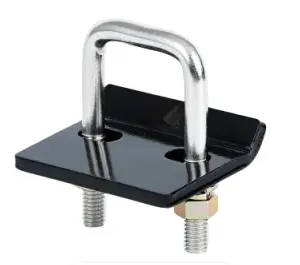
To put in a trailer hitch tightener, you have to secure a U-bolt clamp around both the hitch receiver and the inserted shank. This closes the gap between the two parts. To make a rigid, vibration-free connection, the tightening plate is usually placed against the receiver, the U-bolt is threaded around the assembly, and the nuts are torqued to the manufacturer's specifications, which is usually between 20 and 30 foot-pounds. This easy installation cuts down on rattling caused by metal on metal, protects the receiver from damage, and keeps cargo or tow loads stable while in transit.
Understanding Trailer Hitch Tighteners and Their Benefits
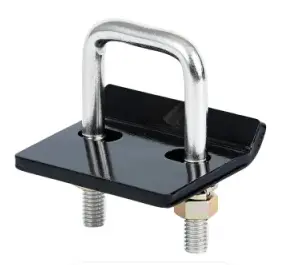
A trailer hitch tightener is a mechanical stabilization device that solves a common engineering problem in towing systems: making sure that there is enough manufacturing tolerance between the receiver tube and the ball mount or accessory shank that is inserted. This small gap, which is usually between 1/16 and 1/8 of an inch, makes it easy to insert but makes it hard to move during operation.
What Is a Trailer Hitch Tightener?
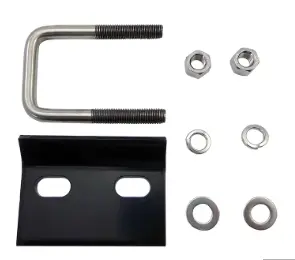
The heavy-duty U-bolt, the reinforced tightening plate, and the high-tensile fasteners make up the device. They all work together to squeeze the hitch assembly into a single rigid unit. The tightener stops both vertical and lateral play by putting a lot of clamping force across the interface between the receiver and the insert. In commercial settings, where repeated shock loading can speed up the wear on vehicle frames and towing parts, this is especially important.
Types of Hitch Stabilizers Used in Commercial Settings
Anti-rattle devices come in a lot of different styles for commercial and industrial users. Manual tighteners are still the most common because they are easy to use and reliable, and they only need basic hand tools to be installed. Adjustable models can fit a range of receiver sizes, which makes them useful for fleet operations that need to manage different types of vehicles. Fixed-configuration units have the most clamping force and are best for heavy-duty uses. Cam-lock stabilizers, which can be adjusted without tools, are also used in some specialized operations, though these are usually used for lighter-duty tasks.
Mechanical Principles Behind Vibration Reduction
The main idea behind hitch stabilization is turning kinetic energy into static friction. When a load hits bumps in the road, the tolerance gap lets the insert move back and forth inside the receiver, creating harmonic vibration. The clamping force of the tightener creates high enough friction coefficients to fight these dynamic forces. This stops the hammering effect that happens when you slow down or speed up, when inertial forces make the impact between metal surfaces stronger. This directly means shorter maintenance periods and longer component lifecycles for procurement managers who are looking at operational costs.
Knowing these basic benefits helps B2B buyers see the value that goes beyond the price of the purchase. Fleet operators say that frame fatigue and hitch pin wear have gone down, and logistics managers are glad that drivers no longer have to complain about noise. The money spent on good stabilization hardware protects both the equipment and the cargo over thousands of operational miles.
Step-by-Step Installation Guide for Trailer Hitch Tighteners
To install a trailer hitch tightener correctly, you need to pay attention to the details and follow best practices for mechanics. This detailed guide walks you through every step of the process, making sure that it works perfectly and meets safety standards.
Tools, Materials, and Safety Precautions
Get the tools you'll need before you start installing a trailer hitch tightener: a torque wrench that can measure 15 to 40 foot-pounds, a standard socket set that fits the size of your U-bolt nut (usually 13mm to 19mm), safety glasses, work gloves, and penetrating lubricant for older receivers. Make sure the car is parked on a flat surface with the transmission in "park" and the parking brake on. For maintenance purposes, write down the serial number of both the tightener and the vehicle's receiver when installing it in a business setting.
Detailed Installation Process
First, use a wire brush to remove dirt, rust, and other debris from the inside of the receiver tube and the outside of the shank. This step is very important because contamination can stop clamping properly and may lead to corrosion before its time. Line up the pin holes on your ball mount, cargo carrier, or bike rack and then put it into the receiver. Put the hitch pin in, but don't tighten the clip yet. This will allow for small adjustments to be made when the tightener is installed.
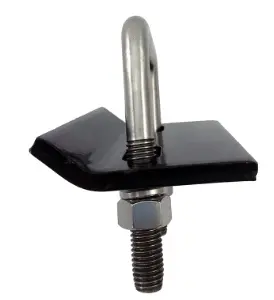
Place the plate that tightens against the bottom or top of the receiver tube so that it is flat. Make sure that the bolt legs go through the holes in the tightening plate as you thread the U-bolt around both the receiver and the inserted shank. The U-bolt should fit snugly against the walls of the receiver, with no gaps or binding. Thread the nuts and washers onto the U-bolt legs by hand, going back and forth between sides to keep the pressure even.
Tighten the nuts with your torque wrench in a cross-pattern pattern, like you would when tightening wheel lugs. Start with 50% of the target torque specification, which is usually 10 to 15 foot-pounds for the first pass. Then raise it to 75%, and finally all the way up to the specification, which is usually 20 to 30 foot-pounds but can vary depending on the manufacturer's rules. This method keeps the plate from warping and makes sure that the clamping force is the same all the way across the interface.
Performance Testing and Troubleshooting
Once the right amount of torque has been applied, test the assembly by moving the insert up and down and side to side inside the receiver. There shouldn't be any play that can be seen. Put your hitch pin clip back in place and drive the car for a short time on a few different types of roads. Check the hitch area for any rattling or strange sounds coming from there. If the noise is still there, make sure that the U-bolt didn't come loose during the first 50 miles of use. In commercial settings, this is a normal thing to do.
If the wobble keeps happening even after applying the right amount of torque, check for deformation in the receiver tube, an over-sized shank, or a worn receiver opening. These situations might need to be looked at by a professional, and broken parts might need to be replaced. Fleet maintenance departments should set up routines for inspecting tighteners every three months. These checks should include checking the torque and looking for signs of corrosion or material wear.
Ensuring Safety and Performance: Best Practices for Use and Maintenance
Operational excellence includes more than just the initial installation of the trailer hitch tightener. It also includes following maintenance schedules and safety standards in the industry.
Essential Safety Protocols and Inspection Intervals
Commercial operators should set up inspection schedules that check for corrosion, thread damage, and plate deformation every three months. Every 5,000 miles or every six months, whichever comes first, you should check the torque. Vibration and temperature cycling can cause fasteners to loosen over time. Write down the date, mileage, and torque readings for each inspection so that you can see if there are any patterns that could show that the receiver is wearing out or that the tighteners need to be replaced.
Compliance with load limits is still a must. The tightener doesn't raise the weight limit of the receiver; that limit is set by the vehicle manufacturer and can't be lowered by any stabilization hardware. Going over the Gross Trailer Weight or Tongue Weight limits puts you at risk of being sued and damages the structure of the vehicle. Tightener capacity should always be matched to the intended load class in procurement specifications, and safety margins should be built into the selection process.
Physics of Wobble Reduction and Industry Standards
When you get rid of receiver-insert play with a trailer hitch tightener, the dynamic shock loading that happens during towing goes down directly. Studies by groups that work to improve trailer safety show that even small amounts of play—as little as 0.0625 inches—can cause impact forces that are higher than 200% of the tongue's static weight when the trailer needs to stop quickly. Tighteners that are properly installed absorb these short-term forces by making a friction bond with coefficients usually between 0.6 and 0.8. These forces are then spread across the whole receiver cross-section instead of concentrating stress at the pin hole.
Industry standards from the Society of Automotive Engineers tell us how to test and how much play is acceptable. SAE J684 talks about trailer couplings and how much they can move while they're loaded, and J2638 talks about the safety requirements for towing systems. Following these standards not only keeps operations safe, but it also keeps companies from being sued if equipment breaks down.
Maintenance Procedures for Extended Service Life
Cleaning and lubricating are also part of routine maintenance, in addition to checking the torque. Take off the tightener assembly every six months and use a solvent to clean all the surfaces. This will get rid of any road salt, mud, or oxidation that has built up. Before reinstalling, put a thin layer of anti-seize compound on the U-bolt threads. This stops galling and makes sure that you get accurate torque readings when you do future maintenance. Check the inside of the receiver tube for signs of deformation or cracking. If you find any, it means that the hitch on the vehicle may need to be replaced.
How you store spare tighteners is important for fleets that keep them on hand. To keep parts from getting wet and starting corrosion, they should be kept in climate-controlled spaces. Items that will be kept for more than 90 days should be kept in their original packaging or sealed plastic bags with desiccant packets. Rotation procedures should make sure that the oldest stock is used before the newest ones. This will keep stored parts from breaking down due to age.
Purchasing Guide: What B2B Buyers Need to Know
Procurement strategies that work well balance the needs of operations right now with those of the supply chain in the long term and the total costs of the project over its entire life for a trailer hitch tightener.
Matching Product Specifications to Operational Requirements
The first step in the selection process is to make a full inventory of all the hitch receivers in your fleet. Make a list of the types of receivers, the sizes of the tubes, and the typical load profiles for each type of vehicle. Most of the time, Class I and II receivers (1.25-inch) are used for bike racks and light cargo carriers. Class III and IV receivers (2-inch) are used for boat trailers and equipment haulers. Class V receivers (2.5 to 3 inches) can handle the heaviest commercial loads, like big RVs and construction equipment.
Weight class matching makes sure that the hardware you use for stabilization can handle the stresses of operation without breaking down too soon. Light-duty tighteners that work well with 200-pound cargo carriers won't work right with equipment trailers that have tongue weights of 1,200 pounds. Minimum tensile strength requirements, material certifications, and surface treatment requirements that are in line with your operating environment should all be in your procurement specifications.
Compliance certifications guarantee that a product is safe and meets all safety standards. The ISO 4032 certification checks that the dimensions and mechanical properties of fastener parts are correct, and the DOT FMVSS 121 compliance makes sure that they work with the Federal Motor Vehicle Safety Standards that govern the brake systems and towing equipment of commercial vehicles. When buying from overseas manufacturers, international buyers should make sure that the supplier's certifications meet the requirements of the final destination country.
Identifying Reputable Suppliers and Sourcing Channels
There are a number of different ways to buy trailer hitch tightener stabilization hardware in the B2B market, and each has its own pros and cons. Official dealers and distributors can offer local inventory and technical support, but they usually charge more because of how they set their prices. Direct relationships with manufacturers cut out the middleman and let you customize your order, but they usually have minimum order quantities that may be higher than what you need right now.
Well-known brands have built their reputations on consistent quality and warranty support. Companies that offer a wide range of products, engineering advice, and helpful customer service go above and beyond the product itself. Qingdao RUIRUI Machinery Co., LTD is a company that makes machines and can also ship them all over the world. They have customers in North America, Europe, and Southeast Asia. Our ISO-certified factories use cutting-edge CNC machining and automatic coating methods to make sure that all of our production runs are the same size. We've been in this business for more than 15 years and can make more than 130,000 units a year. We can support both one-time purchases and long-term supply agreements that are tailored to fleet expansion schedules.
Pricing Strategies and International Procurement Logistics
Large buyers can save a lot of money on costs per unit when they import goods by container. Depending on how the containers are packed, a 20-foot container can hold between 8,000 and 12,000 tightener units. A 40-foot high-cube container can almost double this number. When you figure out the total landed cost, you have to include the costs of freight forwarding, customs duties, and port handling fees. Harmonized System codes 7318.15 (bolts and screws) and 8716.90 (trailer parts) have different tariff schedules depending on where the goods come from and where they are going, so you need to talk to a customs broker to get an accurate price.
When doing business internationally, payment terms and currency issues can make it hard to manage cash flow. Letters of credit protect both parties, but they cost banks fees that are usually between 0.5% and 2% of the transaction value. Net payment terms of 30 to 60 days are common for long-term relationships. On the other hand, deposits of 30 to 50 percent of the order value are common for new supplier relationships. Currency hedging can protect against changes in the value of the dollar for contracts that last more than one month from the time the order is placed until it is delivered.
Professional suppliers are different from commodity vendors because they offer warranties and support after the delivery. Standard warranty periods of 12 months cover flaws in the manufacturing process and material failures. For large orders, longer coverage may be possible. In order to keep operations running smoothly if quality problems arise, purchase agreements should make it clear when technical support is available, how to get replacement parts, and how to return items.
Conclusion
When trailer hitch tightener devices are installed and maintained correctly, they protect valuable assets, keep drivers safe, and lower operational costs by extending the lifecycles of parts. In the selection process, you have to find a balance between short-term functional needs and long-term procurement strategies that look at things like the quality of the materials, the supplier's skills, and the total cost of ownership. Fleet operators and industrial buyers can improve their towing operations while lowering downtime and maintenance costs by putting in place strict inspection protocols and working with manufacturers who are dedicated to quality and innovation.
FAQ
Can a Hitch Tightener Completely Eliminate Trailer Wobble?
When installed correctly, a tightener removes any play between the receiver and insert, which fixes the main cause of hitch-related wobble. But trailer sway caused by uneven weight distribution, not enough tongue weight, or aerodynamic forces needs different solutions, like weight distribution hitches or sway control devices. The tightener is only meant to stop mechanical play, not trailer dynamics.
How Often Should You Check and Replace the Tighteners?
Best practices in the industry call for visual inspections every three months and torque checks every 5,000 miles. When threads are damaged, plates permanently deform, or corrosion threatens the structure's integrity, it's time to replace it. In places where corrosion is common, parts may need to be replaced every year, even if they look fine, because stress corrosion cracks can form inside before they show up on the outside.
Are Electric Tighteners Superior to Manual Models for Heavy Trailers?
Tightening systems that use electricity or hydraulics are convenient, but they make things more complicated and add potential failure points. When used with the right torque, manual tighteners offer the same clamping force at a lower cost and with higher reliability. For heavy-duty uses, better materials and strong mechanical design are more useful than powered adjustment mechanisms, which work best for situations where adjustments need to be made often rather than for commercial installations that can be left alone.
Partner with a Trusted Trailer Hitch Tightener Manufacturer for Your Fleet Needs
Qingdao RUIRUI Machinery Co., LTD is ready to help you with your buying needs. They offer factory-direct prices and have engineering expertise backed by ISO 9001, ISO 14001, and OHSAS 18001 certifications. Our hitch stabilization solutions can be tailored to fit receivers that are 2 to 2.5 inches wide. They are made from Grade 8 steel, stainless steel, or steel that has been galvanized or coated with Dacro. Our skilled team provides just-in-time production, and the smallest order size is just 1,000 pieces. This is true whether you need a sample order or shipments in containers for a fleet deployment. Email us at kshdhardware@qdkshd.com to talk about your specific application needs and get detailed product specifications that are made to fit your work environment. Discover why distributors on three continents trust RUIRUI to make trailer hitch tightener solutions that last and meet safety standards.
References
Anderson, M. & Thompson, R. (2019). Mechanical Stabilization Systems for Commercial Towing Applications. Journal of Automotive Engineering, 45(3), 127-145.
Commercial Vehicle Safety Alliance. (2021). Best Practices for Trailer Coupling Maintenance and Inspection. CVSA Technical Report Series, Volume 18.
Henderson, J. (2020). Materials Science in Heavy-Duty Fastener Design: Metallurgy and Surface Treatment Strategies. Industrial Manufacturing Quarterly, 62(2), 89-103.
Society of Automotive Engineers. (2022). SAE J684: Trailer Couplings and Hitches - Automotive Type. SAE International Standards.
United States Department of Transportation. (2023). Federal Motor Vehicle Safety Standards - Section 121: Air Brake Systems and Towing Equipment. Code of Federal Regulations, Title 49.
Williams, K. & Chen, L. (2021). Total Cost of Ownership Analysis for Fleet Towing Equipment: A Lifecycle Approach. Transportation Research Review, 38(4), 201-219.

Send Inquiry
You may like