
How to measure a fold sheet metal part?
For anybody working in manufacturing, engineering, or design, the ability to measure a fold sheet metal part is essential. To guarantee the correctness of the finished product, this technique requires accuracy and close attention to detail. Understanding the proper measuring procedures is crucial for creating high-quality sheet metal components, whether you're working with simple bends or intricate multi-fold designs. In this thorough tutorial, we'll go over the several tools and techniques for measuring folded products, talk about typical problems, and provide professional advice to help you consistently get accurate measurements. You may raise the caliber and reliability of your sheet metal fabricating tasks by becoming proficient in these methods.
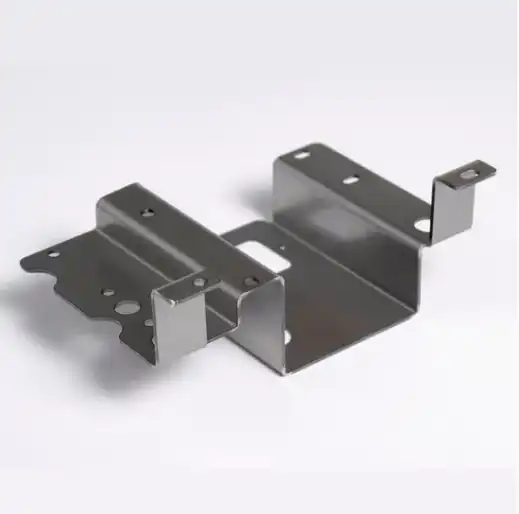
Understanding Sheet Metal Part Measurement Basics
Types of Sheet
Products are available in a variety of shapes and sizes, each with its own specifications. Only length and width measurements are needed for flat elements, making them the easiest to measure. However, since folded elements are three-dimensional, they add more complexity. These may contain intricate geometries with several folds and angles, as well as single-bend and multi-bend components. Choosing the right measuring methods and equipment requires an understanding of the particular sort of sheet metal part you're dealing with.
Critical Dimensions in Sheet Metal Fabrication
A number of crucial parameters need to be taken into account when measuring folded products. These include the bend radius, bend angle, and material thickness in addition to the part's overall length, breadth, and height. You'll also need to take into consideration things like flatness tolerances, edge lengths, and hole positions. The item will fit and perform as intended in its final assembly if these measurements are measured accurately.
Importance of Precision in Sheet Metal Measurement
Precision is paramount when measuring sheet metal parts.Even little mistakes might result in serious problems with the finished product, such poor fit, misalignment, or diminished structural integrity. Accurate measurements are crucial for guaranteeing performance and safety in sectors like aerospace and automotive production, where tolerances are sometimes quite tight. You may reduce mistakes and create consistently precise products by utilizing high-quality instruments and appropriate measuring procedures.
Essential Tools for Measuring Folded Sheet Metal Parts
Digital Calipers and Micrometers
Micrometers and digital calipers are essential instruments for product measurement. Accurate measurements of internal and exterior dimensions are made possible by these precise devices. Lengths, depths, and diameters may all be easily measured using digital calipers due to their versatility. Conversely, micrometers provide significantly more accuracy for measuring microscopic dimensions and material thickness. To guarantee consistent results, use models with high resolution and strong repeatability when choosing these instruments.
Coordinate Measuring Machines (CMMs)
Coordinate measurement machines (CMMs) provide unmatched precision and efficiency for complicated product or high-volume manufacturing. These automated methods create a comprehensive 3D representation of an item by measuring various places on its surface using probes. Complex geometries, interior features, and concealed surfaces that would be difficult to reach with handheld instruments can all be measured by CMMs. CMMs provide the best level of accuracy and reproducibility for measuring sheet metal parts, but using them requires a substantial investment and level of knowledge.
Step-by-Step Guide to Measuring Folded Sheet Metal Parts
Preparing the Part for Measurement
Setting up the sheet metal part correctly is essential before beginning the estimating interaction. Start by cleaning the component to get rid of any dirt, grease, or debris that could affect how accurate your estimates are. Examine the component for any obvious flaws or abnormalities that could need attention. If at all possible, let the component adjust to ambient temperature since heated development might affect some characteristics. Finally, use a level surface or appropriate fixturing to secure the part in a stable position to prevent development during estimate.
Measuring Linear Dimensions
Start by measuring the total length, breadth, and height of the folded product. For these measurements, use digital calipers, making that the jaws are perpendicular to the surface. Use the depth gauge or the inner jaws of the calipers for interior measurements, such as hole sizes or feature spacing. A micrometer is often the most accurate tool for determining material thickness. To account for any changes in thickness across the part, take many measurements at various locations.
Assessing Bend Angles and Radii
To achieve accuracy, measuring bend angles needs precise expertise. Align the angle gauge or protractor exactly with both surfaces by placing it against the folded edge. To find the inner bend radius in tight bends, you may need to utilize a radius gauge. Use a contour gauge to match the curve or a set of radius gauges to measure the outer bend radii. Making a schematic or drawing to carefully capture all angles and radii may be useful when working with complicated multi-bend items.
Verifying Hole Locations and Edge Distances
Accurate measurement of hole locations and edge distances is critical for many sheet metal parts. Measure the distance between each hole's center and reference edges using calipers or a CMM. To rapidly confirm the relative placements of pieces with several holes, think about utilizing a hole pattern gauge. Make careful to take into consideration any chamfers or rounded edges that might alter the actual measurement when calculating edge distances. For more accurate measurements of these traits, optical comparators or vision systems may be required if dealing with tight tolerances.
Checking Flatness and Parallelism
For many products, parallelism and flatness are crucial aspects of quality. Use a surface plate or precision straightedge together with feeler gauges to quantify any variations in order to verify flatness. More precise flatness measurements may be obtained for bigger items using a dial indicator installed on a surface plate. Measure the distance between two surfaces at many locations using a height gauge or CMM to determine their parallelism. To ascertain if the surfaces lie within the prescribed parallelism tolerance, compare these measurements.
Conclusion
Accurate measurement of folded sheet metal parts is a skill that combines precision tools, careful technique, and attention to detail. You may consistently produce excellent outcomes in your sheet metal fabrication projects by adhering to the procedures described in this book and continuously improving your method. Keep in mind that gaining skill in this field mostly depends on experience and practice. You may reach us at kshdhardware@qdkshd.com to learn more about this product.
References
1. "Precision Sheet Metal Fabrication Techniques" by David A. Smith.
2. "Fundamentals of Sheet Metal Design" by Karen Elaine Clark.
3. "Metrology for Engineers" by J.F.W. Galyer and C.R. Shotbolt.
4. "Sheet Metal Forming Processes and Die Design" by Vukota Boljanovic.
5. "Quality Control in Sheet Metal Fabrication" by Michael J. Thompson.
6. "Advanced Measurement Techniques for Sheet " by Robert L. Mott.

Send Inquiry
You may like
Related Industry Knowledge
- How Custom Trailer Accessories Improve Safety & Load Control?
- How Much Weight Can a Wall-Mounted Device Rack Bracket Support?
- What are the different types of hitch pins?
- Can I customize the design of a metal door lock hook?
- Where are retractable bollards typically used?
- How do you choose the right foot plate for a trailer jack?
- How do you choose the best metal dustbin for outdoor use?
- How do you maintain and inspect zinc-plated D-shape pins?
- Can Zinc Plating be customized?
- how to stamp sheet metal parts?