
Key Features to Look for in a Trailer Hardware Factory
The cost extends much beyond quick fixes when your manufacturing line stops because of poor hardware components or your trailer equipment malfunctions on a crucial delivery route. For long-term profitability, safety compliance, and operational continuity, choosing the best trailer hardware manufacturing is essential. Knowing the characteristics that set a reputable trailer hardware manufacturing apart from subpar vendors may save your company thousands of dollars in lost product quality, warranty claims, and downtime. In order to safeguard your investment and preserve your competitive edge, this thorough guide examines the crucial factors you need to consider when working with a trailer hardware manufacturing.
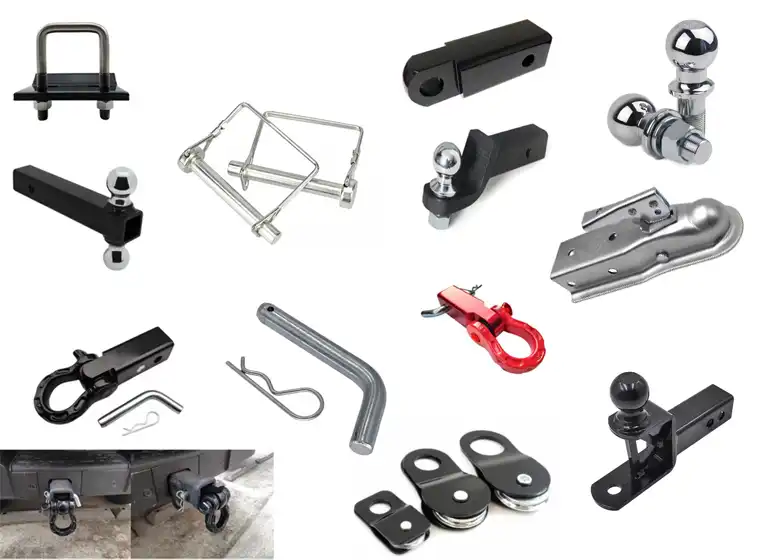
Advanced Manufacturing Capabilities in a Trailer Hardware Factory
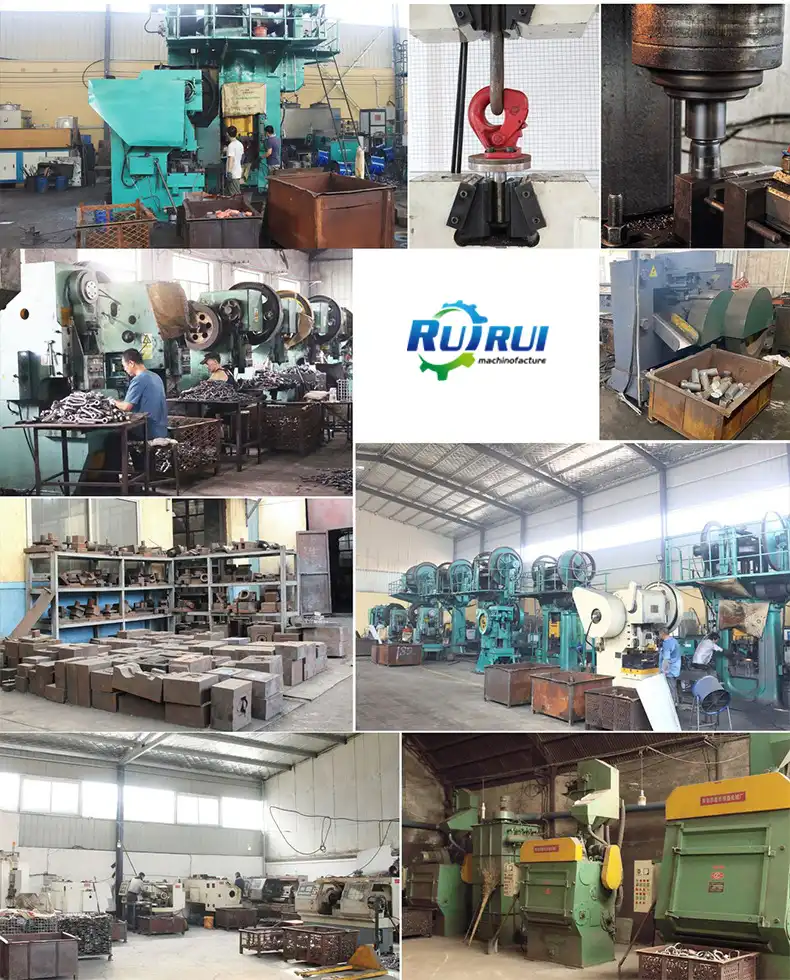
The quality, accuracy, and adaptability of the items you obtain are directly influenced by a trailer hardware factory's production capabilities. Comprehensive metal fabrication technologies that go beyond simple production techniques are essential for a highly competent trailer hardware plant. In order to guarantee constant dimensional precision over large production runs, modern trailer hardware manufacture necessitates advanced machinery such as automated welding stations, laser cutting systems, and CNC machining centers. For the production of intricate trailer parts that must endure high mechanical stress, such as coupling mechanisms, hitch assemblies, and reinforcing brackets, progressive stamping and deep drawing stamping capabilities are especially crucial. Examine a trailer hardware factory's secondary processing skills when assessing them since these last touches have a big influence on the durability and performance of the final product. Important processes include plating for greater durability, anodizing for corrosion resistance, electrophoresis for uniform surface treatment, and powder coating for weather protection. A facility that offers wire drawing, etching, polishing, and deburring demonstrates its dedication to creating products that are ready for the market rather than semi-finished components that need further processing. An investment in quality consistency and production efficiency is shown by automated robot manufacturing lines, which increase output capacity while reducing human error. Factories with eight or more production lines and annual outputs exceeding 130,000 pieces are typically the scale needed to handle both prototype development and mass production requirements.
Material Processing Expertise
The breadth of materials that a trailer hardware manufacturer can produce demonstrates its technical flexibility and ability to meet a broad range of application demands. Premium trailer hardware manufacturers specialize in a variety of materials, including mild steel, cold rolled steel, stainless steel, aluminum alloys, copper, brass, coated steel, and even titanium for certain applications. Every material has specific requirements for equipment selection, processing conditions, and quality control methods. For instance, different welding techniques and heat treatment processes are needed for stainless steel trailer components than for mild steel parts, and specific anodizing procedures are needed for aluminum alloys to get the optimum corrosion resistance. A trailer hardware factory with demonstrated expertise in a range of materials can recommend the most cost-effective material option for your specific application, whether you need lightweight aluminum trailer arms for lower fuel consumption or high-strength steel trailer pins for heavy-duty industrial applications.
Production Technology Innovation
Prominent trailer hardware manufacturer operations consistently make investments in cutting-edge technology that improve production efficiency and product quality. One such development is thermoplastic coating techniques, which provide better impact resistance and corrosion protection than conventional finishing techniques. Particularly useful for unique mounting brackets and bespoke trailer fasteners, laser cutting technology allows for complex shapes and strict tolerances that are not achievable with traditional cutting techniques. Rapid prototype and design iterations made possible by CNC processing capabilities reduce development timelines when new trailer hardware items are introduced to the market. Prioritize facilities that exhibit continuous technology adoption over those that solely rely on legacy equipment when choosing a trailer hardware factory partner. This is because a commitment to innovation is often associated with better problem-solving skills and the ability to adjust to changing industry requirements.
Comprehensive Quality Management Systems
Reputable trailer hardware manufacturer operations are distinguished from suppliers that are likely to offer inconsistent or faulty items via quality assurance. Certifications for internationally recognized quality management systems provide unbiased proof of a factory's dedication to methodical quality control. A trailer hardware factory's ISO 9001 accreditation attests to the fact that it maintains defined quality management procedures for each step of manufacturing, from receiving raw materials to final inspection and delivery. For businesses with sustainability reporting obligations, ISO 14001 certification is becoming more and more significant since it shows environmental responsibility in industrial processes. A dedication to worker safety is shown by OHSAS 18001 or ISO 45001 certification, which is usually correlated with meticulous attention to production details and lower defect rates. Examine the quality control procedures used by a trailer hardware manufacturer throughout the manufacturing process, in addition to certification credentials. From the beginning of production, top manufacturers create comprehensive product quality files that record manufacturing parameters, inspection findings, and material traceability for every batch. When dealing with warranty claims or doing root cause investigation after field failures, this documentation proves quite helpful. To ensure that dimensional correctness, material specifications, and functional performance satisfy design requirements, engineers should collaborate closely with quality inspectors to develop inspection criteria that are in line with ISO and IATF quality standards. Advanced operational maturity is shown by factories that maintain a five-star green supply chain management system certification, striking a balance between environmental stewardship, resource efficiency, and productivity.
Testing and Validation Protocols
Strict testing procedures are used by a seasoned trailer hardware manufacturer to confirm product performance in actual working environments. Tensile strength testing, fatigue cycle testing, corrosion resistance testing, and dimensional verification using calibrated measuring equipment are all important components of mechanical testing. Destructive testing on representative samples gives assurance that production batches fulfill minimum performance requirements with suitable safety margins for safety-critical components such as coupling mechanisms and trailer pins. When components are exposed to severe weather conditions or road salt environments, corrosion resistance claims are verified by salt spray testing. When assessing a trailer hardware manufacturer, ask for evidence of testing procedures and test results from the past. This shows that the company is confident in the quality of its products and is prepared to back up its performance promises.
Customization Capabilities and Engineering Support
Customization capabilities are a crucial distinction when choosing a trailer hardware supplier since standard catalog goods seldom fulfill the unique needs of specialty trailer applications. Full-service manufacturing partners are distinguished from basic component suppliers by their capacity to alter designs in response to client specifications, application circumstances, and integration needs. Comprehensive OEM support, including as design consultation, material selection advice, prototype services, and production scaling aid, should be provided by a competent trailer hardware manufacturer. When creating bespoke trailer gear for specific applications like industrial material handling systems, agricultural trailers, or specialist transportation equipment, this technical cooperation becomes very beneficial. Examine the expertise of the research and development team at the trailer hardware manufacturer and their history of producing creative solutions. Instead of just duplicating preexisting designs, factories with utility model and design patents show their ability to generate intellectual property and dedication to product innovation. Custom trailer hardware designs are certain to include the proper safety considerations and performance margins when there are professional engineers present who are knowledgeable about load calculations, material fatigue characteristics, and failure mode analysis. When market windows are limited or competitive pressures necessitate quick product introductions, short development cycles from idea to production-ready tooling reflect effective engineering procedures and manufacturing flexibility.
Flexible Production Capabilities
With manufacturing flexibility, a trailer hardware firm may adapt to changes in specifications, schedules, and order quantities without incurring significant lead time penalties or minimum order restrictions. This flexibility becomes crucial for handling seasonal variations in demand, reacting to unplanned equipment breakdowns that call for quick replacement components, or gauging consumer interest in new product variations before committing to high production quantities. Multiple production line factories may allocate equipment to certain product families while still having room for small-batch bespoke orders and prototype development. Customers that need a variety of product portfolios benefit from smart production planning and adaptable equipment capabilities that allow switching between various materials, finishing techniques, and product configurations without needing long changeover periods.
Supply Chain Reliability and Delivery Performance
If your production plans and customer obligations are disrupted by trailer gear that arrives weeks late or in improper amounts, even the best quality trailer hardware is worthless. When choosing a trailer hardware manufacturer partner, supply chain dependability is a crucial consideration. No matter the complexity of the order or the location, constant on-time delivery performance is guaranteed by effective manufacturing procedures, sufficient inventory buffers, and proactive logistics management. Factories that have a history of exporting to more than 80 countries usually have the freight forwarding connections, paperwork know-how, and customs compliance skills needed to handle international shipping regulations without any unforeseen expenses or delays. Expert packing techniques safeguard trailer hardware throughout transit, avoiding damage that can impair product functionality or require expensive returns and replacements. Precision-machined parts, finished surfaces prone to corrosion or scratches, and assemblies with many parts that need to be arranged for effective installation all need adequate protective packing. A trailer hardware firm that makes an investment in expert packing shows that it understands that product quality carries over across the supply chain until parts arrive at your site in a usable state.
Long-Term Partnership Potential
Building relationships with trustworthy manufacturing partners provides compounding benefits over time since the trailer hardware manufacturer has a greater understanding of your quality standards, application requirements, and company objectives. Look for suppliers that provide technical support for the duration of the product's lifecycle, not only during the first sales discussions. After-sales service commitments like warranty support, replacement part availability, and application debugging assistance demonstrate confidence in product quality and a commitment to customer success. Negotiating long-term supplier contracts with bulk pricing advantages and guaranteed capacity allocation may help achieve supplier chain stability and cost predictability, which are crucial for strategic planning and competitive positioning.
Conclusion
Selecting the right trailer hardware factory requires careful evaluation of manufacturing capabilities, quality management systems, customization support, and supply chain reliability to ensure consistent access to high-performance components.
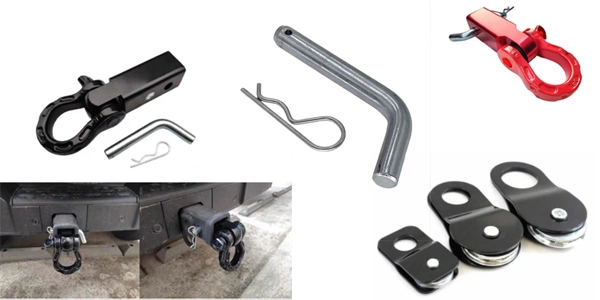
Cooperate With Qingdao RUIRUI Machinary Co., LTD.
A prominent manufacturer of trailer hardware manufacturers in China, Qingdao RUIRUI Machinery Co., LTD. was established in Shandong, China, in 2016. It combines state-of-the-art production technology with meticulous quality control. Trailer pins, trailer arms, winches, and custom fasteners are all sold by RUIRUI, a specialized supplier of trailer hardware companies in China that run eight fully automated production lines with an annual capacity of 130,000 pieces. Our China trailer hardware factory wholesale operations provide premium trailer hardware factory items to more than 80 countries with reasonable price structures backed by ISO 9001, ISO 14001, and OHSAS 18001 certifications. We provide progressive stamping, deep drawing, CNC machining, laser cutting, and extensive finishing processes like powder coating, plating, anodizing, and electrophoresis for a range of materials, including mild steel, aluminum alloys, stainless steel, copper, and brass. Our facility has over 15 years of management experience. By providing complete OEM support, technical guidance, and customization services, our knowledgeable R&D team guarantees the finest solutions for your specific applications. We provide quick delivery, professional packaging, comprehensive technical support, and dedicated after-sales service to ensure your complete satisfaction. Write to our team at info@qdkshd.com to discuss your trailer hardware requirements and find out why leading companies worldwide pick RUIRUI as their go-to China trailer hardware manufacturing partner for reliability, innovation, and consistently excellent quality.
References
1. "Quality Management Systems in Metal Manufacturing" - International Organization for Standardization (ISO Technical Committee)
2. "Advanced Metal Forming Technologies for Automotive and Trailer Components" - Society of Manufacturing Engineers
3. "Corrosion Protection Methods for Transportation Equipment Hardware" - National Association of Corrosion Engineers
4. "Supply Chain Management Best Practices in Global Manufacturing" - Council of Supply Chain Management Professionals
5. "Material Selection Guidelines for Heavy-Duty Trailer Applications" - American Society for Testing and Materials (ASTM International)

Send Inquiry
Related Industry Knowledge
- What Makes a Reliable Trailer Coupler Manufacturer Truly Dependable?
- Weather-Resistant Metal Hinge: Reliable Performance from Rain to Heat
- How do steel trailer fenders resist rust?
- What are common uses for small sheet metal boxes?
- How Does a Receiver Adapter Hitch Boost Towing Flexibility?
- How do you maintain stainless steel hinges?
- Can I Use a Trailer Jack Stand Foot for Heavy-Duty Trailers?
- What materials are trailer ball covers made from?
- What are the dimensions of a trailer jack bottom plate?
- how sheet metal parts are fabricated using nets?