
OEM Trailer Coupler and Hitch Components: Key Features and Benefits
When driving a large cargo down the highway, every trailer owner must decide if their coupler will hold or whether a poor connection may result in catastrophe. Selecting the appropriate OEM trailer coupler and hitch components often makes the difference between a safe trip and a disastrous failure. These intricately designed connection systems are more than simply metal components; they serve as the vital link between your towing automobile and your cargo. You may avoid expensive mishaps, equipment damage, and safety risks that jeopardize every journey by knowing why high-quality OEM trailer coupler and hitch components are crucial.
Understanding OEM Trailer Coupler and Hitch Components
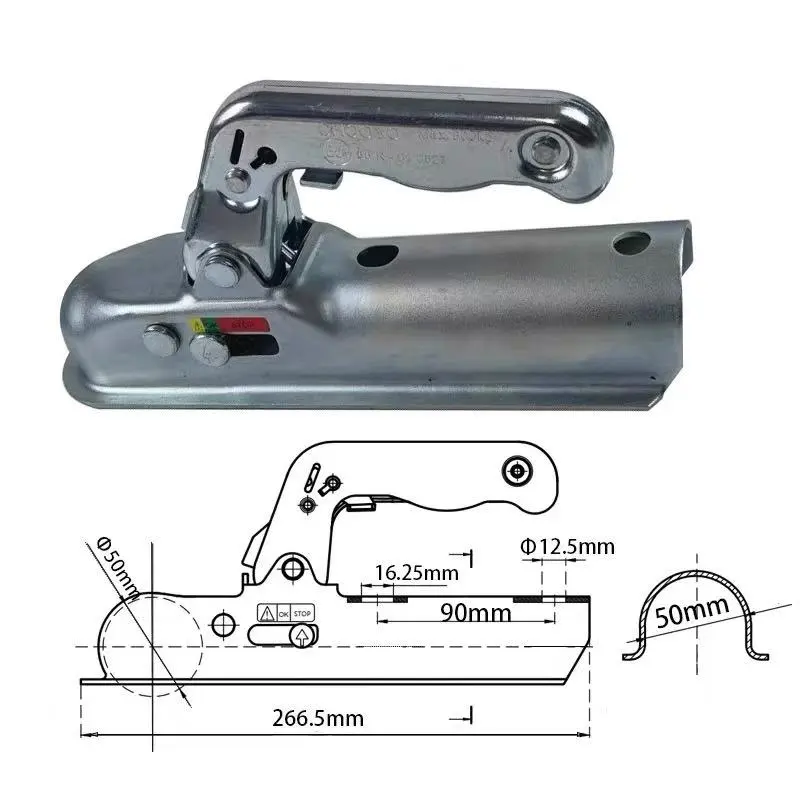
As the mechanical link that fastens your trailer to the towing vehicle, OEM trailer coupler and hitch components are an essential part of any towing system. These parts are produced in accordance with the original equipment requirements, guaranteeing accurate engineering, consistent quality, and dependable performance in a range of towing applications. The word "OEM" denotes that these parts are preferable than aftermarket equivalents in terms of fit and durability since they adhere to the precise specifications established by equipment manufacturers. OEM Trailer Coupler and Hitch Components' basic structure consists of a number of crucial components that operate together. While the latching mechanism makes sure the coupler is firmly fastened to the hitch ball during operation, the coupler body serves as the primary housing that attaches directly to the trailer tongue. The adjustment nut allows for fine-tuning for a tight fit around the trailer ball, while other parts like the hinge pin allow the latch to move for attachment and release. Multiple levels of protection are created during towing operations by using safety pins to seal the latch and prevent unintentional disengagement. Premium OEM trailer coupler and hitch components are distinguished from subpar goods by their manufacturing quality. To make sure they can survive the severe strains of heavy-duty towing, premium materials like cast steel, forged steel, and specialty aluminum alloys go through extensive testing. Components with constant dimensional correctness and structural integrity are produced using advanced manufacturing processes including deep drawing, progressive stamping, and precision CNC machining. Powder coating, zinc plating, and specialty corrosion-resistant finishes are examples of surface treatments that prevent environmental deterioration and greatly increase service life under challenging operating circumstances.
Weight Capacity and Load Distribution
When choosing OEM trailer coupler and hitch components for any towing application, weight capability is the most important factor. The gross trailer weight, which is the entire weight of the fully loaded trailer including the trailer itself, cargo, gasoline, water, and any other equipment, is used to grade these parts. In order to guarantee structural integrity under load and avoid catastrophic breakdown during transport, coupler capacity must be matched to real towing needs. The coupler system must adequately sustain the downward force that tongue weight, which normally ranges from 10 to 15 percent of the total trailer weight, applies on the hitch ball. Larger bearing surfaces, improved latching mechanisms that transfer stresses uniformly across the connection point, and stronger construction are characteristics of OEM trailer coupler and hitch components made for certain weight classes. Even under rigorous operating circumstances, this designed approach to weight management decreases metal fatigue, lowers stress concentrations, and increases component service life. Vehicle handling, brake efficiency, and overall towing safety are all impacted by proper load distribution using high-quality OEM trailer couplers and hitch components. Reduced steering control, increased wear on towing vehicle suspension parts, and trailer wobble may all result from improper weight balancing. High-end couplers include design elements that provide constant performance in every operating environment by maintaining ideal weight distribution over the whole spectrum of towing situations, from highway speeds to tight maneuvering in limited places.
Material Selection and Manufacturing Processes
The lifetime and performance of OEM trailer coupler and hitch components are significantly influenced by material science. While cold rolled steel offers higher surface smoothness and dimensional accuracy for precision components, mild steel offers good formability and weldability for general-purpose applications. In areas with high salt exposure or maritime settings, stainless steel offers outstanding corrosion resistance. In situations where payload capacity is crucial, aluminum alloys minimize weight without compromising strength. Every choice of materials reflects certain operating and technical constraints. Precision OEM trailer coupler and hitch components are created from raw materials using sophisticated manufacturing techniques. In order to achieve great production efficiency and maintain tight tolerances, progressive stamping procedures create complicated forms in numerous phases. In order to ensure constant geometry and appropriate hitch ball contact, deep drawing methods produce cup-shaped components that constitute the ball receiver. Precision elements like threaded holes, mounting surfaces, and adjustment mechanisms that need precise dimensional control for correct assembly and operation are added via CNC machining. The functionality and look of OEM trailer coupler and hitch components are improved by secondary finishing procedures. Sharp edges that might injure people during installation or maintenance are removed via deburring. Smooth surfaces produced by polishing reduce wear and friction in moving parts. For brand recognition and visual appeal, powder coating offers long-lasting, impact-resistant coatings in a variety of colors. Protective metal coatings that prevent corrosion and prolong service life in harsh settings are applied via electroplating. These finishing procedures are the last stages of quality that set high-end parts apart from less expensive ones.
Types of OEM Trailer Coupler and Hitch Components
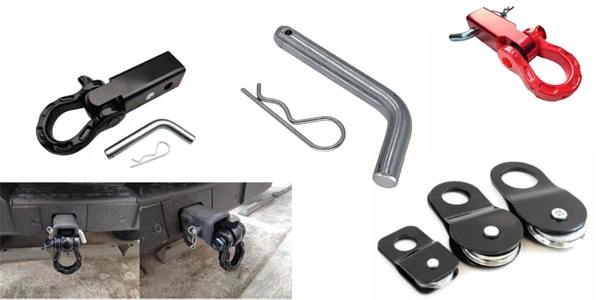
For light to medium-duty towing applications, ball couplers are the most popular kind of OEM trailer coupler and hitch components. These couplers include a socket that clamps over a spherical hitch ball to provide the required movement during turns and across rough terrain, all while establishing a solid connection. Ball couplers support a range of trailer weights, from little utility trailers to large recreational vehicles, and come in conventional sizes such as one and seven-eighths inch, two inch, and two and five-sixteenths inch combinations. Design-specific latching mechanisms include lever-style latches, screw-type adjusters, and quick-release systems that strike a compromise between user convenience and security. When opposed to straight-tongue designs, A-frame couplers provide improved stability and load capacity for trailers with V-shaped tongue arrangements. By mounting to the converging frame elements of the A-frame construction, these OEM trailer coupler and hitch components increase strength by dispersing stresses across a larger base. Heavy-duty stamped steel or cast construction are often used in manufacturing, and mounting patterns are created to correspond with industry-standard frame angles. A-frame couplers are perfect for enclosed trailers, equipment haulers, and mid-sized recreational trailers where stability and dependability are crucial since they can support larger loads while remaining small.
Channel Mount and Adjustable Systems
Channel mount couplers, which are also categorized as straight-tongue types, are welded or attached to rectangular tube trailer tongues. In many situations, these OEM trailer coupler and hitch components provide secure attachment without the need for frame modification by sliding over the square tubular frame. When wear develops, the channel design makes it simple to repair the coupler since it doesn't need cutting or welding. There are variants that are suitable for different towing needs, and weight capabilities vary from light-duty applications to heavy loads. Operators that tow many cars or want height modification capabilities might benefit from the adaptability offered by adjustable coupler systems. Different vehicle heights may be accommodated without modifying the trailer thanks to the mechanisms in these OEM trailer coupler and hitch components that enable vertical positioning modifications. Some cutting-edge designs include tool-free adjustment systems that allow for rapid field adjustments, which are especially helpful for commercial operators and rental fleets catering to a variety of clientele. Regardless of the chosen height setting, the adjustment mechanism ensures safety by maintaining structural integrity across the whole range of settings. Unique trailer layouts, such as those needing surge brake actuators for hydraulic braking systems, are accommodated by specialized channel mount designs. Through a hydraulic cylinder mechanism, these integrated OEM trailer coupler and hitch components synchronize trailer braking with tow vehicle deceleration by combining the coupling function with brake actuation. For boat trailers and other applications where additional braking is necessary for safe operation, this dual-purpose design ensures synchronized brake performance while simplifying trailer assembly.
Heavy-Duty and Specialized Configurations
The heavy-duty category of OEM Trailer Coupler and Hitch Components is represented by gooseneck couplers, which are intended for big loads such as commercial applications, large equipment transporters, and livestock trailers. These couplers use a vertical coupler shaft that attaches to a ball in the truck bed to install above the tow vehicle's rear axle. Weight capabilities range from 15,000 to 30,000 pounds or more. Compared to traditional hitch systems, the higher mounting point offers better weight distribution and increased maneuverability. The design maintains stability under high loads while enabling a smaller turning radius. Fifth wheel couplers provide outstanding stability for big recreational vehicles and heavy trailers by using a kingpin connection mechanism akin to semi-trailer designs. The locking jaw mechanism of these OEM trailer coupler and hitch components contacts a kingpin that extends downward from the trailer, forming a stable connection that disperses weight over a large bearing surface. Compared to traditional bumper-mounted hitches, the raised pivot point above the rear axle enhances handling qualities and reduces sway. Superior towing capability justifies the enormous expenditure required for installation, which is a large fifth wheel hitch installed in the towing vehicle bed. For heavy-duty applications including military, construction, and agricultural machinery, pintle ring couplers provide the highest level of durability. In order to create a connection that can withstand considerable articulation and misalignment, these OEM trailer coupler and hitch components use a lunette ring on the trailer that interacts with a pintle hook located on the tow vehicle. In tough terrain and off-road situations, where traditional ball couplers would bind or fail, the design performs very well. In premium setups, weight capabilities may approach 36,000 pounds, and the sturdy design can survive collisions and misuse that would ruin inferior connection systems.
Key Features of Quality OEM Trailer Coupler and Hitch Components
The crucial safety element of OEM trailer coupler and hitch components is the latching mechanism, which controls how firmly the coupler attaches to the hitch ball and guards against unintentional separation while in use. While screw-type systems give adjustable clamping force that accounts for wear over time, lever-style latches allow rapid engagement with visual assurance of correct locking. Positive locking elements, such as safety latches, supplementary retention devices, and anti-rattle mechanisms that remove connection slack, are included into advanced designs. The latching mechanism must withstand corrosion, function dependably in a range of temperatures, and continue to work consistently throughout the course of the component's service life. OEM trailer coupler and hitch component service life is increased by corrosion resistance, especially in industrial settings with chemical contamination, maritime environments, and winter regions with road salt exposure. Zinc plating for sacrificial corrosion protection, powder coating for impact and abrasion resistance, and specialty sealants that stop moisture entry into crucial places are just a few of the protective treatments used to premium couplers. In instances where the increased material cost is justified, stainless steel construction completely removes rust issues. Even under challenging working situations, long-term durability is ensured by routine inspection and maintenance of protective coatings.
Safety Features and Compliance Standards
In addition to OEM trailer coupler and hitch components, safety chains and emergency breakaway systems provide a backup connection in case of coupler failure or hitch ball separation. Appropriate chain connection sites that retain strength under emergency loads are guaranteed by mounting options included into coupler designs. In the event that the main connection breaks, the catch system created by the chain length and crossing pattern under the tongue keeps the trailer tongue from touching the ground, enabling controlled stopping as opposed to a catastrophic loss of control. The design, testing, and certification procedures for OEM trailer coupler and hitch components are governed by industry compliance requirements. Dimensional precision and uniform manufacturing procedures are guaranteed throughout production runs by ISO quality management systems. Under established testing procedures, such as static load testing, dynamic fatigue testing, and corrosion resistance assessment, products that satisfy SAE and ASTM criteria exhibit confirmed performance. Verification of compliance is provided by certification marks cast or stamped onto coupler bodies, which guarantee that parts fulfill the minimum performance standards for their stated capacity. Manufacturing facilities' quality assurance procedures ensure that every batch of OEM trailer coupler and hitch components produced satisfies predetermined criteria. Dimensional examination verifies that conventional hitch balls and mounting configurations fit properly. Alloy composition and heat treatment efficacy are confirmed by material testing. Each manufacturing run's sample units undergo load testing to verify structural integrity under rated loads with the proper safety factors. Systems for tracking manufacturing processes provide for traceability from the receipt of raw materials to the final shipment, supporting programs for continuous improvement and warranty claims.
Installation and Maintenance Considerations
Throughout the component's service life, excellent performance and safety are guaranteed when OEM trailer coupler and hitch components are installed correctly. Torque requirements for bolt-on couplers must be strictly adhered to, and thread locking compounds must be used to stop vibration-induced loosening. Qualified welding techniques, suitable filler materials, and full penetration welds that develop the base materials' full strength are required for welded installations. Inadequate installation techniques result in weak areas that are susceptible to failure under stress, which might lead to mishaps and equipment damage that significantly outweighs the expense of appropriate installation techniques. OEM trailer coupler and hitch components must have their worn surfaces, latching mechanisms, and mounting hardware regularly inspected. Examine the inside of the ball socket for corrosion, excessive wear, or fractures that can impair the hitch ball's grip. Periodically lubricating latch components with the proper grease that prevents washout and keeps them functional over a variety of operating temperatures is necessary. As natural wear develops, adjustment mechanisms need to be checked and adjusted on a regular basis to maintain the appropriate clamping force. Maintenance activity documentation proves due attention in equipment upkeep and supports warranty claims. OEM trailer coupler and hitch component replacement durations are determined by operating circumstances, inspection results, and use intensity. Instead of continuing to be used, components that exhibit fractures, severe corrosion, or excessive wear in important places need to be replaced right away. Heavy-duty commercial couplers benefit from regular replacement based on working hours or mileage to avoid unplanned failures even in the absence of obvious corrosion. Keeping extra couplers suitable for the needs of the trailer fleet guarantees little downtime when replacement is required, promoting operational continuity and avoiding schedule interruptions.
Benefits of Choosing OEM Trailer Coupler and Hitch Components
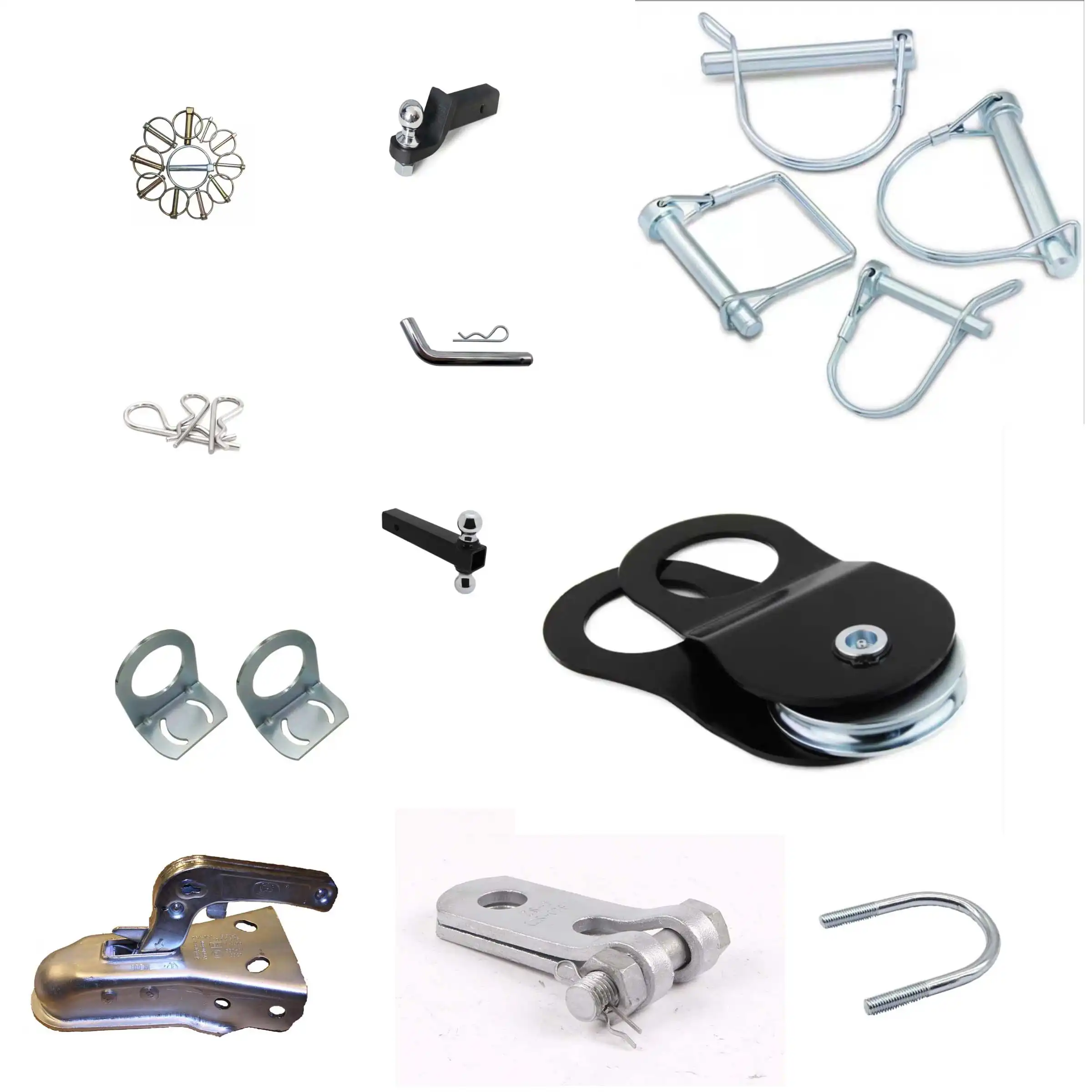
OEM trailer coupler and hitch components are distinguished from generic aftermarket substitutes by engineering perfection, which guarantees appropriate dimensional correctness for safe installation with conventional hitch systems. Extensive testing and validation procedures that maximize component geometry for strength-to-weight ratios are reflected in the original equipment specifications. Throughout the entire specified capacity range, accurate ball engagement, appropriate latch action, and dependable performance are guaranteed by precise manufacturing tolerances. This engineering investment produces parts that, under typical operating circumstances, install accurately, function smoothly, and have a predicted service life. OEM trailer coupler and hitch components made of high-quality materials provide better performance and lifespan than low-cost equivalents. For applications needing frame changes, premium steel alloys provide superior fatigue resistance, increased yield strength, and enhanced weldability. Advanced heat treatment techniques balance toughness to avoid brittle fracture with hardness for wear resistance, optimizing material qualities for particular loading situations. Higher initial prices are justified by longer service intervals, fewer maintenance needs, and lower total cost of ownership over the course of the component's lifespan when using high-quality materials.
Long-Term Reliability and Performance
Under severe working circumstances, structural integrity testing ensures that OEM trailer coupler and hitch components surpass their specified capacity with suitable safety margins. In order to confirm that the component can survive overload conditions without permanently deforming or breaking, static load testing exerts forces greater than the maximum rated capacity. In order to find possible failure modes before items are delivered to consumers, dynamic fatigue testing simulates years of use by repeatedly loading and unloading components. Impact testing verifies how components react to abrupt shock loads that occur during emergency braking or operating over uneven terrain. Manufacturer trust in product quality and performance is shown by the warranty support that comes with OEM trailer coupler and hitch components. Under typical working circumstances, comprehensive warranty coverage guards against premature wear, material failures, and manufacturing flaws. When problems occur, responsive technical assistance helps with installation instructions, application inquiries, and troubleshooting. The availability of replacement parts guarantees that pieces may be maintained and fixed rather than necessitating the replacement of whole assemblies, lowering long-term operating costs and promoting sustainability goals by extending product life. OEM trailer coupler and hitch components bought years apart retain the same specs and interchangeability because to consistency across manufacturing batches. Variation that can jeopardize fit or performance is avoided via documented production methods, regulated material sources, and verified inspection protocols. Because uniformity on certain OEM components streamlines spare parts inventories, technician training, and maintenance processes across different facilities and operating areas, fleet operators especially appreciate this consistency while managing varied equipment populations.
Cost-Effectiveness and Value Proposition
Although the initial cost of high-quality OEM trailer coupler and hitch components seems more than that of less expensive options, they provide better value due to lower maintenance costs, longer service life, and less downtime fees. Over the course of an equipment's lifespan, premium components are less likely to need to be replaced due to their superior resistance to wear and corrosion. Unexpected failures that result in expensive service disruptions, delayed delivery, and possible cargo damage are avoided via reliable operation. Safety performance protects people and financial resources by lowering accident risk and related liability risks. Properly manufactured OEM trailer coupler and hitch components that ensure secure connections without undue weight or complexity increase operational efficiency. In addition to increasing fuel efficiency and lowering tire wear on both the towing vehicle and the trailer, optimal weight distribution improves vehicle handling and braking ability. Less frequent coupler adjustments and repairs save up technician time for other value-adding tasks. Bolt-on designs' streamlined installation processes save labor expenses when replacements are required, increasing overall cost-effectiveness. When choosing OEM trailer couplers and hitch components, risk minimization offers significant hidden value. When a component fails when operating a roadway, there is a serious danger of an accident that might result in injuries, damage to the equipment, loss of cargo, and legal culpability. High-quality couplers that are produced in accordance with accepted standards and appropriately certified for use provide recorded proof of reasonable care in equipment selection, enabling legal defense in the event that events happen in spite of appropriate procedures. While guaranteeing sufficient coverage for operational hazards, insurance considerations may favor equipment specified with certified components, possibly lowering premium costs.
Conclusion
OEM trailer coupler and hitch components are essential investments in long-term cost-effectiveness, operational dependability, and towing safety. Components that consistently function under severe circumstances and have the endurance required for a prolonged service life are produced via quality engineering, precise manufacture, and rigorous testing. Optimal performance and reduced risk exposures are ensured by choosing the right couplers based on operating conditions, load capacities, and application requirements.
Cooperate With Qingdao RUIRUI Machinary Co., LTD.
Qingdao RUIRUI Machinery Co., LTD. is a prominent OEM Trailer Coupler and Hitch Components manufacturer in China that specializes in producing precision-engineered towing components that surpass industry requirements. With ISO 9001, ISO 14001, and OHSAS 18001 certifications, our China OEM Trailer Coupler and Hitch Components supplier capabilities include full design, manufacture, and quality assurance services. As a seasoned China OEM producer of trailer coupler and hitch components, we use robotic welding, laser cutting, CNC machining, and modern stamping technologies to create components that satisfy precise requirements on eight production lines that can produce 130,000 pieces a year.
With goods sold to more than eighty countries, including North America, Europe, and Australia, our China OEM Trailer Coupler and Hitch Components wholesale programs serve distributors, equipment makers, and fleet operators worldwide. We provide competitive OEM trailer coupler and hitch components for sale, along with modification services to meet specific application needs, specialty materials including brass, stainless steel, mild steel, and aluminum alloys, as well as extensive surface treatment choices. Our affordable pricing structure for OEM trailer couplers and hitch components demonstrates effective manufacturing methods without sacrificing the high-quality OEM trailer couplers and hitch components that our clients need.
Join together with RUIRUI Machinery to take advantage of technical know-how, OEM support, quick shipping, and skilled packing that guarantees your parts will be ready for installation right away. From the first idea to production optimization, our skilled engineering team offers complete technical assistance throughout the product development process. Get in touch with us at info@qdkshd.com to talk about your particular needs and see how our production skills can improve the dependability and performance of your towing equipment.
References
1. Society of Automotive Engineers. "Trailer Couplings - Automotive Type - Performance Requirements." SAE Standard J684. Society of Automotive Engineers International.
2. American Society for Testing and Materials. "Standard Specification for Trailer Couplers and Fifth-Wheel Connection Assemblies." ASTM F1331. ASTM International.
3. National Highway Traffic Safety Administration. "Federal Motor Vehicle Safety Standards - Trailer Brake Systems." FMVSS No. 121. U.S. Department of Transportation.
4. International Organization for Standardization. "Road Vehicles - 50 mm Spherical and 50 mm Towing Coupler - Part 1: Basic Requirements and Vehicle-Related Test Methods." ISO 7636-1. International Organization for Standardization.
5. Trailer Manufacturers Association. "Equipment and Maintenance Guidelines for Trailer Couplers and Hitches." TMA Technical Bulletin Series. Recreational Vehicle Industry Association.

Send Inquiry
Related Industry Knowledge
- Adjustable Trailer Coupler: Flexibility for Multiple Balls
- Best Value Hitch Pin and Trailer Ball Supplier: Price vs Performance
- OEM Trailer Parts Manufacturer Solutions for Global Markets
- Vehicle-Specific Trailer Coupler: The Key to Safer, Smoother Hauling
- What Industries Utilize CNC Sheet Metal Parts?
- Why Are CNC Metal Accessories Essential for Precision Engineering?
- What are the differences between gooseneck ball hitches and fifth-wheel plates?
- What is the weight capacity of a 2-inch coupler repair kit?
- How do you maintain a Heavy Duty Snatch Block?
- How to make a corrugated metal fence?