
Safety Chain Types: Which One Should You Choose?
To pick the right safety chain, you need to know how much load you need to operate, how exposed you are to the environment, and how you need to follow the rules. Common types of safety chains are standard-duty chains for lighter trailers (usually 2,000 to 5,000 pounds working load limit), heavy-duty chains for construction equipment and industrial transport (rated 7,000 pounds and up), and corrosion-resistant chains made from Stainless Steel or Galvanized Steel for marine and outdoor infrastructure. The choice of material is very important. Carbon steel chains have the highest tensile strength and can be bought in bulk for the lowest cost. Stainless Steel types (304/316) work better in settings with a lot of moisture or chemicals. Attachment hardware like S-hooks, clevis hooks, and quick links must meet the grade and load rate of the chain to keep the system together and stop failure points from happening when the load changes.
Understanding Safety Chains: Purpose and Key Specifications
The Functional Role of Safety Chains
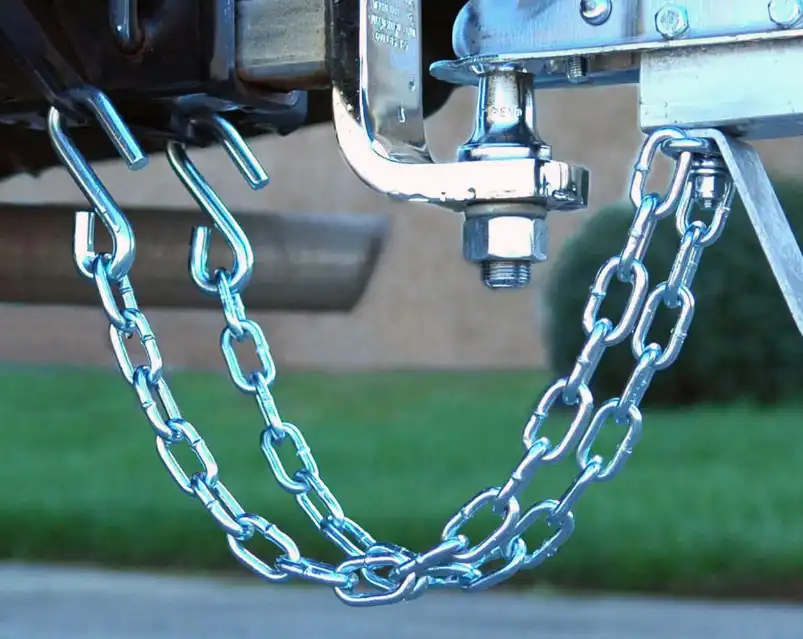
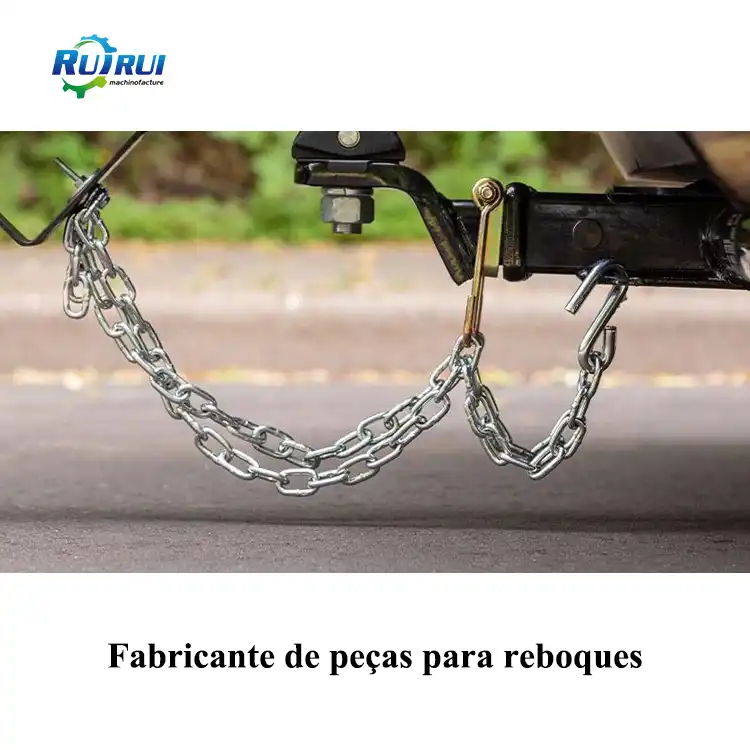
Safety chains are backup retention systems that keep the tow car and trailer physically connected if the primary coupling devices fail. This fail-safe device protects against three major types of failure: latch creep due to harmonic road vibration, hitch pin shear under lateral stress, and coupler separation due to incorrect seating. Crossing the chains under the tongue makes a cushion that catches the tongue of the trailer if it comes loose. This keeps it from falling onto the road and causing jackknife crashes.
Material Composition and Performance Standards
Professional-grade safety chains are made with special metal mixtures that balance strength, flexibility, and resistance to the environment. High-carbon steel metals, like Grade 43 or Grade 70 chains, have tensile strengths between 2,600 and 4,700 pounds per link, making them good for light to medium-duty uses. When alloy steel chains are heated, they can hold more than 15,000 pounds, which is what is needed to move big equipment. In acidic settings, surface treatments have a huge effect on how long something will last. With hot-dip galvanizing, a zinc covering is added to provide cathodic protection, and the ASTM B117 salt spray resistance lasts for more than 500 hours. Galvanic corrosion problems can't happen in naval uses with Stainless Steel types (304 and 316 grades), but they are much more expensive to buy. Buyers need to make sure that chain makers show proof that they follow NACM (National Association of Chain Manufacturers) standards. These standards set the minimum proof load, working load limit, and requirements for material tracking.
Determining Proper Chain Specifications
To figure out the right safety chain capacity, you need to know the Gross Vehicle Weight Rating (GVWR) of the goods being pulled. DOT rules say that the total strength of the safety chains must be at least as high as the GVWR. Each chain must be rated at half of that number to account for situations where just one chain fails. It can be hard to figure out the right length for chains because they need to be long enough to allow for a tight turning radius without getting stuck, but short enough so they don't touch the road when they're not in use. As a general rule, you should measure from one attachment point to another during maximum movement and then add 4 to 6 inches for the hardware used for connection. Link shape affects both strength and flexibility. Welded short-link chains are stronger per unit weight than long-link designs, but they are less flexible around tight bends.
Types of Safety Chains Explained: Which One Fits Your Need
Standard-Duty Chains for General Transport
For leisure trailers, light utility trailers, and small equipment hauliers with GVWRs below 5,000 pounds, standard safety chains are enough to keep them safe. These chains are usually made of Grade 30 or Grade 43 steel and have links that are 1/4-inch to 5/16-inch wide. Each chain can hold up to 3,500 pounds of weight. The material is generally made of low-carbon steel that has been electroplated with zinc. This gives it enough rust protection for short periods of time outside. Standard chains come with different terminal fittings that are designed for different uses. For example, S-hooks are quick to connect, but they can come loose when the chain is shaken. Clevis hooks with safety locks, on the other hand, are more secure when attached to mounting brackets. The mix between manufacturing cost and performance reliability is liked by procurement managers who buy these parts for distribution channels. This makes them good for high-volume trailer accessory sales where end users need DOT-compliant options without having to pay more.
Heavy-Duty Chains for Industrial Applications
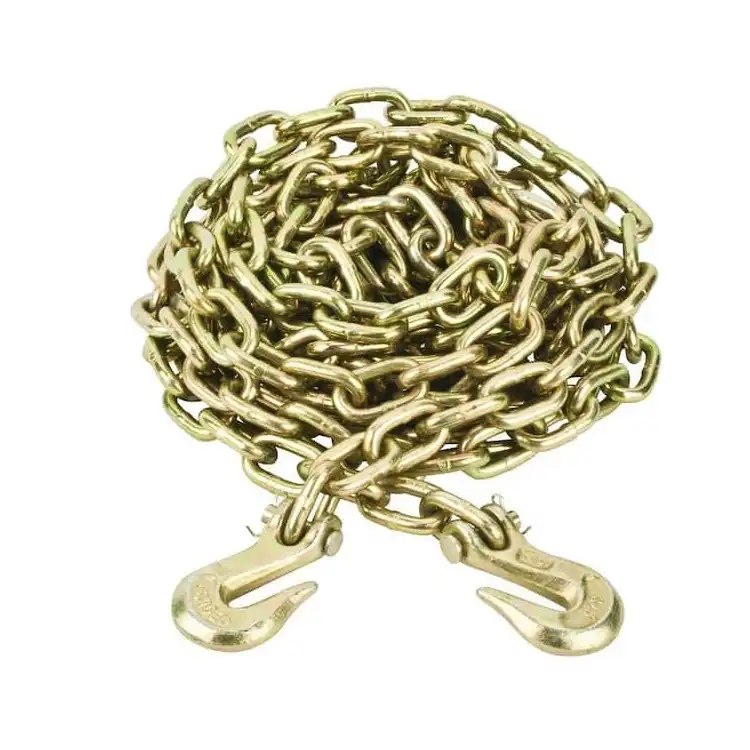
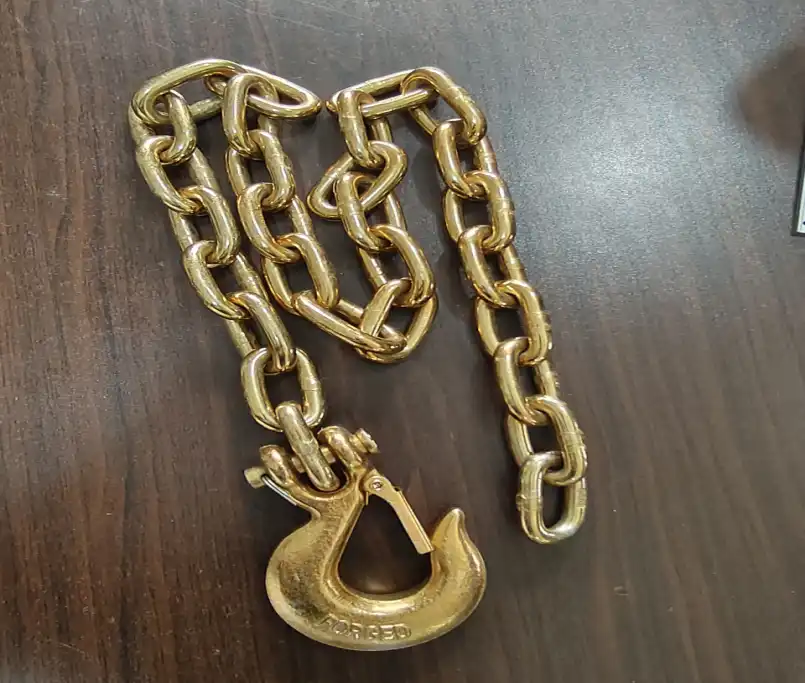
Chains that can handle heavy loads and harsh circumstances are needed for heavy industry tasks like transporting building equipment, towing farm implements, and business flatbed operations. Heavy-duty safety chains are made of alloy steel in Grade 70 or Grade 80. This steel is heated to get tensile forces close to 120,000 PSI. These chains have bigger link widths (3/8-inch to 1/2-inch) and thicker wire cross-sections that keep the chains from deforming when they're going over rough ground. The end fittings have grab hooks with positive locking mechanisms or cast clevis assemblies that keep them from releasing by mistake, even when they are moving very freely. Yellow chromate passivation is often used over zinc coating to protect the surface. This gives the metal a unique gold look and makes it more resistant to chemicals in places where oil, de-icing salts, and alkaline dust speed up rust. When looking at heavy-duty chains, buyers need to make sure that the supplier's certification papers include batch tracking information. This way, buyers can see how the performance of the chain is related to specific heat treatment processes in case it breaks in the field.
Stainless Steel Versus Galvanized Steel: Material Trade-Offs
When choosing between Stainless Steel and Galvanized Steel, it's important to find the right balance between resistance to rust, mechanical strength, upkeep needs, and cost. 316-grade alloy Stainless Steel chains are very resistant to pitting rust in marine settings and keep their structural integrity even after being exposed to saltwater for a long time. Compared to galvanized options, this metal's better performance comes at a cost of 300–400% more. Because the material doesn't have quite as much tensile strength as heat-treated carbon steel, bigger link sizes are needed to get the same working load values. This adds weight and bulk. When used onshore, where contact is limited to rain, road spray, and humidity rather than constant immersion, galvanized chains offer cost-effective corrosion protection. The zinc covering works as a sacrifice, corroding more quickly to protect the steel underneath. However, this protection wears off over time, so it needs to be checked on a regular basis and eventually replaced. Infrastructure contractors who work on city projects in a range of climates usually choose galvanized chains for standard installations and Stainless Steel chains for coastal installations, wastewater treatment plants, and other high-corrosion areas where the cost of replacement is higher than the material premium.
Attachment Hardware and Customization Options
The safety chains' end fittings have a big effect on how useful they are, how safe they are, and how well they work with fixing frames. S-hooks are still commonly used for retrofitting because they can engage different attachment point shapes without any changes. However, because they are open, they can become disengaged by mistake. Clevis hooks with safety latches that are loaded with springs offer better grip. This is especially helpful for transporting goods over the road, where constant vibrations can cause the hook to move. Field length can be changed with quick-link connectors that close with screw-pins. This means that a single chain design can work with a few different mounting setups. When standard goods can't meet specific business needs, customisation becomes very important. OEM equipment makers often ask for connection points to be factory-welded and placed in exact spots so that they can work with their own hitch designs. For municipal building projects, chains may need to be coated with materials that prevent corrosion and are suited to the climate or to the project's style. When bulk distributors need to get safety chain inventory, they can work better with suppliers that can make things. These suppliers can send container loads of goods with custom end fittings, packaging configurations, and private labelling, without the long lead times and minimum order quantities that come with fully custom manufacturing.
How to Choose the Right Safety Chain for Your Business
Evaluating Load Requirements and Equipment Compatibility
The first step in the choosing process is to correctly figure out the most weight that the safety chains must hold. When figuring out the right size safety chain, you have to take into account the whole vehicle's weight plus any extra weight that might be caused by emergency stopping or hitting rough ground. This is different from working load calculations for main lifting equipment. The equipment's GVWR should be used in procurement specs instead of its normal working weight. This will make sure that there is enough capacity even when trucks carry their maximum allowed loads. Not only are the weight values compatible, but so are the actual mounting interfaces. Trailer tongue designs are very different. For example, A-frame tongues have two connection points that are very far apart, while straight tongues may only have center-mount hooks. This shape must be taken into account when choosing the chain length and connection hardware. The crossed-chain design that makes a support cradle must also be kept. For urban applications, shorter chains are needed to keep the wheels clear of speed bumps and parking kerbs. Off-road applications, on the other hand, need longer chains to allow for extreme rotation angles on rough terrain.
Analyzing Environmental Factors and Material Selection
The environment directly affects the materials and protection layers that will last a long time in safety chains. Coastal activities subject chains to air that is high in salt, which speeds up galvanic corrosion and could wear away zinc coatings in 18 to 24 months of constant contact. The higher cost of buying Stainless Steel is worth it for these uses, or strict cleaning plans and a new chain replacement every year are needed. Industrial sites that deal with toxic chemicals also run the risk of breaking down. For example, wastewater treatment plants, chemical processing sites, and mines often use 316-grade Stainless Steel to keep acidic or alkaline compounds from pitting the steel. Extreme temperatures have different effects on chain performance. For example, temperatures below -20°F can make lower-grade carbon steels weak, and temperatures above 400°F can anneal heat-treated chains, making them less strong. UV light breaks down the plastic protective covers and rubber grommets that are used in some chain arrangements. For long-term keeping outside, all-metal construction is needed. When purchasing chains for equipment teams that work in a variety of climates, procurement managers usually choose galvanized Grade 70 chains as a standard. They then keep an inventory of Stainless Steel chains in different regions for coastal distribution centres.
Supplier Evaluation and Quality Assurance Criteria
When choosing a safety chain provider, you need to look at more than just prices per unit. You also need to look at the supplier's manufacturing skills, quality control systems, and supply chain reliability. Manufacturers who have ISO 9001 approval show that they have systematic quality control methods in place. These include inspecting materials as they come in, checking dimensions as they're being made, and proof-load testing output samples. Buyers can check the metallurgical makeup and heat treatment compliance of a product if the supplier provides full material tracking paperwork that connects each chain batch to a specific steel mill certification. Traceability is very important when safety chains need to meet government rules for commercial car operation or when they are used in goods that need liability insurance. When it comes to seasonal businesses, like trailer makers who have to deal with spring production spikes, consistent lead times make it harder to plan purchases. When suppliers have extra production capacity or keep safety stock, they can send goods on more regular schedules than when they are using all of their capacity at full capacity. When applications need help with specifications, suppliers with better technical support stand out. For example, companies that hire degreed engineers to do load calculations, suggest attachment configurations, and provide CAD models for planning integration add value beyond just providing commodities. Warranty terms show how confident the maker is in the quality of the product. For example, sellers who give replacement promises for multiple years on chains used within the approved limits show that they want to build long-term relationships with customers instead of just making sales.
Conclusion
Finding the right safety chains means finding a balance between technical requirements, working environments, legal requirements, and cost factors. The decision process starts with correctly figuring out the load capacities based on the GVWR of the equipment. Then, those needs are matched with chain types and materials that provide the right amount of strength and corrosion resistance. Environmental factors have a big effect on the choice of material. For example, businesses along the coast can justify using Stainless Steel, while rural uses can get by with galvanized chains, which work just as well and cost less. When comparing suppliers, it's not just about price. You should also look at their quality certifications, the ability to track materials, and their expert support services to make sure the supply chain is reliable in the long run. The safety chain works better and lasts longer when it is installed correctly and maintained according to a set of rules. It should also be inspected regularly. By consistently using these criteria, procurement managers can find safe solutions that are compliant and last a long time. These solutions protect people, tools, and the organization's liability risk.
FAQ
1. What distinguishes safety chains from breakaway cables in trailer applications?
When the primary hitch fails, safety chains keep the tow car and trailer physically connected, holding the full weight of the trailer to keep it from coming apart. Breakaway cables turn on the trailer's brakes when it starts to separate from the vehicle, but they don't support the structure. Regulations require both parts to be on trucks with brakes because they work together.
2. How often should safety chains undergo inspection and replacement?
Before each use, there should be a visual check to see if there is any visible damage or warping. Every three months or 500 hours of use, a detailed checkup should check for rust and link elongation. When links stretch past 5% of their original length, when corrosion causes a noticeable loss of thickness, or when connection hardware shows cracks or excessive wear no matter what the state of the chain is, it needs to be replaced.
3. Can safety chains be customized for specialized industrial applications?
When a manufacturer offers OEM services, they can make safety chains with custom lengths, special connection tools, and coatings that are made for specific uses. Customisation is helpful for companies that make equipment and need exact measurements for integration, for building projects that need specific corrosion resistance, or for operations that need chains that work with their own mounting systems. Customisation costs are usually lower when you buy in bulk than when you place a small order.
Partner With RUIRUI for Reliable Safety Chain Solutions
Our engineering team delivers safety chains that meet strict operating and compliance standards, and heavy equipment operators, infrastructure builders, and security system dealers trust us to do so. At RUIRUI Machinery, we use high-tech methods like precision laser cutting, CNC machining, and automatic welding systems to make trailer locking parts. These methods make sure that the quality of each production run is the same. We can make more than just standard catalogue items; we specialise in OEM customisation, making safety chain systems with measurements, attachment hardware configurations, and surface treatments that are best for different types of external exposures that are chosen by the customer. Quality certifications, like ISO 9001, and detailed material tracking paperwork give purchasing managers the peace of mind they need when they need to buy safety-critical parts. Whether you need to ship galvanized chains in containers for distribution networks or special Stainless Steel parts for coastal infrastructure projects, our expert team works together to find solutions that meet your exact needs. Contact us at kshdhardware@qdkshd.com to talk to one of our experienced application engineers about your safety chain needs, or go to sheetmetalprocessingplant.com to see all of our manufactured metal goods. As a well-known safety chain provider that serves customers all over the world, we provide the consistent production and reliable supply chain that B2B partnerships need.
References
1. National Association of Chain Manufacturers. Welded Steel Chain Specifications Manufacturing Standards. 2021 Edition.
2. Federal Motor Carrier Safety Administration. Safety Equipment Requirements for Commercial Vehicle Trailers. Department of Transportation Regulations, 2022.
3. American Society for Testing and Materials. ASTM B117: Standard Practice for Operating Salt Spray Apparatus for Corrosion Testing. ASTM International, 2019.
4. Society of Automotive Engineers. SAE J684: Trailer Couplings and Hitches - Automotive Type. SAE Technical Standards Board, 2020.
5. National Highway Traffic Safety Administration. Safety Chain and Cable Requirements for Towed Vehicles: Performance Analysis and Compliance Guidelines. 2021.
6. International Organization for Standardization. ISO 1834: Short Link Chain for Lifting Purposes - Grade 8 - Specification. ISO Technical Committee 111, 2020.

Send Inquiry
You may like