
The Different Types of Trailer Couplers Explained
Between the vehicle pulling the trailer and the vehicle pulling it, there is a trailer coupler. It makes sure the connection is strong enough to handle the stresses of moving the load, changing road conditions, and transporting it. It took a lot of thought to make sure that these parts can handle certain weights, environmental issues, and operational needs. Maintenance teams and people in charge of buying things can pick the best one for their fleet if they know about the different kinds. This makes commercial and industrial settings safer and lowers the chance that equipment will break down.
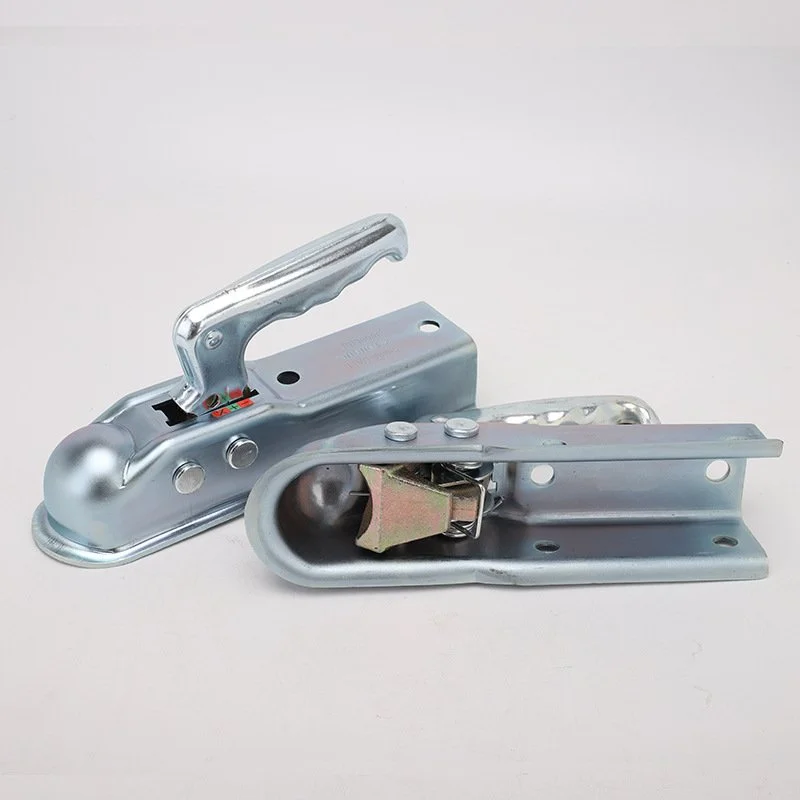
Understanding Trailer Couplers – Basics and Functions
The Critical Role of Trailer Couplers in Transportation Safety
The trailer coupler is the main part of the vehicle that connects to the load when it is pulling it. It's not easy for this part to do its job. It has to keep the structure strong under dynamic loads, absorb shock from uneven ground, and keep the environment from breaking down due to water, road salt, and temperature changes. If the trailer coupler doesn't work right, the whole towing system is at risk. This could make things less safe and get fleet operators and contractors in trouble with the law.
Modern trailer couplers are built with a lot of safety features in mind. A good design is more than just a ball-and-socket or pintle-hook connection. It also has safety chain attachment points, locking latches that keep the connection from coming apart by accident, and mounting brackets that spread the force across the trailer frame. The stuff you use is also very important. For instance, most trailer couplers used in industry are made of forged or cast steel alloys, which are stronger and lighter than alloys that are made by hand.
Key Components and Safety Features
Good trailer couplers have a number of important parts that work together to make the connection strong. A latch holds the trailer coupler to the hitch ball, and it has to close all the way without any extra play. The latch is held in place by safety pins or clips so that it doesn't open when it's being moved. The housing of the trailer coupler must be the right size for the hitch ball. For each type of load, the standard ball diameters are 1-7/8", 2", 2-5/16", and 3".
The safety of operations and the equipment's longevity are directly linked to how well these parts are taken care of. When you oil moving parts, they don't rust or rub against each other, and regular checks find wear patterns before they lead to a major failure. You can tell a trailer coupler is worn when there are long bolt holes, cracks in the casting or welds, too much rust that makes the structure less thick, and hardware parts that are loose or missing.
Maintenance Best Practices for Extended Service Life
Setting up regular inspection times helps the teams in charge of buying things and fixing things find problems early on. Make sure the trailer coupler latch closes tightly around the hitch ball with only a small gap before every trip. Also, make sure the safety pins are in place and working, and the trailer coupler body or mounting points are not visibly bent. Before moving anything, the connection should be checked by lifting the tongue jack a little to make sure it is firmly in place.
Cleaning regularly can get rid of corrosive substances that make wear happen faster. In places where road salt is used in the winter, this is very important. Coverings that keep water out, like rust-prevention spray or grease, keep water from getting into metal surfaces that aren't protected. Replacement times depend on how often the trailer coupler is used. However, no matter how long it has been used, any trailer coupler that has structural cracks, severe corrosion, or changes in size should be taken out of service right away.
Types of Trailer Couplers – Dimensional and Functional Breakdown
Ball Couplers for General Purpose Applications
The most common type of coupling system for light to medium-duty tasks is still the ball trailer coupler. It has a socket-shaped receiver that fits over a spherical hitch ball. The ball is held in place by a latching system that goes around the top of it. Because the joint can move in more than one plane, it can adapt to changes in angle that happen when the vehicle turns or goes over rough ground. When used for heavy commercial use, ball couplers can hold up to 30,000 pounds of weight. For light utility trailers, that's only 2,000 pounds.
When a trailer coupler and ball don't match, they can be dangerously unstable and wear out faster. For example, a 2" trailer coupler must mate with a 2" ball. There are different kinds of materials used for each load class. Heavy-duty units need forged steel to be stronger, while lighter-duty units are made of cast steel. A good number of modern ball couplers have channels that can be changed to get the best fit. The tow is now more stable and there is less play.
Pintle Hook Systems for Heavy-Duty and Off-Road Conditions
This is the best thing to get if you want something that will last and work well in rough conditions. A pintle hook is on the vehicle pulling the trailer, and a lunette ring is on the tongue of the trailer. This is a hook-and-eye connection. The mechanics of this design are very simple, so it is not likely to get damaged by impacts, debris, or being out of alignment while coupling.
This type of system is used a lot in construction and the military because it keeps working even when parts are worn out or dirty with dirt and debris. The connection can handle more misalignment angles than ball couplers, which makes it easier to hook up in tight spaces or on rough ground. When set up for business use, pintle systems can hold more than 60,000 pounds. Military versions with extra space can hold even more. It's tough, but it makes more noise and moves less smoothly than ball coupler systems.
Lunette Ring Couplers for Specialized Equipment
Tow hooks like pintle hooks can be used with lunette rings, which can also be used with NATO-style combination hitches. A lot of the time, these rings are welded or bolted to the trailer tongue. There are standard sizes for them so that they can be used with a range of vehicle platforms. Most industrial standards call for pintle hook jaw openings to be between 2-1/2" and 3" in diameter.
When making a lunette ring, the strength of the material is very important since the connection point is where a lot of stress is applied. It's better to forge than cast something because it makes sure the grain structure is right and there are no holes inside that could lead to cracks. Things last longer because they don't rust, which can weaken the cross-sectional area. Surface treatments like powder coating or galvanizing stop this.
Modern Locking Mechanisms and Automation
New technologies have made electric and hydraulic locking systems possible. These systems make things safer and easier to use. Trailer couplers that are powered by electricity let drivers connect and disconnect the connection from inside the vehicle. The driver doesn't have to move between the truck and the trailer, which makes it safer. In high-volume settings, cutting down on coupling time leads to measurable increases in productivity. This is where these systems really shine.
Locks that you have to use by hand have also changed over time. Some newer models have positive-lock indicators that let you know the mechanism is properly engaged. Some systems have padlocks built in so that no one else can take the trailer without your permission. It's no longer possible for thieves to take tools that are left unattended on job sites. A new trend in fleet management apps is to add electronic sensors that let vehicle monitoring systems know how the trailer coupler is working.
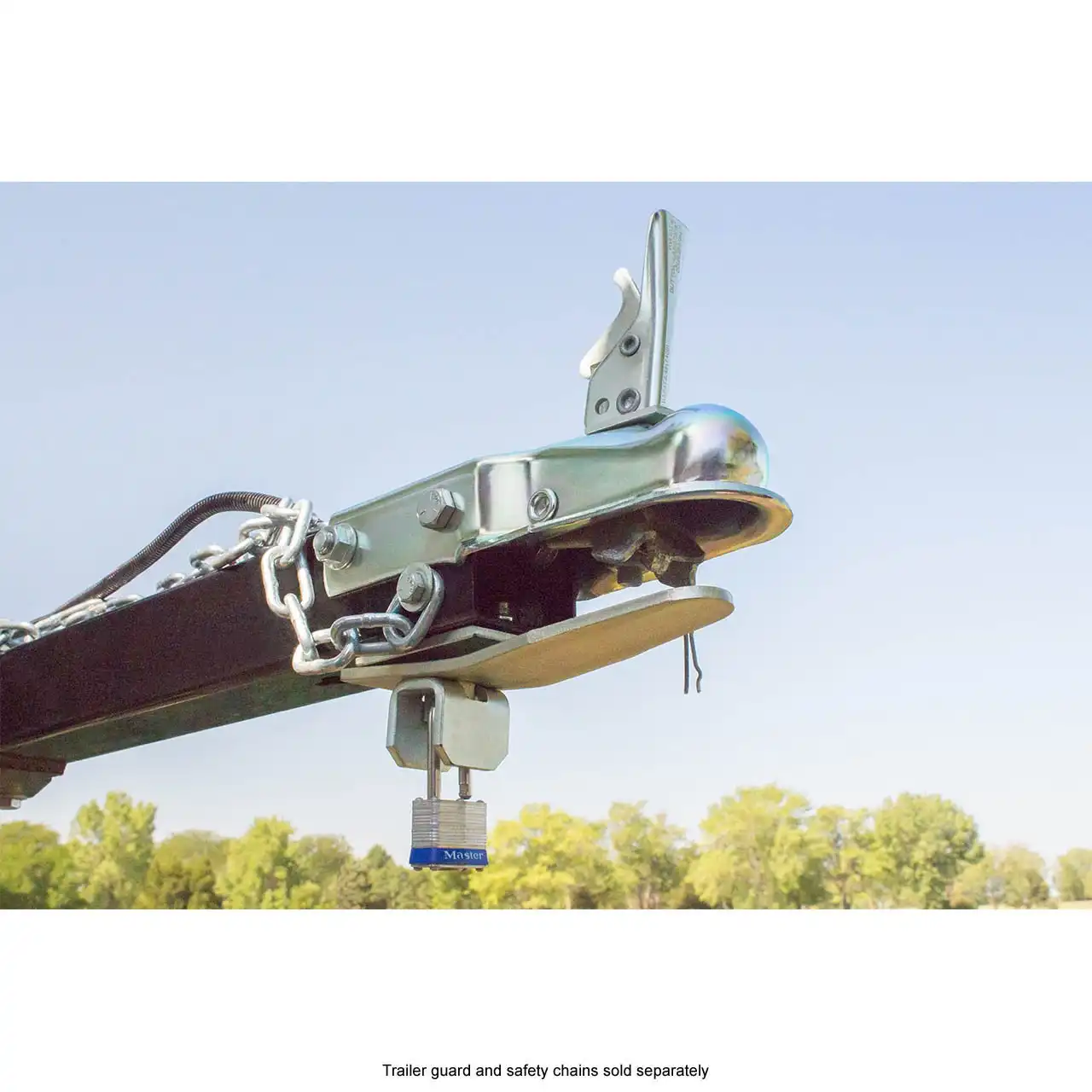
How to Choose the Right Trailer Coupler – Decision Support for Procurement?
Evaluating Load Capacity and Safety Margins
To find the right load capacity for a trailer coupler, you need to know the gross trailer weight. This is the sum of the trailer's own weight, the weight of any cargo that can fit, and the weight of the tongue that is transferred to the tow vehicle. Safety engineering says to pick trailer couplers that are rated at least 20% above the maximum expected load. This is to account for the dynamic forces that happen when you speed up, slow down, or drive on rough terrain. This safety margin keeps you from working too close to the part's maximum strength, which is where it's more likely to fail from wear and tear.
The load class ratings are based on how things are usually done in the business. Class I covers up to 2,000 pounds, Class II covers between 2,001 and 3,500 pounds, Class III covers between 3,501 and 5,000 pounds, and Class IV covers between 5,001 and 10,000 pounds. These categories aren't always enough for business and industrial uses. They need Class V (10,001 to 17,000 pounds) or solutions that are made just for them. Because of the law, having manufacturer certification as proof of these ratings is important. This also makes sure that safety rules are followed.
Material Selection for Environmental Conditions
The operating environment plays a big role in choosing which materials to use. Buildings near the coast that are exposed to salt air need to be made of stainless steel or heavily galvanized steel so that they don't rust. Materials that don't break easily when they get cold are better for work that needs to be done in cold places because they can handle the cold better. For tasks that need to be done at high temperatures, like transporting hot goods, alloys that don't break down at those temperatures may be needed.
There are more expensive trailer couplers made of stainless steel, but they don't rust and don't need coatings that can chip or wear off. Hot-dip galvanized carbon steel is a good middle ground between stainless steel and carbon steel because it stays strong against corrosion and doesn't cost as much. The first level of protection is a powder coating over zinc-plated steel. This is good for light-duty jobs that will not be exposed to much or any moisture.
Custom Fabrication versus Standard Components
Trailer couplers that you can buy off the shelf work well for most towing jobs and are easy to find replacement parts for. Also, most hitch systems work well with them. Custom engineering solutions are sometimes needed, though, because of things like unique industrial equipment, custom trailer designs, or unique operational needs. Custom fabrication lets you get the best results for certain load distributions, mounting restrictions, or making sure that the product works with the rest of your equipment.
If you have to choose between custom and standard methods, you should think about how well the business will run in the long run along with the cost. It may cost more to engineer and make custom solutions at first, but they may save money on maintenance, increase productivity, or let you do things that standard parts can't. To make sure they get the right answer no matter how complicated it is, procurement teams should work with suppliers who make both standard products and custom ones.
Installation Configuration Considerations
How hard it is to install and how long it lasts depend on how it is mounted. There is a stronger way to join two pieces together, but it takes a skilled worker to make them and they are harder to replace. It is easier to fix things in the future when they are bolted together, and you can replace parts in the field without having to use special welding tools. But you have to make sure the torque specs are right so that the nuts don't come loose when the system shakes.
Adjustable trailer couplers can fit hitch heights that are different from one another. This means that level towing can happen on a number of vehicle platforms. This versatility comes in handy when you have a mixed fleet and different cars may pull the same trailer. Fixed-height trailer couplers are easier to make and have fewer places where they could fail. However, when planning to buy one, the trailer and vehicle's specs need to be carefully matched.
Conclusion
You should know how the different kinds of trailer couplers work, compare the load needs to the safety margins, and check that the material needs match the weather conditions in order to pick the right trailer couplers. One type of trailer coupler is flexible and can be used in many situations, while the other type is tough and can be used in harsh conditions. People have to compare the initial cost of an item to the total costs of owning it. They have to think about things like how much maintenance will be needed, how long the item is expected to last, and how the purchase will affect how efficiently the business runs. Parts last longer and don't break down as quickly when they are installed correctly, inspected regularly, and maintained in a planned way. When you work with manufacturers who offer both standard product lines and custom fabrication services, you can meet many different types of needs. These tips can help fleet operators and purchasing managers make tow systems that work well, keep people safe, require less downtime, and are worth the most in the long run.
FAQ
What size trailer coupler do I need for my application?
The trailer coupler size is determined by the max weight of the trailer and the diameter of the hitch ball. Check the paperwork that came with your car or measure the hitch ball you already have to see if it is a standard 2", 2-5/16", or some other size. Make sure that the trailer coupler's load capacity is at least 20% higher than the trailer's gross vehicle weight capacity. To handle loads of up to 5,000 pounds, Class III trailer couplers usually use 2" balls. For heavier loads, Class IV and V trailer couplers need 2-5/16" balls. It is important to always check that the trailer coupler and ball have clear markings that show how much weight they can hold.
How often should trailer couplers be replaced?
Change-out times are not set in stone; they depend on how often they are used and how they are operated. Trailer couplers should be checked often for signs that they need to be replaced, such as cracks in the casting or welds that can be seen, too much wear that makes the ball fit loosely, severe corrosion that makes the structure thinner, or deformation from impact damage. If your business travels a lot, you might need to get new gear every two to three years. Some things can last ten years if you take good care of them and only use them once in a while. No matter how old the part is, it should be thrown away right away if it looks like it's broken.
Can I use a pintle coupler with a ball hitch?
Not all standard pintle hooks and ball couplers work with each other, so they can't be used together. On the other hand, there are hitches that have both a pintle hook and a ball mount on the same receiver. Because of this, a single tow vehicle can hook up to either type of trailer. There are also adapters that can be bought to change ball mounts so they can fit lunette rings, but they make the connection more difficult. It's easier to plan fleet equipment when you use the same coupling system. This is because you don't have to buy as many different spare parts.
Partner with RUIRUI for Precision-Engineered Trailer Coupler Solutions
We at RUIRUI are very good at making custom trailer couplers and metal parts that are stamped very precisely to meet the strict needs of business and industry. We are experts in advanced metal fabrication, CNC machining, and progressive stamping, so we can make parts that you can trust and that are just what you need. We have been making trailer couplers for more than 15 years and are ISO 9001 certified. We know how important quality is for tow parts that are meant to keep people safe. Whether your business needs standard configurations or custom-engineered solutions, our technical team works with procurement professionals to make designs that save money while also improving performance and durability. Contact us at kshdhardware@qdkshd.com to talk about your trailer coupler needs and find out how our OEM services, low factory-direct prices, and strict quality control measures can make your supply chain more reliable.
References
SAE International. "J684: Trailer Couplings and Hitches—Automotive Type." Society of Automotive Engineers Standards Publication, 2019.
National Highway Traffic Safety Administration. "Trailer Hitching Best Practices: A Guide for Commercial Vehicle Operators." U.S. Department of Transportation Technical Report, 2021.
American Welding Society. "Structural Welding Code for Sheet Steel: Requirements for Trailer Coupling Fabrication." AWS D1.3/D1.3M Specifications, 2020.
Transportation Research Board. "Towing Safety Systems: Engineering Analysis of Coupling Mechanisms Under Dynamic Load Conditions." National Cooperative Highway Research Program Report 875, 2018.
Industrial Fasteners Institute. "Corrosion Prevention in Transportation Equipment: Material Selection and Surface Treatment Guidelines." Technical Standards Manual, 2022.
International Organization for Standardization. "ISO 1102: Mechanical Coupling Between Tractors and Trailers—Dimensions and Performance Requirements." ISO Technical Standards, 2017.

Send Inquiry
You may like