
Trailer Ball Sizes Explained: Get the Right Size for the Job
Choosing the correct hitch ball is an important task that impacts safety, working efficiency, and the long-term dependability of the equipment. The trailer ball is the most important part of the link between your tow vehicle and trailer. Making sure it's the right size and shape ensures stable load transfer, keeps coupling parts from wearing out too quickly, and stops catastrophic breakdowns during transport. If you're in charge of a fleet of commercial cars, buying parts for city building projects, or buying tow equipment for industry use, you need to know the ball diameter, shank measurements, and weight capacities. Mismatched sizes can cause couplers to slip, parts to break down faster, and the buying professional to be held legally responsible. These are all problems that cannot be ignored.
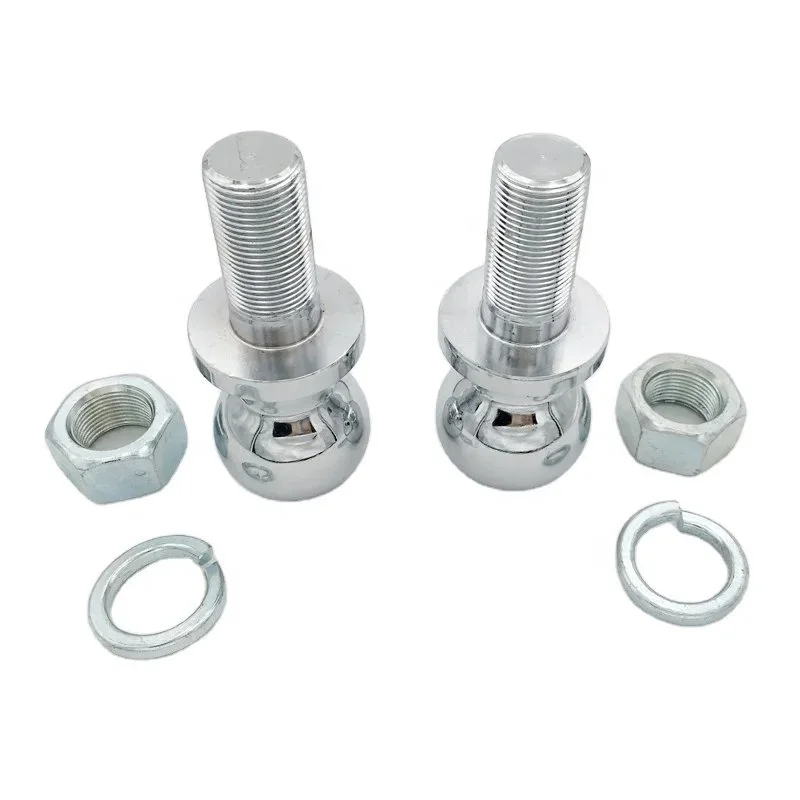
Understanding Trailer Ball Sizes and Their Importance
Tow systems depend on precise mechanical connections to make sure that the load is transferred safely and that the car is controlled. The trailer ball acts as a pivot that allows the tow car and trailer to move together when making turns, changing lanes, or driving on rough terrain. "Trailer ball" and "coupler ball" are terms that are often used equally in the industry. However, in business-to-business technical paperwork, the part is usually described by how it is mounted and its dimensions.
Common Ball Diameters and Their Applications
The North American tow market is mostly made up of three main sizes. Regular 1-7/8-inch balls are used for light-duty tasks with Gross Trailer Weight (GTW) rates of up to 2,000 pounds, like in utility trailers and small leisure equipment. With a width of 2 inches, the ball can handle GTW capacities of 3,500 to 8,000 pounds, making it the workhorse of consumer and light business pulling. The 2-5/16-inch ball meets heavy-duty needs by allowing GTW ratings of 6,000 pounds to 30,000 pounds. This is important for moving boats, building equipment trucks, and big RVs.
Critical Dimensional Parameters Beyond Ball Diameter
For safe fitting of a trailer ball, both the shank diameter and the thread specs are very important. Shank sizes are usually between 3/4 inch and 1-1/4 inch, and they need to match the hole in the receiver tube to keep it from wobbling and make sure the load is spread out evenly. There are different thread sizes, such as 3/4-16, 1-14, and 1-1/4-12. Coarse threads are better at resisting vibration loosening under long-term loads. The person in charge of purchasing should make sure that the shank length fits the receiver depth and that there are enough thread engagements (usually at least five full threads) to keep the structure strong when it is being loaded and unloaded quickly.
Safety Implications of Incorrect Sizing
If you use a ball width that is too small, there will be too much space inside the coupler hole. This lets the ball move side to side, which speeds up wear on both parts and makes the direction less stable. On the other hand, trying to force a bigger ball into a smaller coupler could cause the latch to not connect fully, which would be a high-probability failure situation. When parts are used outside of their planned load ranges, material wear speeds up, and metallurgical stress concentrations form at contact places where dimensions don't match up.
How to Measure Trailer Ball Size Correctly?
Accurate measurement verification stops mistakes that cost a lot of money during buying and makes sure that all of your equipment is compatible. Buyers who are professionals should use calibrated measuring tools instead of guessing by looking at the trailer ball or depending on maker labels, which may be faded or missing on used items.
Measuring Ball Diameter with Precision
Place a digital caliper or precision measuring tape across the ball's sphere's widest point, making sure that the measuring faces touch the surface at the equator and not at places that are not on the axis, which would give you wrong numbers. The right diameter measurement shows the widest part of the ball across its middle. Digital calipers that are of good quality are accurate to within 0.01 inches, which is enough to confirm the measurements. When you measure more than one unit to make sure you have the right amount of inventory, write down each measurement so you can find trends in the measurements that could point to problems with quality control in certain production runs.
Verifying Shank Dimensions and Thread Specifications
To measure the shank diameter of the trailer ball, you have to put the caliper around the cylindrical post right below the ball's base. This is where the shaft has a constant diameter before it starts to narrow toward the threaded parts. A thread gauge tool has precisely cut teeth that match standard thread designs and can be used to check thread pitch. To make sure the threads are engaged correctly, you need to test-fit the trailer ball into the receiver and make sure that the nut can be tightened without cross-threading. This means that the threads must make full contact with the lock washer before the thread length runs out.
Interpreting Weight Ratings for Load Matching
Each trailer ball has marks stamped or cast into it that show its highest tongue weight (TW) and Gross Trailer Weight (GTW) capacities. GTW is the trailer's total weight when it's loaded, and TW is the downward force at the connection point, which is usually 10 to 15 percent of GTW for regular trailers. This idea is shown by a case study that compares different uses: a light-duty ball rated for 2,000 pounds GTW and 200 pounds TW works well for utility trailers that carry landscaping tools, but heavy construction trailers that carry excavators need balls rated for 20,000 pounds GTW and 2,000 pounds TW. When operating close to or at maximum rated capacity, there is less safety margin to handle shock loads from emergency stopping or rough road surfaces. Because of this, it is a good idea to choose parts that are rated at least 20% above the expected maximum loads.
Comparing Trailer Ball Materials and Their Impact on Performance
The choice of trailer ball material has a direct effect on how long a component lasts, how often it needs to be maintained, and the total cost of ownership. When it comes to original investment, resistance to the climate, and mechanical strength, different metallurgical compositions offer different trade-offs.
Steel Hitch Balls: Strength and Economy
Standard carbon steel balls have a tensile strength of over 75,000 PSI and work reliably in controlled settings with little to no contact to water and other corrosive substances. The finishes on these machines are usually black oxide or paint, which protect against corrosion temporarily but need to be inspected and maintained on a frequent basis. For purchases of a lot of items that will only need to be serviced every so often, carbon steel is the most cost-effective choice. This is especially true for businesses that aren't near the coast. Surface rust, on the other hand, can speed up coupler wear by bringing rough particles into the joint contact.
Stainless Steel: Corrosion Resistance for Demanding Environments
Stainless steel alloys, especially types 304 and 316, are better at resisting oxidation in marine settings, places where chemicals are present, and places where road salt is used heavily in the winter, including on a trailer ball. Because the material doesn't naturally rust, there's no need for surface coats that can chip or wear off during normal use. The friction properties of stainless steel stay the same over time, which stops the changing coupling behavior that happens when protective coats wear off on coated materials. The higher price—usually 40–60% more than similar carbon steel units—is supported by longer replacement intervals and lower upkeep labor costs, especially for fleet operators who manage assets in different parts of the world.
Chrome-Plated Options: Balancing Aesthetics and Protection
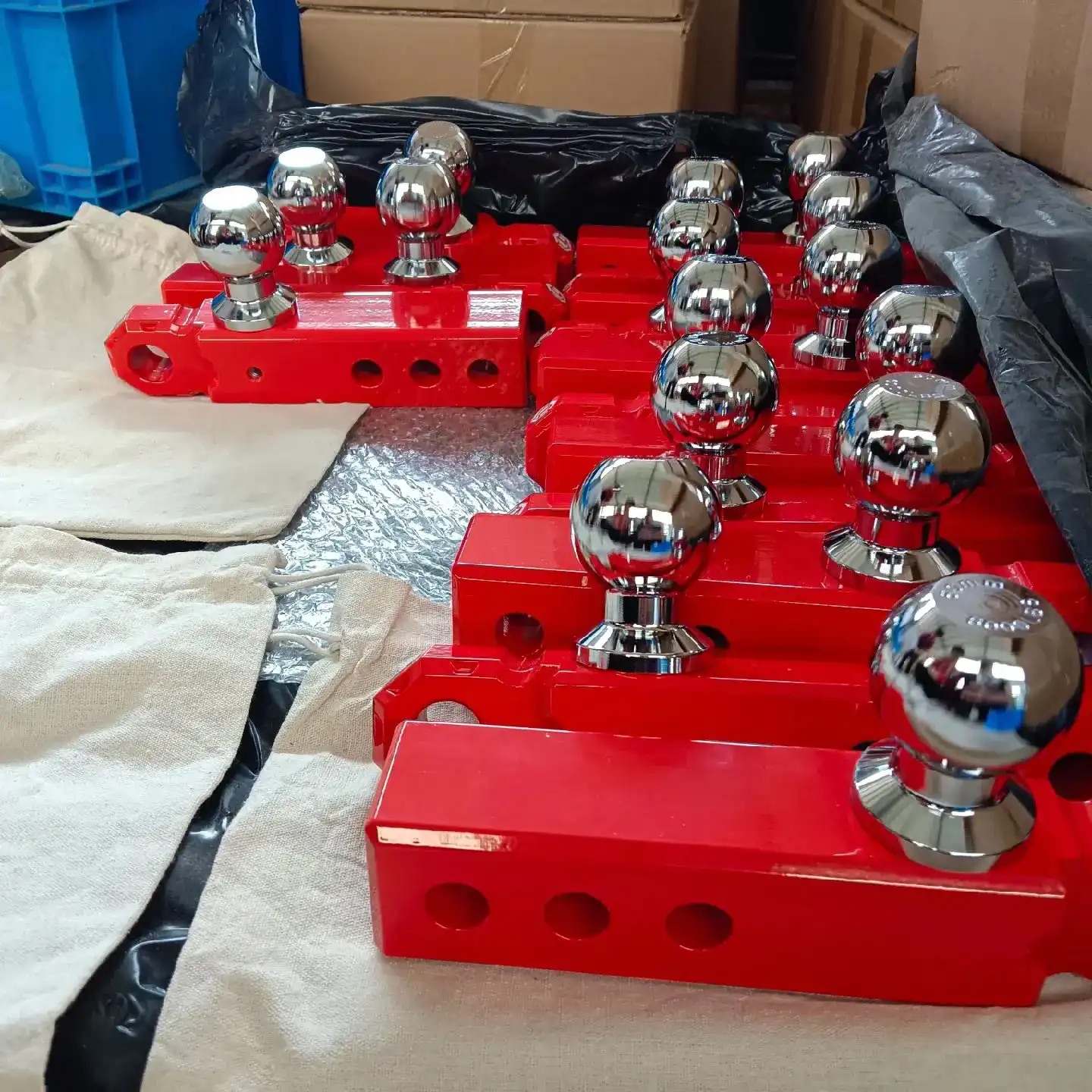
When steel is chromeplated, a thin, hard layer is put on top of it. This gives the steel some corrosion protection and a beautiful, reflective finish. The finishing process makes the surface smooth, which lowers friction during coupling movement and may increase the service life of the coupler. However, chrome coating can still be chipped at impact points, and if it is, corrosion can spread below the metal layer and cause it to separate. These units are in the middle of the price range and performance range. They are good for business uses where looks are important and environmental exposure stays modest.
Choosing the Best Trailer Ball for Your Application
Different businesses have very different operational requirements, so it's important to carefully match specifications to get the best performance and stay in line with regulations. Tow parts are put under different kinds of weather and loading loads when pulling different kinds of trailers.
Application-Specific Requirements
Trailer balls on boat trailers are exposed to saltwater over and over again, and they are also submerged a lot during launch and recovery operations. Because of this, stainless steel is the best material for these components, even though it costs more at first. For RVs, smooth movement is important to keep things from moving around while driving on the highway. Chrome-plated or polished stainless steel choices help reduce stick-slip behavior. Heavy commercial carts used in shipping and building need steel balls with extra-long shanks to handle shock loads from uneven job site ground and lots of coupling cycles.
Fixed Versus Adjustable Ball Mounts
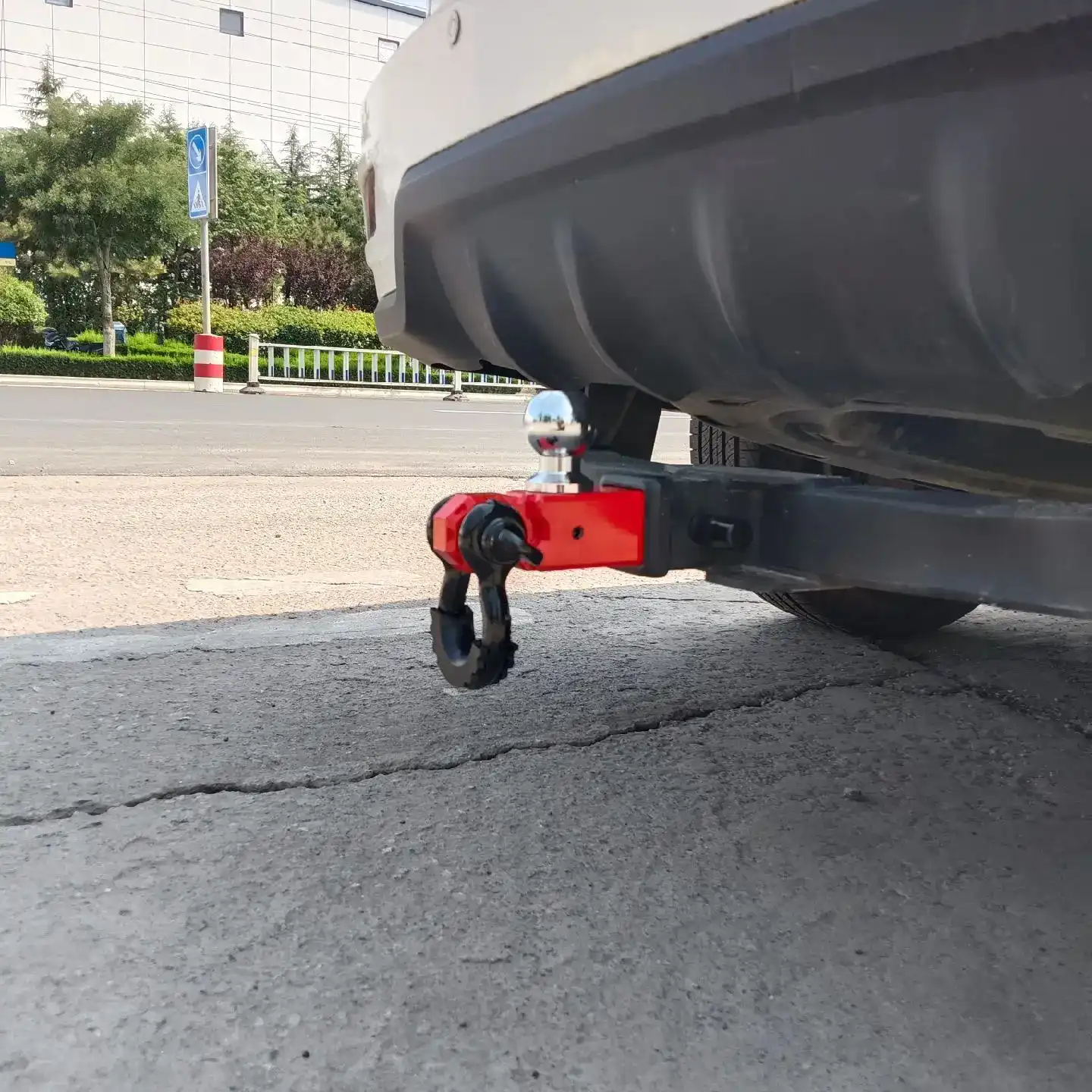
Traditional fixed ball mounts, including the trailer ball, offer a long-lasting, one-diameter option that makes inventory management easier when processes become standardized around a single ball size. Systems that are adjustable or interchangeable let a single shank assembly fit a range of ball sizes, including the trailer ball, through quick-change mechanisms. This cuts down on equipment duplication for workers who work with a mixed fleet. In exchange, the mechanism is more complicated and the control interface may wear down over time. However, current designs include strong locking systems that keep the system safe, including the trailer ball, even when it's under rated loads.
Hitch Compatibility and Receiver Classes
The Society of Automotive Engineers (SAE) has set standards for receiver hitch classes. These classes describe weight limits that range from Class I (2,000 pounds) to Class V (up to 20,000 pounds for weight-distributing hitches). To make sure everything works safely, the balls you choose must match both the receiver class and the trailer connection standard. For general commercial use, a 2-inch ball is still the most flexible option because it fits most mid-range trailers. However, for specialized applications, it is important to check both the upper and lower coupling dimensions carefully to make sure they don't interfere with surge brake actuators or A-frame geometry.
Compliance and Safety Considerations
Compliance with weight ratings has legal effects that go beyond how well the equipment works. Combinations of operations that go beyond the rates of their parts may not be covered by insurance, leaving operators responsible for accidents. As part of professional purchasing practices, it is important to keep records that show how the ball grades, receiver capacities, and trailer GTW standards match up. This creates proof that the right parts were chosen.
Conclusion
To choose the right trailer ball, you have to weigh the dimensions, the material's features, the needs of the application, and the supplier's reputation for dependability. To make sure that pulling is safe and effective, the technical specs—ball diameter, shank measurements, thread configuration, and weight ratings—must match up perfectly with trailer couplers and receiver hitches. When choosing a material from normal steel, stainless alloys, and chrome-plated choices, you need to think about how it will be used, how easy it is to maintain, and the costs over its entire life. Building partnerships with qualified providers that can meet volume needs, offer consistent quality, and provide technical paperwork that meets quality management standards gives procurement pros a competitive edge.
FAQ
1. How do I confirm my trailer ball is compatible with my hitch receiver?
There are three important checks that are part of compatibility testing. Check that the hole in your receiver tube is the same size as the ball's shank width. Common sizes are 3/4 inch, 1 inch, and 1-1/4 inch. Check that the ball diameter fits the coupler specifications on your trailer by measuring the inside diameter of the coupler hole or looking at the trailer's paperwork. Check the weight ratings by looking at the stamped numbers on both the ball and the receiver. Make sure that both parts meet or go beyond the GTW standard for your trailer with a safety cushion.
2. What happens if I use a hitch ball with insufficient weight rating?
When you use something past its stated capacity, the material wears out faster, which causes tiny stress cracks to form in the crystal structure of the part. When the coupler hole touches the sphere, the ball may permanently change shape. This is because the load is not evenly distributed, which adds to the stress. Catastrophic failure types include shank breakage at the thread root or separation at the ball-shank weld joint. Either of these causes the trailer to come completely loose while it's in use. In addition to the instant safety risk, legal issues arise when accident investigations reveal that parts were used in a way that did not follow the manufacturer's instructions.
3. How can I extend the service life of my trailer balls?
As part of regular inspections, you should look for surface rust, wear patterns on the ball surface that show uneven coupler contact, and make sure that the fastening gear is still properly torqued. After being in an area that is corrosive, clean the ball's surface to get rid of salt residue and road chemicals that speed up rusting. Before connecting, put a small layer of lithium-based grease on the ball's surface to cut down on friction and stop galvanic corrosion where metals that are not the same type touch. Instead of trying to keep parts working longer than they should, replace ones that show signs of wear, deformation, or rust damage.
Partner with RUIRUI for Custom Trailer Ball Manufacturing
When you work with an experienced trailer ball maker who cares about quality and design, it's easier to find the right towing component specs. At RUIRUI Machinery, we use our more than 15 years of experience working with metal to make precision-engineered tow parts that meet SAE standards and unique client needs. We can offer custom shank lengths, specialized threading, and material choices from carbon steel to stainless alloy configurations thanks to our advanced production skills, which include CNC machining, laser cutting, and progressive pressing. We make sure that every part meets strict performance standards by using ISO 9001 approval and thorough testing methods. Email our engineering team at kshdhardware@qdkshd.com to talk about your needs, get detailed drawings, or look into chances to work together as an OEM. We help procurement managers quickly find trusted trailer ball suppliers who know how important it is for safety-critical uses that the balls are the right size and the metal isn't broken.
References
1. Society of Automotive Engineers. (2020). SAE J684: Trailer Couplings and Hitches—Automotive Type. SAE International Standards.
2. National Highway Traffic Safety Administration. (2019). Trailer Hitch Safety and Compliance Guidelines. U.S. Department of Transportation.
3. Anderson, M. R., & Thompson, L. K. (2018). Metallurgical Analysis of Towing Component Failures. Journal of Failure Analysis and Prevention, 18(4), 892-907.
4. Industrial Fasteners Institute. (2021). Thread Standards and Torque Specifications for Automotive Applications. IFI Technical Reference Manual.
5. Peterson, J. D. (2017). Material Selection for Corrosive Environment Applications. Materials Performance and Characterization, 6(3), 445-462.
6. Commercial Vehicle Safety Alliance. (2022). Towing Equipment Inspection Criteria and Best Practices. CVSA Operational Policy Manual.

Send Inquiry
You may like