
Trailer Ball vs Trailer Coupler: Key Differences
It is very important to know the differences between a trailer ball and a trailer coupler when buying tow equipment for business companies or on a big scale. The coupler is the part on the trailer's tongue that locks onto the trailer ball. The trailer ball is the set mounting point on the hitch receiver of your tow car. These parts fit together perfectly to make a system. How well they fit together affects the tow vehicle's load capacity, safety, and dependability in a wide range of situations.
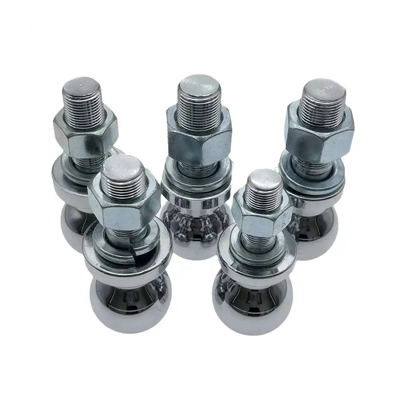
Understanding Trailer Ball and Trailer Coupler: Definitions and Roles
What Is a Trailer Ball
A trailer ball is the round hitch part that is attached to the car that is pulling the trailer. It is made of drop-forged carbon steel, stainless steel, or metals that have been chrome-plated. It is the pivot point for the trailer's movement when it turns or goes over rough ground. There are standard sizes of 1-7/8 inches, 2 inches, and 2-5/16 inches, and each one matches a certain weight class. Something called a shank holds the ball in place. This shank goes into a hitch mount or ball mount base. Its main job is to support forces going up and down and side to side while still letting things turn.
What Is a Trailer Coupler
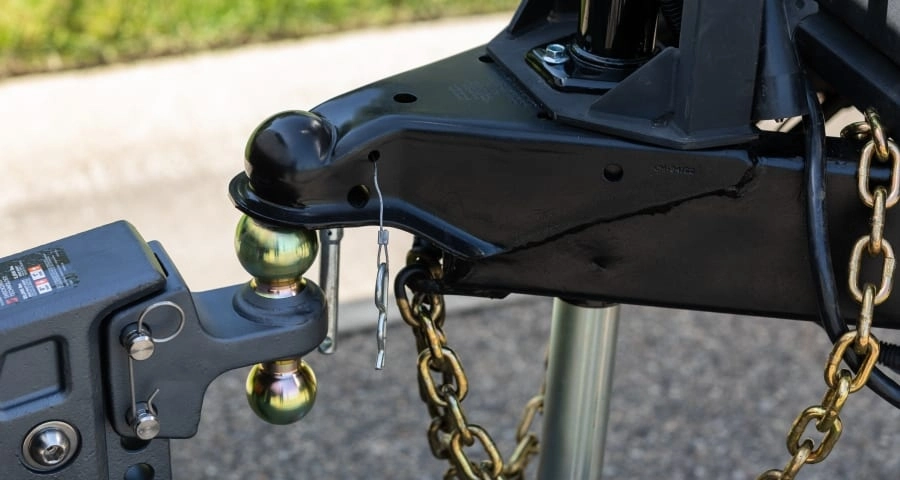
The lock on the front end of the trailer tongue is called the trailer coupler. It surrounds the trailer ball and holds it in place with a latch system, which is usually a locking jaw that is moved by a lever or a hydraulic surge. Gross Trailer Weight (GTW) is used to rate couplers, and the ball size must match exactly. They are usually made of welded steel tubes that have been zinc-plated or powder-coated to keep them from rusting. The locking device in the coupler makes sure that the ball stays engaged during transportation, so it doesn't come loose by chance.
How They Work Together
The way these parts work together is simple but very important. The coupler's hole fits over the ball, and the latch keeps the link safe. If you choose the right size, the coupler's inside diameter will match the ball's outside diameter within the limits set by SAE J684 guidelines. Any gap or too much play causes wobble, which speeds up wear and makes the system less stable. To keep the stability of the system in all kinds of towing situations, procurement teams have to check that the dimensions and load values are compatible.
Key Differences Between Trailer Ball and Trailer Coupler
Structural and Functional Distinctions
Once they are in place, trailer balls stay in place and hold the whole tongue load. They are always being worn down and rubbed against each other, so they need strong metals. Couplers, on the other hand, are parts that can be moved and have springs or locks inside that can connect and disengage many times. Because of how they work mechanically, the design goals are different: balls focus on hardness and surface finish, while couplers focus on latch durability and ease of use.
Material Variations and Durability
AISI 1045 carbon steel balls have a high tensile strength and can be used as trailer balls in Class III and IV situations. Stainless steel types, especially 304 or 316 grades, are better at resisting rust in seaside or marine settings. Chrome finishing increases service life by stopping rust from forming, but the coating needs to be checked every so often to make sure it's still intact. Most couplers are made of steel that has been stamped or soldered and then galvanized or powder-coated. The choice of material affects how often it needs to be maintained and how much it costs to own everything, especially for big buyers who are in charge of large teams.
Maintenance Requirements
Trailer balls need to be checked often for thread strength, wear patterns, and surface cracks. Marine-grade grease is used to lubricate things to reduce friction and keep them from freezing up. To keep the locking tension right, couplers need to have their latch mechanisms oiled, their safety pins replaced, and their settings adjusted every so often. Latch failure can be caused by corrosion in the hinge points or spring assemblies, so they need to be cleaned regularly. When comparing suppliers, procurement managers should take these repair processes into account when they look at lifetime costs.
By being aware of these differences, buyers can choose the right parts for different operating settings. A landscaping contractor who has to move tools over rough ground has different needs than a marine transport company who has to deal with saltwater. Choosing the right materials and following the right repair procedures for these uses will make assets last longer and have less downtime.
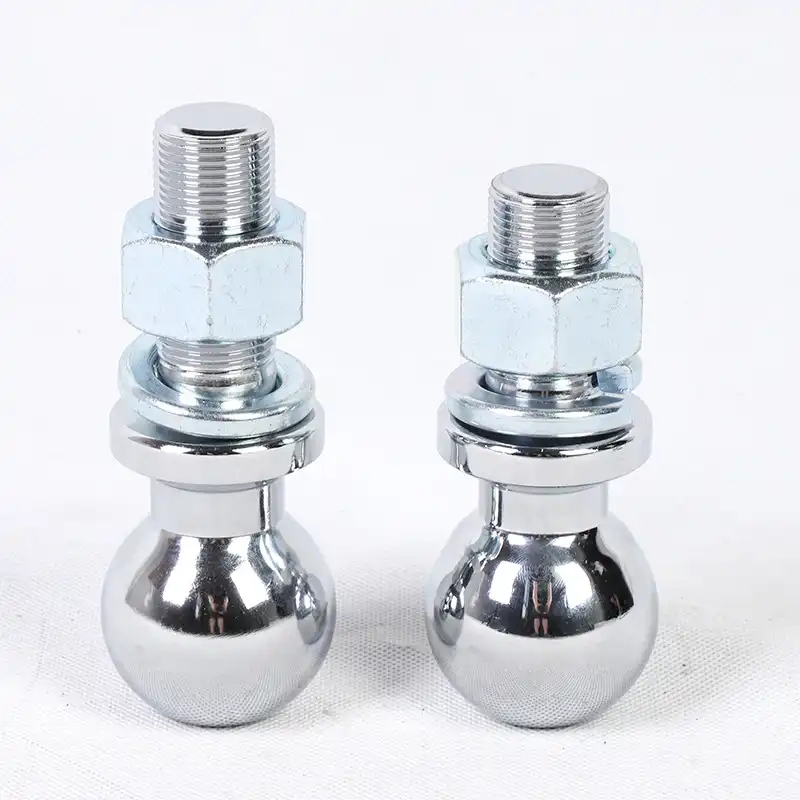
How to Choose the Right Trailer Ball and Coupler for Your Business Needs
Matching Size and Load Capacity
Before you can choose parts, you need to know what you need for pulling. Utility trailers and light building vehicles often have a 2-inch trailer ball that can hold 7,500 pounds GTW. 2-5/16-inch balls that can hold up to 30,000 pounds are needed for heavy-duty uses like gooseneck trucks that haul industrial equipment. The connection needs to be the right size for both the ball width and the weight class. Underestimating either part increases the chance of a catastrophic failure and is against DOT rules. Always make sure that SAE J684 is followed and that the manufacturer's specs match up with your operating loads.
Material Selection for Environmental Conditions
Corrosion happens faster in coastal or high-humidity areas, so stainless steel balls and galvanized couplers are better, even though they cost more up front. For the trailer ball, chrome-plated carbon steel is a good compromise between performance and cost for inland activities that don't get wet often. Think about how often it's used: daily towing increases wear rates, which is why quality materials that last longer between replacements are a good idea. People who buy in bulk and are talking about long-term supply deals should ask for salt spray test results (ASTM B117) that are longer than 500 hours to make sure the finish will last.
Custom Configurations and Compatibility
Customizable trailer balls that come in multiple sizes solve problems with fleet flexibility. These designed solutions let you change the width without taking off the shank, which cuts down on the need for extra tools. Different hitch bar widths can be accommodated by custom shank lengths, and different trailer types can be towed level with the help of special rise-drop setups. When you buy a lot of something, be sure to include the thread type (coarse vs. fine), the torque level, and any extra finishing you want, such as PVD coating. This level of customization, which is offered by companies like RUIRUI, makes sure that the mechanics work with a wide range of ship makeup.
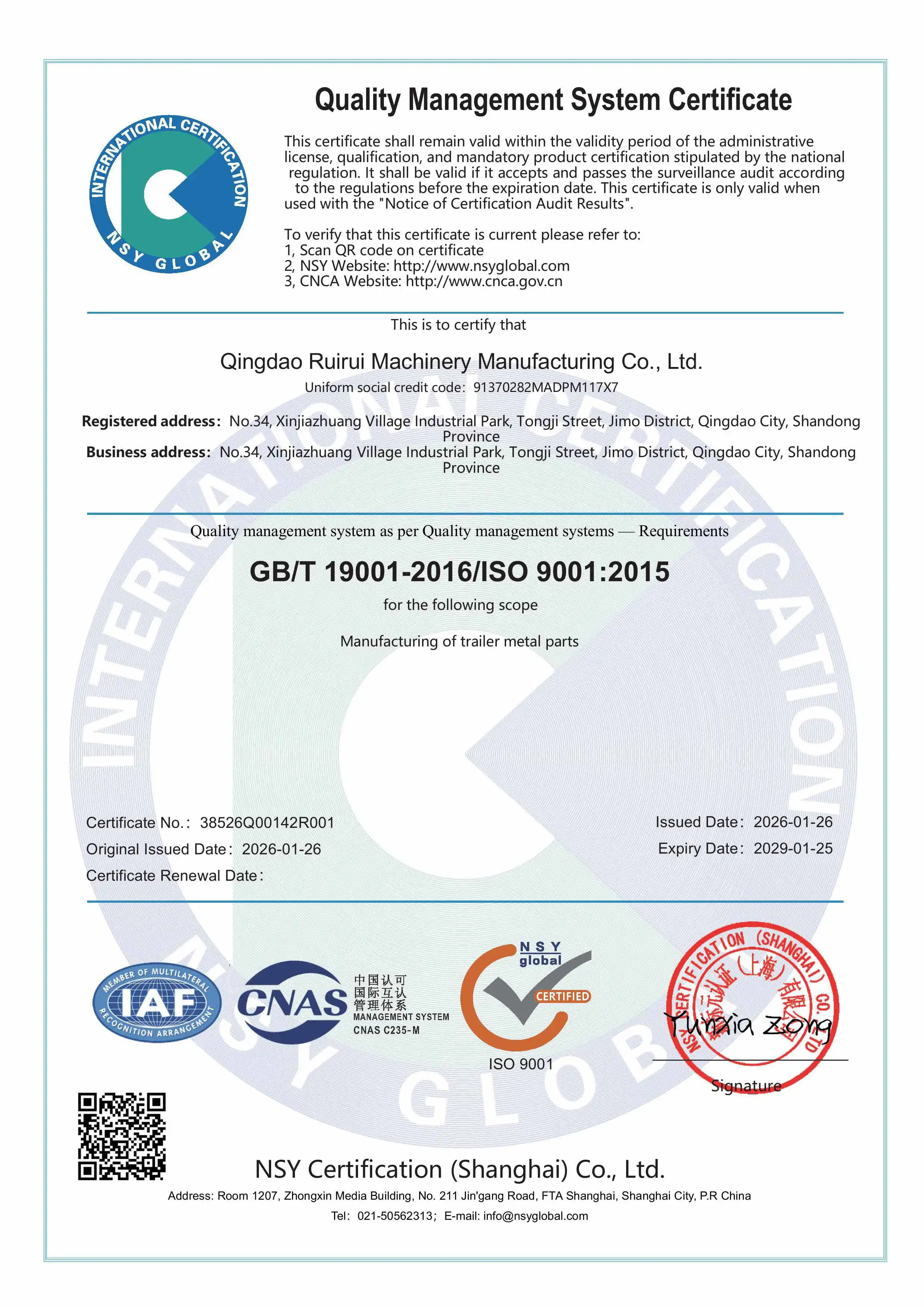
Professionals in procurement should also look at training in the business. Manufacturers who are ISO 9001-certified show that they consistently control quality, and goods that meet ASTM or SAE standards make sure that they follow the rules. Getting engineering sketches and load test papers from vendors during the qualification process lowers the risks in the supply chain.
Comparative Review of Leading Trailer Ball and Coupler Products in 2026
Top Brands and Product Features
CURT has a lot of made trailer balls with built-in shanks and universal fit shanks that can be used right away. People who buy in bulk and want long-term value like that their goods usually come with restricted warranties that last a lifetime. Reese specializes in InterLock systems that stop coupler rattle, which is a problem that businesses worry about because it makes noise. Heavy-haul workers know B&W for its gooseneck and fifth-wheel hitches with balls that can hold up to 30,000 pounds. Tekonsha makes surge brake couplers that are commonly used in naval settings and have hydraulic action for boat trailers. Buyers Products specializes in selling commercial-grade parts at low prices for fleet owners.
Custom Manufacturing and OEM Opportunities
Custom production has big benefits for wholesalers that work with niche markets, including for components like the trailer ball. OEM relationships let companies name their products, make their own sizes, and use special coatings that are made to fit the needs of specific customers. Deep drawing pressing, CNC machining, and multi-layer finish choices like anodizing and electrophoresis are all available from suppliers like RUIRUI. There are different minimum order amounts, but for container-level shipping, bulk savings of 15% to 30% are typical. Custom shank lengths, thread pitches, and ball diameter pairs fill in holes in regional markets where standard goods don't work well enough.
Cost vs. Quality Analysis
Entry-level chrome balls retail around $15-$25, suitable for light-duty or infrequent use. Stainless steel versions cost between $40 and $80, which is reasonable because they last longer in tough settings. When it comes to locking mechanisms and load ratings, couplers range from $30 to $150. The total cost of ownership includes the cost of repairs, replacements, and downtime. A $60 stainless steel ball that lasts five years works better than a $20 chrome ball that needs to be replaced every year, especially when fitting costs are taken into account. Asking suppliers for lifetime cost forecasts and using failure rates and warranty terms in ROI estimates is what procurement teams should do.
Negotiating big purchase deals with well-known makers guarantees a steady supply and takes advantage of economies of scale. Long-term contracts often include technical support, engineering advice, and faster logistics. These are all useful services that make buying easier and improve business efficiency.
Troubleshooting Common Issues: Trailer Ball and Coupler Problems and Solutions
Improper Fit and Compatibility Errors
When the trailer ball and joint are the wrong sizes, they play too much, which can lead to fast wear and separation. Audible clanking during acceleration and obvious coupler movement are signs. Solutions include using calipers to check the ball's width and double-checking the coupler socket's dimensions. It is necessary to replace with parts that are exactly the same. Purchasing teams should set up rules for inbound inspections so that mistakes in size can be found before parts are put into stock.
Corrosion and Surface Degradation
The creation of rust weakens structures and speeds up wear. Corrosion is made worse by salty seas and winter road salt. Some ways to reduce the damage are to clean it regularly with light detergents, put rust inhibitors on it, and store it under protective covers, including the trailer ball. Stainless steel changes get rid of the problem of rust, but they cost more at first. Setting up standard inspections every three months for current ships finds early-stage corrosion before it causes failure.
Latch Mechanism Failures
Should dirt build up on coupler clips or not enough oil be applied, they may not lock firmly. Some signs are partial closure or popping latches during transport. Parts need to be taken apart, cleaned with a cleaner, and re-oiled with high-temperature grease. Broken latch pawls or worn-out springs need to be replaced. As an extra safety step, operators should carry extra safety chains and latch pins. Purchasing managers can cut down on these problems by finding couplers with sealed bearings and latch parts made of stainless steel.
Putting money into locking trailer balls makes them less likely to be stolen, especially when high-value tools are left unchecked on job sites. These special balls have keyed locked shanks that keep them from being taken off without permission. Protective covers keep parts out of the weather while they are being stored, which increases their useful life and lowers the amount of work that needs to be done on them.
With these useful tips, maintenance teams can quickly fix common problems, reducing downtime and keeping operations running smoothly. Setting up preventive repair plans based on how often something is used also cuts down on unexpected problems.
Conclusion
For B2B buying to go well, you need to know the different functions and matching needs of trailer balls and couplers. Even though these parts seem simple, they need to be made with care, using the right materials, and being maintained properly to make sure that pulling operations are safe and effective. The trailer ball gives the trailer a fixed fixing and pivot point, and the coupler locks the link in place. Component selection is based on the right size, load number alignment, and external factors. Better operational results are achieved by procurement workers who put quality materials first, check maker certifications, and follow regular maintenance procedures. Investing in high-quality parts and unique configurations pays off in the form of less downtime, higher safety, and lower overall costs of ownership.
FAQ
1. How do I measure trailer ball size to ensure coupler compatibility?
Find out how big the ball is at its biggest point using a caliper or measure tape. Each size is 1-7/8 inches, 2 inches, or 2-5/16 inches. Compare this number to the coupler's opening width, which is written on the body of the coupler. Tolerance is very important—even a 1/16-inch difference makes play dangerous. To avoid capacity mismatches, make sure that both parts show the same load values.
2. What is the difference between chrome and stainless steel trailer balls in terms of durability?
Carbon steel balls that have been chrome-plated are less expensive and better at resisting rusting. However, heavy use can chip or wear through the plating, leaving the base metal exposed to rust. 304 or 316 grade stainless steel balls don't rust anywhere in their structure, which makes them perfect for marine settings or places with a lot of humidity. Stainless steel choices cost 50–100% more, but they can last three to five times longer in tough circumstances.
3. Can I use any coupler with any trailer ball as long as the size matches?
Matching sizes is important, but it's not enough. Couplers and balls must also have load values that are the same. A 2-inch ball that can hold 3,500 pounds cannot safely hold a coupler and trailer that can hold 7,500 pounds, even though they fit together. Always make sure that both parts meet or go beyond the Gross Trailer Weight limits and are in line with SAE J684 standards.
Partner with RUIRUI for Custom Trailer Ball Manufacturing Solutions
To choose the right pulling parts, you need a provider that knows about both the technical details and the needs of the business. RUIRUI is an expert at making high-quality trailer balls and other parts that go with them. They do this by using advanced techniques like progressive pressing, CNC machining, and multi-layer finishing treatments. Our factory is ISO 9001-certified and makes parts from carbon steel, stainless steel, and special metals that are exactly what you need. We offer trailer ball options for large orders, OEM partnerships, and unique building needs. Our services include laser cutting, powder coating, and electrophoresis. Our technical team is here to help you with your purchase from the concept stage all the way through container shipping. Whether you need designs that can be changed to fit different fleet sizes or marine-grade gear that won't rust, they can do it all. Email us at kshdhardware@qdkshd.com to talk about the details of your project and get a price from a reliable trailer ball provider.
References
1. Society of Automotive Engineers (2018). "SAE J684: Trailer Couplings and Hitches—Automotive Type." SAE International Standards.
2. American Society for Testing and Materials (2020). "ASTM B117: Standard Practice for Operating Salt Spray Apparatus." ASTM International.
3. National Highway Traffic Safety Administration (2019). "Federal Motor Vehicle Safety Standards: Trailer Hitch Systems and Connections." U.S. Department of Transportation.
4. International Organization for Standardization (2021). "ISO 9001:2015 Quality Management Systems—Requirements." ISO Standards Catalogue.
5. Thompson, R. & Martinez, D. (2022). "Material Selection in High-Stress Towing Applications: A Metallurgical Analysis." Journal of Industrial Manufacturing Engineering, 34(2), 112-128.
6. Wilson, K. (2023). "Fleet Management Best Practices: Maintenance Protocols for Commercial Towing Equipment." Transportation Equipment Quarterly, 17(4), 45-61.

Send Inquiry
You may like