
Trailer Coupler for Heavy-Duty Towing
When looking for important parts for industrial towing, it's important to make sure you get the right heavy duty trailer coupler. These engineered fastening systems are the main mechanical link between tow vehicles and trucks that are loaded, so they have a direct effect on operating safety, load integrity, and fleet efficiency. Unlike consumer-grade options, industrial couplers have to be able to handle constant tension forces, weather damage, and keep working after thousands of loading cycles. Knowing the technical details, installation needs, and buying factors of these things helps infrastructure builders, equipment makers, and fleet managers make smart choices that keep people and property safe while lowering the overall cost of ownership.
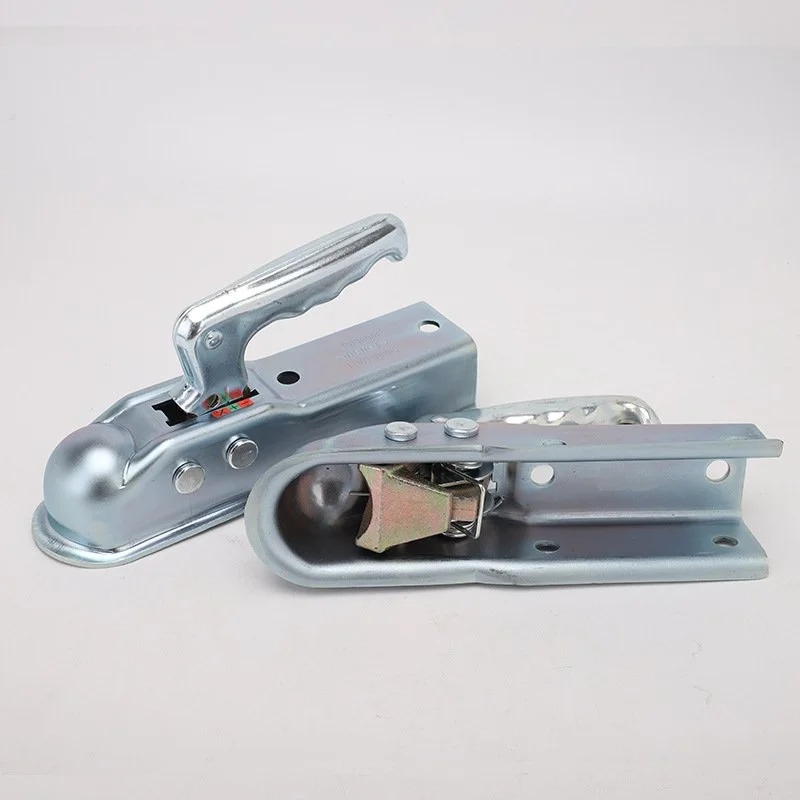
Understanding Heavy-Duty Trailer Couplers: Functionality & Types
Core Mechanical Principles Behind Secure Towing
Precision-engineered couplers make a safe articulated link between the car and trailer, which is needed for heavy duty trailer coupler systems. The trailer ball coupler has a cast steel hole that fits around the hitch ball and is held in place by a spring-loaded latch. This structure keeps the wheels from coming apart vertically while allowing the necessary rotational movement during turns and changes in terrain. The trailer coupler pin is the most important safety part. It's made of hardened steel and keeps the latch closed against movement caused by vibrations. It's the fail-safe part that SAE J684 standards require. This two-locking design fixes the main type of failure called latch bounce, which happens when road harmonics make not enough locks open during movement.
Differentiating Industrial-Grade from Standard Models
Industrial couplers are different because of the materials they are made of and how they handle loads. Cast zinc-alloy housings that can hold up to 3,500 pounds of gross trailer weight are common in standard leisure couplers. Heavy duty trailer coupler versions, on the other hand, are made of cast high-carbon steel (SAE 1045 grade or higher) that can hold more than 10,000 pounds. The size limits are also very different. For example, industrial units keep the space between the socket and the ball to within 0.002 inches to keep play safe and reduce wear. Electrophoresis coating or zinc-nickel plating are two surface treatments that make things resistant to salt spray for 1,000 hours or more. This is important for city building projects that will be used near the coast or during the winter.
Primary Coupler Classifications for B2B Applications
There are two main types that meet different operating needs. Ball couplers work great for situations where you need to connect and disconnect things quickly. Their quick-latch mechanisms let you engage them without using any tools, which makes them perfect for utility trucks that carry building or gardening equipment. The different types of movable channels can handle different tow vehicles' heights, which is very important when handling operations with a mixed fleet.
Pintle hook couplers are used in heavy-duty situations where a lot of movement and impact cushioning are needed. Because the lunette ring link allows for more angular deflection, they are essential for moving big building equipment, military equipment, and farming bulk. Their open-hook design keeps them from getting stuck when making fast turns on rough ground, but they don't have the smooth road manners of enclosed ball systems. When choosing between these designs, procurement teams should look at working terrain conditions and coupling regularity.
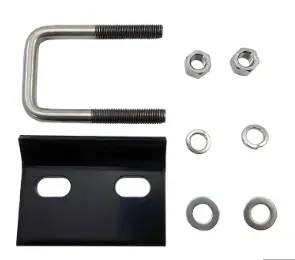
Installation & Maintenance Guide for Heavy-Duty Trailer Couplers
Professional Installation Protocol
The right way to attach a heavy duty trailer coupler starts with checking the trailer frame. For through-bolt installs, the A-frame tongue must have a steel thickness of at least 1/4 inch. Set the coupler so that the trailer stays level when it's loaded. For normal truck setups, this means that the ground-to-ball height needs to be between 17 and 19 inches. Use Grade 8 hardware with lock screws that has been torqued to the manufacturer's specs. For 1/2-inch mounting bolts, this is usually 40 to 50 ft-lbs. Welded systems need full-penetration welds done by qualified makers because poor fusion creates stress risers that cause cracks to spread when the load is changed.
Once the parts are mechanically attached, make sure the latch works by opening and closing it ten times and checking the spring return force each time. The trailer coupler pin should go in without getting stuck and stay in place when it's engaged. Before putting the pin in, make sure the latch closes all the way and can be heard engaging before testing it on the planned hitch ball.
Maintenance Protocols to Maximize Service Life
Every so often (every week for daily-use business fleets, once a month for occasional users) should be the time between routine inspections. Check the ball socket for ovalization or cutting; variations greater than 1/16-inch mean the socket needs to be replaced. Check the latch hinge points for rust that stops them from moving, because mechanisms that are stuck won't work right.
Lubrication methods make operations last a lot longer. Every three months, put marine-grade lithium grease on the pivot points and latch surfaces. Stay away from petroleum products, which attract rough contaminants. Road grit that is packed down speeds up wear, so clean the inside of the ball socket with a fluid before each use. In naval settings, clean with fresh water after being in salt water to stop galvanic corrosion between metals that are not the same. No matter how good the trailer coupler pin looks, it needs to be replaced every year because rotational stress causes wear cracks that can't be seen at first glance. These disciplined processes stop catastrophic fails that put people's safety at risk and create expensive lawsuit exposures.
Comparing Heavy-Duty Trailer Couplers: Making the Right Choice
Performance Characteristics: Ball vs. Pintle Hook Designs
Ball coupler systems make the road more stable because their enclosed socket shape stops unwanted sideways movement while the vehicle is moving. This tight connection keeps the trailer from swaying in crosswinds, which is why flatbed trucks that carry wide loads on public roads like to use them. Their smooth operation also reduces noise, which is important for transport services in cities. But this accuracy makes it easy for pollution; mud or ice buildup can stop the latch from closing properly, which can be dangerous in bad weather.
Pintle hook systems give up style for toughness. Their open design gets rid of garbage on its own and can handle a lot of wear before it starts to slow down. The lunette ring link lets the joint move more than 60 degrees, while ball systems only allow 25 degrees. This is very important for getting around on building sites or farm fields. They can also handle more vertical error without binding, which makes hookup easier. The trade-off shows up as more metal-to-metal contact noise and more upkeep for hinge pins that wear out quickly.
Material Engineering and Longevity Factors
The durability of a heavy duty trailer coupler is directly related to its metal qualities and protective coats. Mild steel housings with a powder covering work well in controlled indoor settings, but they break down quickly when used outside. High-carbon steel forgings that have been heated to a hardness of 40 to 45 HRC are the best combination of strength and flexibility. They don't break easily when hit, and they don't wear down easily either.
In harsh settings, corrosion defense decides how long something will last. Standard zinc treatment can withstand salt spray for 200 to 300 hours, which is long enough for occasional contact to road salt. Marine and seaside uses need building made of 304 stainless steel or high-tech finishes like zinc-nickel alloy plating, which protects for 1,000 hours or more. The extra cost of materials, which is usually a 40–60% premium, is more cost-effective when spread out over longer service times that avoid hasty replacement and the downtime that comes with it.
Cost-Benefit Analysis for Industrial Procurement
Couplers that cost less than $50 USD are always cast and don't have much rust protection, so they can only be used occasionally for light duty tasks. Their short service life—often less than 500 loading cycles—makes them expensive because they need to be replaced so often and have a higher failure rate.
For most business uses, mid-range forged units priced between $80 and $150 are the best deal. These have solid parts, features that can be adjusted, and finishes that last for 2,000 cycles or more. Premium heavy duty trailer coupler models that cost more than $200 are worth the extra money in extreme-duty situations because they have special features like built-in surge brakes that work with other brakes, adjustment systems that don't need tools, or construction made of an exotic metal for chemical exposure environments.
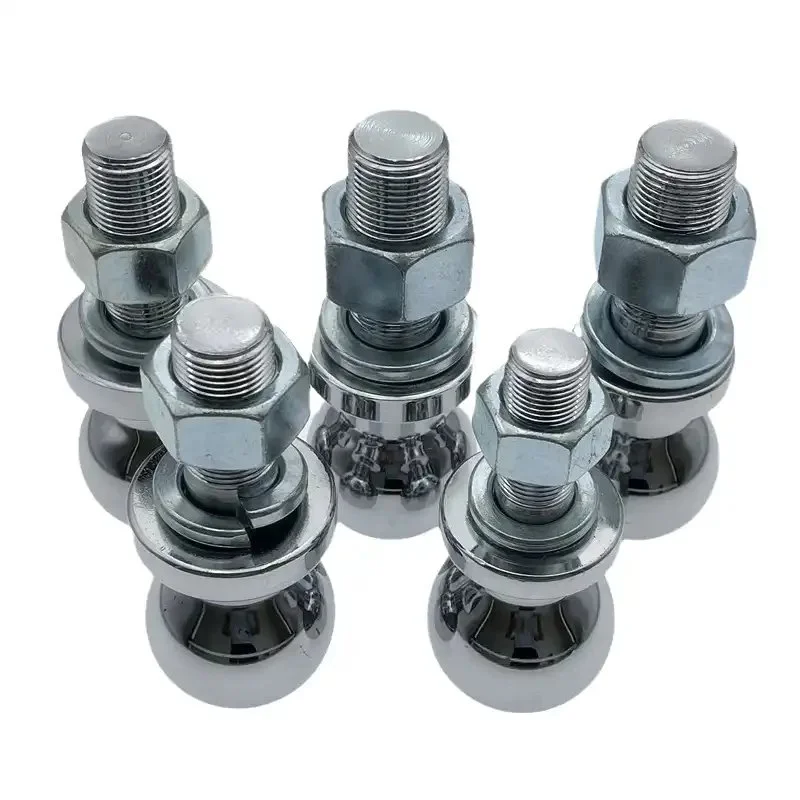
Procurement Insights: How to Buy Heavy-Duty Trailer Couplers
Navigating Supplier Landscapes and Brand Selection
The North American aftermarket is dominated by well-known brands like CURT, Reese, and Bulldog, which have large delivery networks and consistently high quality. Their goods come with a lot of paperwork, like load ratings, material certifications, and fitting instructions. This paperwork is very important for fleet owners who need to keep records of compliance. But because they are seen as high-end, unit costs are often 30–50% higher than OEM-equivalent options.
For buyers in large quantities, buying directly from specialized makers has clear benefits. Vertical merging of metal manufacturing processes like stamping, CNC machining, laser cutting, and advanced coating is used by companies like RUIRUI. These companies also have technical experience in making custom trailer parts. This feature lets you get solutions that are exactly what you need that you can't get from catalog sellers. For example, you can change the mounting size, use different materials, or add security features that are built right in. The direct connection also makes fast prototyping easier for specific uses, which shortens the time it takes to build something from months to weeks.
Volume Procurement Strategies and Contract Considerations
Through economies of scale, buying in bulk can save you a lot of money. When compared to small-lot prices, container-level orders, which usually have between 5,000 and 10,000 units, lower costs by 25 to 40 percent per unit. This method works well for area distributors or big fleet owners who use standard heavy duty trailer coupler equipment. To avoid quality conflicts, procurement agreements should spell out tolerances for dimensions, standards for surface finish, and acceptance testing schedules.
The terms of a warranty are an important way to reduce risk. Standard covering for one year covers problems with the way the product was made, but not wear and tear or rust damage. For important uses, transferring risk in the right way through extended warranties or performance guarantees—where sellers promise a minimum service life under certain conditions—is important. These rules are especially helpful when adding new sources because they show that the maker trusts the product to last.
Customization Capabilities and Engineering Support
Standard options can't meet all of an organization's needs. For certain uses, non-standard ball sizes, different fastening patterns, or the ability to work with specific stopping systems may be needed. When this happens, manufacturers that offer OEM customization services become very useful partners. RUIRUI's engineering team works with buyers to translate technical plans, suggest better materials, and make designs easier to make. This makes sure that unique solutions stay cost-effective while still meeting high performance standards.
When making application-specific parts, the option to make prototype models before committing to full production lowers the risk. Facilities with progressive stamping presses and precision machining centers help this repeated improvement process make sure that final products are perfect for practical needs. Manufacturing partners are different from suppliers because they offer responsive technical help throughout the whole duration of a product, from the initial design to troubleshooting in the field.
Top Heavy-Duty Trailer Couplers in 2024 – Reviews & Recommendations
Performance Leaders for Utility and Flatbed Applications
The current market winners find a mix between old-fashioned dependability and new safety features. The CURT 25,000-lb pintle hook design has a self-lubricating bushing system that keeps the exact limits while extending the time between repair visits. Because it was forged and has a Class V grade, it can be used to move excavators and other big building equipment. The $180 USD price tag makes it a premium choice, but users regularly report service lives of 5 years or more in business settings.
Reese's adjustable channel couplers help with fleet standardization by adapting to 4-inch height differences without the need for tools. This flexibility is very useful for companies with a mix of vehicles, like those with pickup trucks and medium-duty chassis that share trailer pools. The zinc-plated steel design is good enough for inland conditions, but users on the coast should switch to stainless steel versions.
Security-Enhanced Models for Theft Prevention
Businesses in North America lose $1.2 billion every year because of trailer theft. Integrated closing systems solve this problem. Instead of a normal pin, the Bulldog SecureLatch method uses a keyed cylinder with a tumbler mechanism that can't be picked or drilled. This unified method gets rid of the bulk and hassle of having multiple connection locks while still providing high-level security. Fleet owners say that thefts dropped by 60% after they installed locking couplers on all of their trailer pools. Within 18 months, the $45 per-unit extra was paid for by lower loss exposure.
Emerging Innovations and Market Trends
2024 brings smart heavy duty trailer coupler technologies that use pressure gauges and accelerometers to send real-time information to fleet management systems about the state of connections. These IoT-enabled units let workers know when there is a problem with interaction or too much wear before a catastrophic failure happens. Even though each unit costs more than $300 right now, early users in high-risk fields like transporting dangerous materials see the value in lowering risk. It's possible that these smart safety systems will go from being used in niche situations to being widely used within three years, as the costs of sensors drop and the infrastructure for connecting them grows.
Conclusion
To choose the right heavy duty trailer coupler parts, you need to carefully look at their technical specs, where they will be used, and how much they will cost over their whole life. Couplers are very important safety-of-life tools that can't have their quality lowered in the name of saving money. When procurement professionals know the differences between ball and pintle hook designs, how material engineering affects durability, and how to work with manufacturers that allow customization, they can make choices that protect people and property while improving operational efficiency. Security features and smart technologies are always changing, which means that new innovations will keep coming out. Staying aware of the market is important for staying ahead of the competition.
FAQ
What indicators suggest a trailer coupler requires immediate replacement?
If you see cracks in the housing, the ball and socket have more than 1/8-inch of play, the latch mechanisms are twisted and won't close all the way, or rust has gotten into the base metal, you need to replace it right away. Any heavy duty trailer coupler that was in an accident or overload should be inspected by a professional, even if there is no damage that can be seen. This is because internal stress fractures can weaken the structure without any obvious signs on the outside.
Which safety features should procurement teams prioritize during selection?
Dual-redundant locking systems with secondary pins and mechanical locks are necessary for fail-safe defense. Certifications that meet SAE J684 standards show that load limits were tested by a third party. Advanced coats or materials that don't rust stop the breakdown that makes parts weaker over time. Integrated security features keep things from being stolen in high-risk areas without the need for multiple locks, which can make things more difficult to use.
Can installation be performed by in-house maintenance staff or does it require specialized expertise?
Bolt-on installations using properly torqued Grade 8 fasteners can be done by skilled repair workers who follow the manufacturer's directions. Welded mounting needs certified welders with knowledge in structural uses, because using the wrong method can lead to dangerous weak spots. When there are worries about liability or custom fabrication, hiring professional trailer service centers is a good idea because they offer paperwork and warranty security that make up for the slightly higher cost.
Partner With RUIRUI for Custom Heavy-Duty Trailer Coupler Solutions
To build reliable supply chains for important pulling parts, you need manufacturing partners who can provide both technical know-how and quick service. Since 2016, RUIRUI has been based in Qingdao and specializes in making precise metal parts for infrastructure builders, equipment makers, and industrial distributors in North America and Europe. We can provide custom coupler solutions that perfectly match your business needs because our skills include progressive stamping, CNC machining, laser cutting, and advanced surface treatments such as powder coating, plating, and electrophoresis.
When you work directly with a heavy duty trailer coupler maker, you avoid the markups that come with marketing and can work with the engineer on projects that you can't do with catalog sellers. Our eight automated lines make 130,000 units a year, and our ISO 9001-certified quality systems make sure that all of them are made the same way. Our R&D team uses your technical models to come up with custom solutions. We can make products that meet your specific needs, whether you need different mounting measures, different materials for corrosive conditions, or built-in features for unique uses. Standardized products can't do these things.
Email our tech team at kshdhardware@qdkshd.com to talk about your particular needs. We offer sample production to make sure the design works, cheap bulk prices for sales of multiple containers, and technical support for the entire duration of the product. Visit sheetmetalprocessingplant.com to learn more about our wide range of metal production services and how our more than 15 years of experience in manufacturing can help your supply chain with reliable, low-cost pulling parts.
References
Society of Automotive Engineers. (2020). SAE J684: Trailer Couplings and Hitches - Automotive Type. SAE International Standards Publications, Warrendale, PA.
National Highway Traffic Safety Administration. (2019). Federal Motor Vehicle Safety Standards: Trailer Hitches and Coupling Devices - Performance Requirements and Testing Protocols. U.S. Department of Transportation, Washington, DC.
American Society for Testing and Materials. (2021). ASTM A29/A29M: Standard Specification for Steel Bars, Carbon and Alloy, Hot-Wrought, General Requirements for. ASTM International, West Conshohocken, PA.
National Association of Trailer Manufacturers. (2022). Industry Standards for Heavy-Duty Towing Equipment: Design, Testing, and Maintenance Guidelines. NATM Technical Publications, Alexandria, VA.
Trailer Engineering Council. (2023). Best Practices for Commercial Fleet Towing Systems: Safety, Maintenance, and Procurement Strategies. Transportation Research Board Special Report, Washington, DC.
International Organization for Standardization. (2018). ISO 1726: Road Vehicles - Mechanical Coupling Between Towing Vehicles and Trailers - Interchangeability. ISO Technical Committee Publications, Geneva, Switzerland.

Send Inquiry
You may like