
Trailer Couplers: The Best Choice for Correct Operation
The trailer coupler is the most important piece of gear between your trailer and the tow car for safety. This carefully made part clicks onto the hitch ball to make a strong link that can handle changing loads, moves, and the forces that can happen while transporting things. Your pulling system will be safer, work better, and last longer if you choose the right trailer coupler type and make sure it works right. This is why buying teams that are in charge of building projects, industry fleets, or networks that move tools need to think about it.
Understanding Trailer Couplers: Functions and Types
The Core Function of a Trailer Coupler
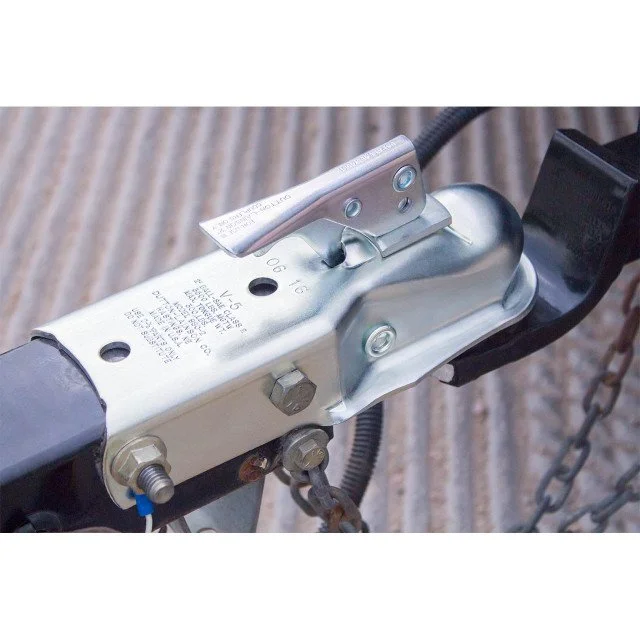
There is a trailer coupler that goes from the trailer tongue to the hitch ball on the tow car. A hole on the device fits around the ball, a latch or lever holds the ball in place, and a pin or clip keeps it from coming loose by accident. When the trailer coupler is in motion, it needs to be able to move in more than one direction while still holding on tight and taking forces from turns and rough ground. The trailer coupler is not like solid mounting methods at all, since it can be physically bent and firmly pulled together.
Key Coupler Types and Their Applications
Different kinds of pulling call for different kinds of trailer couplers. Straight-tongue trailer couplers can be connected directly to trailer frames with a single beam. These are often found on light-duty trucks and service carts. When you connect A-frame trailer couplers to structures with two beams, the stress is spread across two areas. This makes heavy loads, like construction trucks or equipment haulers, more stable.
Adjustable trailer couplers have fixing holes that can be moved to different positions. This lets you change the hitch ball's height without changing the frame. There are safety features built into locking trailer couplers that stop theft and illegal use. These include locked systems or designs that can't be changed. They can be used to manage teams and move expensive goods because of this. Electric trailer couplers have control systems built in that let them connect and disconnect on their own. As time goes on, these trailer couplers are used more and more in factories where worker safety and productivity are important.
Distinguishing Couplers from Hitches
Hitch and trailer couplers are not the same thing and should not be mixed up. The only parts in the hitch are the receiver tube and the ball mount device. It's hooked up to the tow car. The trailer coupler, on the other hand, links to the trailer and slots into the hitch ball. Knowing this difference will help you avoid getting the wrong thing and make sure that all of your pulling gear works with each other. This is especially important if you have to take care of a lot of different cars and trailers at different job sites.
How to Choose the Right Trailer Coupler for Your Needs
Load Capacity and Weight Rating Considerations
Before you can choose the right trailer coupler, you need to get a good idea of the trailer's gross trailer weight (GTW) and tongue weight. It tells you how much weight a trailer coupler can hold. Most of the time, the grade is 2,000 pounds for light-duty use and 30,000 pounds or more for commercial shipping. Ten to fifteen percent of the trailer's weight is usually made up of the tongue. The tongue weight must not be more than the trailer coupler's vertical load limit, or it will break or wear out too fast.
The people in charge of buying things need to think about changing load factors that are bigger than steady weight. Some of these are acceleration forces, emergency stopping forces, and contact loads from roads that aren't level. The total cost of ownership for all of your equipment goes down when you add a safety cushion of 20–30% above the expected maximum loads. This makes your equipment more reliable and extends the life of its parts.
Material Selection and Corrosion Resistance
Steel trailer couplers are most often used for heavy-duty tasks because they are stronger than metal trailer couplers and don't break easily. Different kinds of carbon steel can hold a lot of weight and aren't too expensive, so they're good for controlled environments or short-term uses. Hot-dipped galvanized steel is covered in zinc, which keeps it from rusting and makes it last longer in wet places that are popular in construction and public works projects.
Aluminum trailer couplers are about 40% lighter than steel trailer couplers. This is helpful when the weight of the trailer limits the amount of weight that can be moved or the fuel efficiency of the vehicle. The material doesn't rust on its own, so it works well near the water and in places where road salt is used a lot. Even though they cost more, stainless steel trailer couplers are the best at fighting corrosion. They are used to move food, drugs, or industries along the coast where long life and cleanliness are important enough to justify the higher cost.
Latch Mechanisms and Security Features
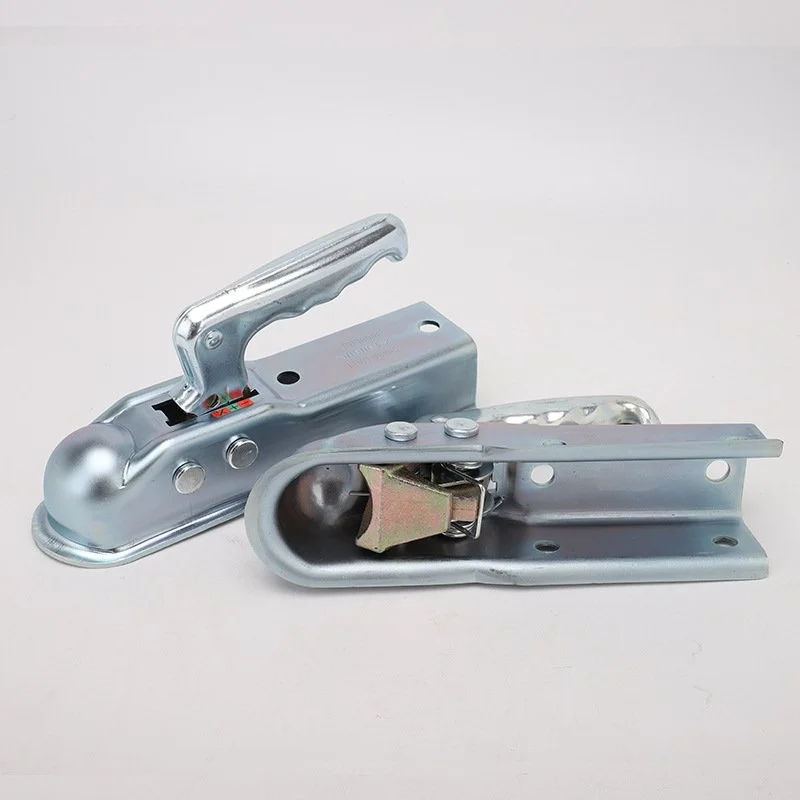
It's not the same for every type of motorized latch that works. For high-frequency filling tasks, lever-actuated latches are best because they can be engaged quickly and can be seen to be tightly linked. Devices that look like screws lock firmly through threaded compression, but they take longer to put together and take apart. A spring-loaded latch closes right away when a ball hits it. People who use it will find this helpful, but the spring tightness needs to be checked every so often.
Safety is very important when working with expensive tools or in places that could be dangerous. Integrated locking systems that use keys or combinations keep trailers from being taken off without permission. This protects investments and lowers the cost of insurance. For more modern designs, there are parts that can't be changed, or they can be tracked electronically so that fleet management systems can check on coupling in real time across activities that are spread out.
Installation, Maintenance, and Safety Best Practices
Correct Installation Procedures
When you tow, make sure the trailer coupler is securely attached to the trailer tongue to keep everyone safe. Where the mount is going to be put must be flat, clean, and free of rust or other damage to the structure. For bolt-on installs, bolts need to be torqued to the manufacturer's specifications. For light-duty uses, these are usually between 40 and 60 ft-lbs, and for heavy-duty trailer couplers, they can go up to 150 ft-lbs. To do a weld-on fix, you need skilled welders and a hole that is deep enough to fully connect the material to the tongue without any weak spots from the heat.
How the trailer coupler and hitch ball are lined up in terms of height has a direct effect on how the load is distributed and how the parts wear. The trailer should sit level or slightly nose-down when it's properly hooked up, and the trailer coupler hole should fully engage the ball without closing. When something isn't lined up right, it creates stress concentrations that speed up fatigue cracking and can make it harder for the latch mechanism to stay in place when loads are changing.
Routine Maintenance Requirements
As part of the regular maintenance, the trailer coupler socket should be looked at for cracks, bending, or signs of too much wear every 500 hours of use or every three months, whichever comes first. Every so often, high-temperature grease needs to be used on the latch device to keep it going smoothly and stop seizures. Pay extra attention to places that get hit by pressure and the weather, like pivot points, spring systems, and locking pins. These can wear out quickly.
Controlling corrosion makes a system last a lot longer, especially in tough environments. If the weather is bad, clean up the trash, salt dust, and other pollutants that have gathered after each use. Keep grease from building up in the ball socket, which can lower friction and make it slip when it's loaded. Coatings should be used to protect metal areas that aren't covered. Safety pins are inexpensive parts that are used as extra holds. If they get old or broken, you should get new ones right away.
Safety Protocols and Failure Prevention
It is important to follow the weight limits on the trailer coupler casting for safety reasons. When the expected limit is exceeded, there is a huge chance of a catastrophic failure, which puts people and property at risk. Before you move the car, you should always make sure the latch is tightly in place. The head of the trailer shouldn't move up when you lift it if the system is linked correctly. As an extra way to keep things in place, add safety bands. They should be crossed under the tongue and attached to the frame of the tow vehicle. There should be enough room for them to bend, but not so much that the tongue touches the ground in case the main connection breaks.
You can use wear signs to find out when to get a new item before it breaks. Sockets that stick out more than 1/8 inch, have cracks in the casting or weld areas, or have latch systems that don't stay in place when hand pressure is put on them should be changed right away. You can follow the rules and figure out when to replace all of your tools better if you keep thorough records of that repair.
Comparing Market Options: Popular Brands and Latest Innovations
Established Industry Leaders
Some producers have been praised for always being there for you and doing well in a lot of different scenarios. CE Smith is an expert at making parts for marine and utility trailers that won't rust and can be used near the water. A lot of different kinds of trailer couplers are made by Reese, which is now known as Cequent. Some are for fun, and some are for work. Parts are also always easy to find because they have strong marketing networks. Curt Manufacturing specializes in custom-made solutions that come with clear load ratings and usage guides that help people in charge of buying things say exactly what they need.
It is important for businesses to move big items, so Bulldog goods are made with strong latch systems and reinforced castings. Draw-Tite makes products that can be used for more than one thing and has specific information on how each one fits each car. Most of the time, these brands' contracts last between one and five years, but it relies on the product line and how it is used. Customers always say how important it is to have correct load rating information and quick expert help when they are having problems in the field.
Manual Versus Electric Coupler Systems
To use a standard manual trailer coupler, the user has to open the latch by hand, put the trailer coupler over the ball, and then lock it in place. Since it's not too hard to understand, this way is safe and cheap to get. When linking doesn't happen very often or when power is hard to get to, manual ways work best.
Electric actuation systems use linear actuators or powered tools that are controlled by buttons or systems that are far away. Because workers don't have to move things from one truck to another, these changes make things safer. They also make it easier to connect to automatic loading systems. Electric trailer couplers are being used more and more in transportation hubs, transit sites, and industrial activities because the higher coupling frequency makes the higher initial cost worth it. Models that run on batteries are useful when there aren't any set power lines, but they need to be handled differently because they use batteries.
Emerging Technologies and 2024 Trends
Smart coupling systems with sensors that check the state of contact, load sharing, and component wear are some of the new ideas that have been coming out lately. With wireless protocols, these systems can talk to fleet management platforms. This lets them plan fixes ahead of time and keep an eye on activities at all times. In some more advanced designs, cameras or proximity sensors help with automatic alignment and show workers how to move the connecting parts together. Trailer coupler mistakes are less likely to happen because of this.
Compound strengthening is now used in trailer coupler making because of recent progress in the study of materials. This has helped cut down on weight while keeping the structure's strength. Standard galvanizing doesn't protect as well as coats made with nanotechnology that don't rust. They are very useful in making chemicals and building up the navy. More use of third-party load testing proof to help control risk in business operations and standardization around SAE J684 standards are two trends that are on the rise.
Procurement Strategies: How to Buy Trailer Couplers Efficiently
Direct Manufacturing Versus Distribution Channels
Going straight to the seller can save you money when you need to get a lot of something or change it. When you have a factory-direct tie, you can get help from engineers to make changes that are specific to your trailer coupler application. They can also help you get better prices by not adding markups to the distribution, and if supply is low, they can do this before anyone else. This method works well for established purchasing groups that handle goods by the container or keep in touch with sources for ongoing projects.
A delivery platform that has a bigger selection of goods, lower minimum order amounts, and faster shipping times for common parts adds value. Wholesalers in the area keep local stock on hand, which cuts down on wait times that are important for service shops. They also offer combined shipping across many manufacturers and have knowledgeable sales teams that can answer questions about how to use their products. The best balance between price and supply can be found in both platforms. They make standard, high-volume parts directly and send one-of-a-kind items or emergency repairs to shops that need them.
Evaluating Supplier Capabilities
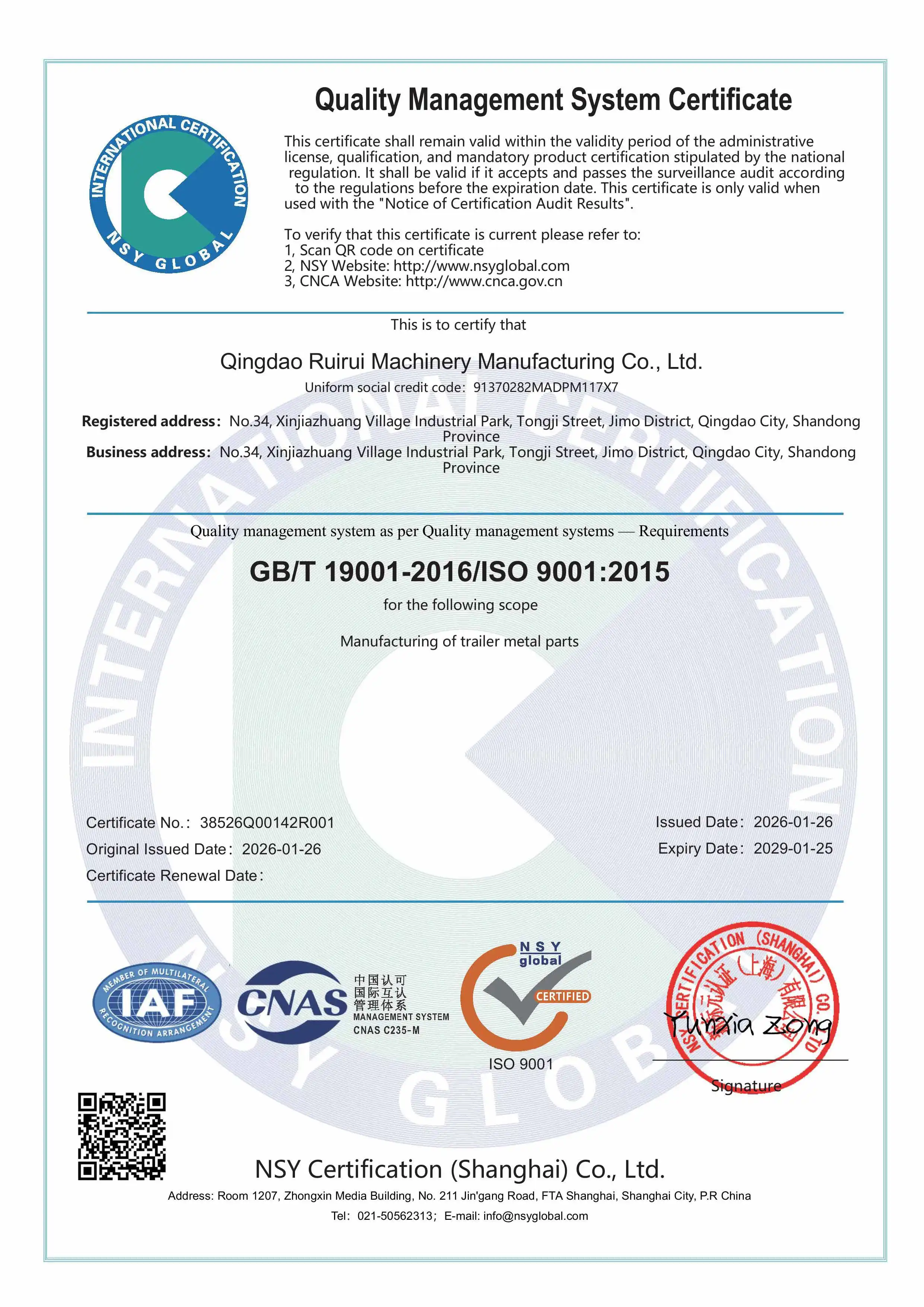
You shouldn't just look at the unit price when judging a provider; you should also look at the total value they offer. Making sure you know how much you can make will help you grow as the job requires. Check out how many production lines there are, how much of the work is done by machines, and how safe the workers are, such as how they handle a trailer coupler. You can be sure that the quality of the end product is always the same by making sure that the process rules and paperwork are well organized. One example of this is ISO 9001.
Technical help skills come in handy when you need to explain custom solutions or fix issues in the field. Suppliers with their own engineering teams can do finite element analysis to check the load, help pick the right materials for the job, and use fast testing to make sure everything works before making a lot of them. Once you buy something, you're promised quick guarantee handling and new parts, so when problems do happen, they don't have to be fixed for a long time.
Complete System Procurement Considerations
When you buy a trailer coupler, you should also get the other parts that hold it together and make sure the system is complete. Getting the right safety chains for the trailer class, suitable hitch balls with the right thickness and shank length, and the right fastener hardware should all be done at the same time to stay on schedule and avoid problems with compatibility. When something breaks down in a remote area or during peak hours, some businesses find it helpful to have extra trailer couplers and wear parts for their most important machines. This way, the machines can still keep going.
Shipping and packing add to the total landing cost, especially when buying from other countries. Check with suppliers to see if they offer packing that is safe enough to ship in containers, help with customs paperwork, and shipping all types of goods together to save money on freight. The price you pay, the currency you can use, and the types of financial tools you accept should match how you handle your cash flow and the things you buy.
Conclusion
You should think about the total cost, technical specs, and how you plan to use the trailer coupler when picking the right one. You can make better and more reliable pulling moves if you know about the different types of trailer couplers, the materials they are made of, and how they latch together. If you place and take care of things the right way, they last longer and don't break down in ways that put people in danger or slow down work. In order to build relationships that offer more than just price, you should look at a supplier's quality systems, engineering support, and service claims as a whole. If you are in charge of city infrastructure projects, industrial equipment fleets, or distribution operations, getting strategic trailer couplers directly helps you reach your goals for real excellence and risk management.
FAQ
1. What size trailer coupler do I need for my application?
The trailer coupler size matches the width of the hitch ball and the maximum weight that it can hold. Light-duty trailers that weigh less than 2,000 pounds usually have 1-7/8-inch balls. Trailers that weigh between 2,000 and 8,000 pounds usually have 2-inch balls, and trailers that weigh more than 8,000 pounds usually have 2-5/16-inch balls. Make sure that the gross trailer weight number on the trailer coupler and the size of the ball both meet or go over the weight limit for your whole trailer. Check the trailer's manufacturer's specs and think about how much the tongue weighs to make sure you get the right size.
2. How often should trailer couplers be replaced?
Instead of being changed at set times, it depends on how often it is used and what the weather is like where it is. Check the trailer couplers for cracks, socket wear of more than 1/8 inch, and damage to the latch mechanism every three months or 500 hours of use. For heavy business use in harsh conditions, you might need to change it every two to three years. For personal use, it might last 10 years or more. It doesn't matter how old the building is; keep track of checks and fix any damage right away.
3. Can I use different brands of couplers and hitches together?
Any trailer couplers or clips from any company can be used with any other as long as the balls are the same size. It doesn't matter what brand of 2-inch hitch ball it is as long as it fits the SAE J684 measurements. The trailer coupler, the ball, the ball mount, and the hitch receiver should all have load numbers that work with each other. All of them should meet or go beyond what the trailer's rules say. When you mix metric and imperial measures, the differences in length and width can make links unsafe.
Partner with RUIRUI for Your Trailer Coupler Requirements
Qingdao RUIRUI Machinery is your main trailer coupler supplier because they are very good at making precise metal parts and know a lot about how tow systems work. Progressive pressing, CNC machining, laser cutting, and robotic welding are some of the high-tech ways we make trailer couplers out of steel, stainless steel, and aluminum alloy that meet the tightest need. Our quality management systems are ISO 9001, ISO 14001, and OHSAS 18001 approved. This means that they make sure every part meets the high standards for performance needed in buildings and in industry.
Our OEM customization services can meet unique needs for uses that stock items can't. Our engineering team listens to your needs and comes up with custom solutions. This is true whether you need different ways to place things, better protection against rust through advanced finishing methods, or load ratings that work best for certain types of equipment. Your projects will stay on track thanks to our eight production lines and yearly capacity of 130,000 pieces. We also make sure that your orders get to businesses in North America, Europe, and other places on time thanks to our experience with shipping goods around the world.
Talk to our team at kshdhardware@qdkshd.com about your trailer coupler needs and learn how RUIRUI's high-quality production can help you reach your business goals with fast expert support and low factory-direct prices.
References
1. Society of Automotive Engineers. (2020). SAE J684: Trailer Couplings and Hitches—Automotive Type. SAE International Standards.
2. National Highway Traffic Safety Administration. (2019). Federal Motor Vehicle Safety Standards: Trailer Hitch and Coupling Device Requirements. U.S. Department of Transportation.
3. American Society for Testing and Materials. (2021). ASTM A641/A641M: Standard Specification for Zinc-Coated (Galvanized) Carbon Steel Wire. ASTM International.
4. Trailer Equipment Manufacturers Association. (2022). Industry Guidelines for Trailer Coupling Systems: Design, Testing, and Application Standards. TEMA Technical Publications.
5. International Organization for Standardization. (2018). ISO 1102: Mechanical Coupling Between Towing Vehicles and Trailers—Specification and Testing. ISO Standards Catalogue.
6 .Cequent Performance Products. (2023). Engineering Guide to Commercial Trailer Coupling Systems: Selection, Installation, and Maintenance Best Practices. Cequent Technical Library.

Send Inquiry
You may like