
Understanding the Working Principles and Types of Trailer Couplers
When a trailer is hooked up to a vehicle that pulls it, the trailer coupler is the most important piece of gear to make sure that everything works safely and fine. A trailer coupler lets the tongue of the trailer connect to the tow vehicle's hitch ball or pintle. This makes a strong connection that can handle being moved while the load changes, the road shakes, and the direction of the move changes quickly. Procurement staff, fleet managers, and engineering teams are in charge of finding heavy-duty tow equipment. These groups need to know how these parts work, what they're made of, and how they are grouped. There are a lot of different kinds of trailer couplers on the market right now. This guide tells infrastructure, logistics, and industrial businesses what they need to know before they buy.
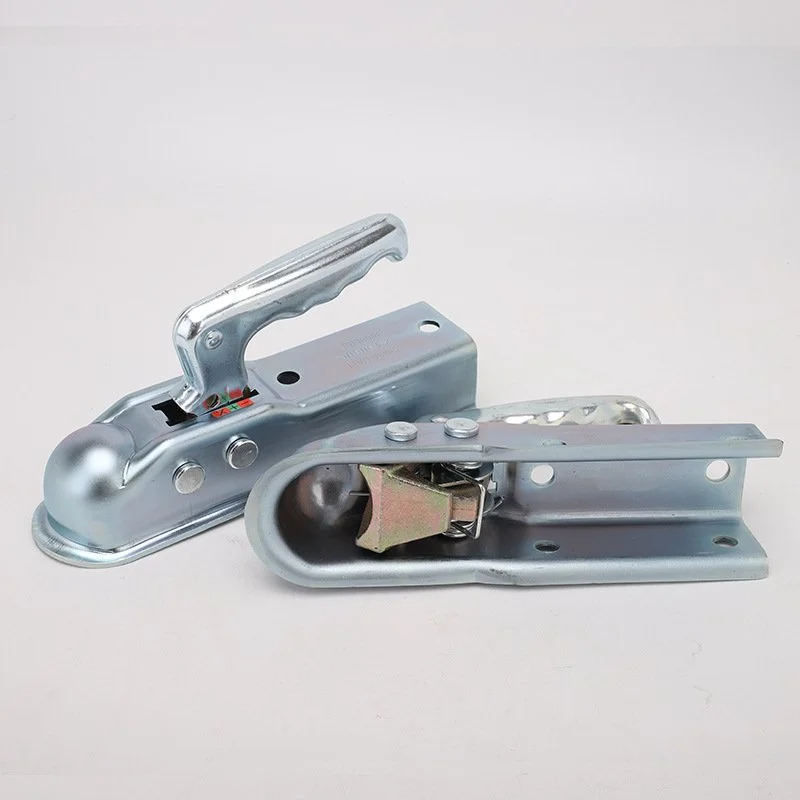
What Is a Trailer Coupler and How Does It Work?
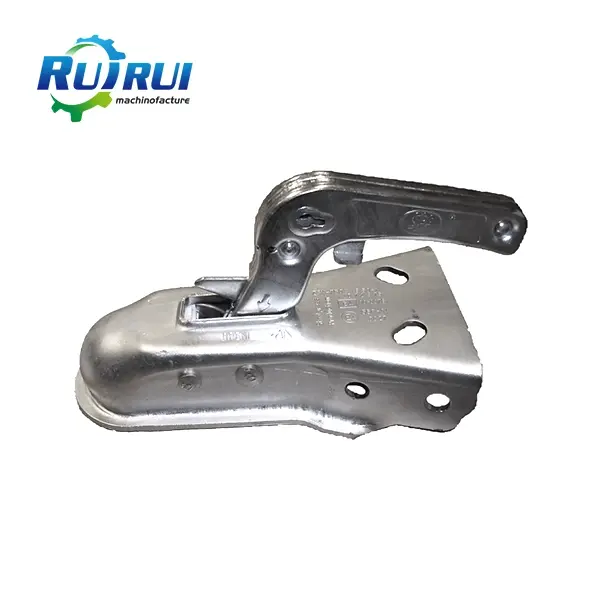
It is the trailer coupler's job to connect the trailer to the vehicle that is pulling it. Its job is to keep the trailer stable on its sides while pulling forces are sent to these other parts. What's most important about the whole thing is the coupler body. There are latches, a locking lever, and often safety pins on it. When you put the coupler over the hitch ball, the latch will close around it and lock it in place. Then the lever that locks goes into place. So, if the door is heavy or shaking, the latch won't open by accident.
Core Components of a Trailer Coupler
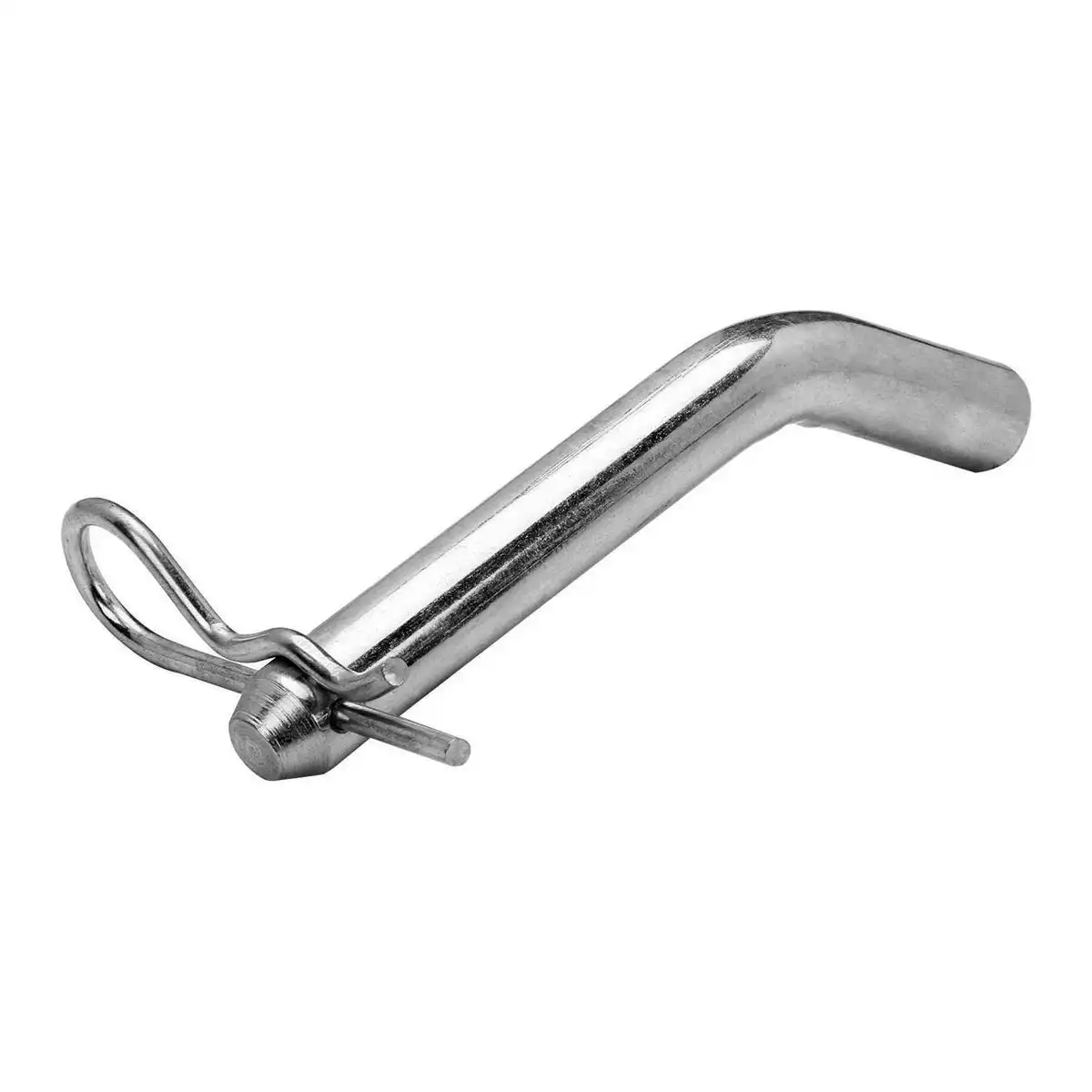
A coupler works because of a few key parts. Most of the time, forged or stamped steel is used to make the coupler body. This gives the structure strength and let it hold weight. Parts that move and fit around the hitch ball are called fixings. When the car is moving, this system locks the door and keeps the latch shut. It can be set to work automatically or by hand. A coupler pin is something that many professional couplers come with as an extra safety measure. When the latch lever is closed, this pin physically holds it in place. So, when the door is opened on rough ground, the latch won't bounce.
Working Principle and Safety Features
A mechanical cover and two sets of locks keep it safe. This is a simple but useful idea. The latch turns or slides to catch the ball all the way once the coupler mouth goes around it. The locking lever then either pushes on the door or mechanically messes with it so it doesn't open by accident. Things are made with wear indicators, non-rusting coatings, and grease fittings these days to make them last longer. Operators can be sure that the connection is safe before they leave thanks to built-in latch pins and audible locking confirmation systems. In high-volume logistics settings, this cuts down on the number of mistakes that need to be made by hand.
Procurement teams can better judge specs and make sure that the couplers they choose meet safety rules and the needs of heavy-duty applications when they know about these mechanisms.
Exploring Different Types of Trailer Couplers
There are different kinds of trailer couplers, and each one has its own design, load limit, and use. The type you choose will depend on the type of trailer, the load, and the work area.
Ball Mount Couplers
The ball mount trailer coupler works best with light to medium-duty trailers most of the time. They have a hole that fits over a round hitch ball. Usually, these balls are 1-7/8 inches, 2 inches, or 2-5/16 inches across. There are two types of latching mechanisms: manual and automatic. Manual locks need to be physically set in order to work, while automatic locks set themselves when the object is placed on the ball. Because they are simple to use and can connect to many things, ball couplers are often found in utility trailers, moving trucks, and light construction.
Pintle Hooks and Lunette Rings
Pintle hooks are strong connections that work well for heavy-duty or off-road work. A hook and a ring make up this type of coupler. The pintle hook goes on the car being towed and a lunette ring goes on the trailer. Being made in a certain way makes it easier to move around. This makes it great for rough terrain and high-stress situations that happen a lot in the military, farming, and construction. Pintle systems work better than ball couplers and last longer in rough conditions if you don't line them up right.
Fifth Wheel and Gooseneck Couplers
Flatbeds, RVs, and commercial freight trailers all have fifth wheel and gooseneck couplers. They're made to last a long time. An extra-long fifth wheel coupler is on the truck's bed. The plate on it is shaped like a horseshoe, and it locks into place on the trailer with a kingpin. The only difference is that gooseneck couplers connect directly to a ball hitch in the truck bed. In both systems, more weight is spread out over the back axle of the tow vehicle. It can now pull more than 10,000 pounds of weight and is more stable.
Choosing between these types involves analyzing factors such as weight capacity, articulation needs, installation complexity, and maintenance requirements, all critical considerations for bulk procurement and long-term fleet management.
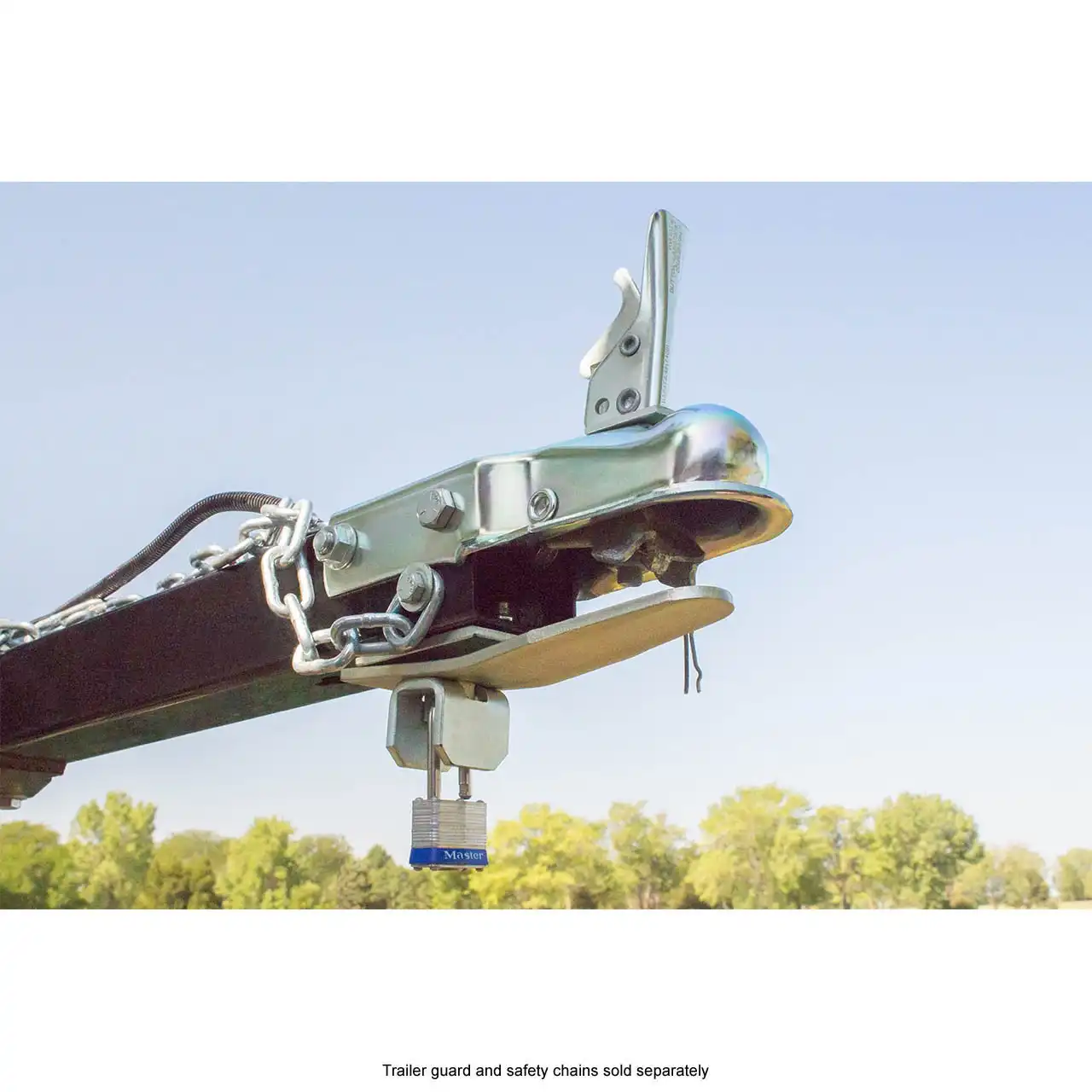
How to Select the Right Trailer Coupler for Your Business Needs?
How to Choose the Best trailer coupler for a Business Trailer: you need to make sure that the way things will be used and the technical needs match up. It takes a lot of work to make sure their supply chain is safe, doesn't cost too much, and works well with other chains.
Assessing Load Capacity and Weight Ratings
It is safe for a coupler to hold a certain amount of weight. Its "gross trailer weight" (GTW) is this number. This level of stress could cause a machine to break down or cause something very bad to happen. Before buying a coupler, people should make sure that it can handle at least as much weight as the trailer can hold when fully loaded, plus a little extra. Standards in the field, like SAE J684, explain how to group ratings correctly, and coupler bodies from reputable companies make their ratings very clear.
Evaluating Material Durability and Corrosion Resistance
How long a trailer coupler lasts and how well it works will depend on the material you pick. This type of steel is very strong for how light it is, and it doesn't wear down easily. Along the coast, on farms, and in the winter when salt is present, roads can rust. e-coating, zinc plating, and powder coating are some of the coatings that are used to protect against this. Couplers made of stainless steel last longer and don't rust as easily in harsh environments and the sea, but they cost more. At RUIRUI, we use high-tech surface treatments like electrophoresis, powder coating, and plating to make sure that the couplers we make will last.
Analyzing Locking Mechanisms and Safety Features
To keep things safe, there are different kinds of locks that are more or less hard to break. You have to use your hands to open and close a manual latch. They're easy to fix and don't need much care. Auto latches make work go faster in high-throughput areas, but they may need to be checked more often. Extra locking parts, like coupler pins, keep things from coming apart by accident when they bump into something or shake. If the buyer cares about safety, they should also look at things like non-theft locking systems and visible lock indicators.
Balancing these criteria with budget constraints and supplier capabilities helps procurement teams optimize sourcing decisions and build resilient supply chains.
Installation, Adjustment, and Maintenance Best Practices
Putting couplers together and taking care of them the right way will make them last longer and keep you safe. But even the best parts can break quickly if you don't install them right or take care of them.
Step-by-Step Installation Guidelines
To connect a trailer coupler to the trailer tongue, you need bolts and other hardware that are the right size. That way, the coupler won't get worn out or stressed out. It should line up perfectly with the hitch height of the tow vehicle. Make sure you follow the manufacturer's torque suggestions so that things don't come loose when they shake. Use thread-locking compounds or lock washers instead. They are even safer. Once the trailer is ready to go, connect it to something else to make sure the locking and engaging works well.
Identifying Wear and Malfunction Indicators
If you check things often, you can find problems before they break something. If your coupler and hitch ball move around a lot, they are worn out. Get some new ones. The building is not as strong if the coupler body cracks, rusts, or bends. There could be dirty or worn-out parts in the latch mechanism that won't let you open or close it. For extra safety, they should make sure there are no broken or missing safety pins and that the locking mechanisms work all the way and make a noise when the door is closed.
Routine Maintenance and Safety Tips
Making sure that moving parts are well oiled can stop corrosion and reduce friction. The coupler socket and latch need to be cleaned after being dirty, muddy, or salty for a while. They'll last longer this way. Making sure to check the mounting hardware often and tighten the bolts as needed will keep the attachment in place. When trailers are stored with covers or caps on top to protect them, the weather can't hurt the couplers. Every driver should be taught to make sure the couplers are properly engaged before every trip. This will keep the fleet and drivers safer.
Incorporating these practices into procurement specifications and supplier agreements ensures that purchased couplers deliver long-term value and operational reliability.
Conclusion
When people who buy things know how trailer couplers work and the different kinds, they can pick stores that sell safer, better, and more valuable items over time. When choosing a coupling system, you should carefully consider how much weight it can hold, how long the material will last, and how well it fits with the other tools you already have. Couplers come in a lot of different styles and sizes, from ball mount couplers for easy work to strong pintle hooks for tough conditions. They will work well for as long as they are used as long as they are set up correctly, serviced regularly, and carefully looked over. Buy from manufacturers with a lot of experience who can offer customization, technical support, and high-quality systems that have been tested and shown to work. This makes the process easier and less risky. Right engineering, cutting-edge production, and quick customer service are all things that RUIRUI is dedicated to. Firms that need trailer coupler solutions can trust us because of this.
FAQ
What weight rating should I choose for heavy-duty trailers?
First, find out how much your trailer can hold when it's full. Then, choose a trailer coupler with a weight rating that is at least 20% higher than that. Heavy-duty trailer couplers need to be able to hold at least 10,000 pounds most of the time. Always check the standards and directions from the maker to make sure you're following safety rules.
Are coupler sizes interchangeable with different hitch balls?
To keep everyone safe, the coupler and hitch ball sizes must match. Many of the time, they are 2 inches or 2-5/16 inches across. Too much play or trouble latching happen when you use sizes that don't match. Both of these are very dangerous. Always check the size before putting it in.
How do I know when a trailer coupler needs replacement?
You should get a new coupler if it is cracked, worn out so much that the coupler and ball move around, the latch mechanism bends, or the structure is rusty and weak. They won't break down in the middle of a trip if they are checked often for these issues.
Partner with RUIRUI for Reliable Trailer Coupler Manufacturing
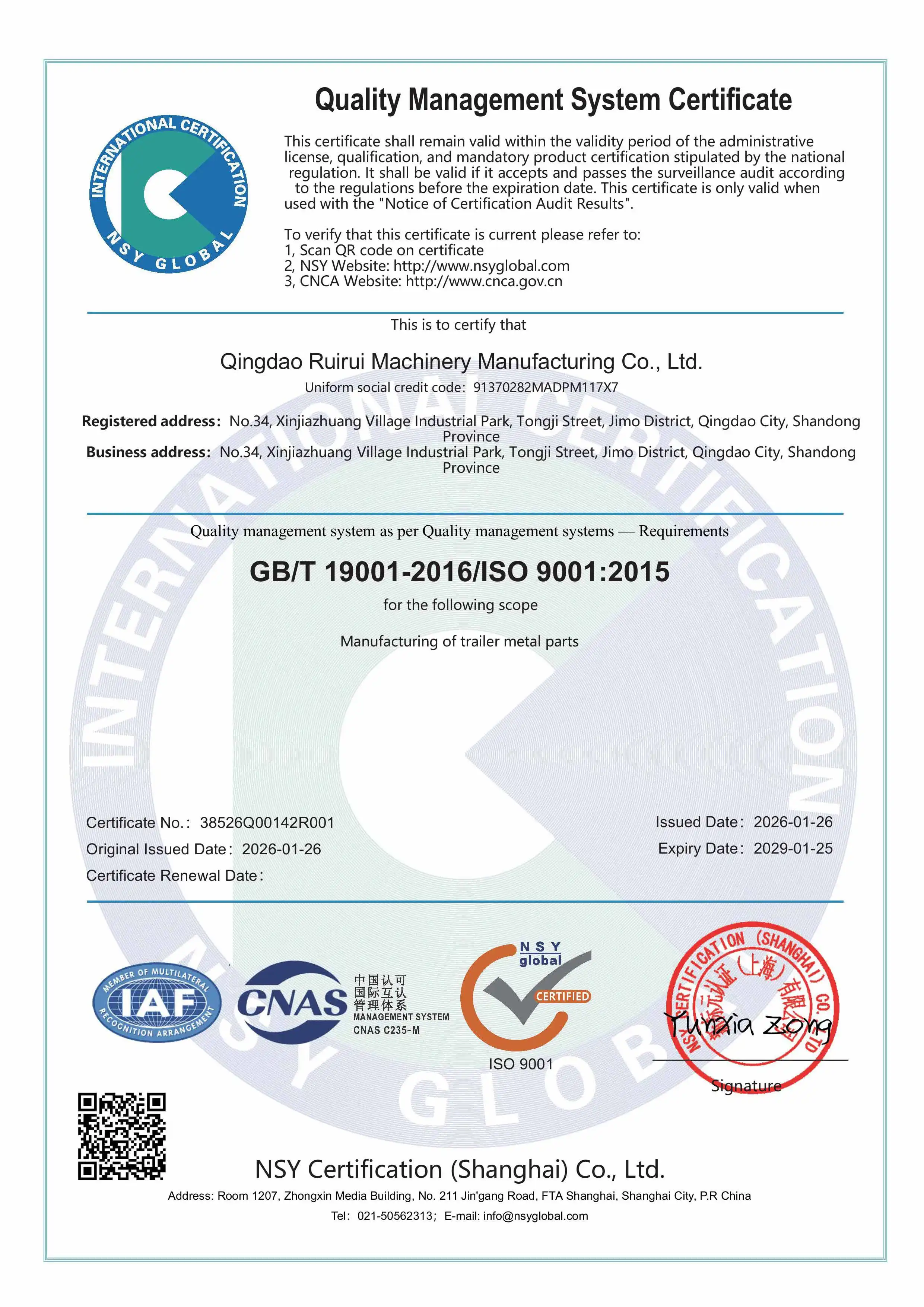
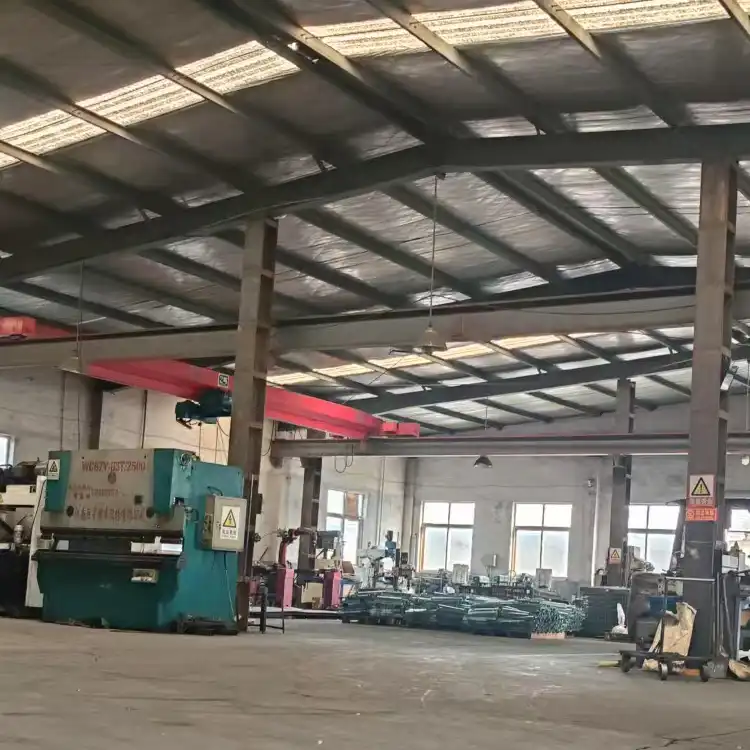
To find the best trailer coupler supplier, you need to look at more than just how good the goods are. You should also look at how well they can be made, how easy it is to change them, and how well they ship. It's easy for RUIRUI to make precise metal objects and work with sheet metal. Custom trailer couplers, coupler pins, and other tow parts are made for tough industrial applications. We can use deep drawing, progressive stamping, CNC machining, and laser cutting in our high-tech factories to make parts that fit together perfectly and last a long time. We are ISO 9001, ISO 14001, and OHSAS 18001 certified. At every step of the way, we keep a close eye on quality. Our engineering team works closely with clients to find solutions that meet all of their needs, whether they need standard ball couplers or heavy-duty pintle assemblies that are made just for them. Talk to us about your trailer coupler needs right away at kshdhardware@qdkshd.com. You can also find out how our OEM support and fast delivery times can help your supply chain.
References
Society of Automotive Engineers, "SAE J684: Trailer Couplings and Hitches - Automotive Type," SAE International Standards, 2020.
National Highway Traffic Safety Administration, "Federal Motor Vehicle Safety Standards: Trailer Hitch Systems and Equipment," U.S. Department of Transportation, 2019.
Anderson, M. and Thompson, R., "Material Selection and Fatigue Analysis in Heavy-Duty Trailer Couplers," Journal of Mechanical Engineering Design, Vol. 45, 2021.
Trailer Manufacturers Association, "Best Practices for Trailer Coupler Installation and Maintenance," Industry Guidelines, 2022.
Williams, J., "Comparative Study of Coupler Types in Commercial Freight Applications," International Journal of Transportation Engineering, 2023.
European Committee for Standardization, "EN 1797: Couplings for Trailers and Semi-trailers - Safety Requirements," CEN Standards, 2018.

Send Inquiry
Related Industry Knowledge
- What is a 2" Trailer Coupler and Why is It Essential for Safe Towing?
- What Are the Most Common Industrial Uses for Precision Steel Die Forging Parts?
- What are the typical applications of small sheet metal boxes?
- What Are the Key Benefits of Using CNC Metal Accessories in Production?
- How do you install a latch spring pull?
- How do you install a wall-mounted device rack bracket?
- What is the weight capacity of a D ring shackle hitch receiver?
- How are hydraulic bollards controlled?
- What are the benefits of zinc plating for D-shape pins?
- How do you choose the right pump cover plate for your application?