
What are the Standard Sizes of Trailer Hitch Pins?
Trailer hitch pins are the unsung heroes of tow trucks used in factories. These mechanical fasteners make the important connection between tow vehicles and trailers by locking ball mounts, cargo carriers, and accessory shanks directly into receiver tubes. Trailer hitch pins with a diameter of 1/2 inch are used for Class I and II hitches, while trailer hitch pins with a diameter of 5/8 inch and 3/4 inch are used for heavier Class III, IV, and V applications. Depending on the receiver tube width and whether the trailer hitch pin goes through a single-walled or double-walled receiver, the length can range from 3.5 inches to over 8 inches. By choosing the right trailer hitch pin size, you can avoid catastrophic shear failure, keep the trailer from coming apart while it's being moved, and make sure you're following the SAE J684 safety standards for towing equipment.
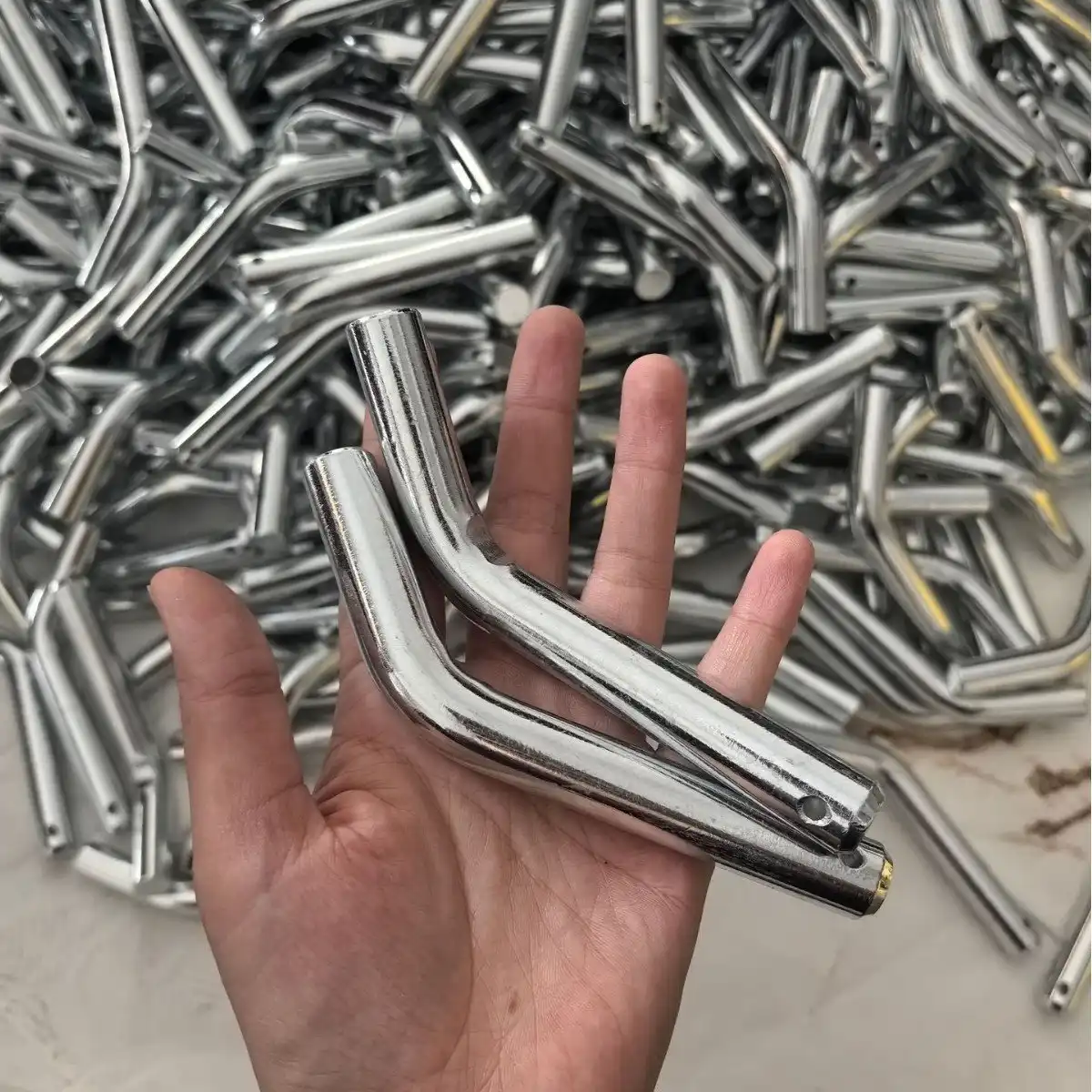
Understanding Trailer Hitch Pins: Overview and Importance
For vehicle towing systems, a receiver trailer hitch pin is the main mechanical fastener that holds ball mounts, cargo carriers, or accessory shanks into the receiver tube. Unlike regular fasteners, these parts have to be able to handle strong lateral shear forces and longitudinal tension that are created during heavy-duty towing. The trailer hitch pin stops the decoupling from happening by accident when there are dynamic loads, and when locking variants are used, it keeps expensive towing accessories safe from theft.
The Critical Role in Industrial Towing Operations
For industrial uses, connections need to be reliable and able to handle harsh conditions. For safe operations, construction fleets that move skid steers, landscaping companies that move heavy equipment, and logistics operators who move trailers all need trailer hitch pins that are the right size. When vibration, emergency braking, and rough terrain come together, a trailer hitch pin that is too small or not installed correctly can become a single point of failure with very bad results.
Why Correct Sizing Matters for Procurement Decisions?
When specifying towing hardware, people who work in procurement take real risks. When you use a 1/2-inch trailer hitch pin in a 5/8-inch hole, you make dangerous tolerance gaps that increase the risk of catastrophic shear. In contrast, forcing a trailer hitch pin that is too big into a receiver tube damages the tubes and weakens the structure. Industry data shows that 23% of towing-related problems are caused by trailer hitch pin hardware that is the wrong size. Picking the right trailer hitch pins based on the receiver class ratings, load capacity needs, and operational environments protects people and property while lowering the risk of liability.
Application Across Multiple Industries
Based on how they tow, manufacturers, infrastructure contractors, and fleet managers all need different trailer hitch pin specifications. Marine vessel transport needs trailer hitch pins made of corrosion-resistant stainless steel so that welding doesn't rust in saltwater. Off-road recovery operations need trailer hitch pins made of high-strength carbon steel that can withstand snatch loads from multiple directions while the vehicle is being freed. Also, anti-rattle threaded trailer hitch pins help with cargo transport because they keep sensitive equipment from getting damaged by vibrations. When procurement teams understand these application-specific needs, they can choose the best hardware.

Standard Sizes of Trailer Hitch Pins: A Dimensional Analysis Approach
Diameter and length are the two main dimensions that affect how well a trailer hitch pin works. These measurements are directly related to how much weight they can hold, how strong they are, and how well they work with certain types of receivers.
Common Diameter Specifications
Most diameters are based on standard measurements that match the sizes of receiver tube holes. Class I and II hitches usually accept trailer hitch pins with a diameter of 1/2 inch, which can pull up to 3,500 pounds. Class III, IV, and V hitches need trailer hitch pins with a diameter of 5/8 inches in order to hold loads ranging from 5,000 to 17,000 pounds, depending on the vehicle. 3/4-inch diameter trailer hitch pins are used for some heavy-duty applications in specialized industrial equipment, but they are still not very common in standard commercial fleets. The diameter has a direct effect on the trailer hitch pin's ability to resist shear forces. Larger diameters make the trailer hitch pin exponentially stronger by increasing its cross-sectional area.
Length Variations and Their Applications
The trailer hitch pin length needs to be the same as the receiver tube width plus enough space for the clips to fit. Standard lengths for receivers are 3.5 inches for small vehicles, 4.5 inches for most passenger vehicles, 5.5 inches for receivers that are used in trucks, and 7 to 8 inches for commercial-grade receivers with reinforced double-wall construction. When going through more than one attachment point or when using anti-rattle devices that make the connection thicker, the trailer hitch pins may need to be longer. The actual functional length is found by measuring from the insertion point to the clip groove. This length must be at least 1 inch longer than the receiver tube width in order for the clip to engage properly.
Matching Size to Load Capacity
Based on expected loads and safety factors, engineering calculations set the minimum trailer hitch pin sizes. A 1/2-inch grade 5 steel trailer hitch pin has a shear strength of about 6,000 pounds, and a 5/8-inch trailer hitch pin has a shear strength of about 9,300 pounds. However, dynamic towing forces add factors for speeding up, slowing down, and moving side to side. To safely handle these moving loads, the industry standard says to choose trailer hitch pins with shear ratings at least 1.5 times the trailer's gross vehicle weight rating.
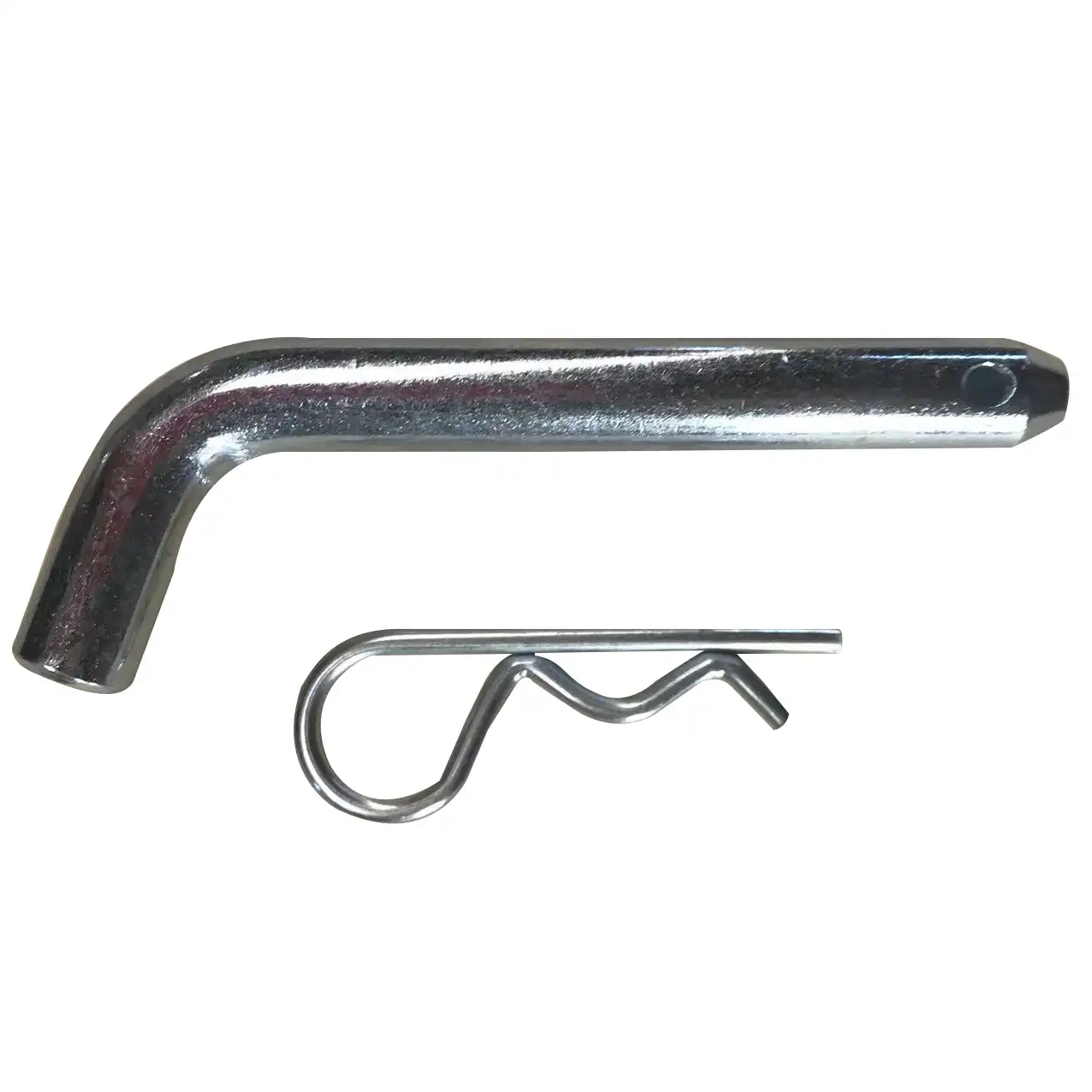
How to Measure and Select the Right Trailer Hitch Pin Size?
Accurate measurements keep mistakes and broken equipment from costing a lot of money. To make sure that all of the assets in the fleet work with each other, procurement managers should set up systematic measurement protocols.
Step-by-Step Measurement Methodology
First, find out what the receiver tube's internal dimensions are. Instead of guessing by looking, use precision calipers to measure the diameter of the existing holes, since differences of just 1/16 inch can have a big effect on trailer hitch pin fit. Next, measure the receiver tube's width from one outer wall to the next. Make sure to include any mounting brackets or other parts that make the tube thicker. Write down these measurements for each type of vehicle in your fleet to set standard requirements for buying things.
Understanding Receiver Class Standards
Class I receivers have square holes that are 1.25 inches wide and trailer hitch pin holes that are 1/2 inch wide. They can hold up to 2,000 pounds of weight. Class II keeps the same size but can hold up to 3,500 pounds more because it is built stronger. Class III includes 2-inch square receivers with 5/8-inch trailer hitch pin holes that can hold up to 5,000 pounds. Class IV has the same measurements, but the materials are made stronger so they can hold 10,000 pounds. Class V uses 2.5-inch square receivers and 5/8-inch trailer hitch pins. Its 17,000-pound ratings come from using advanced metals and building structures. By matching the trailer hitch pin size to the receiver class, you can be sure that the two will work together mechanically and safely.
Differentiating Pin Types by Size Requirements
Standard slide-through trailer hitch pins work well for most tasks, but they don't stop thieves. Locking trailer hitch pins have key cylinders built into them that protect the internal mechanisms and keep expensive ball mounts from being taken off without permission. Usually, these make the overall length 0.5 to 1 inch longer than standard versions. Instead of clips, quick-release trailer hitch pins have spring-loaded buttons that hold them in place, so they can be installed and removed without any tools. While they are more convenient, they have slightly lower shear strength ratings than solid-core designs. Anti-rattle trailer hitch pins have threaded mechanisms that hold the shanks of the bolts tightly against the walls of the receiver. This stops movement but needs to be installed with a wrench.
Procurement and Buying Guide for Trailer Hitch Pins
To build reliable supply chains for towing equipment, you need to look at more than just the price of the trailer hitch pin hardware itself. Long-term total cost of ownership depends on how good the product is, how reliable the supplier is, and how well the warranty is supported.
Evaluating Reputable Manufacturers
When it comes to making trailer hitch pins, well-known brands bring with them a track record and engineering know-how. Businesses like Fastway focus on anti-rattle designs that use advanced tensioning systems. CURT keeps a large selection of products that cover all types of receivers and come with a lot of technical information. Reese products focus on being affordable while still performing well enough for light to medium-duty uses. Bulldog focuses on making commercial-grade hardware for use in fleets. When buying trailer hitch pins, purchasing managers should make sure that the companies that make them have ISO quality certifications and can give full specifications on things like the types of materials used, the maximum shear forces, and the allowed size differences.
Understanding Pricing Factors
Prices for trailer hitch pins vary a lot depending on their diameter, length, material, and any features that are built in. Simple 1/2-inch carbon steel trailer hitch pins cost between $8 and $12 each, while 5/8-inch stainless steel locking trailer hitch pins cost between $25 and $45. Anti-rattle features raise the base price by $10 to $20. People who buy in bulk usually get discounts of 15% to 30% when they buy more than 50 units. Every year, procurement teams should look at their entire fleet's needs and negotiate blanket purchase agreements with their preferred suppliers to get the best prices and make sure that the vehicles are always available.
Building Strategic Supplier Relationships
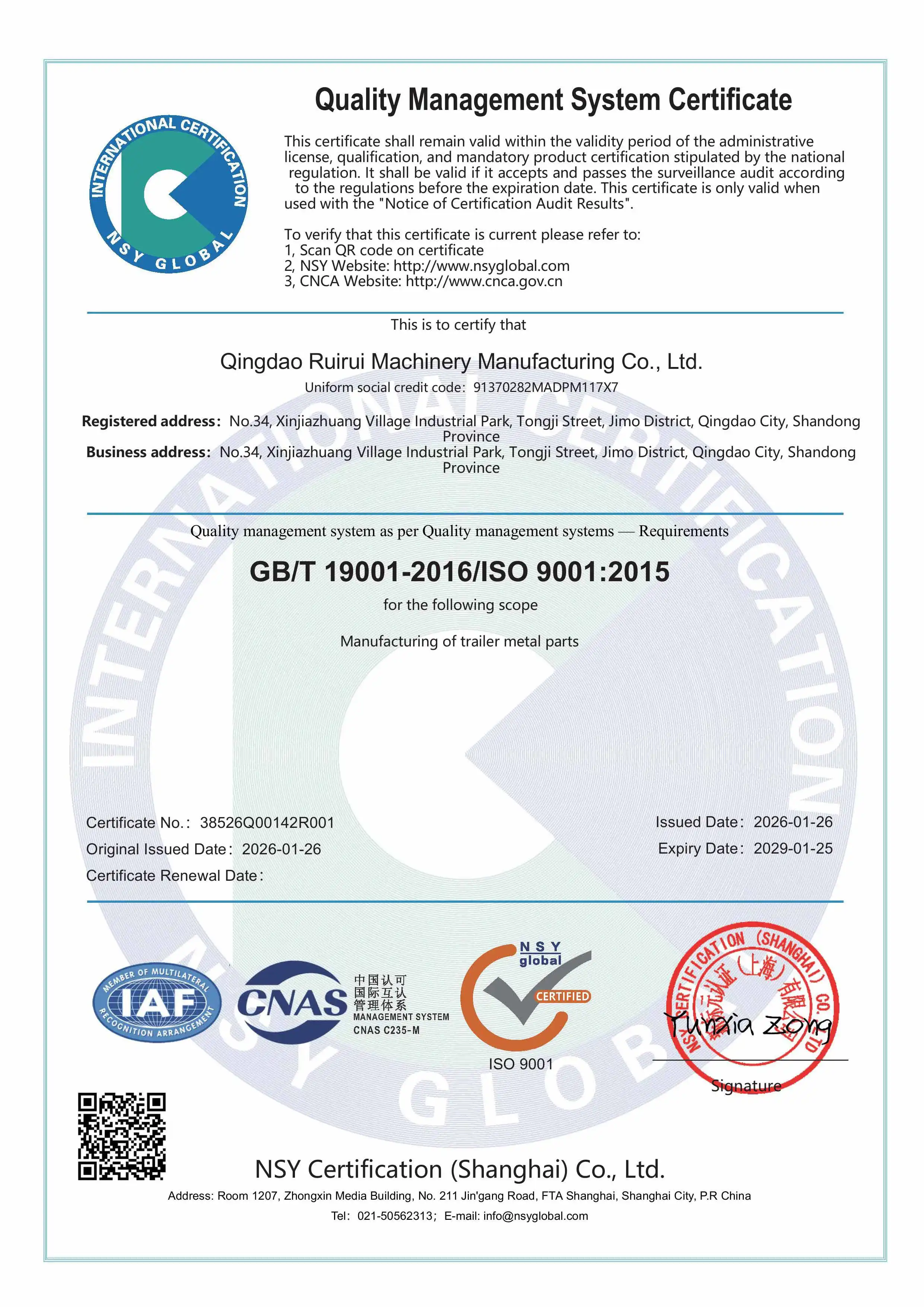
Long-term partnerships with qualified manufacturers have benefits that go beyond lowering the cost per unit. Reliable suppliers offer technical support while specifications are being made, can meet specific needs for specific applications, and keep extra stock on hand so that there aren't any shortages during times of high demand. Factory audits should be used to check a supplier's production capacity, quality control systems, and experience with international logistics. When suppliers show they have ISO 9001 certification, thorough testing protocols, and helpful customer service teams, they become valuable partners who can help with complex purchasing needs in many places and projects.
Safety Tips and Best Practices for Trailer Hitch Pin Usage
Most accidents that involve towing can be avoided by following the right installation and maintenance procedures. Standardized procedures should be set up by engineering teams and backed up by regular training.
Correct Installation Procedures
Make sure the trailer hitch pin goes through all of the mounting points by putting it all the way through the receiver tube holes and out the other side. The clip groove should be able to be seen and reached from the outside of the receiver tube. Never use a trailer hitch pin that doesn't go all the way through the receiver; doing so creates stress points that cause the trailer hitch pin to break quickly. To use the retaining clip, squeeze its ends together and slide it through the trailer hitch pin groove, making sure it sits all the way in the groove and not just on top of the trailer hitch pin shaft.
The Role of Retaining Clips
During operation, retaining clips keep trailer hitch pins from backing out and act as an extra safety measure. These clips must have enough spring tension to keep them in place during transit and prevent vibrations. Damaged, bent, or worn-out clips lose their ability to hold things in place and need to be replaced right away. Having extra clips on hand ensures that the machine will keep running even if some are lost during routine maintenance or inspections on the side of the road. In some heavy-duty situations, extra locking mechanisms, like cotter pins put in through clips to provide extra retention, are helpful.
Inspection and Maintenance Intervals
Damage that is easy to see, like bending, cracking, or too much wear, can be found visually before each use. When fleet vehicles are inspected thoroughly once a month, the trailer hitch pin diameter should be measured several times to look for wear that lowers shear strength. Trailer hitch pins that have lost more than 10% of their diameter need to be replaced right away. To keep them from seizing up, lock cylinders need to be oiled and tested for function every three months. When trailer hitch pins used in high-cycle applications are replaced once a year, they don't wear out and break without any visible signs.
Conclusion
To choose the right trailer hitch pin sizes, you need to know how receiver class specifications, dimensional requirements, and operational needs are related. The mechanical base for safe towing operations is made up of standard sizes ranging from 1/2-inch diameter for light-duty uses to 5/8-inch diameter and larger for heavy industrial use. Procurement managers have to compare the properties of materials, locking mechanisms, and anti-rattle features to the needs of each fleet while also building relationships with qualified manufacturers who can provide on a regular basis. Proper installation methods and regular inspection schedules protect people and property while extending the useful life of equipment in a wide range of situations.
FAQ
What size pin fits a 2-inch receiver?
Most trailer hitch pins have a 5/8-inch diameter and fit a 2-inch receiver tube. This size fits Class III, IV, and V hitches that are common on pickup trucks, SUVs, and commercial vehicles. Depending on how thick the wall of the receiver tube is, the trailer hitch pin should be about 4.5 to 5.5 inches long.
Can locking pins be used across different hitch sizes?
Locking trailer hitch pins are made with certain combinations of diameter and length to fit certain types of receivers. A locking trailer hitch pin made for a 2-inch receiver with a hole diameter of 5/8-inch cannot be used in a 1.25-inch receiver that needs a 1/2-inch trailer hitch pin. Always make sure that the dimensions are compatible before buying locking variants.
How often should pins be inspected in heavy-use conditions?
Every week, fleet vehicles that are used every day should be visually checked for cracks, bending, or too much wear. Using calipers to take monthly measurements shows that the diameter is shrinking, which weakens the structure. Any trailer hitch pin that has been deformed or has lost more than 10% of its diameter should be replaced right away to keep it from breaking while it's being used.
Partner with RUIRUI for Precision-Engineered Trailer Hitch Pin Solutions
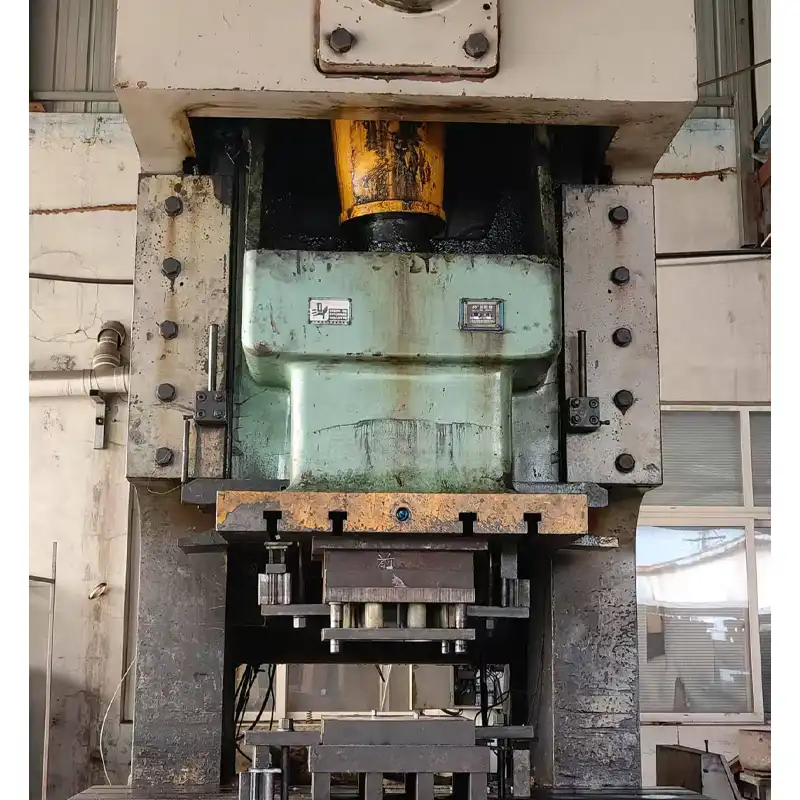
Finding reliable trailer hitch pin manufacturers means working with places that can do a lot of different metalworking jobs and have strict quality control systems. Advanced stamping, CNC machining, and heat treatment methods that meet strict industrial standards are used by RUIRUI Machinery to make high-strength trailer hitch pins. Our factory has environmental and occupational health management systems in addition to ISO 9001 certification. This makes sure that the quality is the same across production runs of more than 130,000 units per year. We offer custom solutions that meet specific load ratings, corrosion resistance, and size requirements. Our knowledge spans many materials, such as carbon steel, stainless steel, and specialized alloys. Our OEM support, short lead times, and technical collaboration during specification development are all good for procurement teams. Contact our team at kshdhardware@qdkshd.com to talk about your trailer hitch pin needs and get detailed quotes. We have over 15 years of experience making metal products for distributors in North America, Europe, and other places.
References
Society of Automotive Engineers. (2020). "SAE J684: Trailer Couplings and Hitches - Automotive Type." SAE International Standards Manual.
National Highway Traffic Safety Administration. (2019). "Federal Motor Vehicle Safety Standards: Trailer Hitch Installation and Performance Requirements." U.S. Department of Transportation.
American Society for Testing and Materials. (2021). "ASTM A576: Standard Specification for Steel Bars, Carbon, Hot-Wrought, Special Quality." ASTM International Publications.
Trailer Hitch Industry Association. (2022). "Best Practices Guide for Commercial Fleet Towing Equipment Selection and Maintenance." THIA Technical Bulletin Series.
Materials Science and Engineering Department, University of Michigan. (2018). "Shear Strength Analysis of Hardened Steel Fasteners Under Dynamic Loading Conditions." Journal of Mechanical Engineering Research.
International Organization for Standardization. (2021). "ISO 11554: Road Vehicles - Towing Systems - Hitch Pins and Coupling Components - Dimensional and Performance Specifications." ISO Technical Standards.

Send Inquiry
Related Industry Knowledge
- Benefits of Using Coupler Lock for RV Trailer
- Best Practices When Sourcing From Trailer Parts Supplier China
- What Role Do Trailer Container Handle Locks on Both Sides Play in Supply Chain Protection?
- What Role Does a Custom Forged Auto Parts Yoke Play in Steering and Suspension Systems?
- What Makes Our Receiver Adapter Hitch So Durable and Reliable?
- Can a Trailer Hitch Tightener Prevent Hitch Wear?
- How do I choose the right trailer safety pin for my setup?
- How are metal fences made?
- How do you choose the best metal dustbin for outdoor use?
- Do bollards require maintenance?