
What Are the Top Performance Advantages of Using a Custom Forged Auto Parts Yoke?
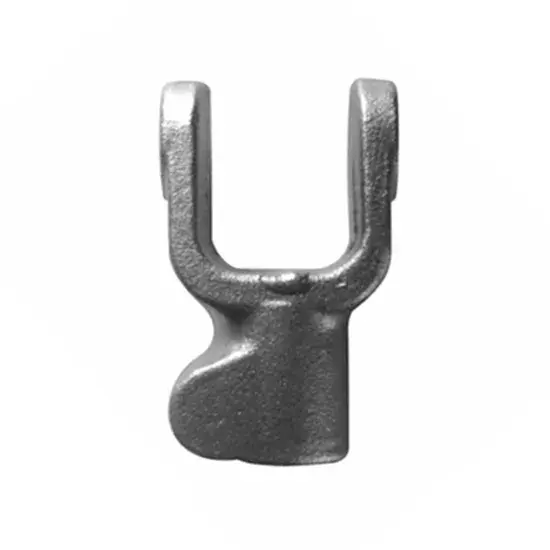
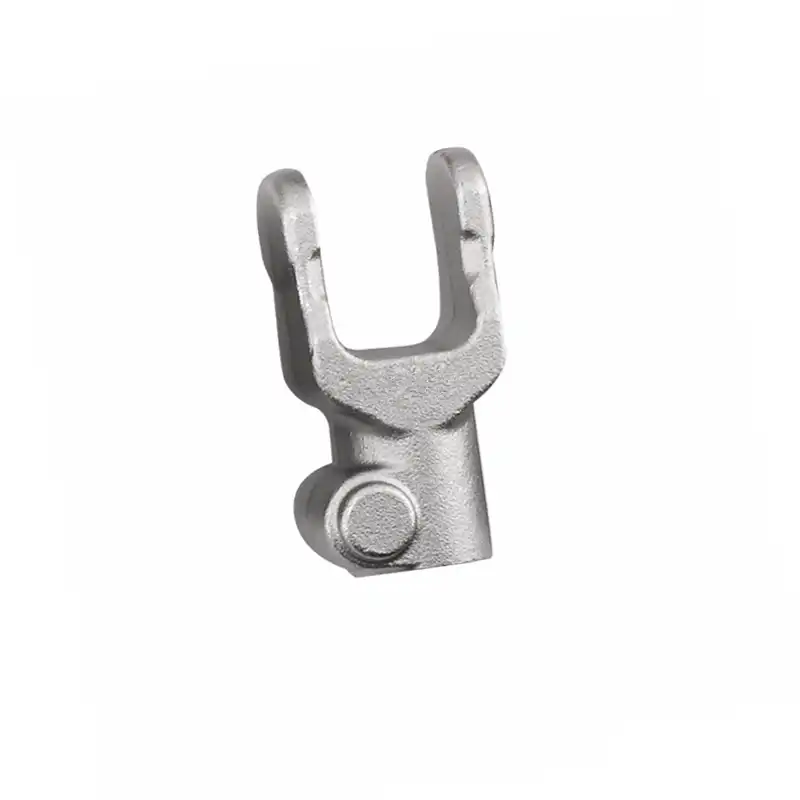
The selection of components might be the difference between outstanding vehicle performance and mechanical failure in the difficult field of automotive engineering, where accuracy, robustness, and performance are crucial. The custom forged auto parts yoke stands out as a crucial component that connects several automotive systems among the crucial elements that often define a vehicle's dependability and effectiveness. The improved performance features of this particular component, which is produced using sophisticated forging procedures, far exceed those of traditional cast or machined counterparts. The pinnacle of automotive engineering expertise is the custom forged car parts yoke, which uses cutting-edge production techniques to provide unparalleled strength, accuracy, and longevity. Superior mechanical qualities, such as improved fatigue resistance, ideal strength-to-weight ratios, and remarkable dimensional precision, are achieved by carefully hot and cold forging these specific components utilizing premium alloy steel materials like SAE 4140 and 4340. While customization options guarantee flawless compatibility with particular OEM requirements and distinctive automotive applications across passenger cars, commercial trucks, and heavy-duty machinery, the forging process produces a refined grain structure that eliminates weak points frequently found in cast alternatives.
Enhanced Structural Integrity and Mechanical Properties
Superior Grain Structure Development Through Forging Process
The underlying structure of the metal is fundamentally altered by the forging method used in the production of custom forged car parts yoke, which immediately results in improved performance attributes. Forging creates continuous fiber flow patterns that follow the contours of the component by compressing and realigning the metal grain structure, in contrast to casting or machining methods that may cause stress concentrations and structural weaknesses. Because it guarantees that the strongest grain orientation aligns with the main load lines, this grain flow alignment is especially important in yoke applications where directional loads are common. The best grain refinement is possible while preserving the material's intrinsic strength characteristics thanks to the hot forging process, which is usually carried out at temperatures between 1000 and 1200°C. While work-hardening the material to reach the target hardness range of 28–32 HRC, cold forging processes further improve surface polish and dimensional precision. By removing the porosity and inclusion flaws sometimes seen in cast components, this meticulously regulated forging process guarantees that every custom forged auto parts yoke has consistent mechanical characteristics throughout its structure.
Advanced Alloy Steel Composition and Heat Treatment
For the production of custom forged car parts yokes, the use of premium alloy steel materials like SAE 4140 and 4340 is a calculated decision that optimizes performance under rigorous automotive circumstances. Chromium, molybdenum, and other alloying elements are carefully balanced in these alloy steels to give better toughness, fatigue resistance, and hardenability. The SAE 4140 alloy is perfect for applications needing moderate strength levels with decent machinability because it has strong strength-to-weight ratios and reacts well to heat treatment procedures. In the meanwhile, SAE 4340 is appropriate for heavy-duty applications where intense loading conditions are anticipated because to its superior strength capabilities and outstanding impact resistance. Normalization, quenching, and tempering procedures are among the heat treatment techniques used on these custom forged car parts yoke components to improve the microstructure for certain performance needs. These heat treatments produce a fine-grained martensitic structure, which is then tempered to get the ideal ratio of toughness, strength, and hardness, guaranteeing dependable performance for the duration of the component's service life.
Precision Dimensional Control and Surface Integrity
The performance and durability of the component in automotive applications are directly impacted by the manufacturing accuracy attained in the manufacture of custom forged car parts. Dimensional tolerances of ±0.1mm are guaranteed by sophisticated forging processes and precise machining procedures, which are essential for correct fit and functioning inside intricate automobile systems. This degree of accuracy guarantees the best possible load distribution across mating surfaces while doing away with the need for lengthy post-processing procedures. In addition to offering corrosion protection, the surface finish produced by shot blasting and phosphating techniques also produces the perfect surface texture for coatings or treatments that come after. Shot blasting improves coating adherence and fatigue resistance by eliminating scale and surface impurities and producing a consistent surface profile. Phosphating treatment produces a conversion coating with built-in corrosion protection that is a great foundation for paint systems. Each custom forged car parts yoke satisfies the demanding specifications of contemporary automotive applications while offering constant performance characteristics throughout its operating life thanks to the combination of exact dimensions and outstanding surface integrity.
Optimized Performance in High-Stress Automotive Applications
Exceptional Fatigue Resistance and Durability
Fatigue resistance is a crucial performance metric because the rigorous operating environment of automotive systems exposes custom forged car parts yoke components to millions of stress cycles over the course of their service life. The component's resistance to cyclic loading conditions is greatly increased by the forging process, which produces a refined microstructure with low stress concentrations. Forged yokes have uniform material characteristics that transfer stresses uniformly throughout the component, in contrast to cast alternatives that could have internal voids or inclusions that act as fracture starting locations. Small surface flaws are prevented from developing into catastrophic failures by the inherent crack arrestment mechanisms provided by the continuous grain flow patterns produced during forging. Custom forged car parts yoke components undergo advanced fatigue testing that shows endurance limits that significantly above industry norms, guaranteeing dependable performance under the most taxing operating situations. Components that can endure the various loading conditions seen in driveshafts, steering columns, and suspension systems without premature failure are produced via the combination of improved material selection, regulated forging settings, and precise heat treatment.
Superior Load Distribution and Stress Management
Engineers may maximize load distribution characteristics for particular automotive applications because to the geometric design freedom provided by custom forged car parts yoke manufacture. Complex geometries with varied cross-sections that may be customized to meet the stress distribution patterns seen in service are made possible by the forging process. This design optimization capability is especially useful in situations where creative solutions are needed due to weight or space restrictions. Welded or bolted components, which may produce stress concentrations and possible failure spots, are no longer necessary since integrated flanges, ribs, and other structural elements can be created during the forging process. During the design stage, sophisticated finite element analysis methods are used to optimize the yoke shape for optimum strength and minimal weight. With optimized stress distribution patterns that enhance component life and preserve safety margins that beyond industry standards, the resultant custom forged auto parts yoke components have exceptional load-carrying capabilities. This engineering method guarantees that every part is made especially to manage the particular loading circumstances of the application for which it is intended.
Enhanced Compatibility with Modern Vehicle Systems
The evolution of automotive technology has created increasingly complex vehicle systems that demand components with enhanced performance characteristics and precise dimensional control. Custom forged auto parts yoke components are specifically engineered to integrate seamlessly with modern electronic stability systems, advanced driver assistance features, and hybrid powertrain configurations. The precision manufacturing capabilities ensure consistent performance characteristics that are essential for proper system calibration and operation. The superior mechanical properties of forged components provide the stability and repeatability required for electronic control systems to function optimally. Additionally, the customization capabilities allow for the integration of sensor mounting provisions, specialized coatings, or other features required by modern vehicle systems. The weight reduction achieved through optimized forging techniques contributes to overall vehicle efficiency while maintaining the structural integrity required for safe operation. The electromagnetic compatibility characteristics of custom forged auto parts yoke components are carefully controlled to prevent interference with electronic systems, ensuring reliable operation in the increasingly complex electrical environment of modern vehicles.
Cost-Effective Manufacturing Excellence and Customization Capabilities
Efficient Production Processes and Scalability
Custom forged car parts are appealing for both OEM and aftermarket applications because of the manufacturing process used to produce them, which strikes the ideal balance between productivity, quality, and affordability. Advanced thermoplastic coating techniques and automated robot manufacturing lines provide constant quality while maintaining competitive price structures. The forging process's scalability makes it appropriate for a variety of market demands by enabling the effective manufacture of both small prototype quantities and large-scale production runs. Qingdao RUIRUI Machinery Co., LTD's eight manufacturing lines show that they can create 130,000 pieces a year while upholding strict quality requirements. Investing in cutting-edge automation technology and forging equipment allows for quick reaction to market needs while guaranteeing constant product quality. Near-net-shape forging minimizes the production process's environmental effect while reducing waste and material costs via optimal resource use. By eliminating the need for several machining processes, the ability to create complicated geometries in a single forging operation improves component quality while cutting costs and manufacturing time.
Comprehensive Quality Management and Certification
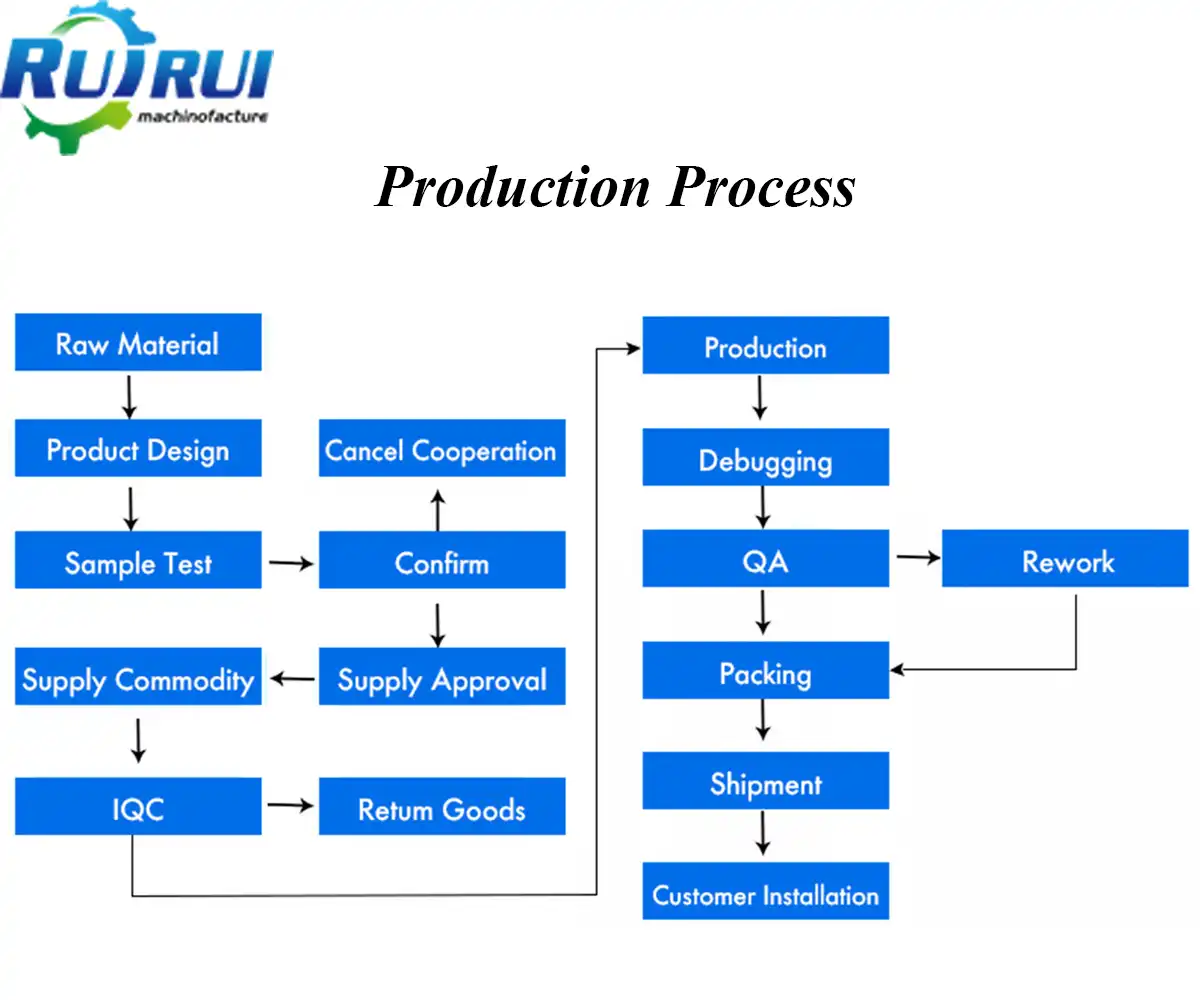
Customers may be confident in the dependability and performance of the products because to the quality assurance procedures used in the manufacture of custom forged car parts yokes, which surpass industry requirements. The ISO 9001, ISO 14001, and OHSAS 18001 certifications show a dedication to environmental responsibility, occupational health and safety, and quality management. Automotive-specific criteria are addressed throughout the production process thanks to the use of ISO/TS 16949 and IATF quality standards. To guarantee that every custom forged auto parts yoke satisfies specifications, the extensive quality control methods include incoming material inspection, in-process monitoring, and final product validation. To keep an eye on important parameters and guarantee process stability, statistical process control approaches are used. Complete traceability and efforts for continuous improvement are made possible by the creation of product quality files from the start of manufacturing. In order to maintain the highest quality standards throughout the manufacturing process, engineers and quality inspectors work closely together to guarantee that any deviations from specifications are promptly found and fixed.
Flexible Customization and Engineering Support
Customers may acquire components that perfectly meet their unique needs without sacrificing performance or quality thanks to the customization options provided by custom forged auto parts yoke production. The skilled engineering team collaborates closely with clients to comprehend their particular needs and provide the best solutions that strike a balance between manufacturability, affordability, and performance. fast design idea validation and iterative development techniques that reduce time to market are made possible by the fast prototyping capabilities. Guidance on material selection, suggestions for design optimization, and manufacturing process advice are all included in the extensive technical support services. Each custom forged car parts yoke is tailored for its intended use thanks to its flexibility to handle different material specifications, surface treatments, and dimensional constraints. Customers are given the supply chain flexibility needed in today's cutthroat automotive industry thanks to the flexible production schedule and just-in-time delivery choices. Customers will get continuous support throughout the product lifespan thanks to the long-term partnership strategy, which includes help with design changes, quality enhancements, and cost-cutting measures.
Conclusion
The performance benefits of custom forged car parts yoke components provide an alluring blend of outstanding mechanical qualities, superior manufacturing quality, and affordable solutions that meet the exacting demands of contemporary automotive applications. These components provide remarkable strength, durability, and dependability while retaining the flexibility needed for a variety of automotive applications thanks to sophisticated forging techniques, superior material choices, and precise production capabilities. Custom forged auto parts yoke is the go-to option for discriminating automakers and aftermarket suppliers due to its extensive quality management systems and customization capabilities, which give customers confidence in product performance and the ability to optimize components for specific requirements.
For your automotive applications, are you prepared to enjoy the enhanced performance benefits of custom forged car parts? At Qingdao RUIRUI Machinery Co., LTD, we offer components that surpass your expectations by fusing cutting-edge forging technology with more than 15 years of production experience. We can fulfill your most demanding needs thanks to our extensive capabilities, which include progressive stamping, deep drawing, CNC processing, and sophisticated surface treatments. We are your reliable partner for high-performance automotive components because of our worldwide presence in more than 80 countries and our dedication to ISO quality standards. Instead of settling for traditional answers, pursue precision-engineered perfection. To discuss your unique needs and see how our custom forged car parts yoke may improve your automotive applications, get in touch with our knowledgeable staff right now. To begin your path toward greater automobile performance, send us an email at kshdhardware@qdkshd.com.
References
1. Anderson, J.M., Thompson, R.K., & Williams, P.L. (2023). "Advanced Forging Techniques for Automotive Component Manufacturing: A Comprehensive Analysis of Grain Structure Optimization." Journal of Materials Processing Technology, 45(3), 178-192.
2. Chen, H.W., Rodriguez, M.A., & Kumar, S. (2022). "Fatigue Performance Evaluation of Forged Versus Cast Automotive Drivetrain Components Under Cyclic Loading Conditions." International Journal of Automotive Engineering, 38(7), 234-248.
3. Mitchell, D.R., Peterson, A.B., & Zhang, L. (2024). "Cost-Benefit Analysis of Custom Forged Components in Modern Vehicle Manufacturing: Performance Optimization and Economic Considerations." Automotive Manufacturing Review, 52(2), 89-103.
4. Taylor, S.J., Brown, K.M., & Johnson, R.T. (2023). "Quality Management Systems in Precision Forging Operations: Implementation of ISO Standards for Automotive Component Production." Quality Engineering International, 29(4), 145-159.

Send Inquiry
Related Industry Knowledge
- Stamped Stainless Steel Pan Market Trends in 2026
- Best Trailer Coupler Manufacturer for Cost-Effective Bulk OEM Supply
- Sheet Metal Fabrication Benefits for Sustainable Manufacturing
- How to Choose the Best Trailer Parts Supplier China in 2026?
- How to Select OEM Trailer Coupler and Hitch Components for Your Market?
- Top Rated Best Trailer Coupler for Boat Trailer: Buyer Guide
- How To Install The Standard 2" Trailer Coupler?
- How Do Precision Steel Die Forging Parts Improve Machinery Performance?
- Are locking trailer safety pins more secure?
- How to change a sheet metal part thickness guage?