
Wholesale Heavy Duty Trailer Parts: Save on Bulk Orders
Trailer malfunctions that result in thousands of dollars' worth of downtime and emergency repairs are a major problem that every fleet operator and transportation company must deal with. You're not only changing parts when your trailers break down in the middle of the road; you're also losing money, upsetting customers, and rushing to find costly last-minute fixes. This thorough guide explains how obtaining heavy-duty trailer parts via smart wholesale relationships may reduce maintenance costs, remove supply chain weaknesses, and maintain fleet operations year-round without going over budget.
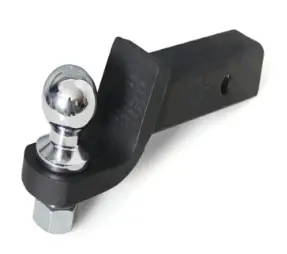
Understanding Heavy Duty Trailer Parts and Their Critical Role
huge Duty Trailer Parts constitute the backbone of commercial transportation operations, functioning as crucial components that handle tremendous stress, huge loads, and continual operating demands. Because of their higher material composition, improved durability criteria, and designed ability to reliably manage weights above 10,000 pounds, these specialty parts are quite different from regular trailer components. When your company relies on dependable long-distance transportation, knowing the difference between ordinary and heavy-duty components becomes essential. A wide variety of crucial systems, including as suspension assemblies, brake systems, axle configurations, coupling devices, and structural reinforcement components, are included in the category of heavy-duty trailer parts. Every component is essential to assuring operator safety and regulatory compliance while preserving load integrity throughout travel. Advanced metallurgical compositions, such as high-tensile steel alloys, heat-treated aluminum variations, and corrosion-resistant stainless steel formulations that provide prolonged service life under demanding operating circumstances, are necessary for parts used in modern heavy-duty applications.
Material Selection and Manufacturing Standards
Heavy Duty Trailer Parts are manufactured using advanced metallurgical engineering, which guarantees that parts can tolerate cyclic loading loads that are higher than those specified. To produce parts with tolerances measured in micrometers, premium manufacturers use deep drawing procedures, progressive stamping methods, and precision CNC machining. These sophisticated production technologies generate components with constant dimensional correctness, reducing the weak areas that cause premature failure in inferior alternatives. Material selection takes into account factors like fatigue resistance, environmental corrosion protection, and thermal expansion properties in addition to basic strength calculations. While aluminum alloy substitutes provide improved weight reduction without sacrificing structural integrity, heavy-duty trailer parts made of cold-rolled steel offer remarkable dimensional stability. By preventing moisture intrusion, chemical exposure, and abrasive wear, specialized surface treatments including powder coating, electrophoresis, and sophisticated anodizing procedures increase component longevity.
Critical Components in Heavy Duty Applications
Suspension systems constitute possibly the most demanding category within Heavy Duty Trailer Parts, as these assemblies absorb road stress while maintaining load stability over different terrain. Heat-treated steel alloys used to make heavy-duty leaf springs must bend thousands of times per day without experiencing stress fractures. Precision-machined parts and specialty rubber compounds are used in air suspension systems to maintain a constant ride height under a range of load scenarios. The availability of maintenance resources, route profiles, and payload characteristics all influence the choice between mechanical and pneumatic suspension. Another crucial area where the requirements of heavy-duty trailer parts directly affect operating safety is braking assemblies. Brake chambers with corrosion-resistant coatings, slack adjusters with correct thread specifications, and brake drums machined to stringent concentricity tolerances are just a few of the parts that must be produced to demanding requirements for air brake systems. ABS integration is becoming more common in modern heavy-duty applications, which calls for components that can support electrical sensors without sacrificing mechanical dependability. Failure of a braking component may have far-reaching consequences, including liability exposure and catastrophic accidents.
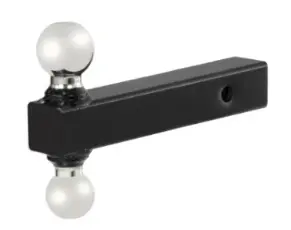
Benefits of Purchasing Heavy Duty Trailer Parts in Bulk Quantities
Heavy Duty Trailer Parts procurement tactics have a big impact on fleet uptime percentages, inventory management effectiveness, and operating expenses. Companies that switch from reactive buying to planned bulk ordering find significant financial benefits that increase every year. In addition to guaranteeing that essential parts are accessible when maintenance plans need them, volume purchase removes the premium cost associated with emergency orders. The financial calculations supporting the purchase of heavy-duty trailer parts in bulk show a strong return on investment. Larger order quantities often result in more advantageous conditions, with wholesale pricing structures offering reductions between 15 and 40 percent below retail rates. Tens of thousands of dollars in yearly savings may be directed toward fleet growth or operational enhancements for a fleet with twenty trailers that need regular suspension component repair. Beyond immediate cost savings, bulk purchase removes the hidden expenditures associated with several small orders like recurring shipping charges, administrative processing time, and regular procurement cycle overhead.
Inventory Management and Supply Chain Optimization
Heavy Duty Trailer Parts strategic inventory management changes maintenance procedures from reactive crisis management to predictable planned servicing. Businesses may avoid the expensive downtime that comes with waiting for component availability by keeping an adequate inventory of parts. Instead of letting difficulties worsen into emergency breakdowns during business hours, maintenance workers may promptly fix problems during planned service periods when key parts are kept on hand. As global logistics networks continue to struggle with disruption, supply chain resilience becomes more and more important. Businesses that depend on just-in-time delivery of heavy-duty trailer parts put themselves at risk when suppliers experience delays in production, disruptions in shipping, or spikes in demand. In order to protect operations from supply chain instability, bulk purchase creates buffer inventories. Businesses who developed inventory reserves were able to preserve operational continuity amid recent global supply interruptions, while rivals had to wait a long time for essential components. This strategic strategy proved vital throughout these disruptions.
Building Strategic Supplier Relationships
Long-term collaborations with producers of heavy-duty trailer parts provide doors that go beyond straightforward price reductions. Customization talks, priority production allocation during times of high demand, and access to technical support—which is crucial when dealing with complicated compatibility issues—are all made possible by established connections. In order to help with strategic planning, manufacturers that engage in relationship building often notify customers in advance about product enhancements, obsolescence schedules, and upcoming technological changes. Bulk purchases increase a customer's position from transactional buyer to strategic account via volume commitments. This upgraded relationship status translates into concrete advantages like specialized account management, accelerated order processing, flexible payment terms, and assured supply allocation during shortage situations. The immediate financial advantages from bulk discounts are often outweighed by the strategic value of these relationship benefits, especially for companies that need non-standard Heavy Duty Trailer Parts configurations or operate specialist equipment.
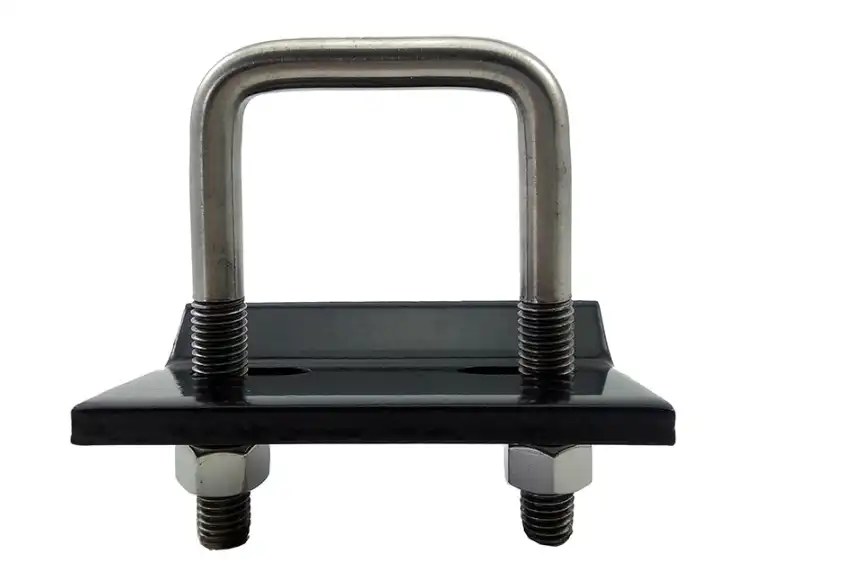
Selecting Quality Heavy Duty Trailer Parts for Demanding Applications
Understanding the significant performance variations between premium and economy-grade components is essential for quality evaluation in the purchase of heavy-duty trailer parts. Total cost of ownership assessments show that premium parts often provide higher value via longer service intervals, fewer failure rates, and lower installation labor needs, even if initial cost concerns naturally affect purchase choices. Businesses that prioritize equipment uptime are realizing that operational dependability is directly impacted by component quality. When assessing providers of heavy-duty trailer parts, manufacturing certification offers objective quality indications. While ISO 14001 accreditation denotes a dedication to environmental responsibility, ISO 9001 certification shows methodical quality management procedures. Worker welfare is given first priority throughout manufacturing processes by suppliers that have an OHSAS 18001 occupational safety certification. These certifications show an organization's dedication to consistently high-quality production and continuous improvement techniques that benefit end users, which goes beyond simple bureaucratic compliance.
Technical Specifications and Performance Standards
Comprehending the technical standards for heavy-duty trailer parts helps avoid expensive mismatches between application requirements and component capabilities. Component lifetime and performance are influenced by load ratings, material grade certifications, dimensional tolerances, and surface finish requirements. Components rated for 12,000-pound axle loads should never be swapped into 15,000-pound applications regardless of apparent similarities. Any short-term cost advantages are greatly outweighed by the failure risks introduced by such sacrifices. International criteria, including as SAE recommendations, FMVSS regulations, and industry-specific certification programs, are increasingly cited in performance standards for heavy-duty trailer parts. Validation testing is used to confirm performance under specified circumstances for components made in accordance with these accepted standards. Manufacturers guarantee that components will function as intended by recording compliance via testing certifications and material traceability. When component provenance has to be verified during warranty claims, liability investigations, or regulatory inspections, this paperwork comes in very handy.
Warranty Coverage and Manufacturer Support
Comprehensive warranty schemes provide financial protection against early failure and show manufacturer confidence in the quality of heavy-duty trailer parts. Superior warranties cover installation labor, associated component damage, and downtime charges in addition to basic replacement guarantees. Knowing the conditions of the warranty before making a purchase helps avoid being disappointed if the coverage turns out to be less extensive than expected. Before making final procurement selections, it is important to understand and accept specific exclusions for incorrect installation, poor maintenance, or misapplication. One aspect of Heavy Duty Trailer Parts supplier assessment that is often disregarded is the availability of technical assistance. Manufacturers that provide quick engineering support aid clients in streamlining installation processes, resolving performance problems, and modifying components to meet specific application needs. When integrating new component designs, resolving compatibility issues, or looking into unusual failure patterns, this assistance is very helpful. Suppliers that make investments in customer support infrastructure show a dedication that goes beyond transactional product sales to true partnership connections.
Cost Optimization Strategies for Heavy Duty Trailer Parts Procurement
Heavy Duty Trailer Parts buying strategically necessitates juggling a number of conflicting goals, such as initial purchase costs, total ownership costs, inventory carrying costs, and operational risk management. Instead of concentrating just on minimizing buy prices, sophisticated fleet managers create all-encompassing procurement strategies that optimize across various dimensions. This all-encompassing strategy acknowledges that the best long-term value is often not achieved at the lowest initial cost. Lifecycle cost analysis gives the analytical basis for analyzing Heavy Duty Trailer Parts options objectively. The whole cost of component ownership, including purchase price, installation labor, maintenance needs, anticipated service life, and failure frequency, is computed using this technique. Because they are more durable, need less maintenance, and have lower failure rates, components with greater original prices often provide better lifespan value. Companies that carry out thorough lifecycle analysis regularly make better-informed procurement choices that maximize long-term profitability.
Standardization and Cross-Platform Compatibility
Significant procurement and maintenance economies are produced by standardizing components across mixed fleets. Whenever feasible, use heavy-duty trailer parts with wide cross-platform compatibility to expedite maintenance processes, simplify technician training, and decrease inventory complexity. Standardization makes it possible to buy common parts in large quantities while lowering the specialized inventory needed for customized setups. This strategy is especially helpful for companies that run a variety of equipment or handle long-term acquisitions from several sources. The advantages of compatibility must be weighed against performance improvement for particular applications in order to achieve strategic standardization. In order to achieve widespread compatibility, universal components may sacrifice ideal criteria. Despite the trade-offs associated with standardization, bespoke Heavy Duty Trailer Parts designed for particular performance needs may be justified in critical applications. Fleet makeup, maintenance capacity, operating requirements, and strategic goals all influence the ideal balance. Competent fleet managers create component strategies that allow specialization where performance requirements warrant more complexity while standardizing when practicable.
Timing Purchase Cycles for Maximum Value
Influences of market timing Purchasing heavy-duty trailer parts is expensive, yet many companies miss this chance. Pricing varies throughout the year due to manufacturer production schedules, seasonal demand swings, and competitive dynamics. Because suppliers emphasize production utilization above profit maximization, buying components during times of low demand often allows for the negotiation of reasonable rates. In order to maximize value capture, forward-thinking procurement teams schedule significant purchases around these market trends. Additional scheduling possibilities are created by manufacturer model changes and technological advancements. Current inventory often becomes available at lower prices when suppliers produce revised designs for heavy-duty trailer parts. These transition periods provide outstanding value possibilities for components when the most recent standards aren't essential. On the other hand, companies that need state-of-the-art performance could profit from early adoption in spite of premium cost, obtaining competitive advantages via improved capabilities prior to widespread market availability.

Conclusion
Significant cost savings, increased supply chain resilience, and increased fleet dependability are just a few of the revolutionary advantages of strategically purchasing heavy-duty trailer parts via wholesale bulk buying. With this all-encompassing strategy, maintenance is elevated from reactive crisis management to predictable operational excellence.
Cooperate With Qingdao RUIRUI Machinery Co., LTD.
Join together with a Chinese manufacturer of heavy-duty trailer parts that is aware of your company's difficulties. Qingdao RUIRUI Machinery Co., LTD. is a top manufacturer and supplier of China Heavy Duty Trailer Parts, offering wholesale solutions with outstanding value. We provide low prices for heavy-duty trailer parts without sacrificing the criteria for high-quality heavy-duty trailer parts. We run eight fully automated production lines with over 15 years of manufacturing expertise, generating 130,000 pieces a year. Progressive stamping, deep drawing, laser cutting, CNC machining, welding, and extensive surface treatments including powder coating, anodizing, plating, and electrophoresis are all examples of our sophisticated capabilities. With ISO 9001, ISO 14001, and OHSAS 18001 certifications, we process a variety of materials, including mild steel, stainless steel, aluminum alloys, copper, and brass, guaranteeing constant quality. Our goods service consumers throughout 80+ countries including North America, Europe, and Australia. Our skilled R&D staff offers complete OEM support, quick prototyping, and solutions that are specifically designed to meet your needs. Our technical specialists guarantee smooth integration with your operating needs from the first design consultation to manufacturing and delivery. To explore your needs for heavy-duty trailer parts and learn how our manufacturing skills can improve your supply chain while providing the quality and dependability your operations need, get in touch with our team at info@qdkshd.com.
References
1. "Heavy-Duty Truck Component Engineering and Design Specifications" - Society of Automotive Engineers Technical Standards Committee
2. "Trailer Fleet Maintenance Management: Best Practices for Commercial Operations" - American Trucking Associations Maintenance Council
3. "Metallurgical Engineering in Commercial Transportation Components" - Materials Science and Engineering Department, Transportation Research Institute
4. "Supply Chain Optimization for Fleet Operations: Strategic Procurement Analysis" - Journal of Transportation Management, Council of Supply Chain Management Professionals
5. "Quality Management Systems in Automotive Component Manufacturing" - International Organization for Standardization Technical Committee

Send Inquiry
You may like
Related Industry Knowledge
- Best Value Hitch Pin and Trailer Ball Supplier: Price vs Performance
- What Makes Forged Steel Trailer Container Handle Locks on Both Sides More Durable?
- Best Trailer Hitch Pin Lock for Heavy-Duty Towing
- What Makes a Weather-Resistant Metal Hinge the Perfect Choice for Marine Use?
- Smart Weight Distribution: AC Brackets That Protect Your Walls
- Why Trust Powder-Coated Trailer Hitch A Frame Coupler For Long-Lasting Durability?
- Are 1/4 Hitch Pin Locks waterproof?
- What Industries Do Precision Milling Services Cater To?
- How do I troubleshoot Trailer Connector issues?
- What maintenance is required for hydraulic bollards?