
Why Choose a Heavy-Duty Trailer Coupler for Workloads?
Every professional hauler knows the frustration of equipment failure during critical operations. When transporting heavy machinery, agricultural equipment, or industrial materials, a weak connection point can mean costly delays, damaged cargo, or worse—serious safety incidents on the road. The right heavy-duty Trailer Coupler serves as the critical link between your towing vehicle and trailer, determining whether your workload arrives safely or becomes a liability. Understanding which coupler type matches your specific towing demands separates successful operations from preventable disasters.
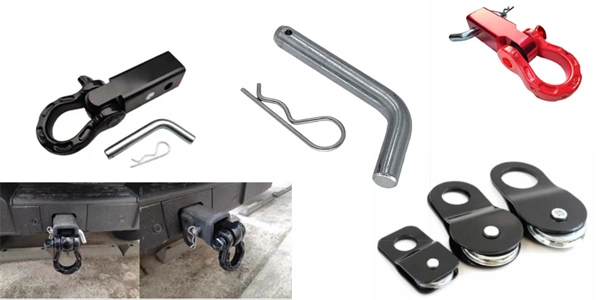
Understanding Heavy-Duty Trailer Coupler Requirements for Professional Applications
When working with substantial workloads, selecting an appropriate Trailer Coupler goes far beyond simply matching ball sizes. Professional towing operations demand couplers engineered to withstand extreme stress, repeated use, and challenging environmental conditions. Heavy-duty applications typically involve gross trailer weights exceeding fourteen thousand pounds, requiring specialized coupler designs that distribute forces effectively across the entire towing assembly. The fundamental difference between standard and heavy-duty Trailer Coupler systems lies in their construction methodology and material specifications. Industrial-grade couplers utilize forged steel rather than cast components, providing superior tensile strength and fatigue resistance. These units incorporate reinforced mounting points that prevent stress fractures during dynamic loading conditions. Professional operators must recognize that tongue weight typically represents ten to fifteen percent of total trailer weight, meaning a fifteen thousand pound trailer exerts approximately two thousand pounds of downward force on the coupler mechanism alone.
Material Quality and Manufacturing Standards
Manufacturing processes significantly impact Trailer Coupler performance under demanding workloads. Premium heavy-duty couplers undergo heat treatment processes that enhance metal grain structure, resulting in components capable of withstanding repeated stress cycles without developing microfractures. Surface treatments including powder coating, galvanizing, or specialized corrosion-resistant finishes protect against environmental degradation that can compromise structural integrity over time. Quality assurance protocols during production determine long-term reliability for heavy-duty Trailer Coupler applications. Reputable manufacturers implement rigorous testing procedures including destructive load testing, fatigue cycle analysis, and metallurgical inspections to verify that each component meets or exceeds rated specifications. Professional operators should prioritize couplers manufactured under ISO quality management systems, ensuring consistent production standards and traceability throughout the supply chain.
Gooseneck and Fifth-Wheel Trailer Coupler Systems for Maximum Capacity
For the most demanding workloads, gooseneck and fifth-wheel Trailer Coupler configurations provide unmatched load capacity and stability. These systems position the coupling point directly above or slightly forward of the rear axle, fundamentally improving weight distribution compared to traditional ball hitch arrangements. Gooseneck couplers routinely handle capacities ranging from twenty thousand to forty thousand pounds, making them essential for agricultural equipment transport, heavy machinery hauling, and large livestock trailers. The mechanical advantage of gooseneck Trailer Coupler designs stems from their direct connection to the truck frame rather than the rear bumper. This configuration reduces stress on the towing vehicle's suspension while providing superior articulation during turns and uneven terrain navigation. The elevated hitch point also eliminates interference between the tow vehicle and trailer during sharp turns, particularly valuable when maneuvering in confined spaces or navigating construction sites with limited clearance.
Installation and Compatibility Considerations
Installing a gooseneck Trailer Coupler requires professional fabrication skills and precise alignment to ensure optimal performance. The coupler must be welded to the trailer frame using appropriate techniques that maintain structural integrity without creating heat-affected zones that could become failure points. Proper installation includes reinforcing the attachment area with gussets or support plates that distribute forces across multiple frame members rather than concentrating stress at single points. Compatibility between gooseneck Trailer Coupler systems and towing vehicles extends beyond simple weight ratings. Truck bed preparation involves installing a hitch ball assembly rated for anticipated loads, with mounting hardware that penetrates the bed and attaches directly to the vehicle frame. Professional installations incorporate safety chains rated at the coupler's maximum capacity, providing redundant security in the unlikely event of primary connection failure. Operators must also consider bed clearance requirements, as gooseneck trailers require adequate space between the coupling point and truck cab to prevent contact during tight turns.
Pintle and Lunette Ring Trailer Coupler Designs for Extreme Conditions
When workloads involve off-road operations, military applications, or extreme industrial environments, pintle hook and lunette ring Trailer Coupler combinations deliver unparalleled durability and articulation. These systems feature a hook-and-eye design that permits significantly greater vertical and horizontal movement compared to ball hitch arrangements. This flexibility proves essential when traversing rough terrain, crossing obstacles, or operating in conditions where rigid coupling would transfer excessive shock loads to vehicle or trailer frames. Pintle-style Trailer Coupler assemblies excel in applications requiring reliable performance despite adverse conditions. The open hook design resists binding from debris, mud, or ice accumulation that might compromise enclosed coupler mechanisms. Load capacities for heavy-duty pintle systems extend up to sixty thousand pounds, accommodating the most demanding commercial and industrial towing requirements. The simplicity of the pintle mechanism also reduces maintenance requirements, as fewer moving parts mean fewer potential failure points during extended service intervals.
Operational Advantages in Heavy-Duty Environments
The articulation characteristics of pintle Trailer Coupler systems provide critical safety benefits during challenging operations. Unlike ball hitches that can bind or lock when approaching maximum articulation angles, pintle hooks permit continued rotation even under load. This capability proves invaluable when backing trailers at steep angles, navigating severe grade changes, or recovering stuck equipment where extreme articulation becomes necessary. Professional operators should understand that pintle Trailer Coupler assemblies produce more noise and vibration compared to ball hitch alternatives. This trade-off represents an acceptable compromise for applications prioritizing durability and reliability over passenger comfort. Modern pintle designs incorporate cushioned mounting systems and greaseable pivots that minimize operational noise while maintaining the robust performance characteristics essential for heavy-duty workloads. When selecting pintle equipment, verify that both hook and ring components carry matching capacity ratings, as mismatched components can create dangerous operating conditions.
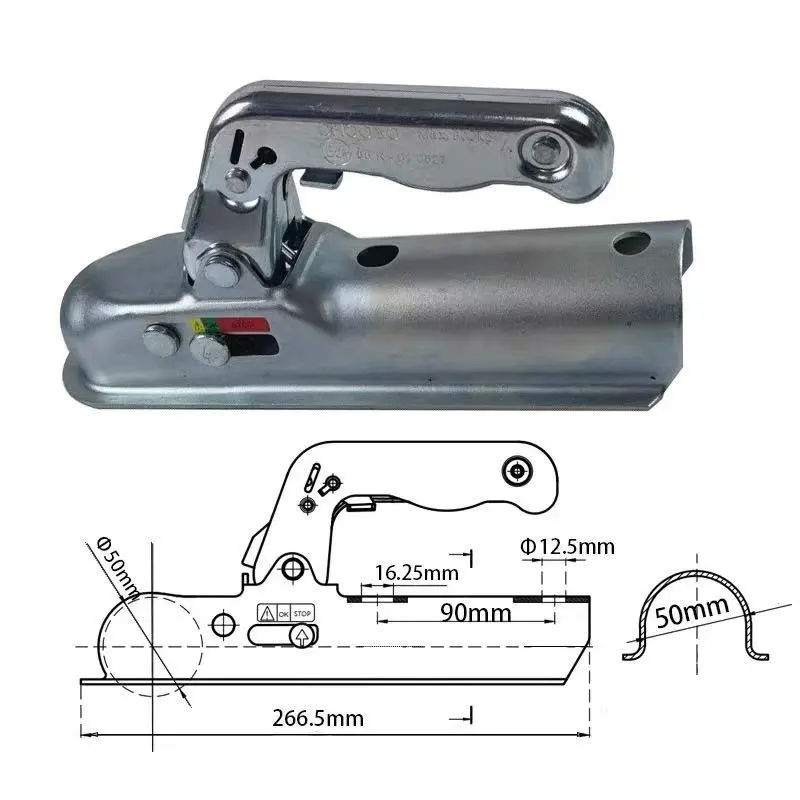
A-Frame Trailer Coupler Solutions for Medium to Heavy-Duty Applications
A-frame Trailer Coupler designs represent the optimal balance between strength, versatility, and cost-effectiveness for medium to heavy-duty towing applications. These couplers integrate directly with triangular A-frame trailer tongue structures, providing superior load distribution compared to straight tongue alternatives. Weight capacities for quality A-frame Trailer Coupler assemblies range from five thousand to twenty-one thousand pounds, covering the majority of commercial trailer applications including enclosed cargo haulers, equipment trailers, and medium-capacity utility units. The structural advantage of A-frame Trailer Coupler mounting stems from the triangulated force distribution inherent to the trailer tongue design. Rather than concentrating stress at a single attachment point, A-frame configurations spread coupling forces across two weld locations, significantly reducing localized stress concentrations. This design characteristic enhances fatigue resistance and extends service life, particularly important for commercial operators accumulating high annual mileage with loaded trailers.
Selecting Appropriate A-Frame Configurations
Choosing the correct A-frame Trailer Coupler requires careful attention to mounting specifications and dimensional compatibility. Coupler width must match the trailer's A-frame spread, typically standardized at specific dimensions but requiring verification before purchase. Ball size compatibility represents another critical consideration, with two-inch and two-and-five-sixteenths-inch options representing the most common configurations for heavy-duty applications. Professional installation of A-frame Trailer Coupler assemblies demands precise angular alignment to ensure the coupler sits level when the loaded trailer rests at proper ride height. Improper angles can result in binding during coupling operations or uneven load distribution that accelerates wear on both coupler and hitch ball. Welding procedures must follow established protocols for the specific steel grades involved, with proper penetration and fillet profiles that achieve full strength joints without introducing defects. Quality installations incorporate inspection procedures verifying weld integrity and dimensional accuracy before placing the trailer in service.
Maintenance and Safety Protocols for Heavy-Duty Trailer Coupler Systems
Maintaining optimal performance from heavy-duty Trailer Coupler assemblies requires systematic inspection protocols and preventive maintenance procedures. Professional operators should implement pre-trip inspection routines examining coupler mechanisms for wear, deformation, or damage that might compromise safety. Critical inspection points include latch mechanisms, ball socket surfaces, mounting hardware torque specifications, and structural integrity of welded or bolted attachment areas. The consequences of Trailer Coupler failure during heavy-duty operations can be catastrophic, making maintenance vigilance essential for safe operations. Inspect ball socket areas for elongation, cracking, or excessive wear that indicates approaching end-of-service-life conditions. Latch mechanisms require regular lubrication with appropriate grease formulations that resist washout while providing smooth operation. Safety chains must be examined for deformation, corrosion, or damage to individual links, with any compromised chains replaced immediately rather than attempting field repairs.
Establishing Professional Maintenance Schedules
Developing comprehensive maintenance schedules for Trailer Coupler systems should account for operational intensity, environmental exposure, and manufacturer recommendations. Commercial operations involving daily use under demanding conditions benefit from weekly detailed inspections supplemented by more thorough quarterly examinations. These inspections should document coupler condition through photographs and written records, establishing baseline data that reveals progressive wear patterns requiring attention before failure occurs. Professional maintenance procedures for heavy-duty Trailer Coupler assemblies include periodic disassembly for internal inspection of components not visible during routine checks. Ball socket interiors require examination for scoring, pitting, or metal displacement indicating excessive wear. Pivot points in adjustable coupler designs need inspection for bearing wear and proper lubrication levels. Fastener hardware should undergo torque verification to prevent loosening from vibration exposure during operation. Any component showing signs of deformation, excessive wear, or stress cracking requires immediate replacement with manufacturer-approved parts meeting original equipment specifications.
Conclusion
Selecting appropriate heavy-duty Trailer Coupler systems directly impacts operational safety, equipment longevity, and overall productivity for professional hauling operations. Understanding the distinct advantages of gooseneck, pintle, and A-frame configurations enables informed decisions matching specific workload requirements with optimal equipment specifications.
Cooperate With Qingdao RUIRUI Machinery Co., LTD.
When your operations demand precision-manufactured trailer components that deliver consistent performance under demanding conditions, Qingdao RUIRUI Machinery Co., LTD. provides the manufacturing expertise and quality assurance protocols required for professional-grade equipment. As a China Trailer Coupler factory with over fifteen years of management experience, we combine advanced automated production capabilities with comprehensive metal fabrication services including stamping, CNC machining, laser cutting, and specialized finishing processes. Our China Trailer Coupler supplier operations maintain ISO 9001, ISO 14001, and OHSAS 18001 certifications, ensuring every component meets rigorous quality standards throughout production.
As a leading China Trailer Coupler manufacturer, RUIRUI specializes in processing diverse materials including mild steel, stainless steel, aluminum alloys, and copper, providing customized solutions perfectly matched to your specifications. Our China Trailer Coupler wholesale programs serve clients across eighty countries, delivering High Quality Trailer Coupler products with competitive Trailer Coupler price structures and professional packaging ensuring safe transportation. Whether you need standard Trailer Coupler for sale configurations or require custom-engineered solutions, our experienced R&D team provides comprehensive technical support throughout the design and production process. Contact us today at info@qdkshd.com to discuss your specific requirements and discover how our manufacturing capabilities can enhance your supply chain reliability. Save this resource for future reference when quality trailer components become essential for your operations.
References
1. "Understanding the Different Types of Trailer Couplers and Latches" - Lippert Components, Technical Documentation Team
2. "Heavy-Duty Towing Systems: Selection and Safety Considerations" - Society of Automotive Engineers, Transportation Division
3. "Trailer Coupling Mechanisms: Design Principles and Performance Standards" - American Society of Mechanical Engineers, Materials Handling Institute
4. "Load Distribution and Stress Analysis in Trailer Hitch Systems" - National Highway Traffic Safety Administration, Vehicle Research Division
5. "Manufacturing Standards for Commercial Trailer Components" - International Organization for Standardization, Quality Management Committee

Send Inquiry
Related Industry Knowledge
- OEM Trailer Parts Supplier for Global Importers
- Top 5 Steel Tread Plate Trailer Fenders for Off-Road
- What Makes OEM Trailer Coupler and Hitch Components High Performance?
- Custom Trailer Hitch Pins Bulk — Trends & Future Demand Insights
- What Advantages Do Heat-Treated Forged Agricultural Machinery Parts Offer Over Standard Options?
- Why Is the Adjustable Tow Arm Adapter Essential for Heavy-Duty Towing?
- Zero Noise Design: Slim Air Conditioner Bracket Cuts Wind Vibration
- How do Bend electronic housing parts protect internal components?
- How do I install a trailer ball cover?
- What are the benefits of hydraulic bollards?