
How Does a Hitch Pin Work? Secure Your Trailer the Right Way
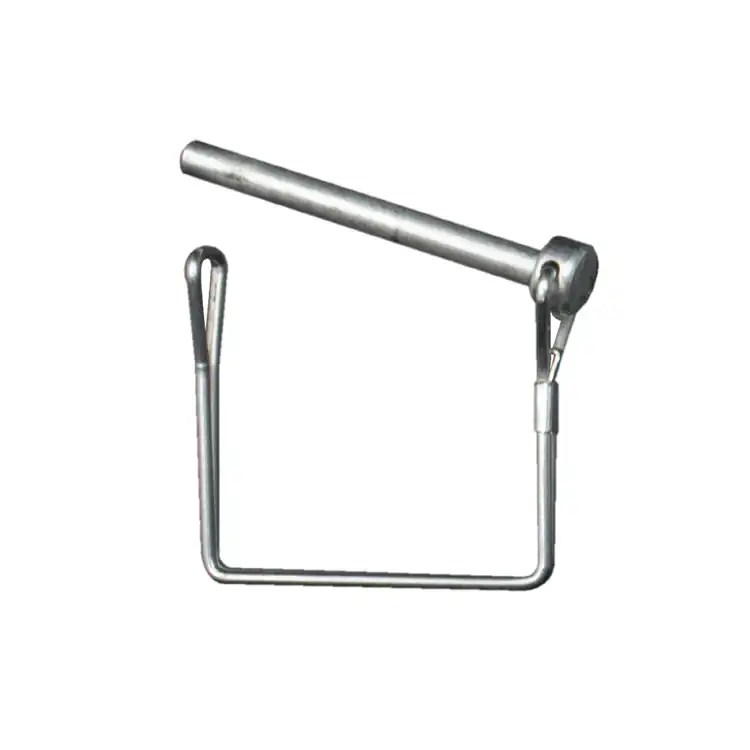
A trailer hitch pin is a metal piece that holds the ball mount or accessory shank in place in your car's receiver tube. This is what links your trailer to your car. This part goes through holes that have already been drilled in the receiver and shank and locks in place with a clip or threaded mechanism. This keeps the ball mount from moving around while it is being moved. If you don't have this important pin, the tow assembly could fall apart while it's loaded, which could damage the car or put people in danger on the road. A procurement manager or fleet operator who knows how receiver hitch pins work can keep safety standards high and keep valuable assets safe during heavy-duty work.
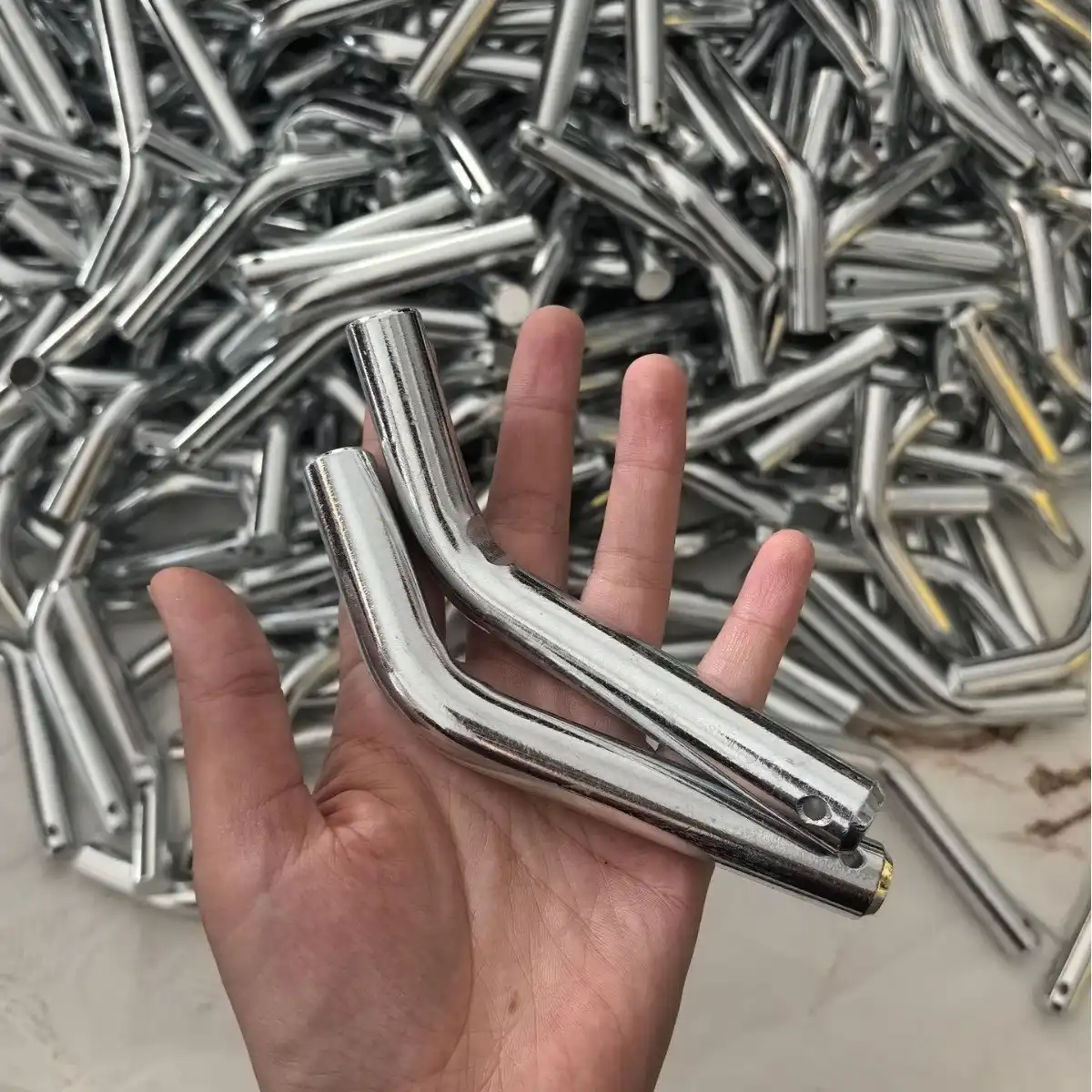
Understanding Trailer Hitch Pins: What They Are and How They Work?
These days, trailer hitch pins are the main thing that keeps things in place. There is a direct link between this and both operational safety and managing liability. Engineered fasteners like these make a mechanical interference that keeps the ball mount shank in place in the channel of the receiver tube.
The Fundamental Role of Hitch Pins in Towing Systems
The holes in a ball mount and a receiver tube line up so that a pin can go through them. The hole's diameter must be the same as the pin's diameter. In most cases, this is half an inch for Class I and II hitches and five-eighths of an inch for Class III through V. Once it is in place, the pin stops the shank from sliding backwards out of the receiver by taking on the side-to-side forces that come from towing. The pin's main mechanical job is to stop shear, and it has to be strong enough to handle forces of more than a few thousand pounds when the car stops or turns quickly.
The lock or retaining clip then keeps the pin in place so it doesn't move around on rough ground. This system is made up of two parts: the pin and the retainer. It meets the safety standards set by SAE J684 for trailer coupling devices. For commercial fleets, knowing this mechanical principle helps maintenance teams tell when pins are wearing out and can't hold as much weight.
How Hitch Pins Differ from Alternative Fasteners
Receiver trailer hitch pins are not the same as bolts or clevis pins used in other mechanical situations. They are made to handle shear loads that are horizontal instead of tensile strengths. People often fall short when they buy bolts and use hardware-grade bolts instead. These bolts can fail badly because they don't have the right shear rating. Heat treatments are used to make good trailer hitch pins harder along the shear plane while still letting them bend enough that they won't break easily.
Locking versions have a keyed cylinder mechanism that keeps them from being taken off without permission, which is helpful for equipment yards that aren't being watched. Anti-rattle designs have shafts that are threaded so that the connection can be made tighter. This gets rid of the gap that is meant to be there between the receiver and the shank. This gap makes noise and wears both parts out faster.
Standard Pin Sizes and Compatibility Requirements
The business world has agreed on two main diameters: 1/2-inch pins are used for lighter tasks with 1.25-inch receivers, and 5/8-inch pins are used for heavy work with 2 inch and larger receivers. It depends on how thick the receiver tube wall is and whether you need locks or clips. Two-inch receivers with 3/8-inch walls need pins that are about 3.5 inches long to fully go through both walls and hold the clip in place.
To make the connection stronger, don't use pins that are too small. They leave too much slack, which speeds up hole elongation in both the receiver and the shank. Pins should have diameter tolerances of within 0.005 inches so that they fit correctly. This should be written into the procurement specifications. We've seen commercial operators' gear break down early because the pins they bought didn't meet the requirements. The hitch system had too much play because of these pins. It cost more in replacement parts and downtime than the savings were worth at first.
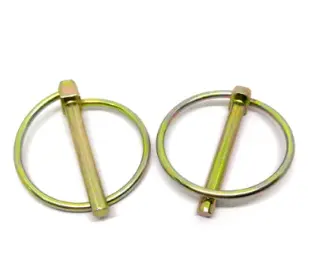
Types of Trailer Hitch Pins and Their Applications
To pick the right trailer hitch pin type, you need to make sure that the locking features and properties of the material fit your needs for security and the way you work. Some pin designs are better than others because they solve problems that are unique to each industry.
Standard Pins versus Locking Mechanisms
Standard trailer hitch pins with simple clip retainers are used when couplings are changed often and theft is not likely to happen. Because these designs are easy to put together and take down, they're good for businesses that move between several trailers during the day. Even at highway speeds, an R-clip or wire lock clip will hold. However, after a lot of use, these clips may rust or bend.
A keyed cylinder is built right into the body of a locking pin, so it can't be taken off without the right key. Two big problems are solved by this design: expensive ball mounts and accessory carriers can't be stolen, and they won't come off by accident when they vibrate. Locking variants are best for commercial parking lots and places that rent out equipment because they don't need any extra security and can be put in place just as quickly as regular pins once they're unlocked.
Material Selection for Durability and Corrosion Resistance
Most of the time, zinc-plated carbon steel is used. This type of steel has good shear strength after being heated and a moderate level of corrosion protection from the zinc coating. These pins work well for operations in the middle of the country, where road salt is only present at certain times of the year. This is because they can be checked and replaced before corrosion makes the structure less strong.
As a result, stainless steel trailer hitch pins don't rust easily. This makes them necessary in marine environments, along the coast, and other places where they will be often wet. Steel Grade 304 is strong enough for most Class III uses, but Grade 316 is better at keeping chloride pits from forming in saltwater. If you look at the total cost of ownership, the extra money spent on the material makes sense. In harsh environments, stainless steel pins can last several years longer than zinc-plated ones. These parts don't need to be changed as often and are less likely to break down in the field.
Chrome-moly alloy pins that are treated with extra heat to make them strong are used in some special situations. These work well for moving and retrieving big pieces of machinery where the dynamic shock loads are higher than normal towing forces. Even though it costs more, the extra safety that comes with higher shear strength makes the price worth it in situations where liability is a concern.
Specialty Pin Configurations and Their Niche Applications
With anti-rattle pins, you can fix a problem with mounting an accessory where the space between the receiver and the shank lets the accessory move around. Because these are threaded, the shank can be clamped against the receiver wall mechanically. This stops the shaking that hurts bike racks and light cargo carriers. Infrastructure contractors who use receiver-mounted work platforms will find this feature very useful. It keeps the aluminum parts from breaking down over time when they are vibrated all the time.
Complete pin-and-clip sets make sure that the pin diameter and retaining mechanism are the same. This keeps parts from not fitting together correctly in the field, which happens a lot. Setting a standard for full sets makes it easier for procurement managers to keep track of stock and makes sure that installers always have the right-sized retainers on hand.
Enhancing Trailer Safety with Advanced Hitch Pin Solutions
It's because more people are aware of their responsibility and want solutions that lower operational risks that trailer hitch pin designers have to keep making their products safer. Teams that buy things can be sure that the things they buy will still work and meet new safety standards if they keep up with these changes.
Advanced Locking Systems for Theft Prevention
The cylinders on modern locking trailer hitch pins are hard to pick, which stops thieves from using common ways to get around locks to get to tow accessories. These new locks are useful for companies that need to keep pricey ball mounts, cargo platforms, or specialized tow equipment in places that are easy to get to. Not only does it stop theft, but it also stops the time and money that are wasted when plans have to be changed because equipment is lost before it's used.
Some of the more advanced models have alarms that sound when someone messes with them. These alarms send a real-time message to fleet management systems via wireless connections. These options cost more than simple locking trailer hitch pins, but they are worth it for places where things have been stolen a lot or that have valuable items.
With keyed-alike systems, fleet managers can make all of the trailer hitch pin locks on the gear look the same. This keeps the equipment safe and makes it easier to keep track of keys. There is no need to sort keys, which takes time during the equipment checkout process. This makes it easier when more than one person needs to use different vehicles and trailers.
Protective Coatings and Corrosion-Resistant Technologies
A barrier is made when powder coating is put on top of zinc plating. This makes the trailer hitch pin service life much longer in places where corrosion is common. The finish doesn't cost much more than the metal itself, and the coating keeps water from getting to the metal. Black oxide coatings protect just as well, but they stay low-profile, which is important for installations that don't have a lot of room.
Even better corrosion resistance comes from new ceramic coating technologies, but they are too expensive to use everywhere right now. As these methods get less expensive, they may replace the old ways of plating trailer hitch pins for business use. Teams in charge of buying things can use new technologies as soon as they become as cheap as old ones if they keep an eye on these changes.
Now, some companies make trailer hitch pins with sacrificial zinc collars that rust faster than the rest of the pin. This keeps the structural pin body from breaking. This galvanic protection idea makes it easy to check the critical shear surface and makes it last longer. If the collar has a lot of rust on it, replacing it on time keeps the service going.
Innovative Design Features Improving Operational Reliability
Businesses that switch between several trailers every day can be more productive with quick-release trailer hitch pin systems that keep things safe and speed up coupling changes. Most of the time, these designs have pins with springs that lock when they are inserted and unlock when a button is pressed. It's faster this way because you don't have to move the clips around.
Some high-quality trailer hitch pins have bearing surfaces built in that make the pin and receiver tube slide along more smoothly. This stops the hardening that can make it tough to take off. For anti-rattle pins that are only put in place temporarily, this feature is very helpful because it makes sure they can still be taken off when service or equipment changes are needed.
Many tow truck accidents are still caused by mistakes made by people, but built-in visual indicators help make sure the trailer hitch pin installation is done right. You don't have to look at both sides of the receiver to know that the pin is fully engaged. Colored markers or clicks can let you know right away. These designs are user-centered because they know that installations often happen in dark or awkward places that make it hard to check.
Conclusion
It is important to understand how trailer hitch pins work and pick the right ones for your needs. This will affect both safety and the overall cost of ownership. These parts are very simple mechanically, but they are very important for making sure that catastrophic failures don't happen during towing operations. Choose the right material, the right size, and the right locking features based on your needs and the safety of the area. Regular checks and maintenance help keep things in good shape and find wear and tear before it breaks down. Better coatings and locking technologies keep coming out. Procurement strategies should find a balance between new technologies that solve operational problems and technologies that have been used before and have been shown to work well. If you think about the things they protect and the liability they help avoid, quality hitch pins still don't cost much.
FAQ
How do I accurately measure what size hitch pin I need?
Measure the diameter of the holes in your receiver tube using calipers rather than estimating visually. Common sizes are 1/2 inch for smaller receivers and 5/8 inch for Class III and above. Verify that your ball mount shank holes match the receiver size. Pin length must allow the pin to pass completely through both receiver walls and the shank while leaving enough protruding to attach the retaining clip—typically 3 to 4 inches total length for standard 2-inch receivers.
What advantages do locking hitch pins provide over standard designs?
Locking pins prevent theft of expensive ball mounts and towing accessories through integrated keyed cylinders that cannot be removed without the proper key. They also eliminate accidental disconnection caused by lost or broken retaining clips, as the locking mechanism itself secures the pin. Operations with equipment stored in accessible areas or high-value accessories see immediate return on investment through theft prevention alone, while the enhanced security against vibration-related loosening improves safety margins.
Are stainless steel hitch pins suitable for marine or winter road salt environments?
Stainless steel pins, particularly Grade 304 or 316, provide excellent corrosion resistance in harsh environments including saltwater exposure and winter road conditions. Grade 316 offers superior performance in chloride-rich environments where pitting corrosion attacks lesser materials. Though initially more expensive than zinc-plated options, stainless pins outlast them significantly in corrosive conditions, reducing replacement frequency and the risk of corrosion-related failures. Verify that stainless pins meet the shear strength requirements for your hitch class, as some stainless alloys are softer than heat-treated carbon steel.
Partner with RUIRUI for Reliable Trailer Hitch Pin Solutions
Securing your fleet with properly engineered hitch pins requires a manufacturing partner who understands both metallurgical specifications and real-world operating conditions. RUIRUI Machinery combines precision fabrication capabilities with material expertise developed through serving industrial equipment manufacturers and infrastructure contractors worldwide. Our trailer hitch pin product line undergoes rigorous quality control aligned with ISO 9001 standards, ensuring consistent shear strength and dimensional accuracy across production runs. Whether you require standard zinc-plated pins for general use or custom stainless steel solutions for marine environments, our engineering team collaborates with your procurement specialists to match specifications precisely to your application requirements. As a trailer hitch pin manufacturer offering OEM customization, we accommodate specific length requirements, coating preferences, and volume commitments that align with your supply chain needs. Contact our team at kshdhardware@qdkshd.com to discuss how our sheet metal processing and precision machining capabilities can deliver hitch pin solutions engineered for your operational demands and budget parameters.
References
Society of Automotive Engineers. (2020). SAE J684: Trailer Couplings and Hitches - Automotive Type. SAE International Standards.
National Highway Traffic Safety Administration. (2019). Towing Safety Guidelines and Equipment Standards. U.S. Department of Transportation.
American Society for Testing and Materials. (2021). ASTM A29/A29M Standard Specification for General Requirements for Steel Bars, Carbon and Alloy, Hot-Wrought. ASTM International.
Trailer Industry Association. (2022). Best Practices for Commercial Trailer Maintenance and Safety Compliance. TIA Technical Publications.
Materials Science and Engineering Department, MIT. (2018). Shear Strength Analysis in Mechanical Fasteners Under Dynamic Loading. Journal of Applied Mechanics Research.
International Organization for Standardization. (2021). ISO 3506: Mechanical Properties of Corrosion-Resistant Stainless Steel Fasteners. ISO Standards Catalogue.

Send Inquiry
Related Industry Knowledge
- Best Coupler Lock for Trailer Anti Theft
- Sheet Metal Fabrication Benefits for Sustainable Manufacturing
- Top-Rated Trailer Ball Coupler Pin Set Supplier for Global Markets
- Could sourcing your Trailer Hitch A Frame Coupler from an original factory with advanced thermoplastic coating processes boost your competitive edge?
- What Are Utility Pole Clamps Used For?
- What Surface Finishes are Available for Brass Aluminum CNC Milling Parts?
- What are the advantages of custom metal brackets over standard ones?
- Why Should I Use a Trailer Hitch Lock?
- What are the different types of trailer safety pins?
- Can Zinc Plating O Shape Pins be customized?