
Steel Tread Plate Trailer Fenders for Car Hauler Trailers
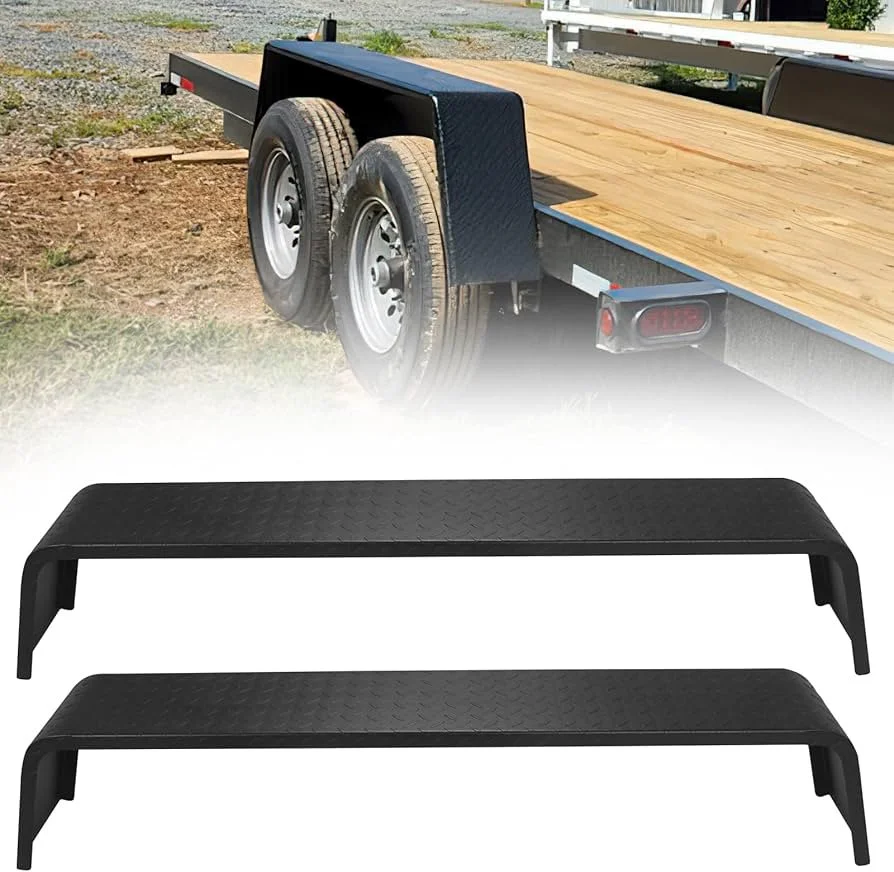
Steel Tread Plate Trailer Fenders for Car Hauler Trailers are an essential investment in both the safety of the vehicle and its effectiveness. These sturdy parts improve overall safety during transport operations by protecting tires and trailer components from environmental threats, moisture, and road debris. These fenders are essential for commercial vehicle hauling operations across a variety of geographical locations and difficult road conditions since they are made from premium steel with unique tread plate designs and provide outstanding durability and corrosion resistance.

Understanding Steel Tread Plate Trailer Fenders
In order to protect your car hauler trailer from the harsh conditions of street transportation, steel tread plate bumpers are used. These parts differ from conventional metal fenders due to the unique diamond plate design, which provides both practical and visual advantages.
Key Features and Essential Characteristics
Construction materials and design components are the cornerstones of high-quality trailer bumpers, such as Steel Tread Plate Trailer Fenders. When compared to other materials, steel tread plate structure provides higher impact resistance, and the raised diamond shape adds structural stability. The textured surface increases safety around the trailer by improving grip during maintenance tasks and producing an anti-slip surface. Certain design elements that cater to the particular difficulties of vehicle transporter operations are included into these bumpers. Usually, the thickness falls between 3 and 6 mm, allowing for modification according to operating circumstances and load requirements. Galvanization or powder coating techniques provide corrosion protection, which greatly increases service life over untreated alternatives.
Durability and Performance Advantages
Contemporary steel tread plate bumpers maintain their structural integrity even in the face of harsh weather, from scorching desert heat to bitter cold. The nature of the material is flexible enough to efficiently absorb road stress while resisting deformation upon impact. Consistent performance across a range of operating situations is ensured by this harmony between strength and flexibility. When choosing a bumper, weight capacity is a crucial factor. Superior steel structure uniformly distributes stress across mounting points and can withstand loads of up to 10,000 pounds. For car transporter trucks that are moving many automobiles across long distances, this feature is essential.
Comparative Analysis with Alternative Materials
Procurement professionals are better able to make decisions when they are aware of material disparities. Although plastic bumpers are lighter, they don't have the impact resistance required for heavy-duty applications. Although aluminum solutions resist corrosion, they may not be able to endure the many stress cycles seen in commercial operations. The strength and affordability of steel tread plate bumpers are well balanced. The longer service life and lower replacement frequency provide a better total cost of ownership, even if the initial investment is more than that of plastic equivalents. Beyond other options, the material's repairability extends operating life by enabling field maintenance.
How to Choose the Right Steel Tread Plate Trailer Fenders for Your Car Hauler
A thorough evaluation of operating requirements and environmental considerations is necessary when choosing appropriate bumper specifications. Analyzing a number of factors that impact both short-term functioning and long-term performance is part of the decision-making process.
Categorizing Fender Types by Application
Operations with frequent loading cycles and difficult road conditions are best suited for heavy-duty designs. Increased thickness and strengthened mounting systems designed to withstand constant tension are characteristics of these variants. For common truck carrying applications, standard configurations provide a compromise between strength and affordability. Trailers with restricted clearance may be accommodated by low-profile choices while still providing protection. Each category uses targeted design changes to meet certain operational demands. Heavy-duty options include stronger foundation materials and more mounting points. Standard configurations address common performance requirements while optimizing material utilization. Without sacrificing protection, low-profile designs increase fuel economy and reduce wind resistance.
Material Comparison and Selection Criteria
When steel is compared to alternatives like rubber, plastic, and aluminum, certain benefits and drawbacks become apparent. Although rubber bumpers provide superior shock absorption, they degrade rapidly under severe temperatures and UV light. Although plastic substitutes are resistant to corrosion, they do not have the impact resistance needed for demanding applications. Although aluminum bumpers are lightweight and resistant to corrosion, they may have fatigue failures after many loading cycles. Steel tread plate structure offers economical solutions for commercial operations by striking the perfect balance between all performance requirements.
Thickness Analysis and Strength Considerations
Variations in thickness have a direct effect on the longevity and performance of bumpers. Lighter applications are better suited for thinner profiles (3–4 mm), which can provide financial benefits for operations on a tight budget. Options with medium thickness (4-5mm) provide exceptional durability to meet common vehicle carrying requirements. Demanding applications needing the highest level of impact resistance benefit from heavy-duty thickness (5–6 mm). Weight distribution and mounting requirements are influenced by material thickness. Although thicker bumpers provide better protection against traffic dangers, they also need stronger mounting frameworks. Protection levels must be balanced with rising complexity and weight factors throughout the selecting process.
Installation and Maintenance of Steel Tread Plate Trailer Fenders
An extended service life and excellent performance are guaranteed by proper installation. To ensure safe installation and long-term dependability, the process calls for specialized equipment and adherence to established protocols.
Comprehensive Installation Process
Getting the necessary tools, such as drill bits, mounting hardware, measurement devices, and safety gear, is necessary before starting the installation. The first step in the procedure is to precisely measure and mark the mounting sites according to the load requirements and trailer specifications.Making safe connection locations that disperse stress uniformly across the trailer frame is part of the mounting process. Premature failure is avoided and even wear patterns are guaranteed with proper alignment. To get the best gripping force without causing damage to mounting surfaces, torque standards must be strictly adhered to.Wearing the proper protective gear and according to established rules while handling heavy components are examples of safety practices during installation. Accurate component alignment and injury prevention are ensured by proper lifting procedures.
Maintenance Requirements and Best Practices
The service life and protection efficacy of Steel Tread Plate Trailer Fenders are prolonged by routine maintenance. Frequent cleaning gets rid of accumulated material that might interfere with moving parts or cause corrosion. Inspection processes find possible problems before they affect functioning. Regular application of protective coatings and timely surface damage repair are essential components of corrosion prevention. To stop corrosion from starting, tread plate fenders' textured surface has to be well cleaned since it might collect moisture and debris in pattern depressions.
Troubleshooting Common Issues
Hardware examination and specification-based retightening are necessary to address mounting looseness. By choosing the right hardware and performing routine maintenance, vibration-induced loosening may be avoided. When surface corrosion is cleaned and recoated as soon as possible, it reacts.Over time, regular wear or impact damage may cause alignment problems. Correction entails changing mounting locations and, if required, swapping out damaged parts. These preventative actions preserve protective efficacy and avert expensive failures.
Procurement Strategies and Where to Source Steel Tread Plate Trailer Fenders
Effective procurement strategies balance cost considerations with quality requirements and delivery timelines. Understanding supplier capabilities and market dynamics enables informed purchasing decisions that optimize value and minimize risk.
Bulk Purchasing and Custom Order Considerations
Significant cost savings are offered by volume buying, which also guarantees steady supply availability. Building enduring connections with dependable suppliers opens the door to personalized solutions and advantageous price structures. Careful preparation is needed for bulk purchases in order to balance volume discounts and inventory expenses.Certain operational needs that are not met by regular goods are addressed by custom fabrication choices. The best fit and performance are guaranteed when working with manufacturers that can modify designs and provide bespoke sizes. These collaborations often provide better solutions that raise overall operational effectiveness.
Supplier Evaluation and Selection Criteria
Assessing production capabilities, quality processes, and customer support infrastructure are all necessary when evaluating possible suppliers. While production capacity influences the ability to satisfy delivery requirements, ISO certifications show a commitment to quality control.Delivery schedules and shipping costs are influenced by geographic factors. Cost savings from foreign suppliers could be possible, but communication skills and quality standards need to be carefully considered. Although they may charge more, domestic providers offer quicker delivery and simpler quality control.
Pricing Analysis and Total Cost Evaluation
Finding genuine value propositions that go beyond initial purchase prices is made easier with an understanding of pricing structures. The overall cost of the purchase is greatly impacted by elements like shipping, customs charges, and handling fees. Throughout the product lifespan, maintenance needs and replacement frequency are influenced by quality concerns. The longevity of Steel Tread Plate Trailer Fenders may lower the cost of replacement over time. Protection against premature failure and manufacturing flaws is offered by warranty coverage. Extensive warranty programs lower procurement risk while demonstrating the manufacturer's confidence in product quality. By lowering the overall cost of ownership, extended warranty options may help to justify premium pricing.

RUIRUI: Your Premier Steel Tread Plate Trailer Fender Manufacturer
Industry management in steel production and trailer component fabrication is addressed by Qingdao RUIRUI Apparatus Fabricating. Our firm was founded in 2016 and delivers popular products for global markets by fusing advanced fabrication skills with extensive quality management systems.
Manufacturing Excellence and Capabilities
Supported by fully automated robot generation systems and advanced thermoplastic coating forms, our fabrication office has eight generation lines with an annual production capacity of 130,000 pieces. This foundation enables dependable quality while assembling delivery plans that are requested by consumers globally. Beyond basic manufacturing, manufacturing capabilities include deep drawing, laser cutting, CNC machining, welding, dynamic stamping, and more. Powder coating, galvanization, anodizing, and electrophoresis medications are examples of auxiliary forms that improve erosion resistance and aesthetic appeal.
Product Specifications and Customization Options
RUIRUI steel tread plate fenders are made of premium steel and may be customized in thickness from 3 to 6 mm, depending on the needs of the application. Excellent corrosion protection is offered by the standard silver finish, and unique branding or operating requirements may be accommodated by bespoke color choices.Fleet operators may purchase items at a reduced cost thanks to minimum order quantities of 1,000 pieces, which also support volume discounts that enhance project economics. Options for custom dimensions and configuration guarantee the best possible match with current trailer designs and functional needs.In order to provide customized solutions that meet particular problems and performance criteria, our engineering team works in conjunction with customers. This method produces cost-effective, functionally enhanced designs that are optimized.
Quality Assurance and Certifications
Product quality and environmental responsibility are guaranteed by quality management systems that are accredited to ISO 9001, ISO 14001, and OHSAS 18001 standards. Our dedication to sustainable manufacturing processes is shown by our five-star green supply chain management accreditation.Throughout the production process, performance testing, dimensional inspection, and material verification are all part of thorough quality control processes. Every shipment is accompanied by thorough quality documentation that supports client quality systems and offers traceability.
Conclusion
For car carrier operations that need dependable, long-lasting protection from environmental factors and traffic dangers, Steel Tread Plate Trailer Fenders are crucial parts. When paired with the practical advantages of tread plate design, steel construction's excellent performance qualities provide the best value for commercial transportation applications. Maximum service life and protection efficacy are ensured by competent installation and maintenance procedures in conjunction with appropriate selection based on operating needs. Fleet operators may maximize their investment while maintaining strict safety and performance requirements by using strategic procurement methods that prioritize supplier capabilities and overall cost concerns.
Frequently Asked Questions
What makes steel tread plate fenders superior to other materials?
Steel tread plate construction provides exceptional impact resistance and durability compared to plastic or aluminum alternatives. The raised diamond pattern adds structural strength while creating anti-slip surfaces that enhance safety during maintenance activities. Steel's repairability allows field repairs that extend service life beyond other materials.
How do I determine the correct thickness for my application?
Thickness selection depends on load requirements, operational environment, and impact exposure levels. Standard car hauler applications typically require 4-5mm thickness, while heavy-duty operations may need 5-6mm construction. Lighter applications can utilize 3-4mm thickness with appropriate cost savings.
What corrosion protection options are available?
Steel fenders receive protection through powder coating, galvanization, or specialized coating systems that resist rust and environmental degradation. Powder coating provides excellent adhesion and color options, while galvanization offers superior corrosion resistance in harsh environments.
Can fenders be customized for specific trailer configurations?
Yes, custom fabrication accommodates unique mounting requirements, size specifications, and design modifications. Working with experienced manufacturers enables optimization for specific operational needs while maintaining structural integrity and performance characteristics.
What maintenance is required to maximize service life?
Regular cleaning removes debris and prevents corrosion initiation, while periodic inspection identifies potential issues before failure occurs. Protective coating maintenance and prompt repair of surface damage extend service life significantly beyond minimum expectations.
Partner with RUIRUI for Premium Steel Tread Plate Trailer Fenders
RUIRUI stands ready to support your steel tread plate trailer fender requirements with comprehensive manufacturing capabilities and customer-focused service. Our experienced engineering team provides technical expertise for custom applications while our efficient production systems ensure timely delivery of quality products. Whether you need standard configurations or custom solutions, RUIRUI delivers the reliability and performance your operations demand. Contact our technical sales team at info@qdkshd.com to discuss your specific requirements and discover how our steel tread plate trailer fender manufacturer capabilities can enhance your car hauler operations.
References
1. Transportation Research Board. "Heavy Vehicle Trailer Design and Safety Standards." National Academy of Sciences, 2023.
2. American Society of Mechanical Engineers. "Materials Engineering for Commercial Vehicle Components." ASME Press, 2022.
3. National Highway Traffic Safety Administration. "Commercial Vehicle Safety Equipment Requirements." Federal Motor Carrier Safety Administration, 2023.
4. Institute of Transportation Engineers. "Fleet Management and Maintenance Best Practices for Commercial Trailers." ITE Publications, 2022.
5. Society of Automotive Engineers. "Corrosion Prevention in Commercial Vehicle Applications." SAE Technical Papers, 2023.
6. International Organization for Standardization. "Quality Management Systems for Automotive Suppliers." ISO Standards Catalogue, 2022.

Send Inquiry
Related Industry Knowledge
- What Would Cause Your Trailer Coupler to Crack?
- Custom Trailer Parts for Off-Road & Recreational Use
- How to Choose Custom Trailer Parts for Your Trailer
- How Secure Towing Solutions Improve Roadside Recovery Speed?
- How does RUIRUI customize Electrogalvanized U-bolts to your exact diameter, length, and thread specifications?
- How Do CNC Sheet Metal Parts Ensure Exceptional Quality and Durability?
- What Are the Benefits of Using a Trailer Hitch Tightener?
- Can I customize the design of a metal door lock hook?
- What are the benefits of hydraulic bollards?
- How to assemble a cast iron bench?