
The Complete Guide to U-Bolts: Types, Sizing, Materials, and Installation
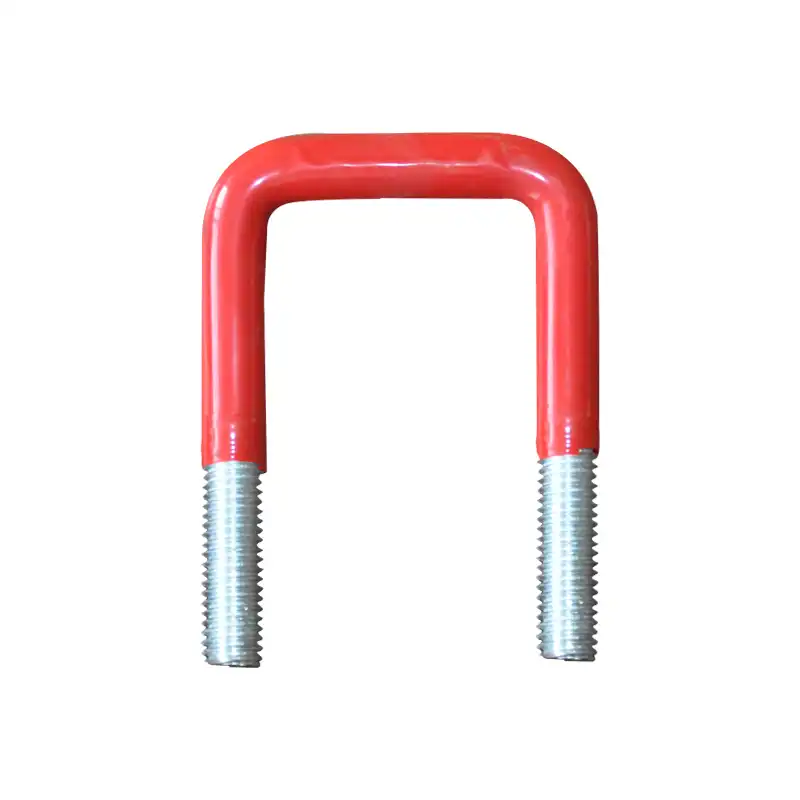
U-bolts are industrial screws that look like the letter "U" and have bent bases with threaded arms that stick out. In the building, automobile, and infrastructure industries, these parts hold pipes, beams, and other tools securely to structural supports. Standard screws can't meet the needs of every project, but a custom U bolt can. Its size, materials, and threading can all be changed to fit the needs of that project. Engineers and procurement professionals can choose the best fastening option for tough industrial uses by understanding the different types, how to measure correctly, the materials that are available, and how to install them.
Understanding Custom U-Bolts: Types, Sizes, and Materials
In industrial settings, the success of a project depends on the difference between standard and customized binding solutions. Custom U bolts solve problems that standard parts can't, especially when working with pipe sizes that aren't standard, odd load requirements, or harsh environmental conditions.
Types of U-Bolts for Industrial Applications
U-bolts that are round are made with a half-circle bend so that they can fit around pipes and tubes that are round. These screws are often used in plumbing systems, exhaust mounts, and industrial piping because the curved base evenly applies clamping force around the pipe's length. There is a rectangular bend on square U-bolts that makes them good for attaching parts with flat or rounded shapes, like leaf springs in car suspension systems or rectangular building frame members. Heavy-duty U-bolts have thicker steel stock and bigger thread sizes so they can handle heavy loads when they're used to secure industrial machinery, support bridge parts, or connect equipment in places with a lot of vibration. Based on the shape of the secured part and the mechanical forces it faces, each type meets different technical needs.
Accurate Sizing Guidelines for Optimal Performance
To get the right measurements for a custom U bolt, you must first find the inside width, which is the space between the two connected legs at their bases. For a good fit, this measurement must be bigger than the outside diameter of the pipe or part being attached. The thread length measurement goes from the bend's bottom end to the end of the threaded part. It needs to be long enough to go through mounting plates or frames and still have enough thread contact for nuts. The bend radius is the same as the U-bolt's base curve, and it should be very close to the pipe's outer diameter to get the most contact area and load distribution. The length of a leg includes the whole straight part of each linked arm. Any mistake in measuring a measurement can cause the clamping force to be wrong, which could damage the part or cause the fastener to fail completely under working loads.
Material Selection for Strength and Corrosion Resistance
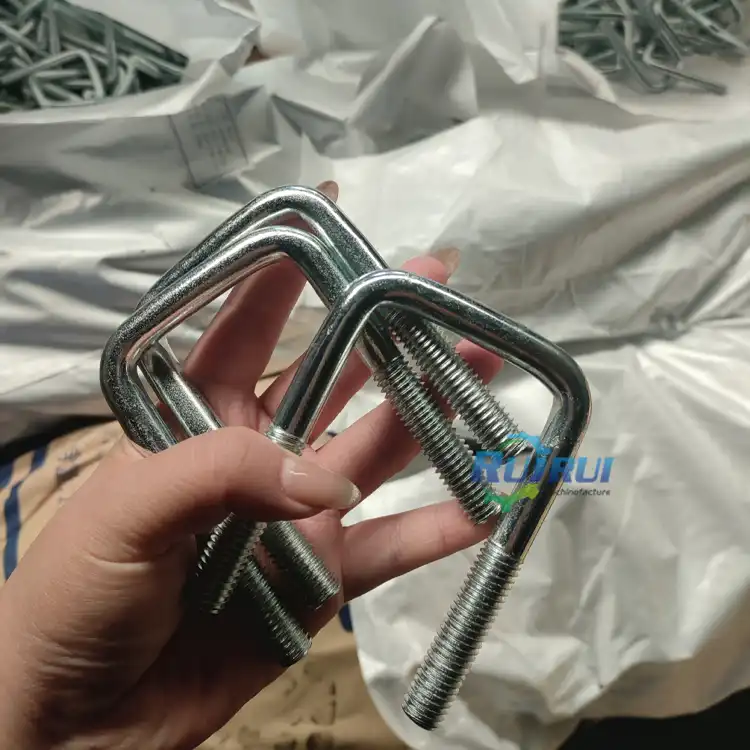
For uses in wet, chemical, or marine settings, stainless steel types 304 and 316 are very good at resisting corrosion. Grade 304 is good enough for most indoor and mild outdoor situations. Grade 316, on the other hand, has molybdenum added to it to make it more resistant to chlorides and acidic substances, which makes it perfect for use in coastal areas and chemical processing plants. Electrogalvanized steel goes through an electroplating process that covers the base metal with a thin layer of zinc. This process protects against rust reliably and more cheaply than stainless steel. This makes it good for building projects, farming tools, and other industry uses where moderate corrosion resistance is enough. For high-load uses, carbon steel metals have the highest tensile strength, but they need protective coats in places where they will rust. The choice of material strikes a balance between the need for good technical performance, exposure to the environment, and cost concerns.
Technical Specifications and Performance of Custom U-Bolts
Understanding how fastener specs apply to real-world performance under stress, changing temperatures, and exposure to the environment is important for engineers. Technical factors set the limits of how U-bolts can be used and still keep the structure together.
Load Capacity Calculations and Standards Compliance
How much weight something can hold varies on the type of material, the cross-sectional area of the threaded part, and the length of the thread contact. Engineers figure out the maximum working load by adding safety factors to the base material's final tensile strength. Standards in the industry, like ASTM A307 for carbon steel and ASTM F593 for stainless steel, set basic mechanical qualities and test procedures. Dynamic forces, vibration, thermal expansion, and possible stress buildup at the thread-to-bend change must all be taken into account when figuring out the load. At Qingdao RUIRUI Machinery Co., LTD, we make electrogalvanized U-bolts out of high-strength steel that can hold up to 20 tons and are compliant with ISO 9001 and ISO 14001 standards. Before being shipped, each batch is put through strict tensile strength tests to make sure it meets performance standards.
Thread Types and Torque Specifications
In most U-bolt situations, coarse threads (UNC) are common because they make assembly go faster and work better with softer materials or when there is some thread damage. For a custom U bolt, the same principles apply, but when it comes to precision uses, fine threads (UNF) offer more holding force and better resistance to vibration loosening. When buying things from other countries, ISO norms are used for metric fitting. For the gripping force to be right, the torque specs must match the fastener grade, thickness, and thread type. If they don't, the threads will loosen or the base material will bend. When you over-tighten, the threads strip or the material breaks. When you under-tighten, the joint slips and the parts move. When you use torque wrenches that are set to the manufacturer's instructions, you can be sure that all of the screws in the same assembly will be installed correctly.
Corrosion Resistance Strategies for Extended Service Life
Electroplating is used to apply electrogalvanized coats, which create a uniform zinc layer that covers the steel below. This method, which is used in RUIRUI's factory in Qingdao, makes the metal resistant to rust for up to 10 years in normal industry settings. Hot-dip galvanizing makes a stronger zinc covering that can withstand rougher conditions, but it might change the thread tolerances. Stainless steel screws don't need coatings because of the way the material is made, but they are much more expensive. As part of regular checking routines, covering wear, rust formation, or material pitting should be found before they cause structural damage. Using anti-seize products during installation stops galling and makes removal easier in the future without hurting the threads.
Comparing Custom U-Bolts with Standard Alternatives: Making Informed Choices
When making purchasing choices, it's important to be able to clearly see the differences between personalized solutions and standard store items. Knowing the trade-offs between price, quality, and shipping time helps you choose the best way to buy things for each job.
Custom versus Standard U-Bolts: Fit and Performance Analysis
Standard U-bolts come in set sizes and only a few types of materials. They are good for common pipe widths and simple fastening tasks. These things can be bought right away and cost less per unit when bought in small amounts. Custom U bolts can be made with non-standard sizes, special coatings, different bend angles, or changed threading to meet specific engineering plans. Customization is helpful for projects that use foreign equipment with metric sizes, industrial pipes that are too big, or systems that are visible from the outside. The precise fit gets rid of gap-induced shaking, lowers noise transfer, and makes the clamping work better. Because RUIRUI can bend and thread, it can make U-bolts that are exactly what the customer wants and have the right tolerances for tough industrial uses. These bolts are a bridge between normal catalog items and fully built fastening systems.
Stainless Steel versus Galvanized Options: Material Performance Comparison
Stainless steel is very resistant to corrosion, and it doesn't need any special coatings on the outside. It keeps its look and structure even in tough chemical or sea settings. The material isn't magnetic, which makes it useful in some situations, and its higher temperature tolerance makes it more useful in thermal cycle situations. But stainless steel is much more expensive, and to stop galvanic rusting, you have to be very careful to choose washers and nuts that are suitable. Electrogalvanized steel protects against rust well enough for most building and industry uses, and it doesn't cost nearly as much as stainless steel. In mild exposure situations, the zinc covering corrodes before the base steel, which makes it last longer. Professionals in procurement have to balance how bad the environment is with how much money they have. They often choose stainless steel for projects that are very important or hard to replace, such as a custom U bolt, while galvanized choices are used for parts that are easy to get to and will need to be serviced regularly.
U-Bolts versus Pipe Clamps: Application Suitability
U-bolts are great for making rigid connections in places where movement isn't allowed, like when you need to secure exhaust systems, support pipe runs, or fix suspension parts. The threaded design lets you precisely control the force and fits plates of different sizes. Pipe clamps that are hinged or split make it easier to place around existing pipes without taking them apart. This is helpful for retrofitting or when it's hard to get to both sides of the pipe. Most clamps don't have a lot of gripping force, and they might move a little when they're vibrating. U-bolts are better at keeping things in place and last longer, so they are usually used for permanent assemblies, heavy equipment installations, and structural applications. Clamp designs, on the other hand, are better for short installations or situations that need to be accessed often.
Procurement Guide: Buying Custom U-Bolts from Trusted Manufacturers
To build trusting supply chains, you need to check manufacturing partners against certain standards that show they can provide regular quality, technical support, and logistics. When you buy things globally, you have to think about things like compliance, contact, and coordinating shipping.
Manufacturer Certifications and Quality Assurance Processes
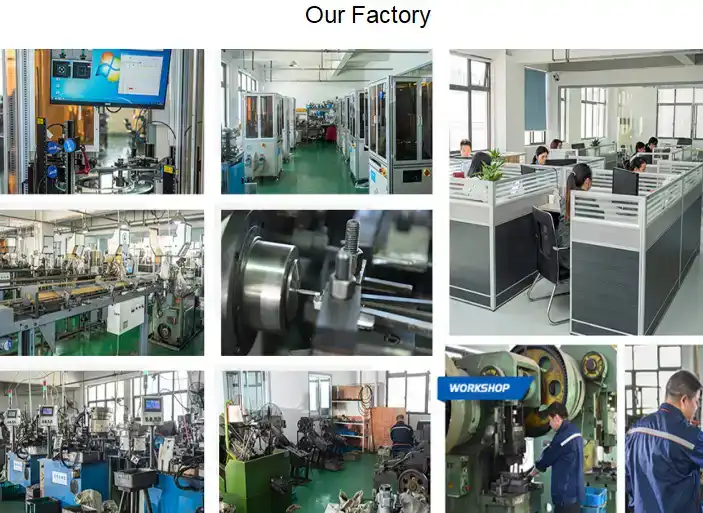
ISO 9001 certification shows that quality control is done in a planned way, from getting the raw materials to checking the end product. For this standard to be met, methods must be written down, measuring tools must be properly calibrated, and there must be systems in place to keep track of production runs. When an organization has ISO 14001 approval, it means that it has environmental management systems that keep trash, emissions, and resource use under control. OHSAS 18001 certification covers health and safety rules at work that keep workers safe and make sure that production conditions are always the same. These licenses give real proof of an organization's skills, not just marketing claims. At RUIRUI, our factories in Qingdao follow written methods. From the start of production, engineers work with quality inspectors to create product files that include information about how each batch was made. Before production starts, the supplier's specs are checked against the raw materials, and during the making and threading processes, the dimensions are checked to make sure they are correct.
Order Management: MOQ, Lead Times, and Bulk Pricing
Custom U bolts usually have a minimum order quantity of 1,000 pieces, which is because of the costs of setting up the tools and getting the materials. This level is good for distributors, contractors, and original equipment manufacturers who are looking to buy things for specific projects or keep stock for ongoing activities. Different factors affect lead times, such as the level of customizing, the supply of materials, and the production schedule. Customized stainless steel U-bolts with special coatings take four to six weeks to ship, while standard electrogalvanized U-bolts with common threading may ship within two weeks. When you buy in bulk, the price per unit goes down a lot as you buy more. This is called economies of scale. Shipments at the container level save North American and European shippers the most money on foreign shipping costs. RUIRUI's eight production lines can make 130,000 pieces a year, which is enough to meet both short-term orders for prototypes and long-term deals for high volumes. During the quotation process, our expert team looks over engineering plans and specs to find any problems that might come up with production before the order is confirmed.
Evaluating Supplier Engineering Support and Customization Capabilities
Strategic manufacturing partners are different from transactional sellers because they have access to engineering knowledge. Quick expert support helps with choosing the right material, figuring out how much it will hold, and making the best use of its dimensions based on the needs of the application. Suppliers who have their own design teams and use CNC machining, laser cutting, and precise bending tools can make shapes with complex forms and tight standards that aren't possible with basic forming methods. Surface finishing choices, such as powder coating, anodizing, and different plating methods, let you choose the look and amount of protection that best fits the needs of the project and the surroundings. RUIRUI can do more than just make U-bolts. They can also do secondary processes like wire drawing, grinding, deburring, and cutting. Our R&D team works with customers to come up with custom solutions that solve their specific problems. These solutions are backed by a number of utility model patents and design patents that were earned over many years of experience in metal fabrication.
Installation and Maintenance of Custom U-Bolts: Best Practices
The performance and service life of fasteners are directly affected by how they are installed and how often they are serviced. Even high-quality parts break too soon if they are put wrong or if wear and tear is not noticed.
Step-by-Step Installation Procedure for Reliable Performance
Start by choosing nuts that are the right size and material for the plate's holes. This will make sure that the load is spread out evenly and the plate doesn't bend. Place the U-bolt around the pipe or part and make sure that the bend radius is the same as the part's width. Place both threaded legs through the holes in the mounting plate or bracket, making sure that the thread length is long enough to go past the thickness of the plate to allow washers and nuts to fully engage. At first, thread the nuts so that they are finger-tight. Switch between the two sides to keep everything in place. To get to the required torque value more gradually, tighten nuts in a cross pattern with a measured torque wrench. This way, you can reach the value over several passes instead of all at once. This method stops cocking and makes sure that the pressing force is spread out evenly. Use thread-locking powder when the need for vibration protection is higher than what mechanical locking can handle.
Common Installation Mistakes and How to Avoid Them
Most of the time, people make the mistake of over-tightening, which breaks threads or the custom U bolt at stress places close to the turn. When you use force values that are meant for different grades or sizes of fasteners, either the fitting doesn't work right or the material breaks. If you don't use screws, the load is concentrated at the edge of the mounting plate hole, which deforms the part and lowers the gripping force. When you mix different metals without isolating them properly, you make galvanic cells that speed up rusting when water is present. Putting in custom U bolts with bend radii that are much bigger than the width of the component can cause point loading and slippage. Cross-threading during the initial fitting hurts the thread profiles and stops the right amount of force from being applied. Most field mistakes can be avoided by taking the time to make sure that parts work with each other, using the right tools, and following written instructions.
Maintenance Protocols and Replacement Indicators
Inspections should be scheduled at regular times based on how important the application is and how exposed it is to the world. A visual inspection can show that the layer is wearing off, rust is forming, threads are damaged, or the material has changed shape. Using a measured wrench to check the torque can find loosening caused by shaking or temperature changes. Replace bolts that have active rust leaking through the galvanized covering, cracks that can be seen near bends or threads, or threads that are stripped and won't allow the right force to be applied. Parts that are exposed to chemicals or high temperature changes should be inspected more often, even if they don't look damaged. Keeping track of installation dates, torque values, and inspection results creates a base set of information that can be used to estimate service life and plan replacements before they fail. Preventative repair programs cut down on unplanned downtime and keep protected equipment from getting damaged by other things.
Conclusion
U-bolts are very important for fastening things together in industry, building, and infrastructure settings where safe operation and long life depend on properly supporting pipes and keeping parts in place. Knowing the differences between custom U bolt and standard choices, choosing the right materials for the setting, and installing them correctly will all lead to the best performance. RUIRUI's electrogalvanized U-bolts protect against corrosion and have a high load capacity, making them ideal for challenging uses that need custom sizes and engineering specs. Partnering with makers that offer technical support, quality certifications, and flexible customization options that fit the needs of the project and the supply chain is good for procurement pros.
FAQ
1. When should I specify a custom U bolt instead of a standard fastener?
When normal catalog sizes don't fit your pipe diameter, when the thickness of the mounting plate means longer thread lengths are needed, or when weather conditions call for specific material grades or protective coatings that aren't in stock, you'll need to have something custom made. Customization is also helpful for projects that need to use foreign equipment with metric measurements or installs that are visible from the outside and need certain finishes.
2. Which material performs best in coastal or marine environments?
Because it has molybdenum in it, stainless steel type 316 is the best at resisting rust in saltwater because it makes it more resistant to chloride-induced pitting. If you're on a tight budget and the steel will only be exposed to mild sea conditions, hot-dip galvanized steel will work fine as long as it is inspected and maintained regularly.
3. Can U-bolts be designed for non-circular pipe shapes or irregular components?
Precision bending tools can be used by manufacturers to make U-bolts that fit square, rectangular, or custom-shaped shapes. Specialized geometries can be made by giving thorough engineering drawings with cross-sectional measurements and mounting needs. When it comes to CNC machining and bending, RUIRUI can work with forms other than normal round and square ones.
Partner with RUIRUI for Your Custom U Bolt Manufacturing Needs
Qingdao RUIRUI Machinery Co., LTD makes electrogalvanized U-bolts that are precisely designed and made to fit your exact needs. Our factory in Qingdao has eight production lines with high-tech bending tools and quality control systems that make sure the parts are the right size and work the same way every time. We are a reliable custom U bolt seller for infrastructure builders, companies that make industrial equipment, and global wholesalers who need large amounts of bolts quickly. Our technical team helps with engineering during the whole specification process, and our quality control systems are ISO-certified to make sure they meet foreign standards. You can email us at kshdhardware@qdkshd.com to talk about the needs of your project, ask for a review of the technical plans, or get quotes for shipping containers. RUIRUI has worked with clients in over 80 countries, so we can help you with your procurement needs by offering low prices and reliable service.
References
1. American Society for Testing and Materials. "Standard Specification for Carbon Steel Bolts and Studs, 60,000 PSI Tensile Strength." ASTM International, West Conshohocken, PA.
2. Bickford, John H. "Introduction to the Design and Behavior of Bolted Joints: Non-Gasketed Joints." CRC Press, Boca Raton, FL.
3. International Organization for Standardization. "Mechanical Properties of Fasteners Made of Carbon Steel and Alloy Steel." ISO Standards Catalogue, Geneva, Switzerland.
4. Kulak, Geoffrey L., Fisher, John W., and Stefanik, John H.A. "Guide to Design Criteria for Bolted and Riveted Joints." American Institute of Steel Construction, Chicago, IL.
5. Marsh, Kenneth J. "Fastener Technology: Materials, Properties and Applications in Engineering." Society of Automotive Engineers, Warrendale, PA.
6. Shigley, Joseph E. and Mischke, Charles R. "Mechanical Engineering Design: Fasteners and Joints." McGraw-Hill Education, New York, NY.

Send Inquiry
You may like