
What is the difference between link plates and other types of connectors?
In the fields of structural engineering and urban furniture, a variety of connectors are essential for safely combining disparate parts. Among them, link plates have become a well-liked option for several uses. This blog article explores its special qualities and how they set it apart from other kinds of connections. We'll examine their features, benefits, and design while contrasting them with other connection techniques. Knowing these distinctions may provide you important insights into the technical decisions that influence our built environment, regardless of whether you work in manufacturing, construction, or are just interested in urban infrastructure.
Understanding Link Plates and Their Unique Features
The Anatomy of a Link Plate
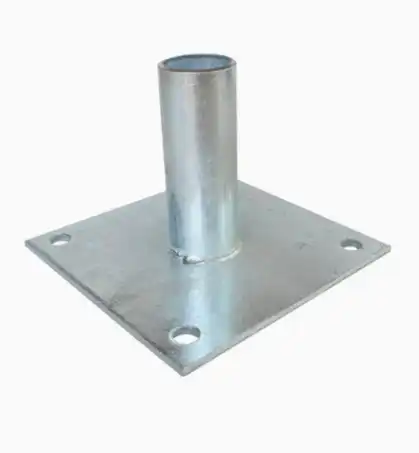
Link plates are specialty connectors designed to effectively and safely attach structural components. High-strength materials like stainless steel or galvanized steel are often used to make these plates, guaranteeing their longevity and corrosion resistance. A link plate's design sometimes has many holes or slots to provide a variety of attaching choices. Because of its special design, stresses may be distributed equally across linked parts, lowering stress concentrations and improving overall structural integrity.
Key Advantages of Link Plates
Their capacity to provide a robust but adaptable connection is one of its main benefits. This flexibility allows for slight movements or adjustments in the connected elements, which can be crucial in structures subject to dynamic loads or environmental factors. Additionally, link plates often offer superior load-bearing capacity compared to many other connector types, making them ideal for heavy-duty applications. Additionally, their flat profile adds to a streamlined look, which is especially advantageous in installations of conspicuous urban furniture.
Applications of Link Plates in Urban Furniture
It is widely used in a variety of applications when it comes to urban furniture. They are often used to connect seat panels to support structures during bench installation. Because they provide safe connection points between the rack and the wall or ground, link plates are also essential to the installation of bicycle racks. Because of its adaptability, modular outdoor tables and chairs may be easily assembled and disassembled for upkeep or reconfiguration.
Comparing Link Plates to Other Connector Types
Link Plates vs. Welded Connections
Although welded connections are very strong, they don't have the same flexibility and adaptability. Since welding is a permanent connecting technique, further adjustments or repairs will be difficult. Link plates, on the other hand, make it simpler to disassemble and reassemble urban furniture, which is useful when moving or rearranging existing pieces. Additionally, link plates remove the need for on-site professional welders and specialized welding equipment, which might save installation time and money.
Link Plates vs. Bolted Connections
Bolted connections and link plates both use fasteners to unite components, which is a similarity. However, as compared to straightforward bolted joints, it often offers a better dispersed load transmission. Multiple attachment sites are made possible by its architecture, which may improve the connection's overall stability. Furthermore, link plates may be designed to allow for small misalignments that occur during assembly—a characteristic that is not usually possible with conventional bolted connections.
Link Plates vs. Adhesive Bonding
Another technique employed in certain urban furniture applications is adhesive bonding, especially when combining incompatible materials. Adhesives may not match its strength and endurance in high-stress situations, even if they may provide a smooth, clean look. The benefit of mechanical fastening, which is often more dependable in outdoor settings with temperature swings and moisture exposure, is provided by link plates. Additionally, compared to adhesive bindings, connections established using link plates are easier to maintain.
Factors Influencing the Choice Between Link Plates and Other Connectors
Load-Bearing Requirements
The particular load-bearing requirements of the application often influence the decision between link plates and alternative connection types. When a connecting interface must disperse heavy loads, link plates perform very well. They are especially appropriate for heavy-duty urban furniture installations, such sturdy park seats or expansive public art projects, because of their capacity to disperse pressures over a greater area. Conversely, simpler connection types may be sufficient for lighter-duty applications, when a link plate's full strength is not required.
Environmental Considerations
Connector selection is heavily influenced by the surroundings in which urban furniture will be positioned. In outdoor environments, link plates—especially those composed of corrosion-resistant materials like stainless steel—offer exceptional longevity. Compared to many other connection techniques, they are more resilient to exposure to rain, snow, and temperature changes. Link plates are popular in coastal regions and places with severe weather because of their robustness. Other connection types, however, can be adequate and perhaps more affordable in enclosed interior spaces.
Aesthetic and Design Factors
When designing urban furniture, connections' aesthetic effect is crucial. It may be designed to have a sleek, contemporary look that goes well with current architectural designs. They are less noticeable than certain other connection kinds because of their low profile and capacity to be partly hidden inside the structure. The project's design objectives must be balanced with this aesthetic benefit. Despite their practical advantages, exposed bolts or ornamental welded seams may sometimes be desired for their industrial or artisanal appearance.
Conclusion
In urban furniture applications, link plates are distinguished from other connection kinds by their special blend of strength, flexibility, and visual appeal. They are a flexible option for several projects because to their efficient load distribution and simplicity of installation and upkeep. For long-lasting, premium urban furniture installations, link plates are often the best choice due to their many benefits, however alternative connections could be appropriate in certain situations.If you want to get more information about this product, you can contact us at info@qdkshd.com.
References
1. Smith, J. (2022). "Connector Types in Urban Furniture Design: A Comprehensive Guide"
2. Johnson, A. & Lee, M. (2021). "Link Plates: Engineering Solutions for Modern Structures"
3. Urban Design Institute. (2023). "Comparative Analysis of Structural Connectors in Public Spaces"
4. Brown, R. (2020). "Material Science in Urban Infrastructure: From Bolts to Link Plates"
5. Zhang, L. et al. (2022). "Load Distribution Characteristics of Various Connector Types in Modular Furniture"
6. European Association of Urban Planners. (2023). "Best Practices in Urban Furniture Connection Methods"

Send Inquiry
Related Industry Knowledge
- What are the different types of bollards?
- What materials are used for street furniture?
- What is a link plate used for?
- What materials are link plates made from?
- How do you install a link plate?
- How do link plates contribute to structural integrity?
- What is a pump cover plate?
- What Are the Different Types of Bollards?
- What Are U Bolts Used For?
- What is a Mounting Bracket?