
Heavy Duty Trailer Coupler Factory Direct: Best Materials and Load Ratings
Disaster happens as you're getting ready for a crucial haul—your trailer coupler breaks down in the middle of the trip, leaving you stuck with a damaged cargo and escalating expenses. This terrible situation serves as a reminder that choosing the correct Heavy Duty Trailer Coupler Factory Direct is more important than most people think. Knowing material specifications and load ratings is crucial for both operational success and catastrophic failure, regardless of whether you're transporting commercial items, farm machinery, or construction equipment. This thorough guide explains how factory-direct sourcing provides verified load capacities, high-quality materials, and production accuracy that safeguard your investment and guarantee every trip satisfies the strictest safety regulations.

Understanding Heavy Duty Trailer Coupler Materials and Construction Standards
The selection of materials and production procedures that determine long-term performance under harsh circumstances constitute the basis of each dependable Heavy Duty Trailer Coupler Factory Direct product. Industrial-grade couplers are required to endure environmental corrosion, continuous stress cycles, and impact pressures that would damage less-than-ideal substitutes. Expert producers use cutting-edge metallurgical techniques to produce parts that surpass industry standards. High-quality materials such as cold-rolled steel, cast steel alloys, and specially treated stainless steel formulas are used in the production of premium heavy-duty couplers. Cold rolled steel is perfect for couplers that handle loads weighing between 8,000 and 15,000 pounds because of its remarkable tensile strength and dimensional correctness. Superior fatigue tolerance and impact resistance are provided by cast steel construction, which is especially important for applications requiring repeated coupling and uncoupling operations. Variants of stainless steel provide unparalleled corrosion resistance for areas with harsh weather and maritime environments.
The dependability of couplers is greatly impacted by manufacturing procedures. The seamless structure produced by progressive stamping technique removes the weak areas seen in welded systems. Complex geometries with homogeneous wall thickness are produced by deep drawing stamping methods, guaranteeing equal load distribution across crucial stress areas. Automated robotic manufacturing lines used by high-quality manufacturers ensure perfect ball socket engagement and minimize early wear by maintaining tolerances within thousandths of an inch. Modern thermoplastic coating techniques used in production guard against rust, chemical exposure, and abrasive wear and tear that deteriorates inferior goods. Heavy Duty Trailer Coupler Factory Direct goods are superior to average offers due to the use of secondary finishing procedures. A strong barrier that resists chip impact and UV deterioration is produced by powder coating. Even in settings where salt spray is present, electrophoresis coating offers complete corrosion prevention by penetrating minute surface imperfections. Zinc plating preserves exact dimensional parameters while providing corrosion protection at a reasonable cost. Expert manufacturers maximize protection and usefulness by combining several finishing processes.
Load Rating Classifications and Safety Capacity Guidelines
The key to distinguishing safe operation from hazardous overloading conditions is an understanding of load ratings. Factory of Heavy Duty Trailer Couplers Standardized categorization schemes that take dynamic loading factors, tongue weight distribution, and gross trailer weight into consideration are followed by direct specifications. Choosing the right rating necessitates looking at your whole towing system, not just the maximum capacity figures. Coupler categories start with Class III ratings, which are appropriate for medium-duty utility trailers and boat hauling applications and can handle weights up to 8,000 pounds gross trailer weight. Larger recreational vehicles and commercial equipment trailers may be accommodated with Class IV couplers, which increase capacity to 10,000 pounds. Heavy-duty categories, which are intended for industrial transport operations, livestock trailers, and construction equipment, weigh 12,500 pounds or more. Ultra-heavy-duty couplers, which are only used in certain commercial and military applications that need extraordinary strength margins, have ratings of 20,000 to 30,000 pounds.
Both static and dynamic forces experienced during real operation must be taken into consideration in load ratings. The weight of the trailer and its contents at rest is known as the static load; braking impacts, acceleration forces, and road shock amplification are examples of dynamic loading. Engineers with expertise create the Heavy Duty Trailer Coupler Factory Direct. Safety factors for direct goods are usually three to five times the rated capacity. Even in the face of unforeseen impact loads or emergency braking scenarios, the coupler's structural integrity is guaranteed by this engineering tolerance. Calculating tongue weight is equally important for safe operation. To provide proper load distribution between the towing vehicle and trailer axles, the ideal tongue weight usually falls between 10 and 15 percent of the total trailer weight. While inadequate tongue weight results in hazardous trailer wobble, excessive tongue weight overloads the vehicle's rear suspension and impairs steering control. High-quality couplers include reinforced ball socket geometries and movable mounting locations, among other design elements that preserve ideal weight transfer over the load range.

Factory Direct Advantages in Heavy Duty Trailer Coupler Manufacturing
Purchasing Heavy Duty Trailer Coupler Factory Direct offers significant benefits over buying via many levels of distribution. Direct manufacturing contacts provide access to the newest technical advancements and customisation options, cut down on lead times, and do away with middlemen markup. Procurement experts may make well-informed sourcing selections that maximize quality and cost criteria by being aware of these advantages. Throughout the product lifespan, access to thorough technical assistance is made possible by direct manufacturer contacts. Instead of making general suggestions, engineering teams help with appropriate specification choices based on thorough application study. Experts from the factory examine mounting arrangements, confirm that they fit the specifications of the trailer tongue, and suggest suitable safety chain fasteners and braking system integrations. Costly misspecification mistakes that jeopardize operational effectiveness and safety are avoided by this professional assistance.
Factory-level quality assurance procedures go beyond what is possible via distribution channels. From raw material verification to final inspection procedures, manufacturers with certified quality management systems have documented control over every step of production. Systematic techniques to continuous improvement and fault avoidance are guaranteed by ISO 9001 certification. Certifications for environmental management systems show a dedication to environmentally friendly production methods without sacrificing the quality of the final product. Certifications for occupational health and safety represent workplace norms that are closely related to manufacturing accuracy and uniformity. Another important factory-direct benefit is the ability to customize. Standard designs may be altered by manufacturers to meet particular mounting needs, custom trailer layouts, or finish requirements that are not met by off-the-shelf items. Modified ball socket angles for unique trailer tongue geometries, stronger mounting plates for heavy-duty applications, or patented latch mechanisms that satisfy certain security standards are examples of custom solutions. When these adjustments are purchased directly from manufacturing facilities, the tooling cost is usually small. For commercial operations that need reliable component availability, production capacity and supply chain stability provide significant advantages. Volume commitments made possible by factory-direct connections ensure supply during times of high demand when distributor inventory runs low. Even for large orders, established manufacturers guarantee prompt fulfillment by maintaining numerous manufacturing lines with yearly outputs surpassing 100,000 pieces. From the production floor to the installation site, components are protected throughout international transportation by following professional packing techniques, which maintain quality requirements.
Technical Specifications and Compatibility Requirements
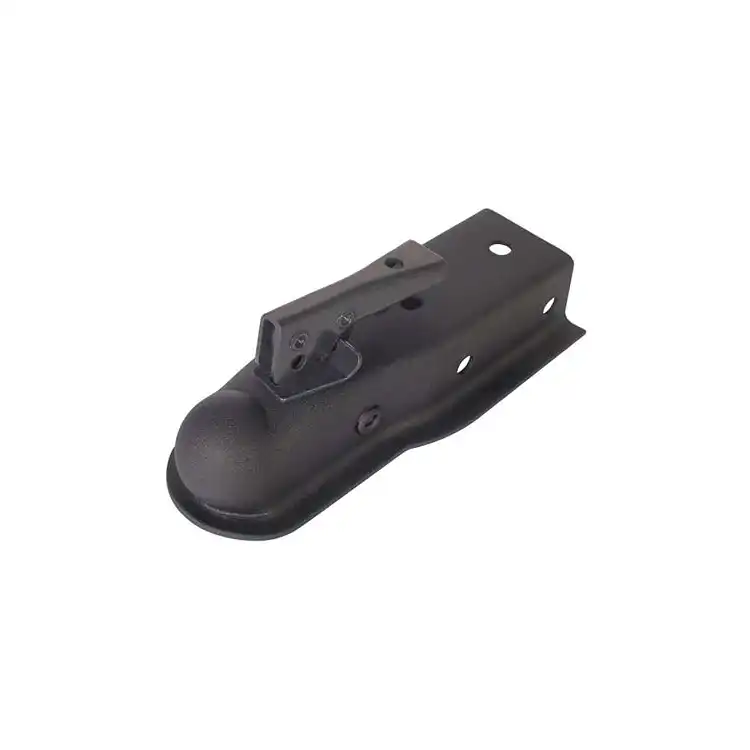
Choosing the Right Heavy Duty Trailer Coupler Factory Direct To enable correct connection with current towing systems, direct goods need an awareness of intricate technical details. Dimensional correctness, ball size coordination, mounting configuration verification, and latch mechanism selection that meets your operating needs are all examples of compatibility that goes beyond basic load rating matching. The most basic need that has to be confirmed is ball size compatibility. Two-inch diameter balls are used for lighter-duty applications up to 6,000 pounds, two and a half-inch diameter balls are used for heavy-duty applications between 8,000 and 12,500 pounds, and three-inch diameter balls are used for ultra-heavy-duty applications over 20,000 pounds. Because even little discrepancies might result in hazardous play that speeds up wear and jeopardizes connection security, the coupler ball socket and hitch ball diameter must match exactly. Ball sockets made by reputable manufacturers are machined to specifications that guarantee a tight fit and allow for smooth articulation while rotating.
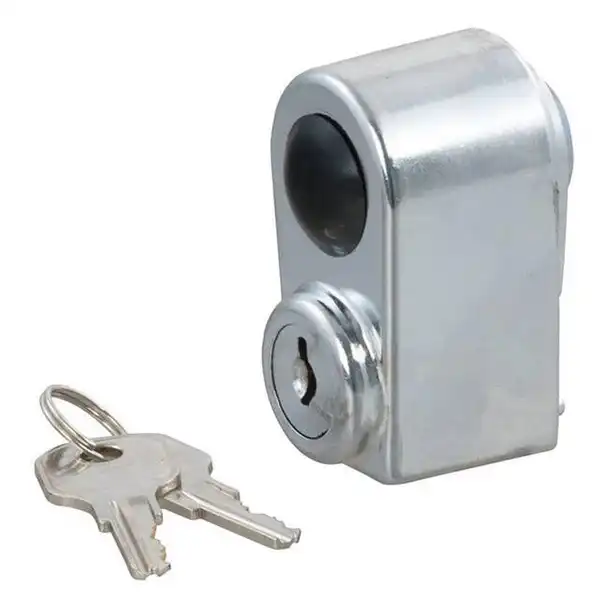
To guarantee correct coupler installation on your trailer tongue, channel mounting dimensions must be measured carefully. For medium-duty applications, standard channel diameters are two inches by three inches, and for heavy-duty installations, they are three inches by four inches. Through repositionable mounting points, adjustable channel-mount couplers provide versatility in fitting various tongue diameters. Bolt hole designs, which usually use Grade 8 fasteners with a diameter of five eighths of an inch and torqued in accordance with manufacturer standards, must properly match trailer tongue mounting arrangements. The choice of latch mechanism affects security levels as well as operational ease. By fully enclosing the ball when engaged, sleeve-lock latches provide the highest level of security and guard against unintentional disconnection even under severe shock loading. Trigger-latch designs provide sufficient security for the majority of applications while providing quick-release capability that is perfect for frequent coupling operations. In all weather conditions, composite handle mechanisms provide comfortable operation while reducing weight. Unauthorized trailer removal is prevented via lock-compatible designs, which take common padlocks or specialist coupler locks.

Quality Assurance and Manufacturing Certifications
Expert Heavy Duty Trailer Coupler Factory Direct producers set themselves apart with extensive quality control procedures and globally recognized certifications that attest to superior production. The dependability of products and customer satisfaction are directly impacted by these certificates, which provide impartial proof of methodical quality control, environmental responsibility, and continuous improvement procedures. Consistent manufacturing excellence is established by ISO 9001 quality management system accreditation. This standard calls for documented processes that oversee all facets of manufacturing, from the verification of incoming materials to the testing of finished goods and the preparation of shipments. Certified manufacturers have thorough quality records that allow for full traceability of each component, speedy resolution of any quality issues, and documentation of warranty claims. Continuous adherence to quality system criteria is ensured by independent certifying agencies conducting surveillance audits on a regular basis. Certification of an ISO 14001 environmental management system shows a dedication to environmentally friendly production methods without sacrificing the caliber or functionality of the final product. Throughout industrial processes, certified facilities use methodical techniques to pollution avoidance, energy saving, and waste reduction. Customers gain from low price without sacrificing quality thanks to these environmental measures, which are often associated with increased operational efficiency and cost effectiveness.
Workplaces where employee welfare is given top importance are reflected in OHSAS 18001 occupational health and safety certifications. Because well-trained operators in well-maintained facilities consistently deliver better outcomes than those in facilities with inadequate safety procedures, safe working conditions are directly correlated with production quality. Innovations produced by employees participating in continuous improvement programs boost production efficiency and product quality. Certifications for five-star green supply chain management systems attest to thorough methods of sustainable manufacturing, distribution, and sourcing. These certifications assess the environmental effect of a product at every stage of its lifespan, from the extraction of raw materials to recycling or disposal at the end of use. In addition to maintaining competitive pricing and product quality, manufacturers which get these certifications show leadership in the industry in sustainability. Additional proof of industrial innovation and the growth of intellectual property may be seen in utility model and design patents. Patents show that money has been spent on R&D projects that result in better designs, more efficient production methods, and better product performance. Novel latch mechanisms, improved load distribution geometries, or customized coating formulas that outlast traditional alternatives are examples of patentable characteristics.
Conclusion
Choosing a Factory for Heavy Duty Trailer Coupler Factory Direct A thorough assessment of the materials, load ratings, manufacturing quality, and technological compatibility is necessary for direct goods. Through low price, access to technical assistance, customization options, and quality assurance that distribution channels cannot match, factory-direct sourcing offers better value.

Cooperate With Qingdao RUIRUI Machinary Co., LTD.
Qingdao RUIRUI Machinary Co., LTD. stands as your trusted China Heavy Duty Trailer Coupler Factory Direct manufacturer, delivering exceptional quality through ISO 9001, ISO 14001, and OHSAS 18001 certified manufacturing systems. As an experienced China Heavy Duty Trailer Coupler Factory Direct supplier and China Heavy Duty Trailer Coupler Factory Direct factory, we offer competitive Heavy Duty Trailer Coupler Factory Direct price points with China Heavy Duty Trailer Coupler Factory Direct wholesale options for bulk orders. Our High Quality Heavy Duty Trailer Coupler Factory Direct products feature advanced manufacturing capabilities including progressive stamping, CNC machining, laser cutting, and specialized finishing processes like powder coating, anodizing, and electrophoresis. With eight automated production lines generating annual output exceeding one hundred thirty thousand pieces, we guarantee reliable supply for Heavy Duty Trailer Coupler Factory Direct for sale requirements. Our R&D team provides comprehensive OEM support, enabling customization for specific applications while maintaining short delivery schedules and professional packaging standards. Contact us today at info@qdkshd.com to discuss your Heavy Duty Trailer Coupler Factory Direct requirements and discover why global customers across eighty countries trust RUIRUI for their trailer component needs. Save this resource for future reference when planning your next procurement initiative.
References
1. "Trailer Coupling Safety Standards and Load Rating Specifications" - Society of Automotive Engineers (SAE), Technical Standards Committee
2. "Heavy-Duty Trailer Component Manufacturing and Quality Control Protocols" - American Welding Society (AWS), Manufacturing Division
3. "Metallurgical Properties of High-Strength Steel Alloys for Trailer Applications" - American Society for Testing and Materials (ASTM), Materials Engineering Department
4. "ISO Quality Management Systems in Metal Fabrication Industries" - International Organization for Standardization (ISO), Manufacturing Standards Board
5. "Engineering Design Guidelines for Trailer Coupling Systems" - National Highway Traffic Safety Administration (NHTSA), Vehicle Safety Research Department

Send Inquiry
Related Industry Knowledge
- Best Custom Trailer Hitch Pins Bulk: Durable & Cost-Effective
- OEM Wholesale Price Trailer Hitch Lock Pins: Supplier Guide
- The Ultimate Guide to a Corrosion-Free Rust-Proof Hitch Pin
- What Applications Are Perfect for a Robust Car Trailer Ball Towing Hitch?
- How Does Advanced Manufacturing Enhance Our Car Trailer Ball Towing Hitch?
- Which tire sizes are compatible with Steel Tandem Fender?
- Need to Convert Hitch Sizes Fast? Why Not Use Our Adapter?
- Where are retractable bollards typically used?
- What materials are D ring shackle hitch receivers made from?
- What are the different types of lifting chain slings?