
Heavy Duty Trailer Coupler Factory Direct: How It Compares vs Forged Types
Choosing between Heavy Duty Trailer Coupler Factory Direct options and forged types isn't just about price; it's also about protecting your cargo, preventing costly breakdowns, and guaranteeing operator safety. This becomes clear when your trailer disconnects mid-haul or the coupler latch fails during a crucial task. This thorough study compares factory-direct heavy duty trailer couplers to conventional forged alternatives, looking at manufacturing procedures, performance traits, durability factors, and overall cost to assist you in making an informed choice that strikes a balance between short-term financial constraints and long-term operational dependability.

Understanding Heavy Duty Trailer Coupler Factory Direct Manufacturing Methods
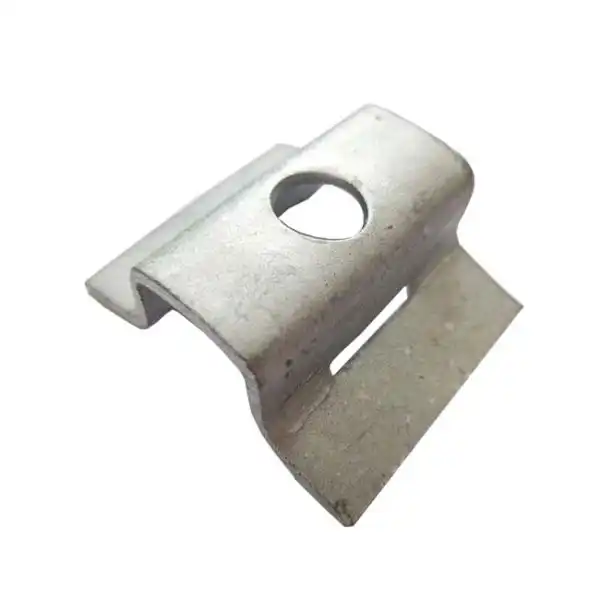
Structural integrity, load-bearing capacity, and service life are all directly impacted by the basic differences between the manufacturing processes used for Heavy Duty Trailer Coupler Factory Direct products and typical forged coupler manufacture. Advanced stamping methods, progressive die stamping, and deep drawing procedures are often used in factory-direct heavy duty trailer couplers. These techniques enable manufacturers to create components with consistent material qualities and dimensional precision. Through sequential forming stations that gradually shape the material without compromising its grain structure, progressive stamping operations at facilities like Qingdao RUIRUI Machinery turn sheet metal materials, such as mild steel, cold rolled steel, and coated steel, into precision-engineered coupler bodies. Comparing this manufacturing technique to traditional production methods reveals a number of clear benefits. Tighter tolerances, less material waste, and the integration of secondary processes like electrophoresis treatments, plating, anodizing, and powder coating directly into the manufacturing line are all made possible by the progressive stamping method. With fully automated robot production lines, modern factory-direct facilities can maintain exceptional quality consistency across large production volumes. For example, RUIRUI produces over 130,000 pieces annually while adhering to ISO 9001, ISO 14001, and OHSAS 18001 certification standards that regulate occupational safety, quality management, and environmental responsibility.
Designers may maximize material distribution throughout the coupler body by adding more material in high-stress regions and lowering weight in places with lower loads thanks to the stamped construction technology utilized in Heavy Duty Trailer Coupler Factory Direct manufacture. The design of the stamping die is guided by sophisticated computer-aided engineering analysis, which guarantees that material flow during forming processes produces advantageous grain orientation that improves tensile strength in crucial load pathways. Furthermore, the material is naturally work-hardened during the stamping process, improving its surface hardness and resistance to wear in comparison to the qualities of the base material. This helps the material last longer under rigorous working circumstances.
Forged Coupler Construction Characteristics
An alternate method of manufacture, forged trailer couplers are made by heating metal billets to high temperatures and then shaping the material into the required coupler geometry using compressive pressures. By removing internal gaps and porosity that may act as fracture initiation sites, the forging process produces a dense, consistent grain structure throughout the component. Grain flow patterns formed during forging follow the contours of the final part, providing optimal mechanical properties aligned with primary load directions. Forged couplers are usually made from alloy steels, which offer superior strength-to-weight ratios when compared to mild steel materials commonly used in stamped applications. When compared to cast or machined alternatives, forging offers metallurgical benefits such as increased ductility, greater fatigue strength, and improved impact resistance. However, the manufacture of forged couplers entails more complicated manufacturing logistics, longer lead times for unique configurations, and higher initial tooling costs, all of which raise the cost per unit, especially for small and medium production numbers. Additionally, flash removal and subsequent machining operations needed to meet final dimensional specifications result in more material waste during the forging process, and the heat treatment cycles required to maximize mechanical properties add more processing time and energy consumption to the manufacturing sequence.
Buyers should take into account that forged couplers often attract premium price, which is justified by their better material qualities and shown performance in heavy loading conditions, when comparing Heavy Duty Trailer Coupler Factory Direct choices to forged alternatives. Forged couplers are commonly specified for applications involving severe duty cycles, repeated heavy impacts, and crucial safety considerations where component failure could have disastrous consequences. These applications include construction contractors, professional haulers operating equipment trailers, and livestock transporters. Couplers with weight capabilities between 10,000 and 60,000 pounds may be produced by manufacturers using the forging technique, meeting the most severe towing requirements seen in commercial and industrial settings.

Performance Comparison: Load Capacity and Structural Integrity
The load-bearing capabilities of Heavy Duty Trailer Coupler Factory Direct products versus forged types represent a critical consideration for equipment operators who must match coupler specifications to actual towing demands. Modern stamped couplers manufactured through advanced progressive die processes can reliably handle gross trailer weights up to 14,000 pounds when properly installed and maintained, making them suitable for the majority of utility trailer applications, enclosed cargo trailers, equipment haulers, and recreational towing scenarios encountered by small businesses and individual operators. The performance envelope for factory-direct stamped couplers has expanded significantly as Thanks to developments in metallurgy, high-strength steel alloys designed especially for cold forming applications are now available. Coupler performance characteristics are largely determined by the choice of material. Cold rolled steel, coated steel, and sometimes stainless steel are used by Heavy Duty Trailer Coupler Factory Direct manufacturers such as RUIRUI. These materials provide exceptional strength-to-weight ratios while retaining enough ductility to withstand shock loads without experiencing catastrophic brittle failure. When requirements call for greater performance levels, following heat treatment procedures may further improve mechanical qualities. The cold forming techniques employed in the manufacturing of stamped couplers cause work hardening, which raises yield strength in important places. By combining strength, corrosion resistance, and cost factors, factory-direct suppliers may tailor their material selection to meet the needs of certain application segments, maximizing value.
When gross trailer weights above 14,000 pounds, forged couplers continue to provide performance benefits in ultimate strength, fatigue resistance, and impact toughness. Professional haulers who frequently operate near maximum rated capacities or come across harsh road conditions that expose couplers to repeated high-magnitude impact loads choose forged couplers because of their superior resistance to crack propagation under cyclic loading conditions, which is provided by the grain flow patterns inherent in forged components. Although appropriate surface treatments may greatly reduce these problems for factory-direct items, forged construction also has benefits in adverse environmental circumstances where corrosion, high temperatures, or chemical exposure might impair the performance of stamped alternatives.
Durability Under Adverse Operating Conditions
Trailer couplers are subjected to intricate loading patterns in real-world towing situations that go beyond straightforward vertical loads. These patterns include impact loads produced when navigating uneven terrain or during emergency braking situations, lateral forces during cornering maneuvers, and torsional stresses brought on by uneven terrain. When used within specified capacity limitations, Heavy Duty Trailer Coupler Factory Direct products produced with integrated quality control systems and thorough testing processes provide dependable performance under these various loading scenarios. Incorporating reinforcing ribs, gussets, and structural elements that efficiently distribute loads throughout the coupler body and lessen stress concentrations that may otherwise cause fatigue fractures is made possible by the stamped construction process. Regardless of the production process, surface treatment procedures have a major impact on coupler durability. Factory-direct vendors who provide electrophoresis finishing, plating, anodizing, and powder coating offer defense against corrosion, which over time may jeopardize structural integrity. In marine environments, agricultural applications, and construction sites where couplers come into contact with salt spray, fertilizers, or concrete residues, RUIRUI's sophisticated thermoplastic coating processes produce barrier layers that withstand moisture penetration, chemical attack, and abrasion damage, extending service life. Coating adherence and consistent coverage, which optimize protective efficacy, are ensured by proper surface preparation, which includes sonic cleaning, deburring, and polishing procedures.
When compared to stamped alternatives, forged couplers usually have better resistance to deformation under impact loading. This property is especially useful in situations where the couplers collide with loading docks, unintentionally collide with tow trucks while hitching, or come into contact with ground obstacles while off-road. In contrast to stamped couplers, which may undergo localized buckling or distortion under extreme impacts, forged components' solid microstructure and advantageous grain orientation prevent persistent deformation that might jeopardize dimensional tolerances and latch engagement. Nonetheless, well-designed Heavy Duty Trailer Coupler Factory Direct products have geometric characteristics and sufficient material thickness to provide useful impact resistance for common operating conditions that both commercial and recreational users may experience.

Cost Analysis: Factory Direct Heavy Duty Trailer Couplers vs Forged Options
Analysis that goes beyond the initial purchase price to include installation costs, maintenance needs, service life expectations, and replacement frequency is necessary to comprehend the total cost of ownership for Heavy Duty Trailer Coupler Factory Direct products in comparison to forged alternatives. End users may get high-quality couplers at drastically lower prices thanks to factory-direct buying, which removes middlemen distribution markups. These price reductions generally range from 25% to 40% when compared to retail pricing via conventional distribution channels. Direct manufacturer-to-customer transactions, which simplify the supply chain, lower handling expenses, and do away with retailer profit margins that drive up consumer prices in traditional distribution models, are the source of this pricing advantage. Depending on weight capacity requirements, mounting configuration specifications, and optional features like integrated locking mechanisms or specialty coatings, the initial capital investment for Heavy Duty Trailer Coupler Factory Direct options typically ranges between forty and one hundred twenty dollars. Comparable rated capacities for forged couplers fetch premium prices, usually more than $150 and perhaps more than $300 for heavy-duty types built to support gross trailer weights of more than 20,000 pounds. The total savings obtained via factory-direct procurement may have a significant influence on operational profitability and competitive positioning in price-sensitive market categories for fleet operators overseeing many trailers or companies buying parts for resale.
Heavy Duty Trailer Coupler Factory Direct solutions with flexible mounting options that support both bolted and welded connection techniques are preferred when installation costs are taken into account. Because channel-mount variants are available, bolt-on installation is possible without the need for welding, which lowers installation labor costs and permits field replacement without the need for specialized tools or qualified welders. In order to help clients avoid expensive installation mistakes, factory-direct providers such as RUIRUI offer thorough technical support, which includes installation instructions, appropriate torque standards, and compatibility verification aid. In order to ensure correct fit and performance without costly field adjustments, the company's skilled engineering team provides customisation services that solve particular dimensional needs or unusual mounting issues.
Long-Term Value and Return on Investment
Service life expectations for properly maintained Heavy Duty Trailer Coupler Factory Direct products typically range from five to ten years depending on usage intensity, environmental exposure, and maintenance practices. Regular inspection protocols identifying wear indicators, corrosion development, or mechanical damage allow operators to address developing issues before catastrophic failures occur, maximizing component service life and preventing costly downtime. Factory-direct manufacturers providing comprehensive quality documentation, material certifications, and traceability records enable users to establish evidence-based replacement intervals optimized for specific operating conditions rather than relying on arbitrary time-based schedules that may result in premature replacement of serviceable components.
In heavy-duty applications where severe loading conditions, hostile environments, or crucial safety requirements justify the higher initial expenditure, forged couplers often provide prolonged service life potential. By reducing the frequency of replacements, minimizing downtime expenses, and improving operational reliability that avoids load delays or contract penalties, professional haulers who operate livestock trailers, heavy equipment transporters, and commercial freight operations frequently see positive returns on their investments in forged couplers. However, well-chosen Heavy Duty Trailer Coupler Factory Direct products offer optimal value by providing sufficient performance and reliability at significantly lower acquisition costs, making them ideal for recreational users, light commercial operators, and applications involving moderate duty cycles. The availability of replacement parts, warranty coverage, and post-purchase assistance must all be taken into account in the overall cost calculation. Customer-focused factory-direct manufacturers usually provide competitive warranty periods supported by quick-response technical support teams and efficient replacement procedures. Because of RUIRUI's dedication to after-sales support, clients are guaranteed to get timely help resolving technical issues, acquiring new parts, or addressing quality problems. This peace of mind improves the whole value offer beyond simple price comparisons.
Material Selection and Finishing Options for Heavy Duty Applications
Heavy Duty Trailer Coupler Factory is largely influenced by material criteria. Buyers may choose couplers that are tailored for certain operating settings and loading circumstances by knowing the available alternatives and directly seeing performance characteristics. The most popular base material for stamped couplers is mild steel, which provides good formability during production, sufficient strength for moderate-duty applications, and affordable prices that enable competitive market positioning. Quality-conscious producers manufacturing high-end factory-direct items choose cold-rolled steel because it offers superior mechanical qualities, tighter dimensional tolerances, and a better surface polish than hot-rolled equivalents. Zinc galvanizing or other protective coatings applied during steel manufacture are included into coated steel compositions, which provide built-in corrosion resistance that prolongs service life without the need for further finishing procedures. These materials are especially useful for trailer applications in areas with high winter road salt application, coastal regions, or agricultural settings where corrosion is the main failure mechanism limiting component lifespan. The protective advantages of coated steel are transferred to completed couplers rather of being lost during production processes thanks to RUIRUI's experience processing coated steel using specific stamping dies and shaping techniques that maintain coating integrity.
Advanced applications could call for copper, stainless steel, or aluminum alloys that provide unusual property combinations to meet particular needs. In applications involving the food industry, chemical processing facilities, or maritime situations where contamination concerns prohibit the use of traditional steel materials, stainless steel couplers provide remarkable corrosion resistance. For trailer applications where reducing tongue weight enhances vehicle handling or where payload capacity constraints make every pound of component weight reduction crucial, aluminum alloy construction offers significant weight savings. Customers may improve coupler parameters for unique application needs without settling for the compromises that come with conventional catalog goods thanks to factory-direct suppliers who provide extensive material selection choices.
Surface Treatment Technologies Enhancing Performance
Applying finishing techniques to the Heavy Duty Trailer Coupler Factory Direct goods have a significant impact on long-term durability, corrosion resistance, and aesthetic quality. Powder coating techniques provide thick, long-lasting finish layers that are resistant to chemical deterioration, chipping, and scratches while also offering appealing visual qualities that raise the perceived quality of the product. The electrostatic application technique guarantees even coverage of intricate geometries, recessed spaces, and interior surfaces that traditional liquid coatings may not be able to sufficiently shield. Without the need for costly bespoke finishing equipment, factory-direct providers may satisfy consumer preferences or corporate branding needs thanks to powder coatings, which come in a variety of colors, textures, and gloss levels. Plating processes such as nickel, chromium, and zinc plating provide metallic coatings that improve wear resistance and prevent corrosion. With sacrificial anode mechanisms that allow the zinc coating to degrade preferentially while shielding the underlying steel substrate, zinc plating is the most cost-effective plating technique. Although chrome plating offers a brilliant surface and greater hardness and abrasion resistance, its use is restricted to high-end product lines or specific needs due to its higher processing costs. Customers may choose finishing solutions that best balance performance needs, aesthetic preferences, and financial restrictions thanks to RUIRUI's extensive plating capabilities covering numerous deposition methods.
Instead of applied coatings that may delaminate or wear away, anodizing processes for aluminum alloy couplers produce strong, corrosion-resistant oxide layers that are an inherent part of the metal surface. Through dye absorption, the anodizing process also makes it possible to customize color, enabling producers to create couplers in high-visibility finishes that enhance workplace safety or corporate colors. Because of its remarkable uniformity of coverage and ability to penetrate intricate shapes, electrophoresis coating technology is especially well-suited for couplers with internal cavities, tight corners, or assembled components where traditional coating techniques are unable to provide sufficient protection. By investing in cutting-edge finishing technologies, factory-direct manufacturers satisfy exacting client standards and provide exceptional products that justify competitive price.
Selecting the Right Coupler: Application-Specific Considerations
corresponding factory for heavy-duty trailer couplers It is necessary to systematically evaluate a number of criteria, such as gross trailer weight, tongue weight characteristics, ball size compatibility, mounting arrangement, and environmental operating circumstances, in order to directly specify to real towing needs. With a suitable safety margin that takes into consideration dynamic loads, impact forces, and possible overload situations, the coupler capacity must match or surpass the gross trailer weight, which is the entire weight of the fully loaded trailer including cargo, gasoline, equipment, and all accessories. Proper capacity selection is crucial since underspecified couplers provide major safety risks that may lead to catastrophic failures, cargo loss, vehicle damage, and operator injury. For standard trailers, tongue weight—the downward vertical force that the trailer tongue applies to the tow vehicle hitch—usually falls between 10 and 15 percent of gross trailer weight, while certain load distributions and specialized equipment trailers may result in greater percentages. While inadequate tongue weight results in stability problems such as trailer wobble, jackknifing tendencies, and hazardous oscillations at highway speeds, excessive tongue weight may overload vehicle rear suspension systems, impede steering control, and prematurely wear out couplers. Customers may confirm that chosen couplers suitably accept expected tongue weight values while preserving adequate load distribution characteristics with the assistance of factory-direct suppliers offering technical support.
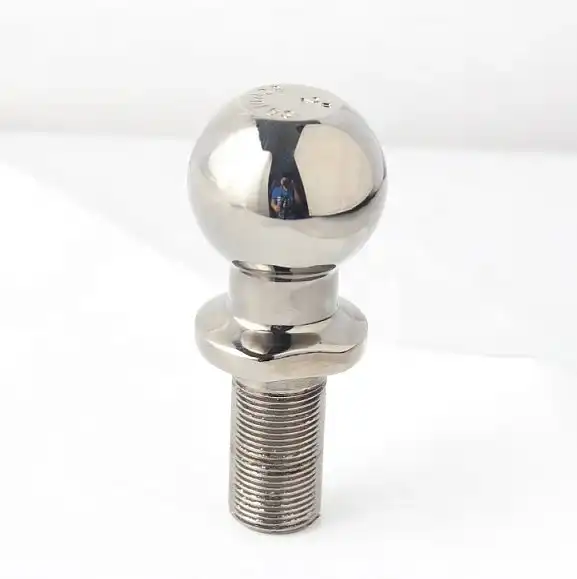
Ball size compatibility is a basic requirement that calls for precise correspondence between the diameter of the tow vehicle's ball and the coupler socket specifications. Larger balls may withstand heavier loads and provide more secure engagement for heavy-duty applications. Common ball sizes are one and seven-eighths inch, two inch, and two and five-sixteenths inch diameters. Factory of Heavy Duty Trailer Couplers Through permanent marks cast or stamped onto coupler bodies, Direct products clearly indicate compatible ball sizes; users must confirm correct matching before starting towing operations. Inappropriate ball and coupler combinations may lead to hazardous situations where the coupler may not seat on the ball correctly, latch mechanisms may not engage completely, or excessive component play results in noise, increased wear, and possible separation while in use.
Mounting Configuration and Installation Requirements
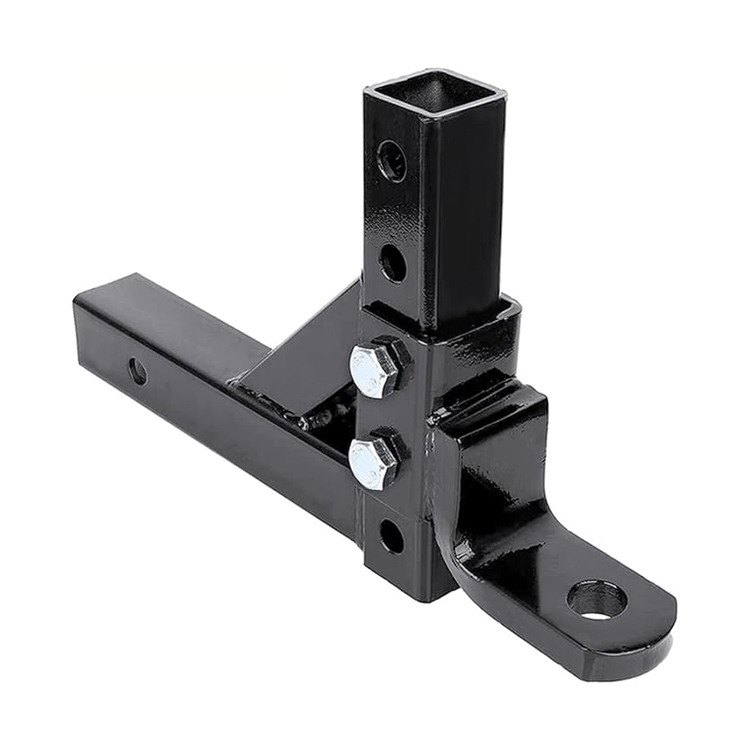
The proper coupler mounting technique is determined by the trailer tongue geometry; the main types seen in both commercial and recreational applications are straight tongue, A-frame, and channel mount configurations. Straight tongue couplers are easy to install and don't need any additional tools since they attach straight to channel sections or rectangular tube tongues. A-frame couplers are integrated into triangle frame constructions that are often seen on equipment haulers, utility trailers, and enclosed cargo trailers. They usually need to be welded into place to provide long-lasting, very durable couplings that can transfer the maximum design loads. Different installation capabilities and customer preferences may be accommodated by factory-direct providers that offer both welded and bolted A-frame varieties. The height location of channel mount couplers may be adjusted to suit different trailer heights, the geometry of the tow vehicle-trailer interface can be fine-tuned, and single coupler designs can accept varied trailer configurations. For fleet managers overseeing a variety of trailer types or contractors needing adaptability in a range of hauling situations, the flexibility is very beneficial. In contrast to fixed-mount options, channel mount designs include additional parts, possible wear spots, and adjustment mechanisms that need to be inspected and maintained on a regular basis. Strong adjustment mechanisms, strong locking features, and extensive mounting hardware are all hallmarks of RUIRUI's channel mount Heavy Duty Trailer Coupler Factory Direct products that guarantee dependable performance over long service intervals.
Regardless of the mounting type or manufacturing process, installation techniques have a considerable impact on coupler performance and safety. Joint preparation, filler metal selection, competent welding techniques, and post-weld inspection to confirm structural integrity and dimensional correctness are all necessary for welded installations. During the initial service term and subsequent preventive maintenance periods, bolted installations need proper torque application, thread engagement verification, suitable fastener grade selection, and frequent retightening. Factory-direct manufacturers assist customers in achieving optimal installation outcomes that optimize service life expectations and actualize planned performance capabilities by offering comprehensive installation instructions, technical support resources, and quality assurance documentation.

Conclusion
The comparison between Heavy Duty Trailer Coupler Factory Direct products and forged alternatives reveals that optimal selection depends on specific application requirements, operating conditions, and budget parameters. Factory-direct stamped couplers deliver excellent performance, reliability, and value for typical commercial and recreational towing scenarios, while forged options justify premium pricing for severe-duty applications demanding maximum strength and durability.
Cooperate With Qingdao RUIRUI Machinery Co., LTD.
As your go-to China Heavy Duty Trailer Coupler Factory Direct manufacturer, Qingdao RUIRUI Machinery Co., LTD. combines extensive technical knowledge with cutting-edge production skills to provide outstanding value in international markets. RUIRUI was founded in Qingdao, Shandong, China, in 2016 and specializes in manufacturing trailer arms, trailer pins, winches, trailer fasteners, and bespoke sheet metal products using sophisticated finishing technologies, CNC machining, laser cutting, welding, progressive stamping, and deep drawing stamping. Our eight specialized manufacturing lines and completely automated robot production lines produce more than 130,000 items annually while closely adhering to ISO 9001, ISO 14001, ISO 20000, and OHSAS 18001 certification requirements.
We provide professional packaging, quick delivery, extensive OEM support, and competitive Heavy Duty Trailer Coupler Factory Direct wholesale pricing as a top China supplier, maximizing value for distributors, fleet operators, and end users globally. Our broad range of material processing skills includes mild steel, copper, brass, stainless steel, cold rolled steel, coated steel, aluminum alloys, and more, guaranteeing the best material choice for particular application needs. Superior corrosion resistance and longer service life are provided by our High Quality Heavy Duty Trailer Coupler Factory Direct products, which include cutting-edge surface treatments including powder coating, plating, anodizing, and electrophoresis.
Whether you require Heavy Duty Trailer Coupler Factory Direct for sale in standard configurations or custom-engineered solutions addressing unique specifications, our experienced R&D team collaborates with customers developing innovative products optimized for targeted applications. Our global reach extends to over 80 countries including Spain, the United Kingdom, Europe, America, and Australia, supported by responsive technical assistance, comprehensive after-sales service, and bulk order capabilities. Contact our team at info@qdkshd.com to discuss your requirements, obtain detailed Heavy Duty Trailer Coupler Factory Direct price quotations, and discover how partnering with a trusted China Heavy Duty Trailer Coupler Factory Direct factory transforms your procurement strategy and operational performance.
References
1. Society of Automotive Engineers. "SAE J684: Trailer Couplings and Hitches - Automotive Type." SAE International Standards, Technical Committee on Towing and Towed Vehicles.
2. American Society for Testing and Materials. "ASTM A653: Standard Specification for Steel Sheet, Zinc-Coated (Galvanized) or Zinc-Iron Alloy-Coated (Galvannealed) by the Hot-Dip Process." ASTM International, Committee A05 on Metallic- Coated Iron and Steel Products.
3. International Organization for Standardization. "ISO 9001:2015 Quality Management Systems - Requirements." ISO Technical Committee 176, Quality Management and Quality Assurance.
4. National Highway Traffic Safety Administration. "Federal Motor Vehicle Safety Standard No. 393: Parts and Accessories Necessary for Safe Operation." U.S. Department of Transportation, Office of Vehicle Safety Standards.
5. American Welding Society. "AWS D1.1/D1.1M: Structural Welding Code - Steel." AWS Technical Committee on Structural Welding, Fabrication Practices and Quality Standards.

Send Inquiry
Related Industry Knowledge
- How to Adjust a Trailer Coupler?
- 5 Key Features of Leading Trailer Parts Manufacturer
- China Trailer Parts Supplier: OEM, ODM & Custom Design Services
- Seeking a Multi-Compatible Anchoring System for Portable Winch for Your Equipment Fleet?
- The Ultimate Guide to Drop Hitches for Level Towing
- 10,000 LBS Capacity: The Ultimate Heavy Duty Locking Hitch Pin
- Looking for ISO-Certified Custom Casing Fitting Cannula Sleeve Supporting Foot Manufacturers?
- How do I design custom metal brackets?
- What are the benefits of metal outdoor dustbins compared to plastic ones?
- How to make a sheet metal box with out tools?