
What is the Standard Hitch Ball Size?
In North America, hitch balls with a width of 1-7/8", 2", or 2-5/16" are common. All together, these three types are used to tow trailers about 95% of the time. A 2" size is most often used for utility and pleasure trucks. The Gross Trailer Weight Rating (GTWR) and the connection specs for your trailer will help you decide. It's very important to pick the right size for safe and effective pulling.
Understanding Hitch Ball Basics
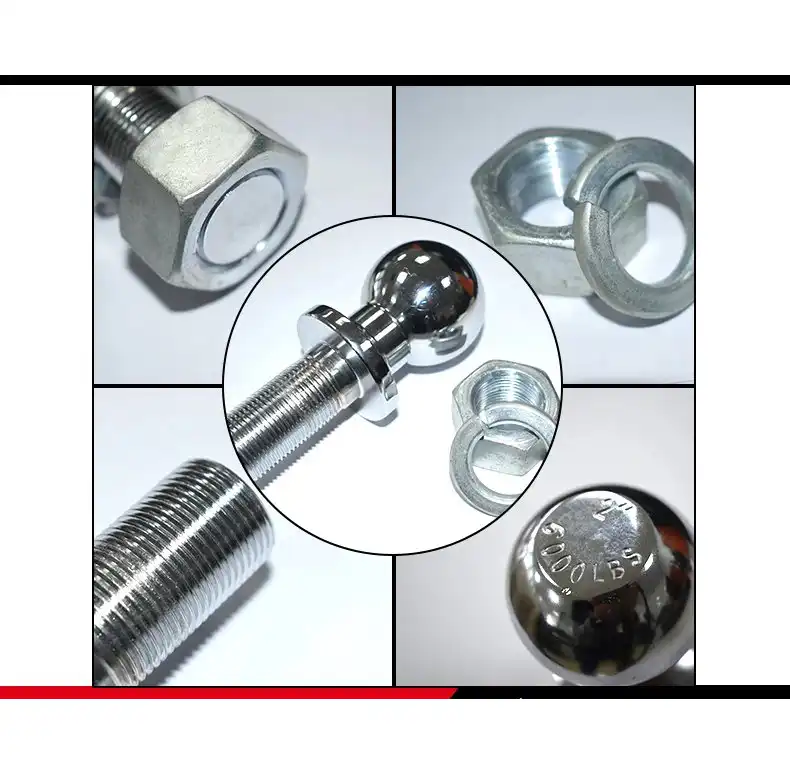
What's in the middle of a tow car and the hitch? That's a hitch ball, which is also known as a trailer ball or tow ball. This important gear makes the articulated link point between pull vehicles and trucks. This lets them move safely and easily on different surfaces and in different working situations.
Core Functionality and Design
A trailer ball can move in more than one way while still staying linked because of its basic shape. The sphere's shape lets it turn, change height, and make small horizontal tweaks while it's being towed. If you use stiff links, there is a chance that things will get stuck or build up stress.
Professional users of fleets and people in charge of buying things know that the quality of this link point directly impacts the safety of operations and the longevity of equipment. The connection device needs to be able to handle dynamic loading, which includes going faster and slower, moving, and roads that aren't level.
Material Composition and Performance Characteristics
What kind of material is used makes a big difference in how well and how long tow equipment works. Carbon steel is chosen most of the time because it is cheap and strong for its weight. Forging or grinding are usually the best ways to get these parts to the right size and shape.
It is common to chrome plate surfaces because it makes them look better and keeps them from rusting. This layer protects the surface so it lasts longer in tough conditions while still having the smooth finish that the coupler needs to join properly.
Types 304 and 316 stainless steel are especially good at not rusting in military settings and other places where they might come into touch with things that rust. Even though these materials cost more, they last longer and don't need as much maintenance.
Standard Hitch Ball Sizes Explained
People in North America and Europe mostly use the three main ball types. It is designed to work with a variety of trailer types and weights. If people who work in buying know about these size standards, they can better match the specs of tools to what operations need.
1-7/8" Diameter Applications
Most small cars that weigh up to 2,000 pounds gross can fit through the 1-7/8" hitch ball size. People often use small utility trailers, personal boat trailers, and small camping trailers. Because these units are smaller and made of thinner materials, they can be used for occasional fun activities.
2" Diameter Versatility
This size is best for cars that weigh between 3,500 and 5,000 pounds. Its width is 2 inches. This size is good for most utility trailers, boat trailers, and mid-size pleasure cars. This standard is used by a lot of businesses, which makes it easier for truck operations to buy things and keep track of goods.
2-5/16" Heavy-Duty Performance
The 2-5/16" width can be used for heavy-duty tasks that weigh more than 5,000 pounds, and some units can hold 10,000 pounds or more. Most of the time, big trip trucks, equipment haulers, and business travel need this size. Because there are more materials and the building is strong, it can handle the stress of heavy pulling.
Measurement and Specification Guidelines
For a correct reading, you need to know three important things besides the ball's width. The hole in the receiver tube needs to be the same size as the shank. Depending on the type of hitch on the car, the shank width is generally 1" or 1-1/4". Because the base is different lengths, the ball is placed differently against the car hood and the tongue's weight is spread out differently.
Threads made by different companies have different specs. The most common pitches are 1"-8, 1-1/4"-7, and their metric equivalents. When threads are properly connected, they stay put and don't come loose when the load changes.
Hitch Ball Weight Capacity and Safety Considerations
It's most important to think about how much weight the trailer ball can hold when you're looking for one for heavy-duty. It is important to know how ball size, material qualities, and load rates work together so that tools don't break and safety rules are followed.
Gross Trailer Weight and Tongue Weight Dynamics
Gross Trailer Weight (GTW) is the trailer's full weight, and Tongue Weight (TW) is the force that pulls on the hitch ball. Most of the time, the tongue weight should be between 10% and 15% of the GTW for the best control.
When you go over the manufacturer's suggested weight limits, something could fail catastrophically, which could cause accidents and legal issues. Professional fleet managers set up filling procedures that keep safety gaps at the right level and make operations run as smoothly as possible.
Load Distribution and Stress Analysis
You should think about the stress points that the round contact area between the ball and coupler creates when you make your choice. Units with more capacity are made of stronger materials and better steel that can handle more stress without changing shape forever.
When you speed up, slow down, or turn, dynamic loading for hitch ball can make weights that aren't moving much heavier. Good people who make things think about these things when they make and try their goods.
Maintenance and Inspection Protocols
Having regular check times helps find signs of wear, damage to the surface, or changes in size or shape that could be dangerous. When looking at the ball, you should pay attention to how the surface is worn, how strong the shank is, and how tight the hardware is that holds it together.
Putting oil on the ball surface stops it from wearing down and makes it easier for the coupler to join. This is especially important in places where there is a lot of dust or salt. Not enough oil, though, can bring in dirt and dust that speed up the wear process.
How to Choose the Right Hitch Ball for Your Business Needs?
When picking out the best tow tools, you should carefully think about the job requirements, the working conditions, and the level of performance you want. When people work in shopping, they need to find a way to balance the need to save money with the need for safety and reliability.
Application-Specific Requirements Analysis
Performance must stay the same in a lot of different work situations and job cycles for fleet operations to work. It is important to know which trailers you have, how their weight is divided, and how they are generally loaded before you can actually order it.
Companies that work in construction and building often need heavy-duty systems that can handle equipment trucks and material haulers. The best size for these tasks is a 2-5/16" circular unit, which can hold more weight and last longer.
People who work for cities or who put together security systems may value resistance to rust and longer service times over maximum capacity. When this happens, a frame made of stainless steel or better finishing methods are helpful.
Brand and Supplier Evaluation Criteria
Big names in the business, such as CURT, Reese, and Draw-Tite, make a lot of different goods with a range of sizes and features to meet different needs. You should think about everything from the length of the protection to how easy it is to get new parts when you are looking at different sources.
In addition to 1-7/8", 2", and 50mm options, RUIRUI has a lot of different ways to pull things. Chrome finish and different materials can be used for many different tasks, and OEM customization choices can be used to meet the specific needs of each person.
Quality control methods and ISO certification at the company for hitch ball make sure that standards are always met and goods work the way they're supposed to. Ruiru has been making things for more than 15 years and has the most up-to-date production tools. This gives skilled fleet workers the reliability they need.
Installation, Replacement, and Procurement of Hitch Balls
The equipment stays safe and works well for as long as it's meant to because it was installed and maintained by professionals. By learning how to do things right and when to fix parts, maintenance teams can keep things in good shape and make sure they don't break down too often.
Step-by-Step Installation Guidelines
Making sure that the width of the ball fits the coupler specifications exactly is the first thing that needs to be done for a good fit. It should be possible for the threads to touch completely without having to cross-thread or push them together.
Pay close attention to the torque specs given by the maker to make sure there is enough clamping force without putting too much stress on the attaching gear. Anything that isn't tight enough could come loose while it's being used. It could break or damage the threads if you twist it too much.
Replacement Timing and Criteria
When the surface wears down more than the manufacturer allows or when damage that can be seen makes the structure weaker, it needs to be replaced. Change the ball right away if its width changes or if the surface isn't smooth.
Fleet workers usually decide when to replace cars based on how many miles they've been driven, how many hours they've been used, or what they see when they look at them. You can avoid problems and the costs that come with them by changing things before they break.
Strategic Procurement Considerations
In the long run, buying high-quality tools from well-known names saves you money because you won't have to replace them as often and they will be safer. You can save money and always have things on hand if you buy in bulk.
Putting things together is easier and there is less chance of problems when you buy complete kits that come with fixing tools. Most of the time, these sets come with the ball, screw, nut, and any other tools that are needed to put them together.
Conclusion
When you know the normal hitch ball sizes and how they are used, you can make smart purchases that make your work safer and more efficient. The three main sizes—1-7/8", 2", and 2-5/16"—can be used for most pulling jobs. Pick the right size based on the trailer's specs and how much weight it needs to hold. Carbon steel or stainless steel? It depends on the weather and how long you need the material to last. It will work at its best for as long as it lasts if you have a professional install it, keep it in good shape, and repair parts when they wear out. You can get good items, professional help, and the freedom to make changes that meet the needs of businesses and teams as they change when you work with well-known makers.
FAQ
What is the most common hitch ball size in commercial applications?
The 2" diameter ball represents the most common size in commercial and fleet applications, accounting for approximately 60% of all installs. This size provides excellent versatility, handling trailers from 3,500 to 5,000 pounds while maintaining reasonable cost and availability. Most utility trucks and mid-size cargo haulers use 2" couplers, making this size the practical choice for diverse fleet tasks.
Can I use a smaller ball with a larger coupler?
Putting a smaller ball on a bigger joint makes things less safe, so you should never do it. More stress can build up because there is less contact area. This can make the coupler fail or break while it is still running. Make sure that the coupler's specs and the ball's diameter fit correctly every time, and make sure they work before every tow.
How often should I replace my trailer balls?
How often you use something, how you use it, and how well you take care of it all affect how often you need to replace it. Most professional teams check the balls once a year or every 10,000 miles and change any that have more than 0.010" of wear on the outside. In places with a lot of stress, you can see signs like surface cutting, changes in size, or bending.
Partner with RUIRUI for Premium Hitch Ball Solutions
Having a good tow truck is an important part of having a safe and successful business. Professionals need hitch ball solutions that are made by RUIRUI, which combines high-tech production skills with high-quality systems. They come in a gold finish and a number of different materials, so you can find one that works for you. Our standard sizes are 1-7/8", 2", and 50mm.
A well-known hitch ball manufacturer is RUIRUI. They have ISO certifications and have been in business for more than 15 years, and they offer OEM customization services. Our tech team helps clients find solutions that meet their wants and fit their budgets, as well as ones that make things run better. Email our purchasing staff at kshdhardware@qdkshd.com for expert help and low prices on big orders
References
Society of Automotive Engineers. "Trailer Coupling Ball and Socket Connections - Performance Requirements and Test Procedures." SAE J684 Standard, 2019.
National Highway Traffic Safety Administration. "Federal Motor Vehicle Safety Standards: Trailer Hitch Ball and Mount Systems." FMVSS-571.180, Department of Transportation, 2020.
American National Standards Institute. "Recreational Vehicle Towing Equipment - Design Criteria and Testing Methods." ANSI/RVIA TH-001, 2021.
International Organization for Standardization. "Road Vehicles - Trailer Couplings and Components - Dimensional and Performance Specifications." ISO 11555-1:2017.
Trailer Manufacturers Association. "Commercial Towing Equipment Guidelines: Selection, Installation, and Maintenance Best Practices." TMA Technical Bulletin 2022-03.
Canadian Standards Association. "Automotive Trailer Couplers and Hitching Components - Safety and Performance Requirements." CSA D164-18, 2018.

Send Inquiry
You may like
Related Industry Knowledge
- What Would Cause Your Trailer Coupler to Crack?
- RV Lifting Machinery Jacks for Off-Road and Rough Terrain
- What Are the Key Features of High-Quality Trailer Container Handle Locks on Both Sides?
- How Are Forged Agricultural Machinery Parts Manufactured to Ensure High-Load Strength?
- How a Custom-Sized Hitch Pin Enhances Equipment Compatibility and Safety?
- Why Hitch Tightener Is a Must-Have for Every Towing Trip?
- Can Utility Pole Clamps Be Used in Various Industries?
- How Do Custom Precision Milling Parts Enhance Product Durability?
- What is a foot plate for a trailer jack used for?
- What are wire lock lynch pins used for?