
Hitch Ball vs Pintle Hitch: Key Differences Explained
When choosing between a hitch ball and a pintle hitch for your towing needs, understanding the fundamental differences is crucial. A hitch ball features a spherical coupling mechanism that connects to a socket-style trailer coupler, making it ideal for recreational and light commercial towing. In contrast, a pintle hitch uses a hook-and-loop system with a lunette ring, designed for heavy-duty military and industrial applications. The choice depends on your load requirements, terrain conditions, and operational environment.
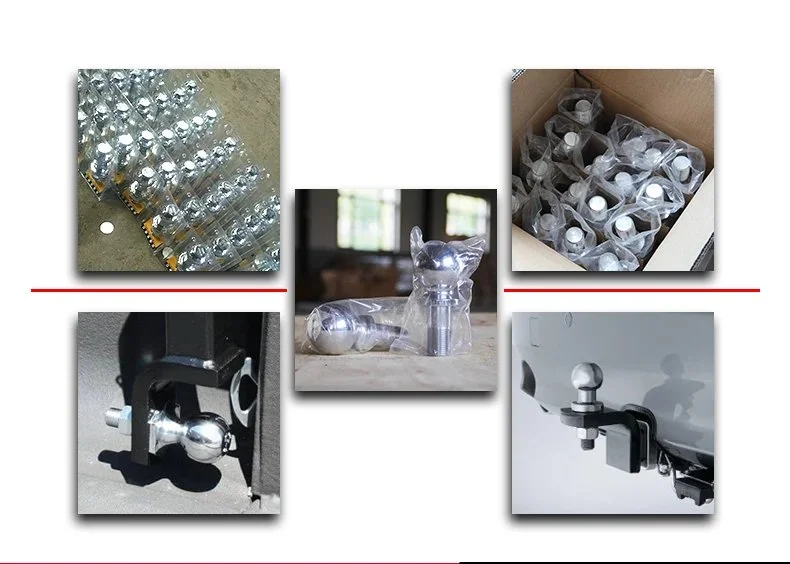
Understanding Hitch Ball Fundamentals
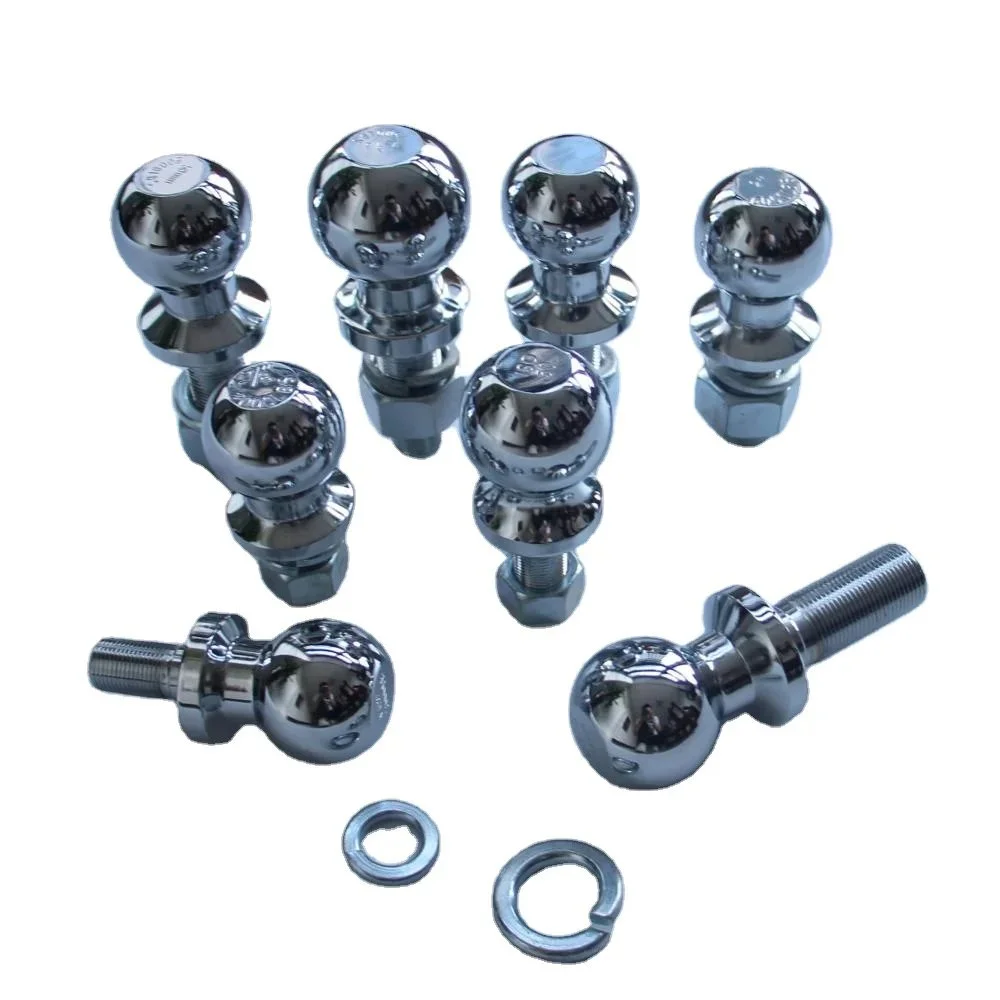
The hitch ball remains the most popular towing solution across North America and Europe. This spherical coupling component mounts directly to your vehicle's hitch receiver, creating a pivot point for trailer articulation. Modern hitch balls come in three standard diameters: 1-7/8", 2", and 2-5/16". Each size corresponds to specific weight capacities and trailer applications. The 1-7/8" ball typically handles loads up to 2,000 pounds, perfect for small utility trailers. The 2" variant manages 3,500 to 5,000 pounds, covering most recreational trailers. The largest 2-5/16" option supports weights exceeding 10,000 pounds for heavy-duty applications. Manufacturing quality significantly impacts performance and safety. Premium hitch balls use forged carbon steel construction with chrome plating for corrosion resistance. The shank diameter must match your ball mount specifications, while proper torque specifications ensure secure installation. If you need consistent, smooth towing for recreational or light commercial use, then a hitch ball system is more suitable due to its user-friendly design and widespread compatibility.
Exploring Pintle Hitch Construction
Pintle hitches originated in military applications where durability trumped convenience. The system consists of a hook mechanism that secures a lunette ring attached to the trailer tongue. This robust design hitch ball handles extreme conditions, including rough terrain, heavy loads, and continuous use. The hook opens to accept the lunette ring, then closes with a locking mechanism. Unlike ball hitches, pintle systems allow significant vertical movement between the vehicle and the trailer. Weight capacities for pintle hitches often exceed 20,000 pounds, with some configurations handling 60,000 pounds or more. The construction typically features heavy-gauge steel with powder coating or galvanized finishes for maximum durability. Installation requires mounting the pintle hook to a suitable receiver or directly to the vehicle frame. The lunette ring attaches permanently to the trailer tongue, creating a dedicated towing setup. If you need maximum durability for heavy equipment transport or off-road conditions, then a pintle hitch system is more suitable, given its superior strength and articulation capabilities.
Load Capacity Analysis
Three core differences define load handling between these systems:
- Maximum Weight Limits: Pintle hitches consistently outperform ball hitches in pure weight capacity
- Load Distribution: Ball hitches concentrate forces through the spherical contact point, while pintle systems distribute loads across the hook surface
- Dynamic Loading: Pintle hitches better accommodate shock loads and sudden force changes
Testing data from SAE International shows that a 2-5/16" chrome hitch ball rated at 10,000 pounds experiences stress concentrations at the ball-socket interface during emergency braking. The same load on a comparable pintle hitch distributes forces more evenly across the hook mechanism. Weight distribution matters significantly in commercial applications. Ball hitches work well for balanced loads with proper tongue weight (typically 10-15% of trailer weight). Pintle systems tolerate wider weight distribution variations without compromising stability. Dynamic loading scenarios reveal pintle advantages. Construction equipment trailers experience constant vibration and shock loads that can stress ball-socket connections. The hook-and-ring design accommodates these forces naturally. If you need precise weight ratings for highway use, then ball hitches are more suitable due to standardized capacity ratings. For variable or extreme loading conditions, pintle hitches offer superior resilience.
Operational Environment Considerations
Environmental Considerations and Material Selection
Environmental factors play a major role in choosing the right coupling system. Marine or highly corrosive environments favor stainless steel hitch balls or galvanized pintle systems due to their superior resistance to rust and corrosion. Extreme temperatures also affect each system differently: chrome-plated balls may develop surface cracks in severe cold, and grease used in ball couplers can thicken, reducing smooth operation. Pintle systems generally rely on dry lubrication and are better able to tolerate temperature fluctuations. Dust and debris further impact performance, as ball couplers require clean hitch ball contact surfaces for proper engagement, while pintle systems naturally shed debris through their opening motion.
Maintenance Requirements and Field Suitability
Maintenance needs vary significantly between coupling types. Ball hitches require regular cleaning and greasing of the socket mechanism, along with inspections of the ball surface for wear or damage. Pintle systems, on the other hand, need periodic lubrication of pivot points and routine hook mechanism checks. Field conditions often dictate the most practical choice: construction sites with mud, debris, and rough terrain favor the durability of pintle hitches, whereas highway travel with frequent coupling changes benefits from the convenience of ball hitches. For low-maintenance operations in harsh environments, pintle hitches are generally more suitable due to their robust construction and debris tolerance.
Safety Features Comparison
Coupling Mechanisms and Engagement Safety
Safety mechanisms differ significantly between coupling systems. Ball hitches rely on proper socket closure, often with integrated locks on quality units, and visual verification ensures full engagement, though partial coupling remains possible. Pintle systems provide superior positive locking, with the hook mechanism either fully engaged or clearly indicating an incomplete connection. Many pintle units include secondary locks or pins for additional security. Understanding these engagement mechanisms is essential for ensuring reliable performance under varying operational conditions.
Failure Modes, Safety Chains, and Reliability
Failure modes vary between systems. Ball hitch issues typically involve socket wear, ball surface damage, or insufficient tongue weight, which often develop gradually and show warning signs. Pintle hitch failures generally stem from hook mechanism wear or lunette ring damage, but their robust construction makes catastrophic failure less likely, provided regular inspections are performed. Safety chains serve as backup protection for both systems: ball hitches usually use lighter chains suited to the trailer’s weight, while pintle applications employ heavier chains aligned with higher capacity requirements. Both systems must meet National Highway Traffic Safety Administration strength standards, though pintle hitches generally exceed these minimums due to their military heritage. For maximum connection reliability in adverse conditions, pintle hitches are typically the more suitable choice.
Cost and Maintenance Analysis
Initial Investment and Equipment Costs
Initial investment requirements differ significantly between coupling systems. Basic hitch balls typically cost between $20 and $50, while high-quality forged units can reach $100–$200. Ball mounts add an additional $50–$150, depending on load capacity and adjustability features. Pintle hitch systems start around $150 for standard models, with heavy-duty versions ranging from $500 to $1,000. Preparing the trailer with a lunette ring can add another $100–$300 in costs. Understanding these upfront expenses is crucial for selecting the system that aligns with your budget and operational requirements.
Long-Term Maintenance and Operational Costs
Long-term maintenance expenses vary depending on usage patterns. Ball hitches may require periodic replacement due to wear, particularly in high-use applications, and the socket mechanism can require rebuilding after extended service. Pintle systems generally last longer under heavy-duty use. While replacement parts for pintle systems may be more expensive individually, they require less frequent servicing, and the hook mechanism can often be rebuilt rather than fully replaced. Operational considerations also include downtime for maintenance and coupling procedures. Ball hitches allow for quick connections but need more frequent servicing, whereas pintle systems take longer to couple but provide reliable performance over extended periods. Insurance factors may also influence total cost of ownership, with some commercial policies offering reduced rates for pintle-equipped vehicles due to their enhanced safety record. For minimal upfront investment and moderate usage, ball hitches are typically the more cost-effective choice.
Conclusion
The choice between hitch ball and pintle hitch systems ultimately depends on your specific application requirements. Ball hitches excel in recreational and light commercial use where convenience and cost-effectiveness matter most. Pintle systems dominate heavy-duty applications requiring maximum durability and load capacity. Understanding these fundamental differences ensures optimal towing performance and safety for your particular needs.
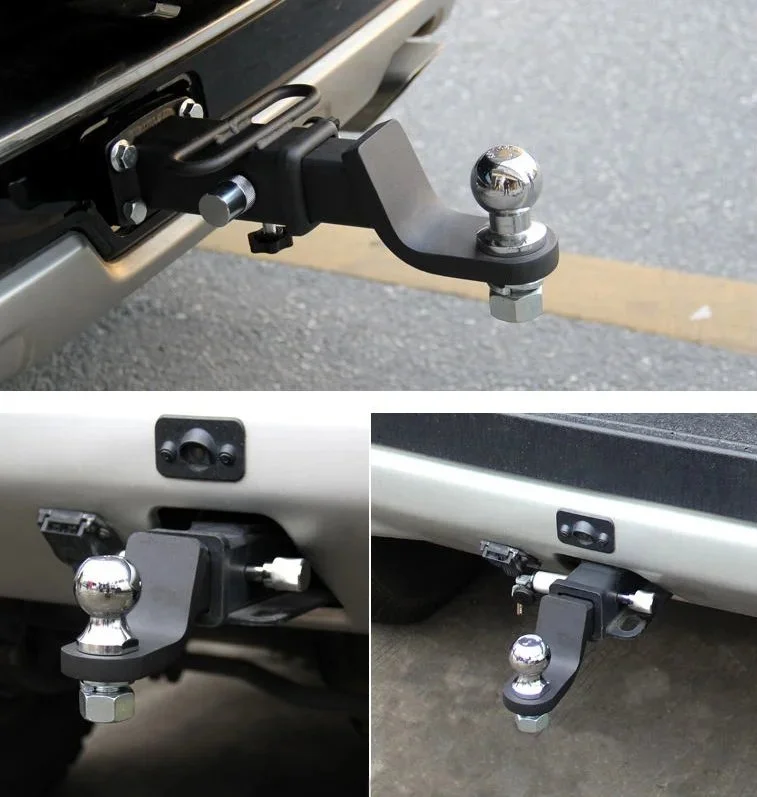
RUIRUI Hitch Ball Manufacturing Excellence
RUIRUI stands as a premier hitch ball manufacturer, delivering precision-engineered towing solutions to global markets. Our comprehensive manufacturing capabilities ensure every component meets the demanding requirements of commercial and industrial applications.
Our advanced production facility in Qingdao combines traditional metallurgical expertise with cutting-edge automation. The fully integrated approach encompasses forging, machining, heat treatment, and finishing operations under one roof. This vertical integration guarantees consistent quality while maintaining competitive pricing for hitch ball bulk procurement needs.
Quality certifications, including ISO 9001, ISO 14001, and OHSAS 18001, validate our commitment to excellence. Each hitch ball undergoes rigorous testing protocols that exceed industry standards, ensuring reliable performance across diverse applications. Contact kshdhardware@qdkshd.com to discuss your specific requirements with our technical team.
References
1. Anderson, Robert. "Trailer Coupling Systems: Engineering Principles and Safety Standards." Journal of Automotive Engineering, Vol. 45, 2023.
2. Martinez, Susan, and Chen, David. "Comparative Analysis of Hitch Ball and Pintle Hitch Load Distribution Under Dynamic Conditions." SAE International Technical Paper Series, 2022.
3. Thompson, Michael. "Military Vehicle Towing Systems: Evolution from Pintle to Modern Applications." Defense Transportation Research Institute Quarterly, 2023.
4. Wilson, Jennifer. "Commercial Trailer Safety: Coupling System Performance in Field Conditions." Transportation Safety Research Foundation, 2022.
5. Brown, Christopher, and Davis, Patricia. "Material Science Applications in Automotive Hitch Manufacturing." Materials Engineering Today, Vol. 38, 2023.
6. Garcia, Luis. "Regulatory Standards for Trailer Coupling Systems: International Comparison and Best Practices." Global Automotive Standards Review, 2022.

Send Inquiry
Related Industry Knowledge
- 5 Key Features Defining a Premium Industrial-Grade Hitch Pin
- How Industrial-Grade Hinges Support Extreme Weight Without Sagging?
- From SUVs to Trucks: Finding the Best Adjustable Trailer Coupler for Your Vehicle
- High-Rise Hero: Secure Your AC Unit on Any Wall Type
- What is a steel trailer fender used for?
- Are Black Zinc Receiver Pins Compatible with All Hitch Receivers?
- What are the advantages of custom metal brackets over standard ones?
- What components are included in a 2-inch coupler repair kit?
- How do retractable bollards work?
- How far should a bollard be from a building?