
Top Sheet Metal Fabrication Methods for OEM Production
Are you having trouble choosing the best sheet metal fabrication techniques for your OEM manufacturing line, only to encounter delays, poor quality, and overspending? Selecting the best sheet metal fabrication methods may make the difference between achieving strict production schedules and losing important contracts in today's cutthroat industrial environment. The best sheet metal fabrication techniques created especially for OEM manufacturing are revealed in this thorough book, which will help you maximize productivity, save expenses, and maintain constant quality standards. Understanding these tried-and-true fabrication procedures can improve your production skills and provide you a competitive edge in the global market, whether you're making electronic enclosures, automotive components, or aerospace parts.
Understanding Sheet Metal Fabrication for OEM Manufacturing
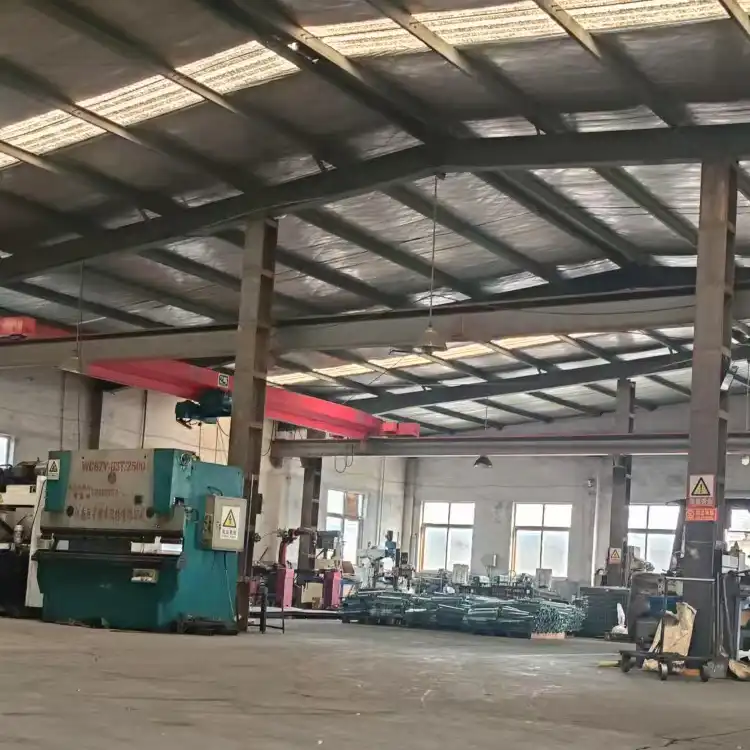
A key component of contemporary OEM manufacturing is sheet metal fabrication, which includes complex procedures that convert flat metal sheets into precisely manufactured parts that satisfy strict requirements. Original Equipment From automobile body panels to aircraft structural parts and electronic device housings, manufacturers depend largely on sheet metal fabrication to create specialized equipment and components that form the foundation of their product offerings. It is impossible to overestimate the importance of sheet metal fabrication in OEM manufacturing as it allows manufacturers to produce complex designs with exact specifications at a reasonable cost for both high-volume production runs and low-volume prototypes. From manual techniques to complex high-tech procedures that use robots, computer-aided design, and advanced data analytics, sheet metal fabrication has evolved. Modern OEM manufacturers profit from state-of-the-art technology that push the limits of metal forming, enabling better quality control, shorter production cycles, and tighter tolerances. Because of this technological advancement, sheet metal fabrication can now serve a wide range of industries, including consumer goods, automotive, aerospace, electronics, medical equipment, and construction. Each of these industries has unique finishing requirements, precision levels, and material properties that modern fabrication techniques can meet.
Key Advantages of Sheet Metal Fabrication in OEM Production
Because of its many strong benefits, sheet metal fabrication is the material of choice for OEM manufacturers all over the globe. Because of the method' remarkable design flexibility, engineers may produce intricate features, complicated geometries, and unique combinations that precisely satisfy functional requirements. Another important advantage is manufacturing efficiency, as sheet metal fabrication techniques allow for quick prototyping, which shortens time-to-market and allows for iterative design modifications prior to full-scale production. Furthermore, manufactured sheet metal components are perfect for end-use applications where longevity and dependability are critical factors due to their structural integrity and endurance. In OEM production settings, cost-effectiveness is a critical benefit, especially when working with medium-to high-volume manufacturing runs. Through accurate cutting methods and effective nesting algorithms that maximize raw material consumption, sheet metal production processes reduce material waste. Working with a variety of materials, from affordable mild steel to specialty alloys like titanium and Inconel, gives OEMs flexibility to strike a balance between budgetary limitations and performance needs. Additionally, automated sheet metal fabrication's repeatability and consistency guarantee consistent quality across production batches, lowering rejection rates and eliminating expensive rework while upholding the exacting tolerances required by OEM standards.

Essential Cutting Methods in Sheet Metal Fabrication
The fundamental process in sheet metal fabrication is cutting, which involves carefully removing material from metal sheets to create certain sections and shapes that serve as the foundation for completed components. Both conventional and cutting technologies are used in modern OEM manufacturing; manufacturers choose their processes according to the kind of material, required thickness, production volume, accuracy demands, and cost. Since the cutting process determines the initial dimensions and geometry of components, it is crucial to choose methods that satisfy design standards while striking a balance between precision, speed, and cost effectiveness.
Laser Cutting Technology for Precision Applications
One of the most advanced and extensively used techniques in contemporary sheet metal fabrication for OEM production is laser cutting. This cutting-edge method uses a powerful laser beam directed onto sheet material to precisely heat and evaporate material. This technique, which most often uses CO2 lasers that emit at infrared wavelengths of around ten-six millimeters, may penetrate a variety of materials with few areas damaged by heat. High precision capabilities that allow for tight tolerances, a lower chance of material warping as compared to thermal cutting techniques, and the capacity to generate complicated geometries and detailed patterns without the need for specialized tools are just a few of the process's exceptional benefits. Laser cutting is used by the aerospace, automotive, electronics, and medical device production industries to create components where accuracy and clean edges are essential. Intricate parts for satellites and airplanes are used in aerospace applications, while laser cutting is used by automakers for body panels and other structural components that need precise measurements. Laser cutting is especially valued by electronics makers for circuit boards and smartphone chassis, where product functioning is determined by micron-level precision. For the manufacture of medical devices, where contamination risks must be kept to a minimum, the technology's sterile, burr-free cuts are vital. The capabilities and applications of laser cutting in sheet metal fabrication for OEM production continue to grow as laser technology advances with innovations like ultra-short pulse lasers and green wavelength systems, allowing manufacturers to meet previously unattainable design specifications.
Waterjet and Plasma Cutting for Diverse Material Applications
In sheet metal fabrication, waterjet cutting is a flexible and effective technique that uses high-pressure water streams to cut through materials with amazing accuracy. For tougher materials, it often incorporates abrasive particles to increase cutting power. This cold-cutting method completely removes heat-affected areas, which makes it perfect for applications where preserving the original material qualities is crucial or for materials that are susceptible to thermal deformation. From thin aluminum sheets to heavy stainless steel plates, waterjet cutting can handle a wide variety of material kinds and thicknesses, giving OEM manufacturers remarkable material selection flexibility without requiring them to alter their equipment or procedures. In sheet metal fabrication processes, plasma cutting is especially useful for cutting copper, brass, aluminum, and steel because it provides a stronger cutting power that is appropriate for electrically conductive materials. An electrical channel of superheated, electrically ionized gas is created during the plasma arc cutting process, which melts metal and blows away molten material for clean cuts. This technique provides OEM manufacturers dealing with ferrous and non-ferrous metals with affordable options, and it performs very well in production settings that need quick cutting speeds for medium-thickness materials. In sheet metal fabrication processes, both waterjet and plasma cutting technologies easily interface with CNC control systems, allowing automated operations that guarantee uniformity between production runs while lowering labor costs and human error.
Advanced Forming Techniques for Complex Geometries
By transforming flat sheets into three-dimensional forms without removing material, forming operations give structural strength and functional qualities to components. This is the transformational step of sheet metal fabrication. In OEM manufacturing, these methods are crucial for producing anything from basic brackets to intricate chassis assemblies. The kind of material, necessary geometry, production volume, and tolerance requirements all influence the forming process selection. In order to attain previously unheard-of accuracy and reproducibility in sheet metal fabrication processes, modern forming methods integrate sophisticated digital controls with conventional mechanical principles.
Press Brake Bending and Folding Operations
One of the most basic and adaptable forming techniques in sheet metal fabrication is press brake bending, in which a piece of sheet metal is placed onto a die with precise geometry and a punch is pressed into the material to shape the sheet to the die's contour. Although this procedure may seem simple, it incorporates intricate technical factors that have a big influence on the final dimensions, such as bend radius calculations, springback correction, grain direction alignment, and material thickness changes. In addition to accepting different die configurations for V-, U-, and channel-shaped bends along straight axes, modern CNC press brakes provide remarkable control over bending parameters, enabling operators to achieve consistent bend angles with tolerances of plus or minus one degree. Understanding how materials behave during deformation is crucial to the performance of press brake operations in sheet metal fabrication. Sheet metal undergoes stress on the exterior and compression on the inside when it is bent; there is a neutral axis where neither tension nor compression takes place. Before forming operations start, the K-factor—which has to do with material strain during bending—becomes essential for determining precise flat patterns. To avoid material deformation and provide sufficient grip during bending procedures, OEM manufacturers are required to maintain minimum flange lengths. In order to guarantee consistent outcomes in sheet metal fabrication operations, best practices include keeping the inside bend radius at least equal to the thickness of the material, placing holes and cutouts far enough away from bend lines to prevent deformation, and keeping the part oriented consistently throughout production runs.
Progressive and Deep Drawing Stamping Methods
In sheet metal fabrication, stamping is a high-volume manufacturing technique in which dies are pushed into sheet material to produce desired forms by plastic deformation. With each stroke, progressive stamping creates progressively complicated geometries by moving the material through a number of stations inside a single die set. This approach is perfect for electronic enclosures and consumer product housings, as well as automobile components like firewalls, doors, and trunk lids. It performs best in high-volume OEM manufacturing circumstances when identical parts must be created quickly and affordably. In a single manufacturing cycle, the process may combine many processes, such as cutting, punching, shaping, and coining, and it offers outstanding reproducibility. By using plastic deformation under compressive pressures to convert flat sheet metal blanks into hollow, three-dimensional objects, deep drawing stamping expands these possibilities. When producing cylindrical, rectangular, or irregularly shaped containers and components—where depth surpasses diameter—this specialist sheet metal fabrication technology becomes very useful. To avoid flaws like wrinkling, ripping, or excessive thinning, deep drawing procedures need careful consideration of material formability, lubrication requirements, and draw ratios. Fuel tanks, kitchen sinks, car oil pans, and many more goods that need seamless construction without welded connections are made by OEM manufacturers using deep drawing. For large-scale OEM manufacturing operations in sheet metal fabrication, both progressive and deep drawing stamping processes are economically appealing since they need a substantial initial investment in specialized equipment, but the per-part costs drop significantly with increasing production volumes.
Joining and Assembly Processes in Sheet Metal Fabrication
The selection of suitable joining techniques has a substantial influence on structural integrity, manufacturing efficiency, and overall product quality. Joining procedures are crucial activities that convert separate sheet metal components into functioning assemblies. From conventional welding and mechanical fastening to sophisticated adhesive bonding and hybrid approaches that combine several techniques for best results, modern OEM manufacturers use a variety of joining technologies. Material compatibility, joint strength requirements, manufacturing volume, accessibility limitations, aesthetic considerations, disassembly requirements, and impacts on corrosion resistance and electrical conductivity in the final assembly are just a few of the many aspects that influence the choice of joining procedure.
Welding Technologies for Permanent Joints
Through targeted melting and fusing, welding creates permanent metallurgical connections between sheet metal components, resulting in joints that, when done correctly, may match or surpass the strength of base materials. Because of their adaptability and affordability, traditional arc welding techniques like MIG (Metal Inert Gas) and TIG (Tungsten Inert Gas) are still often employed in sheet metal fabrication, especially for thicker materials and structural applications. While TIG welding gives more control and accuracy for important applications needing superb weld quality and little heat distortion, MIG welding delivers rapid deposition rates and good productivity for production operations. Laser welding has become the dominant approach for applications requiring high-quality, repeatable connections with little thermal distortion, and advanced welding technologies have transformed sheet metal fabrication for OEM production. Solid-state laser resonators that precisely regulate the delivery of focused energy are used in laser welding to melt and fuse sheet metal workpieces. By creating small heat-affected zones, this approach lowers the possibility of deformation and makes it possible to weld thin materials that would be difficult to do with other methods. Another essential technique in high-volume OEM manufacturing is resistance spot welding, especially in the automobile industry where thousands of spot welds connect structural elements and body panels. The method offers quick cycle rates and great automation possibilities for sheet metal fabrication processes by passing electrical current through stacked sheets while applying mechanical pressure to create localized fusion without the need for filler material.
Mechanical Fastening and Assembly Methods
Mechanical fastening provides versatile joining solutions in sheet metal fabrication could accommodate materials incompatible with welding procedures and permit disassembly as required. Riveting is still a tried-and-true technique that produces long-lasting mechanical joins by deforming cylindrical fasteners. Contemporary blind rivets provide single-sided access, which is crucial for closed sections and assemblies where backside access is limited. Self-piercing rivets, which eliminate the need for pre-drilling while preserving joint integrity, have become more common in OEM manufacturing for attaching different materials, such as aluminum to steel or metal to composite materials. In sheet metal fabrication, threaded fasteners, such as bolts, screws, and specialty sheet metal fasteners, provide the most flexibility for assembly and future servicing needs. Clinching and self-clinching fasteners, which use specifically made dies to bend material and generate interlocking features, provide attractive ways to establish robust mechanical joins without the need for extra consumables. These techniques are especially useful for situations requiring electrical isolation between linked components or for thin materials where welding might result in significant deformation. In order to maximize performance in demanding applications requiring both structural integrity and environmental protection in sheet metal fabrication assemblies, modern OEM manufacturers are increasingly using hybrid joining techniques that combine mechanical fastening with adhesive bonding. This approach takes advantage of the immediate strength of mechanical fasteners during assembly while adhesives cure to provide enhanced load distribution and sealing capabilities.

Quality Control and Surface Treatment in OEM Sheet Metal Fabrication
In order to guarantee that final components fulfill exacting OEM requirements, industry standards, and customer expectations, quality assurance is a crucial component of sheet metal fabrication operations. Comprehensive quality control systems provide documented traceability that supports continuous improvement efforts by integrating inspection techniques at various production stages, from incoming material verification through in-process monitoring to final product certification. Advanced manufacturers show their dedication to continuous quality and customer satisfaction in sheet metal fabrication operations by implementing quality management systems certified to ISO 9-1, ISO 13-4-185, and industry-specific standards.
Inspection Methods and Dimensional Verification
Various inspection methods are used in modern sheet metal fabrication quality control to confirm mechanical qualities, surface integrity, and dimensional correctness throughout manufacturing processes. Automated dimensional verification of intricate three-dimensional geometries is made possible by coordinate measuring devices with precision probes and laser scanning capabilities. These devices compare real measurements to CAD models to find variations within microns. These advanced technologies provide thorough inspection reports that record adherence to technical specifications and spot patterns that might point to process drift or tool wear that calls for remedial action. In sheet metal fabrication processes, non-destructive testing techniques are essential for confirming material qualities and internal integrity without causing component damage. High-frequency sound waves are used in ultrasonic testing to find internal flaws, voids, or delamination that might jeopardize structural integrity in crucial applications. For components where failure might have major repercussions, radiographic examination using X-rays offers visible proof of internal features, weld quality, and material consistency. Despite advancements in technology, visual inspection is still essential because skilled quality inspectors may see surface flaws, inconsistent finishes, and assembly mistakes that automated methods could miss. By monitoring important quality indicators during production runs, statistical process control techniques allow for proactive modifications that preserve process stability and reduce flaws in OEM sheet metal fabrication.
Surface Finishing and Coating Applications
Raw manufactured sheet metal components are transformed into market-ready goods by surface treatment and finishing procedures, which also improve appearance, offer the functional surface qualities needed by demanding applications, and resist corrosion. Because of its great durability, environmental friendliness, and wide range of color possibilities that satisfy a variety of client needs, powder coating has emerged as the most popular finishing technique in sheet metal fabrication. In order to produce hard, consistent coatings that are more resistant to chipping, scratching, and chemical exposure than conventional liquid paints, this method applies electrostatically charged dry powder to grounded metal surfaces before curing it under heat. In sheet metal fabrication applications, metal finishing options provide customized capabilities for particular OEM needs. Anodizing gives aluminum components protective oxide coatings that improve corrosion resistance and allow for attractive coloring possibilities that are often employed in architectural and electrical applications. Thin metallic coatings, such as zinc, nickel, chrome, or precious metals, are deposited onto sheet metal surfaces using electroplating to provide greater electrical conductivity, corrosion protection, or attractive finishes needed by certain industries. Electrophoresis painting provides superior coverage and corrosion protection for automotive and appliance components by using electrical current to produce homogeneous paint layers in intricate geometries and recessed regions that are difficult to coat using traditional techniques. In order to satisfy both functional needs like cleanability and aesthetic preferences that set products apart in competitive markets served by OEM sheet metal fabrication, mechanical finishing techniques like polishing, brushing, and bead blasting produce specific surface textures ranging from mirror finishes to uniform matte appearances.
Conclusion
Selecting optimal sheet metal fabrication methods for OEM production requires comprehensive understanding of cutting technologies, forming processes, joining techniques, and quality control standards that collectively determine manufacturing success. By implementing appropriate methods matched to specific production requirements, OEM manufacturers achieve superior quality, efficiency, and cost-effectiveness in their sheet metal fabrication operations.

Cooperate With Qingdao RUIRUI Machinary Co., LTD.
As a reputable supplier and skilled manufacturer of China sheet metal fabrication, Qingdao RUIRUI Machinary Co., LTD. is your top China sheet metal fabrication factory, providing all-inclusive solutions. Our completely automated manufacturing lines, together with our sophisticated skills and more than fifteen years of managerial expertise, make us your perfect wholesale partner for China Sheet Metal Fabrication. Without sacrificing our dedication to High Quality Sheet Metal Fabrication standards, we provide competitive Sheet Metal Fabrication for sale with clear Sheet Metal Fabrication pricing structures that give outstanding value.
Our product source factory features complete machinery and equipment supported by an efficient research and development team ready to tackle your most challenging OEM requirements. We excel in progressive stamping, deep drawing, laser cutting, CNC processing, welding, anodizing, powder coating, plating, electrophoresis, and etching—transforming new technologies into productivity advantages that benefit your projects. Our expertise spans diverse materials including mild steel, stainless steel, aluminum alloys, copper, brass, cold rolled steel, and coated steel, ensuring optimal processing technology for each application.
Quality assurance certifications including ISO nine-thousand-one, ISO fourteen-thousand-one, ISO twenty-thousand, and OHSAS eighteen-thousand-one demonstrate our unwavering commitment to excellence. Our engineers collaborate closely with inspectors to establish comprehensive quality files documenting every manufacturing process detail. With products exported to over eighty countries across Europe, America, and Australia, we welcome opportunities to serve your sheet metal fabrication needs. Contact us today at info@qdkshd.com to discuss your requirements and discover how our professional packaging, OEM support, and technical expertise deliver superior results. Bookmark this resource for future reference when planning your next project.
References
1. Kalpakjian, Serope and Steven R. Schmid. "Manufacturing Engineering and Technology." Pearson Education, Seventh Edition.
2. Boljanovic, Vukota. "Sheet Metal Forming Processes and Die Design." Industrial Press Inc.
3. Wick, Charles and Raymond F. Veilleux. "Tool and Manufacturing Engineers Handbook: Forming." Society of Manufacturing Engineers.
4. Groover, Mikell P. "Fundamentals of Modern Manufacturing: Materials, Processes, and Systems." John Wiley and Sons.
5. Lange, Kurt. "Handbook of Metal Forming." Society of Manufacturing Engineers.

Send Inquiry
Related Industry Knowledge
- What Would Cause Your Trailer Coupler to Crack?
- OEM Trailer Parts Supplier for Global Importers
- Top Rated Bulk Trailer Balls for Heavy Equipment Hauling
- Can these Steel Tandem Teardrop Fenders be painted or coated?
- Are there any limitations or considerations when using a Hitch Packer Adapter?
- Can Sheet Metal Cases be customized?
- What are the best locations for installing bicycle parking racks?
- How to remove rust from cast iron bench?
- What is the role of a pump cover plate in pump efficiency?
- How do you choose the right pump cover plate for your application?