
Can a Coupler Lock be Used on Any Trailer?
There is no simple yes or no answer to the question "Can a coupler lock be used on any trailer?" when it comes to trailer safety. These security devices are very good at keeping your things safe from theft and unauthorized use, but they may not work with your specific trailer, coupler, or hitch system. A trailer coupler lock works by locking the hitch mechanism, which stops the trailer from attaching to a tow vehicle. However, because trailers come in so many different styles, procurement professionals have to carefully look at dimensions, locking mechanisms, and material specifications before making decisions about bulk purchases. Infrastructure contractors, security system integrators, and distribution partners looking for reliable anti-theft solutions need to know about these compatibility details.


What Is a Trailer Coupler Lock and How Does It Work?
When buying protection hardware for fleet assets or wholesale inventory, procurement teams can make better decisions when they know the basics of these security devices.
Core Components and Construction
A trailer coupler lock is a special kind of security fastener that is designed to stop the hitch connection point from moving. These gadgets usually have bodies made of hardened steel, pins that won't rust, and cylinder lock mechanisms that can handle cutting tools and being out in the elements. Premium models use marine-grade stainless steel or alloys that have been heated. This is especially important for boat trailers because saltwater corrosion can destroy materials quickly.
The mechanical design focuses on blocking either the coupler latch or the ball mount cavity. This makes a barrier that stops any tow vehicle from connecting. Many business-to-business buyers look for models with protective shrouding that keeps angle grinders from getting to lock parts that are easily damaged.
How the Locking Mechanism Functions
The basic idea behind how it works is to put a piece of hardened steel inside the coupler structure. When installed correctly, the lock stops the coupler from opening to accept a hitch ball or stops a trailer that is already coupled from coming apart. Advanced models have disc-detainer or tubular cylinder cores instead of standard pin-tumbler mechanisms. This makes them harder to pick, which is a feature that security equipment distributors really value.
Some designs use secondary retaining pins that work like trailer coupler pins. This protects against latch bounce while the vehicle is moving. In addition to meeting the mechanical safety standards set out in SAE J684, this two-layer approach also makes it harder to steal.
Standard Dimensions and Compatibility Factors
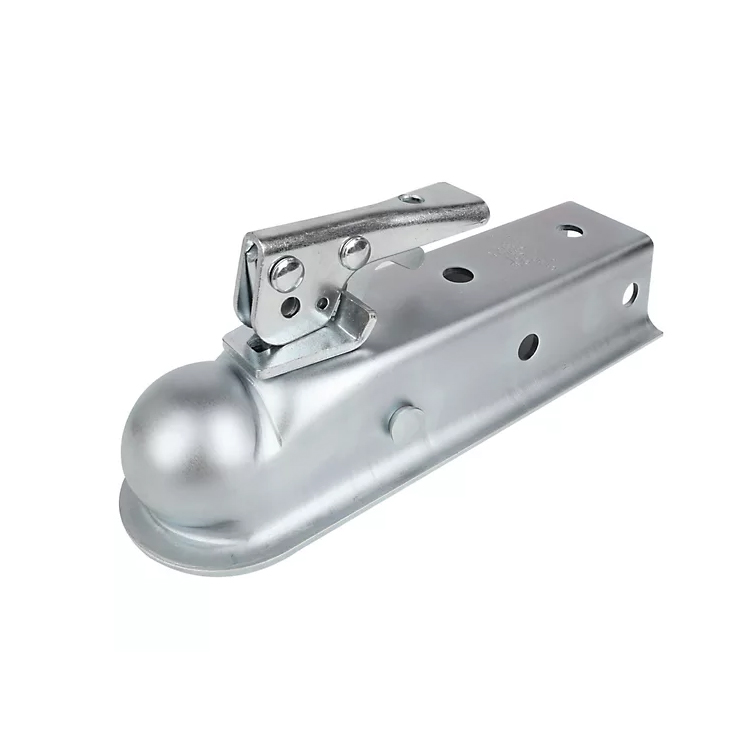
Industry-standard couplers usually work with 1-7/8", 2", or 2-5/16" hitch balls, which have corresponding lock sizing needs. The internal geometry of the coupler—whether it's an A-frame, gooseneck, or pintle ring style—determines which lock design will work best. When purchasing managers look at what suppliers have to offer, they need to make sure that the pin diameters, span widths, and throat clearances match the specifications for their trailer inventory to make sure that the couplers will work well with a variety of types of equipment.
Can a Coupler Lock Be Used on Any Trailer? Key Compatibility Considerations
There are a lot of complicated issues with compatibility that need to be looked at technically instead of assuming that everything will work.
Trailer Type Variations and Hitch Systems
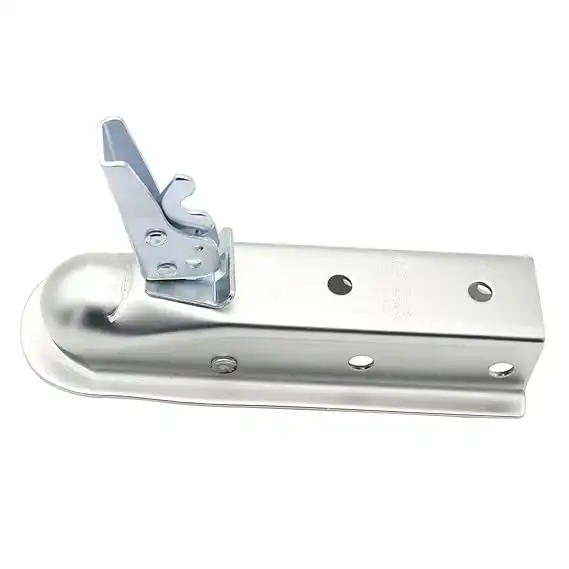
Different types of trailers have different coupling mechanisms that affect how well trailer coupler lock work with them. For example, utility trailers usually have ball-and-socket couplers, which work with most standard trailer coupler lock models made for Class I through Class V hitches. Travel trailers and campers, on the other hand, usually have larger 2-5/16" ball couplers with longer necks, which means that the locks need to have a deep enough throat to get around the safety chain attachment points.
Gooseneck or fifth-wheel connections are common on flatbed trailers used in construction and industry. These connections require very different security measures. Standard coupler locks won't work with these systems; they need special kingpin locks or fifth-wheel plate locks instead. Pintle ring configurations, which are common in military and heavy equipment transport, also need locking hardware that is made to work with their specific hook-and-ring interface.
Measuring for Proper Fitment
Costly procurement mistakes can be avoided by doing accurate dimensional assessment. People who want to buy a coupler should check the ball size, the internal width of the latch mechanism, and the space around the mounting holes. Some non-standard or imported trailers have metric sizes or custom coupler designs that aren't compatible with North American standards.
The coupler walls' thickness is also important. Stamped steel couplers that are thinner might not have enough material for some locking pin designs to engage securely. Heavy-duty cast couplers have stronger lock seating, but you need to make sure that the lock body doesn't get in the way of nearby safety chain attachments or electrical connectors.
Real-World Limitations and Exceptions
It can be hard to get custom-built trailers, old equipment, and specialized hauling rigs to work together. Agricultural trailers sometimes have couplers that are reinforced with extra bracing that makes it impossible to install a standard lock. Marine boat trailers with submerged couplers need locks made of materials that are resistant to galvanic corrosion. Standard locks made of zinc-plated steel will break quickly in saltwater.
Systems with surge brakes and adjustable-height couplers make the mechanics more complicated. Some lock designs can't work with surge brake actuators' articulating parts, so you need to make sure there is enough clearance before ordering in bulk. Instead of assuming that one-size-fits-all solutions will work, infrastructure contractors who are in charge of a variety of trailer fleets should keep detailed equipment specifications on file so that they can match lock purchases with real-world needs.

Choosing the Right Trailer Coupler Lock: Factors B2B Buyers Must Know
When choosing the right security hardware, you have to balance technical requirements with operational needs and budgetary limits. The following things should be thought about when making strategic buying decisions that protect assets and save money.
Security Level and Material Specifications
The main purpose is still to keep people from stealing, which is directly related to how hard the material is and how the structure is built. Locks made of hardened steel alloys that have Rockwell hardness ratings above 50 HRC are strong enough to withstand attacks with bolt cutters and hacksaws. Material certifications should be asked for by procurement teams to make sure that the heat treatment processes and tensile strength requirements are met.
Surface treatments have a big effect on how long something lasts in harsh environments. Electrophoretic deposition coating is better at resisting corrosion than basic zinc plating. This is especially important for equipment that works near the coast or is exposed to winter road salt. Even though it costs more, stainless steel construction completely eliminates rusting problems, which makes the higher price worth it for marine use or long-term outdoor storage.
Weather Resistance and Environmental Durability
Locks that work in extreme temperatures and rain are needed by companies that make industrial equipment and contractors who work on infrastructure. Trailer coupler lock with rubber gaskets on sealed cylinder mechanisms keep water out, which would otherwise cause internal corrosion and freezing. Some models have drain ports that let water vapor escape so it doesn't build up inside the lock body.
When you store things outside all year, UV resistance is important. Long-term exposure to sunlight can break down polymer parts and rubber seals, causing mechanical failure. Specifications should check that any non-metal parts have been treated with UV stabilizers to make sure they last for years without losing their performance.
Evaluating Supplier Capabilities and Lead Times
Beyond product specifications, the success of B2B procurement depends on how reliable the supplier is and how much they can produce. Distributors who need to get container-level shipments need manufacturers who can keep quality high over long production runs. Quality certifications, like ISO 9001, make sure that the inspection and production processes are written down.
When fulfilling project-based orders or seasonal demand spikes, lead time becomes very important. Suppliers with a lot of inventory and multiple production lines can meet urgent shipping needs without lowering the quality. When engineering firms choose locks for city infrastructure projects, they should make sure that the suppliers can offer technical information, compatibility charts, and application support during the whole buying and installing process.
The way that different suppliers set their bulk prices is very different. Total cost of ownership is affected by volume discounts, long-term contract terms, and the ability of OEMs to make changes. Our factory has eight dedicated production lines that can make more than 130,000 units a year. This makes sure that trailer coupler lock high-volume distributors always have what they need while keeping the price advantages of buying directly from the factory. Our wide range of metal fabrication skills, such as laser cutting, CNC machining, and different surface finishing methods, can meet any specific needs, such as unique keyways, branded packaging, or changes to the size or shape of an item.

Benefits and ROI of Investing in Quality Trailer Coupler Locks
Investing strategically in reliable security hardware pays off in a number of ways, including preventing theft, lowering insurance costs, and protecting asset values.
Theft Deterrence and Direct Cost Savings
Industry data shows that theft attempts on trailers with visible trailer coupler lock security devices are 60–70% lower than on equipment that is not locked down. Thieves who are looking for easy targets will choose areas that are less noticeable. When theft does happen, trailers that are properly secured have much higher recovery rates than trailers that are not protected. Law enforcement reports say that visible security hardware is a key part of successful recovery operations.
It has a big direct effect on the finances of all fleet operations. The price to replace a single utility trailer ranges from $3,000 to $8,000. On the other hand, good security hardware usually only accounts for less than 3% of the value of that asset. For distributors who are in charge of stock yards or contractors who are using equipment on multiple job sites, the money they save from not losing things makes security investments worthwhile in just one fiscal year.
Insurance and Compliance Advantages
Commercial insurers are increasingly lowering premiums for fleets that use documented safety measures. Policy discounts of 5 to 15% are given to operators who show proactive theft prevention protocols. Some insurance companies require certain security hardware as a policy requirement for high-value, specialized trailers. This means that quality trailer coupler lock options are not just an extra, but a requirement.
Regulatory compliance is more than just meeting insurance requirements. Contracts for municipal infrastructure projects often include security standards that require contractors to show they can protect assets. Suppliers who meet these requirements can compete for lucrative government contracts that they might not be able to get otherwise.
Asset Value and Fleet Management Benefits
Higher resale values and more buyer interest are seen in trailers that have been well taken care of and have proof of security measures. Quality security hardware shows that the owner is responsible and knows how to keep it in good shape. When security protocols include written lock assignments and key control systems, fleet managers say it's easier to keep track of equipment and make sure people are responsible for it.
Another important but often overlooked benefit is operational continuity. Theft of trailers causes problems with customer satisfaction, project delays, and missed deliveries that go beyond the cost of replacing the stolen equipment. These kinds of business interruptions are kept to a minimum by reliable security hardware. This keeps operational schedules and service commitments that protect long-term client relationships and brand reputation.
Conclusion
To keep your trailer coupler lock safe, you should pay close attention to things like compatibility, material specifications, and operational needs instead of assuming that everything will fit. To successfully implement quality security hardware that keeps people from stealing and keeps your things safe, you need to match trailer coupler lock designs with specific coupler configurations, think about how long the hardware needs to last in different environments, and choose suppliers that can handle bulk purchases. The investment pays off in a big way by lowering theft losses, making insurance cheaper, and raising the value of assets. This is especially true when procurement teams work with manufacturers who offer full technical support, quality certifications that have been proven, and production capacity to meet tight delivery dates.
FAQ
Can I use the same lock on different trailer types?
Compatibility is based on the coupler's specs, not the type of trailer. If several trailers have balls and couplers that are all the same size and shape, one lock model may work for all of them. But when you mix utility trailers with boat trailers or equipment haulers, you often run into different coupler styles that need different lock designs. Always check the sizes before assuming that two items can be used together.
How do I measure my coupler to find the right lock?
Check the coupler for the hitch ball size, which is usually written on it as 2" or 2-5/16". Then, look at the latch width and the space that is available for clearance. Take pictures of the coupler from different angles and compare them to the manufacturer's compatibility charts. When looking for different types of fleet inventory, make a specification matrix that lists the coupler type for each trailer. This will make bulk ordering easier.
Will a coupler lock completely prevent trailer theft?
These devices work best as part of layered security strategies, but they are also very good at keeping people away. If thieves are determined and have cutting torches or heavy tools, they can break through any portable lock in time. It is still the goal to make theft so hard that thieves move on to easier targets. When you use good locks, store things properly, and get insurance, you have full protection.

Partner with RUIRUI for Reliable Trailer Coupler Lock Solutions
Here at RUIRUI, our engineering team focuses on making high-precision security hardware for tough industrial and commercial uses. With production methods that are ISO 9001 certified and more than 15 years of experience working with metal, we offer trailer coupler lock solutions that meet the high quality standards needed by infrastructure contractors, equipment distributors, and fleet operators in North America and around the world.
Contact our technical support team at kshdhardware@qdkshd.com for full product details, help with compatibility, and bulk pricing for trailer coupler lock suppliers. To help you meet your procurement deadlines, we offer review of engineering drawings, sample evaluation programs, and faster shipping.
References
National Insurance Crime Bureau. (2022). Trailer Theft Trends and Prevention Strategies in Commercial Transportation. NICB Research Division Annual Report.
Society of Automotive Engineers. (2021). SAE J684: Trailer Couplings and Hitches - Automotive Type. SAE International Standards Publication.
Henderson, M. & Collins, R. (2023). Security Hardware Performance in Marine Environments: Material Corrosion Analysis. Journal of Industrial Materials Engineering, 45(3), 178-194.
American Trucking Associations. (2022). Fleet Asset Protection: Best Practices for Equipment Security Management. ATA Technology & Maintenance Council Guidelines.
Industrial Equipment News. (2023). Comparative Analysis of Trailer Coupling Lock Systems: Security Ratings and Field Performance. IEN Market Research Division White Paper.
Bureau of Justice Statistics. (2021). Property Crime and Recovery Rates: Impact of Visible Deterrent Devices. U.S. Department of Justice Statistical Analysis Report.

Send Inquiry
Related Industry Knowledge
- Hitch Pin Clip Wholesale Supplier Guide
- Best Custom Trailer Hitch Pins Bulk: Durable & Cost-Effective
- From SUVs to Trucks: Finding the Best Adjustable Trailer Coupler for Your Vehicle
- Heavy-Duty Steel Trailer D Ring: Your Key to Safer Towing
- Could a Custom-Sized Trailer Arm Locker Fastener Improve Safety and Fit for Your Equipment?
- What are the Best Practices for Brass Aluminum CNC Milling Parts?
- How do I Install a Spare Tire Lock?
- How do I use a Ball Coupler on a Trailer?
- What are custom metal door lock hooks?
- What are the benefits of hydraulic bollards?