
How Do Secure Towing Solutions Prevent Trailer Sway?
Have you ever been on the highway and watched in horror as your trailer starts to fishtail uncontrollably? One of the main reasons for towing accidents is trailer sway, which may quickly transform ordinary travel into hazardous circumstances. Secure towing solutions solve this serious safety issue by stabilizing your trailer with appropriate weight distribution, cutting-edge hitch systems, and precisely built parts that maintain your cargo in line with your tow vehicle the whole time.

Understanding the Causes of Trailer Sway and Why Secure Towing Solutions Matter
When outside factors cause your trailer to swing from side to side regardless of the direction of your tow vehicle, this is known as trailer sway. Rapidly increasing from slight oscillations to intense whipping that leads to total loss of control is possible with this lateral pendulum-like motion. The first step in putting into practice safe towing solutions that safeguard your investment and other drivers is to comprehend why this occurs.
Wind Forces and External Factors That Trigger Instability
A lot of surface area is exposed to crosswinds and air displacement from moving cars when you pull a trailer. Uneven pressure between your tow vehicle and trailer may result from a wind speed of 30 mph, which can exert hundreds of pounds of lateral stress on the sidewalls of your trailer. The trailer pivots on its hitch connection point as a result of this variation in force application. By strengthening the bond between your car and trailer, decreasing the pivot effect, and dispersing these forces more uniformly across the towing system, Secure towing solutions prevent this. High-quality towing parts are crucial for preserving control in actual driving situations since big semi-trucks traveling on roads produce bow waves and suction effects that rapidly push and pull your trailer.
Improper Weight Distribution and Loading Errors
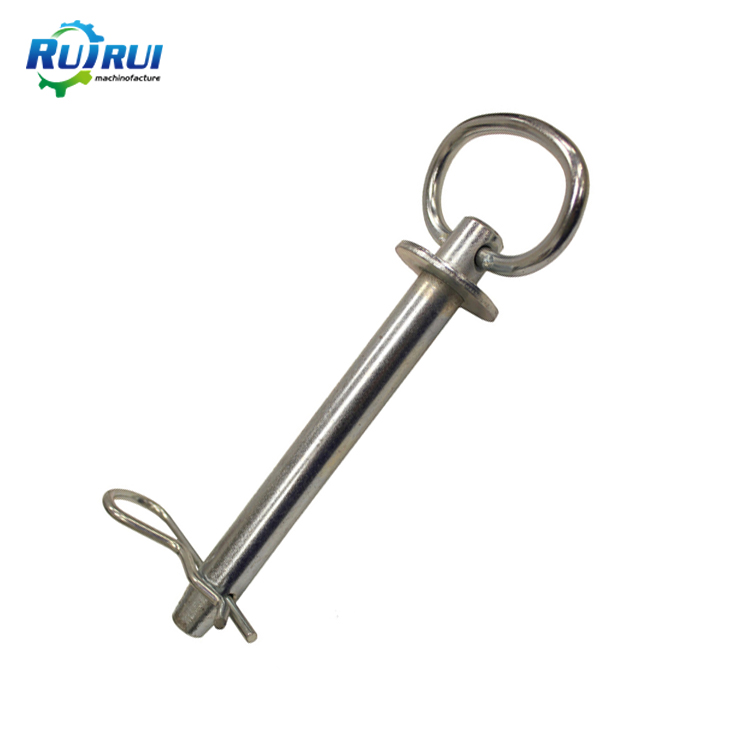
The distribution of goods within the trailer is one of the main reasons for trailer wobble. The recommended tongue weight is between 10 and 15 percent of the trailer's entire loaded weight, with around 60 percent of the total weight going toward the front and 40 percent toward the back. The trailer becomes prone to swaying when its center of gravity changes away from the hitch point due to a movement in weight or an uneven distribution of weight from side to side. Weight distribution hitches and well-designed trailer parts are examples of secure towing solutions that support this crucial equilibrium. Expert-grade coupling mechanisms, fasteners, and trailer pins guarantee that your connection points stay secure under a range of load scenarios, avoiding the slow loosening that may jeopardize your whole towing system over long distances.
How Secure Towing Solutions Provide Stability Through Engineering Excellence?
To stop trailer sway before it begins, modern safe towing systems use a variety of technology and design concepts. For drivers who know how to choose and use the best options for their particular requirements, today's towing equipment—from electronic stability systems to friction-based sway control devices—offers previously unheard-of levels of safety.
Weight Distribution Systems and Their Critical Role
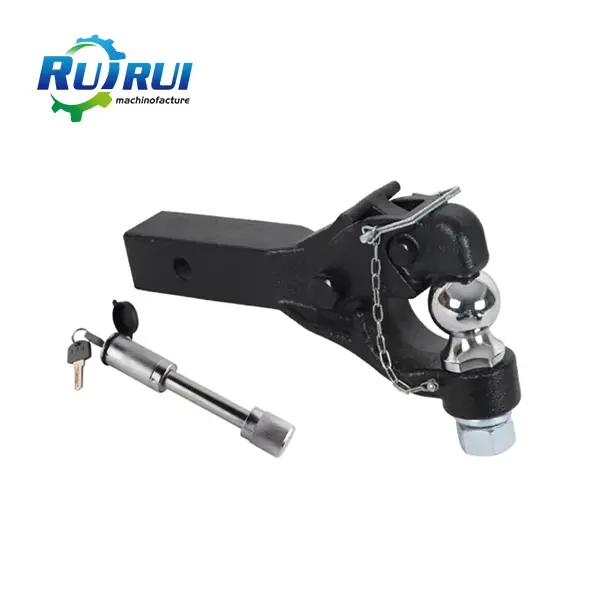
One of the safest and most efficient towing options for trailer owners is a weight distribution hitch. These systems transfer your trailer's tongue weight over all axles of the tow vehicle and trailer using spring bars and tension mechanisms. Weight distribution systems let your tow vehicle's rear-axle droop and level the whole towing combination, which improves braking efficiency and steering geometry. The initial sway motion is limited before it can develop into hazardous oscillations by the spring bar tension, which acts as resistance against lateral movement. Because subpar brackets, pins, and fasteners might break under the continuous strain of highway towing, material quality becomes crucial when choosing parts for these systems. The corrosion resistance and structural integrity required for dependable long-term performance are provided by premium steel components with the appropriate surface treatments, such as powder coating, plating, or electrophoresis.
Friction and Cam-Based Sway Control Devices
By increasing resistance at the pivot point between your tow vehicle and trailer, friction sway control devices function. These systems, which use movable friction pads to reduce lateral movement, usually install between the hitch and the trailer frame. Friction systems work well for lighter trailers and milder weather, but they are limited when severe forces are used. More aggressive protection is offered by dual cam sway control systems, which actively maintain the trailer's alignment with the tow vehicle. Instead than just damping sway after movement starts, these safe towing solutions employ cam mechanisms and stiff brackets to provide a caging effect that stops wobble before it starts. These components' efficacy is strongly impacted by the quality of their production; to guarantee reliable performance under severe circumstances, precise stamping, precise CNC machining, and appropriate heat treatment are necessary.
Electronic Stability and Brake Control Systems
Electronic trailer brake controllers and stability control systems that automatically identify and adjust for sway situations are examples of modern, Secure towing solutions. These systems detect lateral trailer movement using accelerometers and microprocessors, and when required, they autonomously deploy the trailer brakes. The automated reaction applies corrective brakes to certain wheels before the sway motion intensifies, happening quicker than most drivers can respond. By combining top-notch mechanical parts with electrical stability systems, trailer sway avoidance may be approached holistically, taking into account both underlying stability causes and urgent repair requirements. Trailer owners gain from choosing parts made to exacting quality standards, which guarantee that sensors get precise input and braking systems react reliably when engaged.

Best Practices for Implementing Secure Towing Solutions Effectively
If used improperly, even the greatest equipment cannot stop trailer sway. Your safe towing solutions will continue to function as intended for the duration of your trailer's life provided you know how to set up your towing setup and maintain your equipment.
Proper Setup and Regular Maintenance Requirements
Check for wear or damage on your hitch connection, safety chains, and other mechanical parts before to each journey. Make sure the tongue weight is within the range advised for your particular hitch system and that your trailer sits level when attached. Because underinflated tires reduce load-carrying capacity and alter driving characteristics, they greatly increase sway susceptibility. Check the tire pressure on both your tow vehicle and trailer. Since road conditions and vibration may cause connections to loosen over time, Secure towing solutions need constant upkeep to stay effective. Replace any parts that exhibit wear, corrosion, or fatigue, and use high-quality fasteners with the proper locking mechanisms. Many towing accidents are caused by slow deterioration that went undetected during normal operation rather than equipment breakdown under harsh circumstances.
Driving Techniques That Complement Your Equipment
No matter how perfectly your safe towing solutions are set up, your driving style is a major factor in avoiding trailer wobble. When towing, keep your speed at or below 55 mph since greater speeds significantly increase the chance and intensity of sway. Steer clear of abrupt steering changes, hard braking, and fast acceleration since they might throw off the balance between your tow car and trailer. Hold onto the steering wheel tightly while overtaking cars or in crosswinds, but don't overcorrect if there is little wobble. Instead, let the trailer steady itself naturally and gradually lower speed by letting off of the accelerator. If your trailer has electronic brakes, you may straighten the combination without the hassles that come with vehicle brake application during an active sway event by turning them on separately via your brake controller.
Conclusion
Secure towing solutions prevent trailer sway through proper weight distribution, quality components, and advanced stability systems that keep your trailer aligned with your tow vehicle under all conditions.

Cooperate With Qingdao RUIRUI Machinary Co., LTD.
Searching for a trustworthy manufacturer in China that offers safe towing solutions to serve your company? With more than 15 years of unparalleled manufacturing experience, Qingdao RUIRUI Machinary Co., LTD. is your go-to source for safe towing solutions from China. With ISO 9001 certified quality assurance, we are a top wholesale supplier of safe towing solutions in China, specializing in winches, trailer arms, trailer pins, and bespoke fasteners. Without sacrificing quality, our secure towing solutions for sale provide competitive secure towing solutions price points. Discover superior secure towing solutions supported by cutting-edge CNC machining, stamping, and surface treatment techniques including anodizing, plating, and powder coating. Our items are reliably delivered to more than 80 countries. To discuss your needs, email us at info@qdkshd.com right now. Keep this site handy for future use and get in touch if you want professional towing component assistance!
References
1. "Trailer Towing Safety Guide" - National Highway Traffic Safety Administration (NHTSA), U.S. Department of Transportation
2. "Weight Distribution and Trailer Sway Control Systems" - Society of Automotive Engineers (SAE International), Technical Paper Series
3. "Safe Towing Practices for Recreation Vehicles" - Recreation Vehicle Industry Association (RVIA), Safety Standards Committee
4. "Principles of Vehicle Dynamics and Trailer Stability" - Gillespie, Thomas D., Fundamentals of Vehicle Dynamics, SAE International
5. "Trailer Coupling and Hitch Design Standards" - American National Standards Institute (ANSI), Trailer Equipment Standards

Send Inquiry
Related Industry Knowledge
- Best Practices When Sourcing From Trailer Parts Supplier China
- Trailer Ball vs Pintle Hitch: Which Towing System Wins?
- Adjustable Trailer Coupler: Flexibility for Multiple Balls
- Universal Heavy-Duty Hitch Tightener for SUV, Truck, and RV Hitches
- Trailer D Pin Explained: Everything You Need to Know
- How Trailer D Pin Extends the Life of Your Trailer Coupler?
- What are the applications of Bend electronic housing parts?
- Do Trailer Hitch Tighteners Come in Different Styles?
- The Role of Removable Bollards in Event Management and Crowd Control
- how to stamp sheet metal parts?