
A Complete Guide to Hitch Ball and Shank Sizes for Towing
Getting the right tow equipment is important for keeping things safe and running smoothly. Any round coupling part that goes on the back of a tow vehicle is called a hitch ball. It is also known as a trailer ball or tow ball. A trailer coupler can be attached to it so that safe articulated towing can happen in business, government, and industrial grounds. You can keep your equipment in good shape and protect your investment by knowing the ball diameter, shank compatibility, and load capacity. By giving them technical information and helpful decision-making frameworks, this guide helps procurement professionals pick out, install, and take care of tow equipment that meets strict B2B standards.

Understanding Hitch Ball Basics: Types, Sizes, and Weight Capacities
Core Components and Functionality
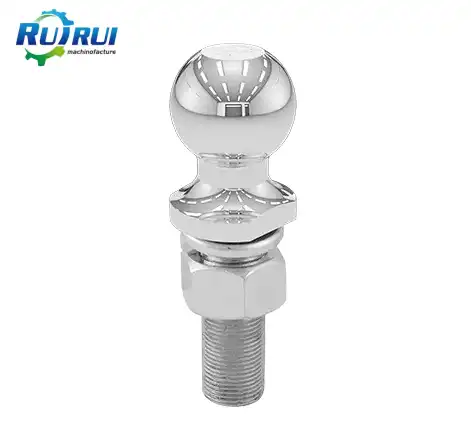
A trailer ball is made up of three main parts: the disk-shaped ball surface that connects to the coupler, the shank that goes through the mounting platform, and the stem with threads that is held in place by a locknut and washer. It's easy to turn while keeping the attachment in place during transport because it can turn in more than one plane. So that the coupler socket doesn't break down too quickly, the ball surface needs to stay clean and smooth.
Standard Ball Diameters and Applications
As a general rule, balls with diameters of 1-7/8-inch, 2-inch, and 2-5/16-inch can handle three main types of loads. Up to 2,000 pounds can be put on the 1-7/8-inch version, which makes it good for light utility trailers and small recreational gear. The 2-inch ball can hold between 3,500 and 5,000 pounds, which is enough for enclosed cargo trailers, boat trailers, and equipment haulers. They can be used on heavy-duty construction vehicles, big travel trailers, and industrial transport vehicles. The 2-5/16-inch ball can hold more than 10,000 pounds. The international standard for balls is 50mm, and it is usually used in global procurement contracts.
Material Composition and Surface Treatment
As long as trailer balls are needed, forged carbon steel is still the best choice. It is strong for its weight and doesn't bend when loaded and unloaded many times. Chrome plating does two things: it makes the surface smooth and low-friction so that the coupler can engage, and it mostly keeps the surface from rusting when the road is normal. In places like chemical plants, the ocean, and the coast, where salt air speeds up metal breakdown, grades 304 and 316 of stainless steel are especially good at resisting corrosion. The cost to own something is directly related to the material that is used. Steel units, on the other hand, need to be replaced less often, even though they cost more at first.
Weight Rating Classifications
To tow safely, you need to know the difference between Tongue Weight (TW) and Gross Trailer Weight (GTW). The total weight of the trailer when it's loaded is called GTW. The downward force on the coupling point is called TW, and it's usually 10 to 15 percent of GTW. Both ratings have to be within the range of what the ball can hold. If you go over these limits, the structure becomes weaker and there is a greater chance that the shank will break, the ball will deform, or it will come apart completely during transport. There are parts of the tow system that must meet or beat the chain's highest load rating. These are the receiver, mount, ball, and coupler.
Common Specification Challenges
As the parts are being put together, procurement teams often run into issues with shank diameter compatibility, thread pitch variation, and not enough torque. As the load capacity and mount platform sizes change, shank diameters of 3/4-inch, 1-inch, and 1-1/4-inch match them. Different types of threads have different coarse and fine pitches, which change how securely they can be put in place and how easily they can be taken out. Because of corrosion between the shank and mount, parts can become stuck together and need to be taken apart in a destructive way. If you choose the right materials and do regular maintenance, you can lower these operational risks.

Hitch Ball and Shank Size Comparison for Optimal Decision-Making
Size and Capacity Matrix
When people buy things, comparing ball sizes across different levels of capacity helps them get the right gear for their needs. The 3/4-inch shank on a 1-7/8-inch hitch ball can hold up to 2,000 pounds, which makes it a good choice for landscape trailers and small equipment haulers. The 2-inch ball with a 3/4-inch or 1-inch shank can hold between 3,500 and 7,500 pounds, so it can be used in a lot of different fleet situations. Heavy business loads, construction equipment, and big utility trailers can weigh up to 10,000 to 30,000 pounds. The 2-5/16-inch ball has a 1-inch or 1-1/4-inch shank. The shank diameter and thread engagement area get bigger as the size goes up. This makes the structure more stable by spreading stress over a larger area.
Shank Diameter Impact on Load Distribution
You can tell how well a part resists bending and shear forces by how big the shank is. A 3/4-inch shank can hold up to 5,000 pounds of weight, but it might bend after a long time of heavy use. A 1-inch shank gives the bolt more rigidity and better load distribution for loads between 5,000 and 12,000 pounds. For heavy-duty uses with more than 12,000 pounds, where safety must come first, a 1-1/4-inch shank gives the structure the most stability. Also, the shank has to be the exact same size as the hole in the mount for receiving it. The shank can move side to side if there is too much space between them. This makes the connection weaker and speeds up wear.
Material Comparison: Chrome Versus Stainless Steel
Having chrome added to carbon steel balls makes them work well and not cost too much, making them the best choice for normal fleet operations in mild climates. The chrome layer keeps the metal from rusting and makes towing easier, but the plating needs to be checked regularly for wear and tear. Stainless steel balls don't rust and keep their shape even when they're used in harsh conditions without any coatings to protect them. Even though the material is more expensive, it lasts longer, needs to be replaced less often, and doesn't cause downtime because it fails due to corrosion. Teams that buy things for chemical plants, marine uses, or operations close to the coast can save money over the life of a product by choosing stainless steel.
Compatibility Between Balls and Receivers
Installation mistakes are less likely to happen if you know how the trailer ball connects to the vehicle's receiver tube. The receiver is a tube-shaped part that connects to the motor vehicle's frame. It has room for a ball mount or a drawbar. The receiver class (from Class I to Class V) determines the maximum load and opening size. For example, if you have a Class III receiver with a 2-inch square opening that can hold up to 5,000 pounds, you need a ball mount with the same shank size. If the parts don't fit together right, they weaken the structure and make the warranty useless.

How to Select the Best Hitch Ball for Your Towing Needs?
Key Selection Criteria for B2B Procurement
When professional purchasing managers pick out towing hardware, they look at four main things: the hitch ball diameter needs to match the trailer coupler's specifications; the weight rating needs to be higher than the maximum loads that are expected; the material composition needs to be right for the job; and the thread type needs to work with the existing mounting infrastructure. Parts that work for all types of vehicles are needed so that maintenance and stock replacement can be done more quickly and easily. OEM manufacturers need specs that can be changed so that their own trailer designs can work with them. Partners in distribution give more weight to suppliers that have a lot of products, can get them quickly, and are reliable.
Procurement Scenario Analysis
Standardizing on sizes like 2-inch chrome balls with 1-inch shanks for hitch ball saves money for fleet management while still letting them use a lot of different trailers. For OEM manufacturing projects, balls may need to be of a certain size, have a certain finish, or have built-in mounting systems that work with the design of the product. Because of how things are sent out, suppliers should be able to keep a lot of standard configurations in stock and be able to make special orders faster. In each case, the supplier needs to be able to do different things, like make prototypes quickly, be able to engineer things in different ways, and be able to make a lot of things at once.
Supplier Evaluation Considerations
CURT and Reese are two manufacturers with good reputations. They have built those reputations through strict quality control, thorough product certifications, and large distribution networks. In their product lines, they have standardized parts that meet SAE J684 standards. This means that they can be used with hardware from different brands. Teams of technical support experts help you pick the right specs, give you tips on how to install things, and fix issues that arise in the field. Having spare parts on hand keeps things running smoothly when parts reach the end of their useful life. Certification documents, like load test reports and material composition certificates, help with following the rules and managing risks.
Installation, Maintenance, and Safety Guidelines for Hitch Balls and Shanks
Proper Installation Procedures
For a proper installation, you must first pick a ball mount that keeps the trailer level when it's hooked up. The threaded part of the shank sticks out below and fits into the hole in the mount. The load is spread out across the bottom of the mount by a flat washer, and the locknut keeps everything together. For example, 3/4-inch shanks need about 100 ft-lbs of torque, 1-inch shanks need 200 ft-lbs, and 1-1/4-inch shanks need 250 ft-lbs or more. Things that aren't torqued enough can come loose during transport, and things that are torqued too much can damage threads or bend parts. Use a high-quality hitch ball to ensure the threads can withstand these specific torque requirements.
Lubrication and Performance Enhancement
Marine-grade grease on the hitch ball surface lowers the friction between the ball and coupler socket. This means that neither part wears out as quickly. Also, lubrication keeps water from building up, which would speed up the corrosion process in the coupler mechanism. Stay away from lubricants that are made from oil because they attract dust and grit that wears down surfaces faster. Whether it's every three months or every 3,000 miles, lubrication should be added again and again to keep things running smoothly.
Routine Inspection and Maintenance Protocols
Every month, you should take a close look at chrome plating to make sure it's still in good shape. Check for rust, cracks, or peeling. Check to see if the threaded shank has changed shape, if the threads are broken, or if corrosion is sticking to the mount. If the torque on the locknut goes outside of the range given, tighten it again. It should feel smooth when the coupler is in place, with no binding or too much play. Broken parts, parts that have been worn down a lot, or parts that have corrosion getting into them should all be replaced. You are less likely to be sued if you write down inspection schedules. This also keeps equipment from breaking down during important operations.
Procurement Strategies: Where and How to Buy Hitch Balls Effectively?
Channel Selection and Cost Analysis
Online industrial suppliers can offer competitive prices because they don't have to pay as much for overhead and their distribution networks are centralized. They do a great job of giving detailed technical specs, cross-reference tools, and bulk pricing tiers that make it easier to buy a lot of things. When you buy a hitch ball from a local distributor, you can get it right away, look at it in person, and get personalized technical advice. This helps a lot when you need a replacement right away or when your application questions are hard to understand. For standard parts, hybrid procurement strategies use online channels. For unique needs, they keep relationships with local suppliers.
Volume Purchasing Advantages
When you buy in bulk, you can usually take advantage of tiered pricing systems that make the price per unit 15% to 30% less than when you buy in small amounts. Getting things in kits that come with balls, mounts, and fasteners makes it easier to buy everything and make sure it all fits together. Value packs that come in different sizes are useful for many fleet uses and help vendors work together better. By making yearly supply agreements with your top manufacturers, you can be sure of stable prices, priority production schedules, and technical support resources that are only for you.
Custom Manufacturing and Lead Time Considerations
Sometimes, you may need unique ball sizes, shank configurations that aren't standard, or your own mounting interfaces for certain tasks. When a manufacturer can do both OEM and ODM, they can make parts that are an exact match for engineering drawings and performance needs. It takes about two to four weeks to make a custom order, but for an extra fee, rush services may be able to cut down on wait times. Adding these lead times to the plans for rolling out equipment will help avoid delays that cost a lot of money.

Conclusion
To pick the right hitch ball tow equipment, you need to know the technical details, what the business needs, and what the supplier can do. The load ratings, the type of material used, the size of the ball, and the length of the shank must all match what the trailer needs and the weather. Chrome-plated carbon steel is good for most uses, but stainless steel is better in places where it will rust. Parts last longer and operations are safer when they are installed with the right amount of torque, oiled regularly, and inspected in a planned way. People who work in business-to-business procurement get the best results when they work with manufacturers who offer customization options, quality certifications, and quick technical support. Buying in bulk and making deals once a year are examples of strategic sourcing that keep the supply chain reliable and cut costs.
FAQ
What ball size does my trailer require?
Trailer couplers have stamps on them that say what size ball they need to fit. Most of the time, these are on the coupler's tongue or body. If the numbers are worn down, use calipers to find out how big the ball is at its widest point. The Gross Vehicle Weight Rating (GVWR) of the trailer, which can be found on the compliance plate, tells us how many balls can fit inside. If you use a ball diameter that is less than what is specified, it won't fit right in the coupler socket.
Can one ball serve multiple trailer types?
As long as all of the couplers fit inside the ball's diameter and none of the trailers weigh more than what the ball can hold, it can handle more than one. A lot of fleet companies use 2-inch balls that can hold up to 7,500 pounds. These balls can fit a lot of different trailers, like utility trailers, equipment haulers, and enclosed cargo trailers. When you need 2-5/16-inch balls for heavy-duty tasks, you can't use smaller couplers because the sizes don't match up.
How does ball weight rating differ from vehicle towing capacity?
The weight rating on the ball tells you how much weight that part can safely hold without breaking. A car's towing capacity tells you how much weight of a trailer it can safely pull. We base this on how strong the car's frame is, how well its brakes work, and how well its engine runs. Users need to make sure that the receiver, mount, ball, and coupler all meet or go above the weight of the fully loaded trailer. This is because towing capacity often goes above ball ratings.

Partner with RUIRUI for Premium Hitch Ball Manufacturing Solutions
Businesses that buy from other businesses come to Qingdao RUIRUI Machinery Co., Ltd. to get all the hitch ball towing equipment they need. Our factory is ISO 9001-certified and is in Qingdao, China. It can make balls that are 1-7/8-inch, 2-inch, or 50mm in diameter. Different kinds of materials can be used to make the balls, and they can have chrome finishes. We offer OEM and ODM customization, and we use cutting-edge CNC machining, robotic welding, and thermoplastic coating methods to make parts that are exactly what engineers want. We keep our inventory levels steady so that we can handle orders for whole containers and meet tight delivery times. Every year, our eight automated lines make 130,000 units. Our technical team works with procurement managers to make solutions that are unique and fit the needs of various loads, settings, and mounting configurations.You can email our engineering team at kshdhardware@qdkshd.com to talk about your project needs, get detailed specs, or get cheap bulk prices. Infrastructure contractors, equipment makers, and industrial distributors all over the world trust us to provide them with hitch balls.
References
Society of Automotive Engineers. "SAE J684: Trailer Couplings and Hitches—Automotive Type." SAE International Standards, 2018.
Anderson, Michael R. "Load Distribution Analysis in Vehicular Towing Systems." Journal of Transportation Engineering, Vol. 144, No. 3, 2019.
National Highway Traffic Safety Administration. "Federal Motor Vehicle Safety Standards: Trailer Coupling and Hitch Systems." U.S. Department of Transportation, 2020.
Thompson, James L. "Material Selection for Heavy-Duty Towing Applications: A Comparative Study." Materials Science and Engineering Quarterly, Vol. 27, No. 2, 2021.
International Organization for Standardization. "ISO 1103: Road Vehicles—Towing Couplings—50 mm Spherical Couplings." ISO Standards Catalog, 2017.
Williams, Robert and Chen, Lisa. "Corrosion Resistance in Marine Towing Hardware: Stainless Steel Versus Chrome-Plated Components." Corrosion Prevention Journal, Vol. 33, No. 4, 2020.

Send Inquiry
Related Industry Knowledge
- Affordable RV Lifting Machinery Jacks for Small Budget
- RV Lifting Machinery Jacks Safety Features You Need
- Hitch Pin Clip vs Hitch Lock Which Is Better
- Best Tow Ball Options for RV and Trailer Towing
- Custom Trailer Hitch Pins Bulk — Trends & Future Demand Insights
- what are some possible defects in drawn sheet-metal parts?
- Which Trailer Types Are Compatible with Steel Tandem Teardrop Fenders?
- How Much Weight Can Stainless Steel Wall Hooks Hold?
- Are trailer ball covers universal in size?
- How to fix metal fence?