
What is a sheet metal box?
Made from thin, flat sheets of metal, a sheet metal box is a sturdy and adaptable container. These boxes are used in a wide range of sectors, including electronics, automotive, and more. Because of its strength, adaptability, and capacity to shield goods from the elements, sheet metal boxes are highly valued.Understanding sheet metal boxes may provide you important insights into contemporary production and storage solutions, whether you're an engineer, manufacturer, or just interested in industrial design.
The Fundamentals of Sheet Metal Boxes
Definition and Characteristics
A sheet metal box is a container made of thin, flat metal sheets that are usually created using different metalworking techniques. These boxes are distinguished by their robust construction, longevity, and adaptability. They may be made of steel, aluminum, copper, or stainless steel, each of which has special qualities appropriate for a variety of uses.Depending on the intended function, the metal used in the goods might range in thickness from larger sheets for heavy-duty applications to thin gauges for lightweight applications. Manufacturers may design boxes that satisfy certain specifications for strength, weight, and corrosion resistance because to this flexibility in material choices.Their ability to combine intricate elements like flanges, lips, or interlocking mechanisms, as well as their exact corners and crisp edges, are frequently what set them apart. In addition to improving the box's structural integrity, these design features make it easier to use and assemble in a variety of industrial settings.
Manufacturing Processes
Sheet metal boxes are made using a number of intricate manufacturing techniques, each of which influences the shape and functionality of the finished product. The following are the main techniques utilized in the production of sheet metal boxes:
- Cutting: Cutting the sheet metal to the necessary dimensions is the first stage. Numerous technologies, including laser cutting, water jet cutting, and conventional shearing techniques, may accomplish this. The thickness of the material and the required level of cut accuracy often influence the choice of cutting technique.
- Bending: The sides and corners of the box are formed by bending the sheet metal after it has been cut. Press brakes or automated bending machines, which can produce exact angles and forms, are often used in this operation. To guarantee precise final dimensions, the bending process must take the material's springback characteristics into consideration.
- Welding: Welding is used to unite the metal sheets in boxes that need to be stronger or have waterproof sealing. Depending on the material and particular needs of the sheet metal box, methods including spot welding, seam welding, or TIG welding are often used.
- Finishing: To improve the box's durability and look, finishing procedures are often used at the last step. This might include surface treatments like anodizing for metal boxes, painting, or powder coating. In addition to enhancing appearance, these finishes provide further defense against wear and corrosion.
Design Considerations
It is necessary to carefully examine a number of elements while designing a Sheet Metal Box in order to guarantee that it fulfills its intended function and is both economical to construct. Important design factors consist of:
- Material Selection: Strength requirements, weight restrictions, corrosion resistance requirements, and cost concerns are all important considerations when choosing a metal. For example, aluminum can be used for situations where lightweight is crucial, whereas stainless steel might be chosen for its superior corrosion resistance in hostile settings.
- Structural Integrity: The box's design must guarantee that it can sustain anticipated loads and stresses. This entails determining the proper material thickness, adding reinforcing elements like gussets or ribs where needed, and creating joints that retain stiffness and strength.
- Manufacturability: Taking into account the constraints of manufacturing processes, the design should be optimized for effective production. This might include reducing the number of bends, making sure that bend radii are sufficient to avoid material cracking, and creating sections that are simple to nest for effective material use.
- Functionality: To fulfill the intended usage of the box, features like mounting points, access panels, or cable entry points must be included into the design. The structural integrity and sealing qualities of the box shouldn't be jeopardized by the positioning of these elements.
Applications of Sheet Metal Boxes
Industrial and Manufacturing Uses
Because of its strength and adaptability, sheet metal boxes are widely used in manufacturing and industrial settings. The goods in these industries have a variety of uses:
- Component Housing: The goods are used in many industrial machinery and equipment to house hydraulic systems, control panels, and delicate electronic components. These enclosures ensure the equipment's lifetime and dependability by shielding the inside components from dust, moisture, and physical harm.
- Storage Solutions: To store tools, spare parts, or raw materials, manufacturing facilities often employ specially made sheet metal boxes. These boxes may be customized with features like partitions, stackable designs, or built-in locking mechanisms to meet certain storage requirements.
- Material handling: The items are used as sturdy containers for moving components or completed goods in assembly lines and warehouses. Their sturdy design enables frequent usage and can tolerate the demands of industrial settings.
- Electrical Enclosures: Sheet metal boxes are used extensively in the electrical sector for distribution panels, switch enclosures, and junction boxes. These boxes guarantee adherence to safety regulations while provide the essential protection for electrical components.
Consumer and Commercial Applications
Sheet metal boxes have been used in a variety of consumer and commercial applications outside of industry.
- Home and Office: They are used for organizing and storage in homes and workplaces. Safes, file cabinets, and ornamental storage boxes that blend use and style are a few examples.
- Retail Displays: Custom Sheet Metal Boxes are often used in the retail industry for product displays, fusing strong construction with eye-catching design to successfully exhibit goods.
- outside Equipment: They are used in outside applications such mailboxes, garden tool storage, and electricity meter boxes. They are perfect for these exposed settings because of their weather-resistant qualities.
- Automotive Industry: Battery housings, fuse boxes, and storage compartments are just a few of the uses for sheet metal boxes in automobiles. They are very useful in vehicle design since they can produce accurate, lightweight structures.
Specialized and Niche Uses
Additionally, sheet metal boxes are used in more limited and specialized fields:
- Medical Equipment: Sensitive medical equipment and instruments are kept in sheet metal crates in the healthcare sector. To adhere to strict hygienic and safety regulations, these boxes often need particular designs and finishes.
- Military & military: Rugged materials are used in the military industry for protective housing for electronic warfare systems, ammo containers, and equipment storage. High-performance materials and cutting-edge manufacturing processes are often required for these applications.
- Aerospace: Lightweight but robust items are essential for housing avionics, communication systems, and other vital components in airplanes and spacecraft. Strict aeronautical requirements for weight, durability, and electromagnetic shielding must be met by the design of these boxes.
- Scientific Instruments: Precision-engineered goods are often used in research and scientific instruments. To safeguard delicate experiments or observations, they might contain specific features like electromagnetic shielding, vibration isolation, or controlled atmospheres.
Advantages and Considerations of Sheet Metal Boxes
Benefits of Using Sheet Metal Boxes
Sheet metal boxes are a popular option in many applications due to their many benefits:
- Durability: Metal materials' inherent strength offers superior resistance to pressure, impact, and environmental influences. Long-term dependability and content protection are guaranteed by this durability.
- Customizability: They are readily adaptable to fit certain forms, sizes, and characteristics. Customized solutions that closely match the intended application are made possible by this flexibility.
- Cost-Effectiveness: The items may be quite economical when made in large quantities. For effective production, the well-established manufacturing processes may be automated.
- Recyclability: The items are an eco-friendly option since many of the metals utilized in them are recyclable. This is in line with the growing need for environmentally friendly production methods.
- Electrical safeguarding: Metal boxes are perfect for safeguarding delicate electronic components from interference since they naturally provide electromagnetic shielding.
- Fire Resistance: The goods' ability to provide substantial fire resistance, which is crucial in many industrial and safety applications, depends on the material utilized.
Limitations and Challenges
Although sheet metal boxes provide numerous advantages, there are also drawbacks and difficulties to take into account:
- Weight: The items may weigh more than alternatives like plastic, depending on the material utilized. In situations where weight is an important consideration, this may be a problem.
- Corrosion: In severe settings, some metals are prone to corrosion. Although coatings and treatments may lessen this, material design and selection nonetheless take it into account.
- Thermal Conductivity: When temperature insulation is needed, metal's strong thermal conductivity may be a disadvantage. In certain applications, further steps could be required to remedy this.
- Initial Tooling expenses: Especially for intricate forms or large-scale manufacturing, the initial tooling and setup expenses for unique designs may be substantial.
- Noise and Vibration: Compared to certain other materials, sheet metal may transfer noise and vibration more easily, which might be an issue in some applications.
Future Trends and Innovations
The future of sheet metal box production is being shaped by a number of trends and breakthroughs.
- Advanced Materials: The creation of novel alloys and composite materials with better strength-to-weight ratios, resistance to corrosion, or other improved qualities.
- Smart integration is the direct integration of sensors, Internet of Things devices, and other smart technology into goods for use in environmental monitoring, security, or inventory management.
- 3D Printing: New developments in metal 3D printing technology might enable faster product prototyping and more intricate geometries.
- Sustainable Manufacturing: A greater emphasis on environmentally friendly production techniques, such as the utilization of recycled materials and energy-saving manufacturing techniques.
The creation of sophisticated surface treatments and nano-coatings to improve attributes like wear resistance, self-cleaning, or antimicrobial qualities.
Conclusion
A key component of contemporary production and storage solutions are sheet metal boxes. They are essential in a variety of sectors and applications because to their adaptability, robustness, and customizability. The design and manufacturing of sheet metal boxes continue to evolve as environmental concerns and technological advancements develop, offering even more creative and effective solutions for the future. You may reach us at info@qdkshd.com to learn more about this product.
References
1. "Sheet Metal Fabrication: Techniques and Applications" by David Gingery
2. "Manufacturing Processes for Engineering Materials" by Serope Kalpakjian and Steven Schmid
3. "Industrial Sheet Metal Fabrication" by John Walker
4. "Metal Forming: Mechanics and Metallurgy" by William F. Hosford and Robert M. Caddell
5. "Sheet Metal Handbook: How to Form and Shape Sheet Metal for Competition, Custom, and Restoration Use" by Ron Fournier
6. "The Complete Guide to Metal Boats: Building, Maintenance, and Repair" by Bruce Roberts-Goodson

Send Inquiry
Related Industry Knowledge
- What is the Difference Between a Coupler Lock and a Hitch Lock?
- How to Use a Coupler Lock?
- OEM Coupler Lock Manufacturing for Importers
- Best Trailer Coupler Manufacturer for Cost-Effective Bulk OEM Supply
- The Ultimate Guide to a Corrosion-Free Rust-Proof Hitch Pin
- How would a Trailer Hitch A Frame Coupler manufactured with laser cutting and CNC precision benefit your operational efficiency?
- what are some possible defects in drawn sheet-metal parts?
- What are the types of latch spring pulls?
- How do I maintain and clean a trailer ball cover?
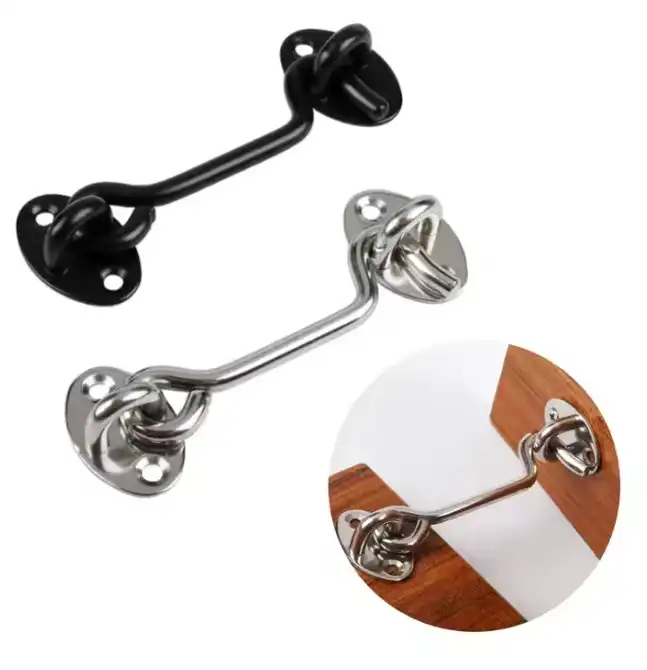
- Are there different styles available for metal door lock hooks?